

How to Choose a Pickleball Paddle Like a Pro: 10 Key Factors Explained
10 Things Professional Pickleball Players Actually Look for in a Paddle 👇
When you step into the world of competitive pickleball, you quickly realize that a paddle is not just equipment—it’s an extension of a player’s skill, style, and strategy. At the professional level, every small detail matters. From spin generation to grip comfort, elite players are extremely selective about what they use. Here’s a deeper, refined breakdown of what truly defines a high-performance pickleball paddle.
1. Surface Material – The Spin Advantage
One of the first things professionals evaluate is the paddle surface. Advanced players lean heavily toward raw carbon fiber surfaces, particularly T700 or T800 variants. These materials are known for their ability to generate exceptional spin.
Unlike fiberglass or graphite surfaces, raw carbon fiber grips the ball better, allowing for enhanced control during dinks, drops, and topspin drives. This “bite” on the ball has become a game-changer in modern pickleball, where spin variation can disrupt even the best opponents. Additionally, these surfaces tend to be more durable, maintaining performance over a longer period.
2. Core Technology – Balancing Power and Feel
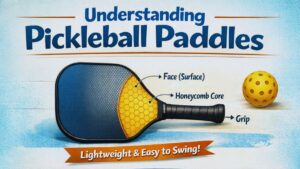
The core is essentially the heart of the paddle. It determines how the paddle feels on contact and how the ball reacts.
Most professionals prefer polymer honeycomb cores because they offer a balanced blend of control and softness. This allows for precision without sacrificing power. On the other hand, Nomex cores are stiffer and provide more pop, but they can feel harsher and produce louder impacts.
Another growing trend is foam-injected edges, which enhance stability and expand the sweet spot. For pros, the goal is simple: consistent response with controlled power.
3. Weight and Swing Weight – Speed vs Strength
While many beginners focus only on the paddle’s static weight, professionals pay closer attention to swing weight. This determines how heavy the paddle feels during motion.
Lightweight paddles (around 7.3–7.8 oz) allow for quicker reactions, making them ideal for fast exchanges at the net. Midweight paddles (7.8–8.5 oz) provide a more balanced approach, offering both power and control.
Swing weight, typically ranging between 110–125, plays a crucial role in maneuverability. Elite players often prioritize faster hands, especially during rapid-fire kitchen rallies.
4. Balance Point – The Hidden Performance Factor
The distribution of weight across the paddle—known as the balance point—can significantly influence gameplay.
Head-heavy paddles generate more power, making them suitable for aggressive baseline shots. In contrast, head-light paddles are easier to maneuver, allowing quicker resets and sharper volleys.
For doubles players, where reaction time is critical, a head-light balance is often preferred. It allows them to stay agile during fast-paced net play.
5. Paddle Shape – Reach or Control?
Shape is another strategic choice. Elongated paddles offer extra reach and typically deliver more power, which can be advantageous in singles matches.
On the flip side, standard or wide-body paddles provide a larger sweet spot and better control. This makes them ideal for doubles, where consistency and precision matter more than raw power.
The choice ultimately depends on playing style and match format.
6. Grip Size and Handle Length – Comfort Meets Control
Grip plays a crucial role not just in performance but also in injury prevention. Paddle grips generally range from 4 to 4.5 inches, and selecting the right size is essential.
A grip that’s too small can lead to overuse injuries, while one that’s too large can reduce wrist flexibility and control. Many professionals also look for longer handles, especially if they use two-handed backhands.
In humid conditions, like those commonly experienced in India, sweat absorption and cushioning become even more important for maintaining a firm hold.
7. Edge Guard vs Edgeless Design
Edge guards are designed to protect the paddle from damage, especially during accidental ground contact. However, they slightly reduce the hitting surface.
Edgeless designs, or paddles with minimal edge guards, offer a larger playable area and improved aerodynamics. This can enhance swing speed and shot precision.
Many professionals prefer edgeless or near-edgeless paddles for the performance benefits, even if it means sacrificing a bit of durability.
8. Sweet Spot Optimization – Consistency is Key
A larger and more forgiving sweet spot can make a huge difference, especially during high-pressure moments.
Modern paddles use technologies like foam perimeter weighting and thermoformed construction to expand the sweet spot. This ensures that even off-center hits maintain decent control and power.
For professionals, consistency is everything, and an optimized sweet spot helps reduce unforced errors.
9. Vibration Dampening – Feel Matters
High-end paddles are engineered to minimize vibration on impact. This not only improves comfort but also enhances shot feel.
Reduced vibration allows players to execute delicate shots like dinks and drop shots with greater precision. It also reduces strain on the arm, which is crucial during long matches and tournaments.
10. Compliance and Certifications – Playing by the Rules
No matter how advanced a paddle is, it must meet official standards to be used in competitive play. Professional players ensure their paddles are approved by recognized governing bodies.
Using a non-compliant paddle can lead to disqualification, making certification a non-negotiable factor.
Final Thought
At the professional level, choosing the right paddle is a science as much as it is a personal preference. Every detail—from material to balance—can influence performance in subtle yet impactful ways.
As pickleball continues to evolve, equipment innovation is becoming just as important as skill development. If you’re serious about improving your game, understanding these factors is your first step toward playing smarter and more effectively.
What do you think matters the most in a paddle?
10 Things Professional Pickleball Players Look for in a Paddle
| # | Factor | What Pros Look For | Key Details | Why It Matters |
| 1 | Surface Material (Spin Engine) | Raw Carbon Fiber (T700/T800) | Better ball grip, higher spin, more durable than fiberglass/graphite | Spin control is a major differentiator at elite levels |
| 2 | Core Technology (Feel + Power) | Polymer Honeycomb Core (most preferred) | Balanced control + soft feel; Nomex = more power but harder feel; foam edges improve stability | Ensures consistent response with controlled power |
| 3 | Weight & Swing Weight | Optimized swing weight (110–125) | 7.3–7.8 oz = faster hands; 7.8–8.5 oz = balanced play | Impacts reaction speed and maneuverability, especially at the net |
| 4 | Balance Point | Head-light for control, head-heavy for power | Head-heavy = stronger drives; head-light = quicker volleys & resets | Crucial for playstyle, especially in doubles |
| 5 | Paddle Shape | Based on playing format | Elongated = reach & power; Standard/Wide = larger sweet spot & control | Singles vs doubles strategy varies significantly |
| 6 | Grip Size & Handle Length | Proper grip size (4”–4.5”) + longer handle if needed | Supports two-handed backhands; sweat absorption important in humid conditions | Prevents injury and improves shot control |
| 7 | Edge Guard vs Edgeless | Preference for minimal or no edge guard | Edge guard = durability; edgeless = better aerodynamics & larger surface | Impacts performance vs longevity trade-off |
| 8 | Sweet Spot Optimization | Larger, forgiving sweet spot | Foam perimeter weighting, thermoformed design | Reduces errors and improves shot consistency |
| 9 | Vibration Dampening | Low vibration paddles | Enhances feel and comfort, especially for touch shots | Helps in control and reduces arm fatigue |
| 10 | Compliance & Certification | Tournament-approved paddles | Must meet official standards (USAPA/UPA) | Non-compliance leads to disqualification |
Final Insight
| Aspect | Summary |
| Paddle Selection | A mix of science + personal preference |
| Key Focus | Spin, control, balance, and feel |
| Modern Trend | Equipment innovation is shaping elite gameplay |
| Takeaway | Understanding these factors helps you play smarter and elevate performance |
1. How do I choose the right pickleball paddle as a beginner?
Choosing your first pickleball paddle can feel overwhelming because of the wide variety of options available. The key is to keep it simple and focus on balance rather than extremes. A polymer honeycomb core is usually the safest choice as it provides a softer feel and better control, helping you develop consistency early on. Grip size is equally important—if the grip feels uncomfortable, it can affect both your shots and your confidence. You don’t need the most expensive paddle to start; instead, prioritize comfort, control, and ease of handling. As your game improves, you can gradually upgrade based on your playing style.
2. Does a more expensive paddle really improve performance?
A higher price tag often reflects better materials, advanced construction, and improved durability—but it doesn’t automatically make you a better player. However, if your fundamentals are not strong, these advantages may not be fully utilized. For intermediate and advanced players, investing in a premium paddle can make a noticeable difference, especially in control and shot precision. But for beginners, skill development matters far more than equipment. Think of a paddle as a tool—it can enhance your game, but it cannot replace proper technique and practice.
3. How often should I replace my pickleball paddle?
High-end paddles tend to last longer due to better materials, but even they eventually lose their effectiveness. Recreational players who play occasionally can use the same paddle for a longer period. It’s important to regularly check your paddle’s condition because even small performance drops can impact your consistency during matches.
Related posts:
 5 Biggest Problems Faced by Pickleball Coaches in India? With Facts
 India’s Pickleball Growth Story: Opportunities, Challenges, and the Road to 2031
 Everything You Need to Know About Pickleball Paddles( Weights, Category and Price)
 Pickleball Boom 2026: 5 Game-Changing Reasons Driving Its Popularity