How AI Can Transform Pickleball into One of the World’s Smartest Sports
Artificial Intelligence (AI) is rapidly changing the way sports are played, coached, managed, and experienced. From football and tennis to cricket and basketball, AI has already begun revolutionizing athlete performance, fan engagement, and tournament operations. As pickleball continues its remarkable global rise, integrating AI into the sport presents a unique opportunity to make it one of the smartest and most technologically advanced sports in the world.
By combining AI-powered analytics, wearable technology, smart officiating, and automated content creation, pickleball can become more accessible, fair, engaging, and data-driven for players at every level.
- AI Coaching and Performance Analysis
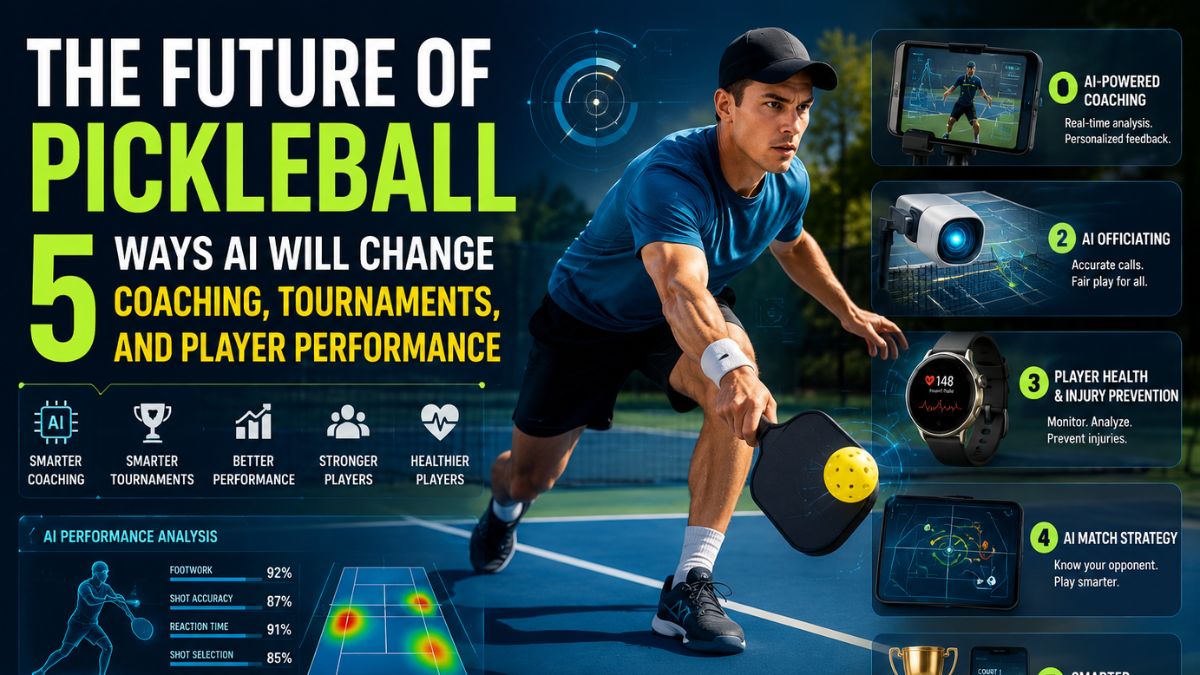
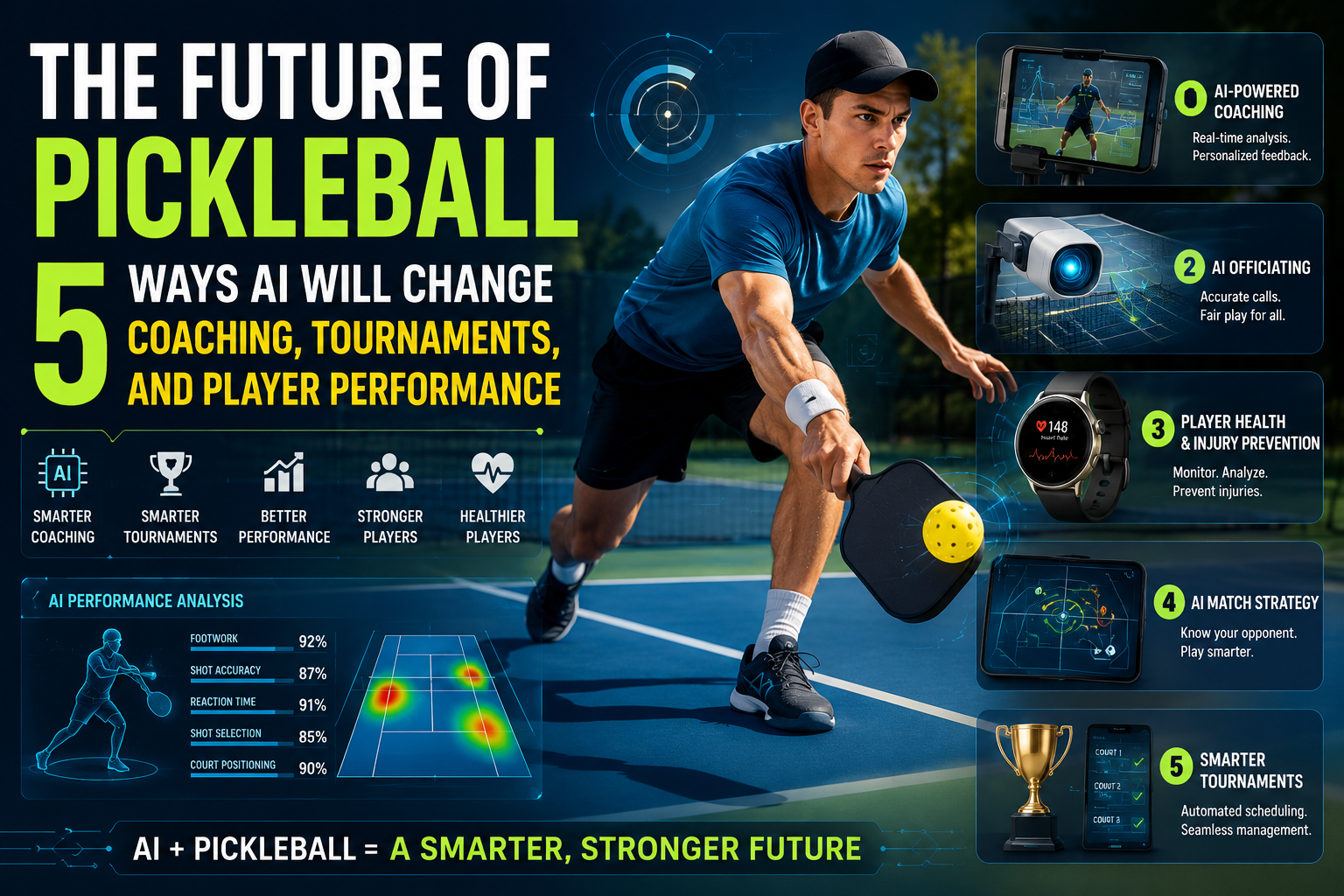
One of the most impactful applications of AI in pickleball is personalized coaching. Using a smartphone, tablet, or court-mounted camera, AI can analyze every aspect of a player’s game—from footwork and paddle angle to swing mechanics, shot placement, reaction time, and court positioning.
After each practice session or match, players can receive detailed performance reports highlighting their strengths, weaknesses, and areas for improvement. AI can even recommend personalized drills and training plans based on individual playing styles, allowing recreational players to benefit from insights that were once available only through elite coaches.
2. AI-Powered Officiating for Fair Play
Officiating remains one of the biggest challenges in fast-paced racket sports. AI-powered computer vision can significantly improve accuracy by automatically detecting line calls, kitchen violations, foot faults, illegal serves, and double bounces.
With multiple smart cameras analyzing every point in real time, controversial decisions can be minimized, ensuring greater consistency and fairness during tournaments. This technology can also reduce pressure on referees while increasing player confidence in officiating decisions.
Wearable AI for Injury Prevention and Player Health
Modern wearable devices integrated with AI can continuously monitor heart rate, hydration levels, fatigue, workload, movement patterns, and recovery status.
By analyzing this data over time, AI can detect early signs of overuse injuries affecting the shoulder, wrist, elbow, knees, or lower back. Instead of reacting after an injury occurs, players receive proactive recommendations regarding rest, recovery, nutrition, and training intensity, helping extend careers and improve long-term performance.
3. AI-Powered Match Strategy and Tactical Intelligence
Winning in pickleball is not just about skill—it’s also about strategy. AI can analyze opponents’ previous matches to identify playing tendencies, strengths, and weaknesses.
Before stepping onto the court, players could receive tactical recommendations such as:
Where to serve most effectively.
Which opponent to target during doubles.
When to attack or defend.
The best shot selection under different match situations.
Patterns to exploit during long rallies.
This level of tactical intelligence can help players make smarter decisions and elevate the competitive standard of the sport.
4. Smarter Broadcasts and Enhanced Fan Engagement
AI has the potential to completely transform how fans experience pickleball.
Broadcasts could feature real-time statistics, shot speeds, rally analysis, player movement heat maps, win probabilities, and automatically generated highlights within minutes of a match ending.
Fans could also enjoy personalized match summaries, multilingual commentary, AI-powered chatbots that answer live questions, fantasy pickleball integration, and customized content recommendations. These innovations would make pickleball broadcasts more interactive and appealing to audiences worldwide.
5. AI-Driven Tournament Management
Tournament organizers often face logistical challenges involving scheduling, court allocation, referee assignments, player check-ins, and live scoring.
AI can automate many of these processes by optimizing match schedules, reducing delays, predicting court availability, assigning officials efficiently, and managing player flow throughout the event.
This results in smoother tournament operations, shorter waiting times, and a better overall experience for players, officials, organizers, and spectators alike.
AI for Talent Identification and Grassroots Development
Perhaps one of AI’s greatest contributions lies in talent identification.
Young athletes from villages, towns, and cities could simply upload match videos to an AI-powered platform. The system could evaluate agility, reflexes, shot consistency, court awareness, decision-making, movement efficiency, and overall athletic potential.
This enables academies, coaches, and national federations to discover talented players regardless of their geographical location, creating a more inclusive pathway for future champions and accelerating the growth of pickleball worldwide.
AI-Powered Content Creation and Personalized Equipment Recommendations
In today’s digital-first world, AI can dramatically simplify sports content creation.
Within minutes of a match ending, AI can automatically generate highlight videos, social media reels, graphics, posters, captions, match reports, and player performance summaries. This helps tournaments, clubs, and athletes maintain a strong digital presence with minimal effort.
AI can also recommend the most suitable paddle, grip size, footwear, training routine, and recovery plan based on a player’s biomechanics, skill level, and playing style. Such personalization ensures that players make informed equipment choices that complement their performance.
The Future of Smart Pickleball
Pickleball is already one of the fastest-growing sports globally, but AI has the potential to take it to an entirely new level. By integrating intelligent coaching, automated officiating, injury prevention systems, tactical analysis, smarter tournament management, enhanced fan experiences, and data-driven talent identification, the sport can become faster, fairer, and more accessible than ever before.
The future of pickleball will not be defined solely by athletic ability—it will also be shaped by technology. As AI continues to evolve, it offers an unprecedented opportunity to transform pickleball into one of the world’s smartest sports, setting a benchmark for innovation that many traditional sports may eventually follow.
| AI Application | How It Works | Benefits for Pickleball |
|---|---|---|
| 1. AI Coaching & Performance Analysis | AI analyzes player movement, footwork, paddle angle, swing mechanics, shot selection, reaction time, and court positioning using smartphones or court-mounted cameras. | Provides personalized coaching, identifies strengths and weaknesses, recommends drills, improves technique, and accelerates player development. |
| 2. AI-Powered Officiating | Computer vision technology automatically detects line calls, kitchen violations, foot faults, illegal serves, and double bounces in real time. | Improves officiating accuracy, minimizes human error, ensures fair play, reduces controversies, and increases player confidence. |
| 3. Wearable AI for Injury Prevention | AI-enabled wearable devices monitor heart rate, fatigue, hydration, movement patterns, workload, and recovery. | Detects early signs of overuse injuries, offers personalized recovery plans, adjusts training loads, and helps players stay healthy throughout the season. |
| 4. AI-Powered Match Strategy | AI studies opponents’ previous matches and playing patterns to recommend tactical game plans before competition. | Suggests optimal serving locations, target opponents in doubles, attack and defense strategies, and smarter shot selection based on opponent weaknesses. |
| 5. AI-Enhanced Broadcasts & Fan Engagement | AI generates live statistics, shot speeds, rally analysis, win probabilities, automatic highlights, multilingual commentary, and AI chatbots. | Creates a richer viewing experience, boosts fan engagement, supports fantasy sports, and delivers personalized match summaries. |
| 6. AI-Based Tournament Management | AI automates scheduling, court allocation, referee assignments, player check-ins, live scoring, and tournament logistics. | Reduces delays, optimizes court utilization, improves operational efficiency, and enhances the overall tournament experience. |
| 7. AI for Talent Identification | Players upload match videos that AI evaluates for agility, reflexes, consistency, decision-making, court awareness, and athletic potential. | Helps academies and federations discover talented players from remote regions, making talent scouting more inclusive and data-driven. |
| 8. AI Content Creation & Equipment Recommendations | AI automatically creates match highlights, reels, posters, captions, graphics, and recommends paddles, grip sizes, shoes, and training plans based on player biomechanics. | Saves content creation time, strengthens digital marketing, and provides personalized equipment and training recommendations for improved performance. |
| Overall Impact | AI integrates coaching, officiating, health monitoring, strategy, tournament operations, talent scouting, broadcasting, and content creation into one intelligent ecosystem. | Makes pickleball smarter, fairer, more engaging, more accessible, and positions it as one of the world’s most technologically advanced sports. |
Frequently Asked Question (FAQ)
How can Artificial Intelligence (AI) transform pickleball into one of the world’s smartest sports?
Artificial Intelligence (AI) has the potential to revolutionize pickleball by enhancing every aspect of the game, from player development and officiating to fan engagement and tournament management. AI-powered coaching systems can analyze a player’s footwork, paddle angle, shot selection, and court positioning using smartphones or smart cameras, providing personalized feedback and training recommendations after every session. This allows players of all skill levels to improve faster with data-driven insights.
AI can also make officiating more accurate through computer vision technology that detects line calls, kitchen violations, foot faults, illegal serves, and double bounces in real time. This reduces human error and ensures fair play during competitive matches. Wearable devices equipped with AI can monitor heart rate, fatigue, hydration, workload, and movement patterns, helping players prevent injuries by identifying early signs of overuse and suggesting recovery strategies.
Beyond player performance, AI can analyze opponents’ playing styles to recommend match strategies, such as where to serve, which opponent to target in doubles, and when to attack or defend. For fans, AI enhances broadcasts by generating live statistics, rally analysis, win probabilities, automatic highlights, multilingual commentary, and interactive chatbots, creating a more engaging viewing experience.
Tournament organizers also benefit from AI by automating scheduling, court allocation, referee assignments, player check-ins, and live scoring, leading to smoother operations and reduced delays. Additionally, AI can identify emerging talent by evaluating uploaded match videos from young players across different regions, helping academies and federations discover future stars regardless of location. Combined with AI-powered content creation and personalized equipment recommendations, these innovations position pickleball as one of the world’s smartest, most accessible, and technologically advanced sports, paving the way for its continued global growth.