
How Sports Federations Work in India: Roles, Selection, Camps and National Teams
When an Indian sportsperson represents the country at an international competition, the process behind that selection is much bigger than just one trial or one tournament. Sports federations play an important role in running sports at the national level, organizing competitions, creating selection policies, conducting camps and preparing teams for international events.
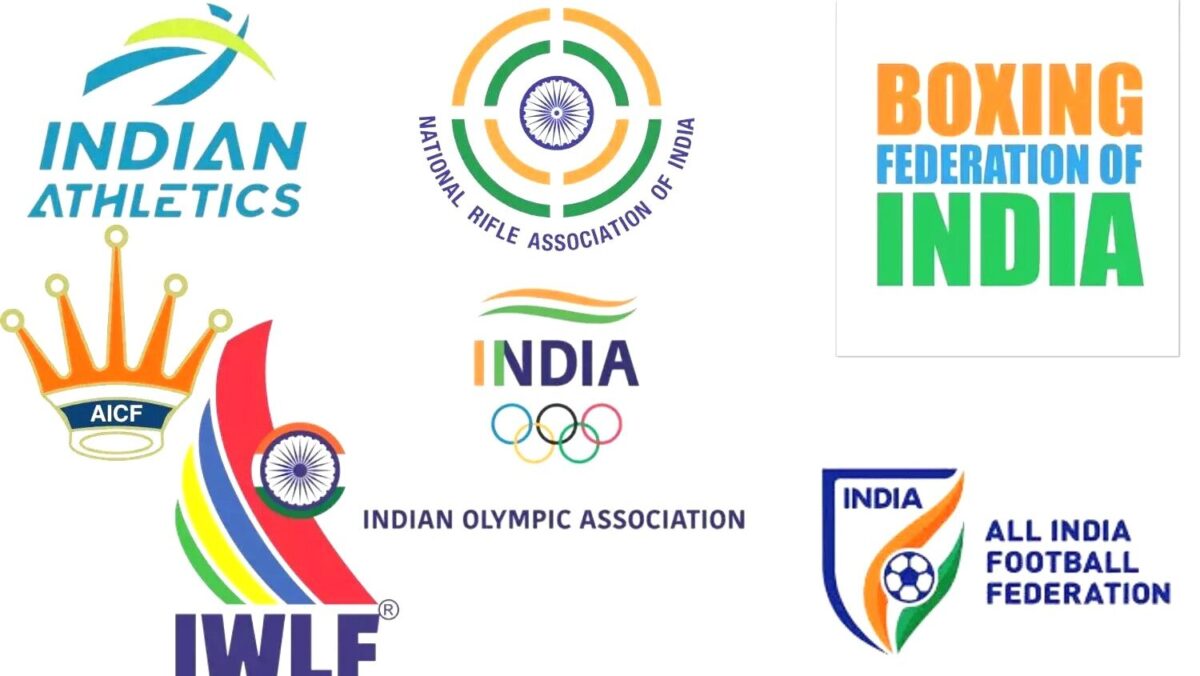
In India, each major sport generally has a National Sports Federation, commonly called an NSF. These organizations work with state-level bodies, coaches, players, the Sports Authority of India (SAI), the Ministry of Youth Affairs and Sports and, for multi-sport Games, the Indian Olympic Association (IOA). Their exact structure can differ from one sport to another, but the basic system follows a similar pattern.
The National Sports Development Code of India, 2011 created an important framework for the functioning and recognition of National Sports Federations. Since then, the system has also seen new rules and changes, including the National Sports Governance Act, 2025 and related rules notified in 2026.
What Is a Sports Federation in India?
A sports federation is an organization responsible for the development and management of a particular sport at the national level. For example, a federation can be responsible for athletics, boxing, wrestling, badminton, swimming or another sport. It works with bodies and clubs at different levels to organize competitions and create a path for players to reach the national team.
Most sports federations have a national office, office-bearers, committees, technical officials, coaches and affiliated state or other units. The structure can include a General Body and an Executive Committee that handle major decisions and day-to-day administration. The federation also works with the rules of the international federation that governs that sport worldwide.
The Indian Olympic Association has National Sports Federations among its members and works with them for India’s participation in Olympic, Asian Games, Commonwealth Games and other multi-sport competitions. The IOA’s own history notes that the individual sports federations are responsible for selecting and training competitors in their respective sports, while the IOA coordinates India’s participation in multi-sport events.
How the Sports Federation Structure Works in India
A simple way to understand the structure is to look at it from the grassroots level to the international level. A player may begin at a local club, school, academy or district competition. From there, the player can compete at state and national events, depending on the rules of the sport.
The state association or state unit usually handles competitions and player activities within the state. It can send players or teams to national competitions organized under the national federation. The national federation then manages the sport at the national level and handles national competitions, coaching programmes, rankings, selections and international participation.
However, this structure is not exactly the same in every sport. Some sports have strong district and state systems, while others may use academies, clubs, ranking events or other forms of qualification. Therefore, the route from a young player to the India team depends on the rules of that particular sport.
What Are the Main Roles of National Sports Federations?
One of the biggest jobs of an NSF is to organize and manage competitions in its sport. National championships, junior events, senior events, selection tournaments and other competitions give players opportunities to compete and give coaches a way to assess performance. Government guidelines have also provided assistance to recognized federations for activities such as National and Zonal Championships, international events in India, equipment and training.
Another major responsibility is preparing Indian teams for international competitions. This can include deciding competition calendars, identifying players, arranging coaching camps, appointing coaches and support staff and completing entries for international events. The federation also has to work within the rules of the sport’s international governing body.
Federations also maintain records and rankings where applicable. In some sports, rankings have a direct role in deciding entries or selections, while in other sports they may be one of several factors. Federations may also maintain player performance data from national and international competitions to help coaches and selectors evaluate athletes.
Who Selects the Indian National Team?
This is one of the most common questions about sports federations in India. The answer is that, for international events, the concerned National Sports Federation is responsible for selecting sportspersons according to its own selection policy and criteria.
The Ministry of Youth Affairs and Sports issued revised instructions in June 2025 stating that selection for participation in international events is the responsibility of the concerned NSF. The same instructions say that the Government and SAI will not have direct involvement in the selection process. They also require selection to be fair and transparent and based on criteria decided in advance.
This means SAI may support training, camps, facilities and other services, but it is not normally the body that directly picks the final India team for an international event. The federation’s selection committee and its approved selection policy play the central role.
For multi-sport competitions such as the Olympics and Asian Games, the selection of players in individual sports still comes through the concerned sports federation. The IOA then has a major role in coordinating India’s overall representation at the Games.
How Does Athlete Selection Take Place?
There is no single selection formula that is used for every sport in India. The method depends on the sport, the event, the competition format and the selection policy published by the concerned federation.
For example, a sport may use selection trials to choose players. Another sport may place greater importance on national rankings, international results or qualification standards. Team sports may consider several factors together because selectors need to build a complete squad with players for different positions and roles.
Common factors can include recent performance, national championship results, international results, rankings, qualification marks, performance in selection trials, fitness, injury status and technical requirements. However, these factors are not automatically the same for every federation, so athletes have to follow the selection policy issued by their own NSF.
The 2025 instructions specifically require federations to have a standard selection policy and to decide the criteria in advance. This is important because athletes should know the basic rules before they enter a selection process.
What Are Selection Trials?
Selection trials are competitions or tests organized to assess athletes before an international event or another major assignment. Depending on the sport, a trial may be a knockout competition, time or distance test, ranking competition, match-based assessment or another sport-specific evaluation.
In team sports, selection trials can involve match situations where coaches and selectors observe players over multiple games. They may look at individual performance as well as how a player fits into the team. In individual sports, the result can sometimes be directly linked to a measurable mark, ranking or qualification standard.
The timing and method of trials can also differ. Some federations may select players through a national championship, while others may organize a separate trial. The selection notice and policy are therefore important documents for players because they explain who can participate and how the selection will be decided.
What Is a National Coaching Camp?
A national coaching camp is a training programme where selected athletes, coaches and support staff come together to prepare for an upcoming competition. Such camps can be held at SAI centres, sports academies or other approved training locations.
A camp is more than regular practice. Training can include fitness sessions, technical work, tactical planning, match practice, recovery, injury management, video analysis and sports science support. The exact programme depends on the sport and the competition for which the camp is being held.
Government assistance for National Sports Federations can cover approved coaching camps and related expenses such as athlete travel, boarding and lodging, training kits, medical coverage and insurance under the relevant scheme and approved norms.
How Are Players Chosen for National Camps?
Being invited to a national camp does not always mean that a player has already been selected for the final international team. A camp can be used to create a group of possible players and then evaluate them further before the final team is announced.
Federations may identify a group of core players or probables for a major competition. These players can then train together for a period of time while coaches monitor their progress. Performance in camp can become part of the information considered by the selection committee, depending on the sport’s rules.
This is especially common before major tournaments because coaches need time to assess combinations and team balance. A final squad can be named after one or more camps, trials or competitions.
What Happens Inside a National Camp?
A national camp usually follows a planned daily schedule. Players may begin with fitness work, followed by technical and tactical sessions, and then finish with recovery or additional skill work. The schedule may change according to the stage of preparation and the competition calendar.
Sports science has become an important part of many national camps. SAI has provided services such as sports medicine doctors, sports scientists, physiotherapists and masseurs during national coaching camps. The Ministry’s annual report for 2023-24 recorded 72 National Coaching Camps under the assistance scheme for National Sports Federations.
Some camps also include video analysis, strength and conditioning, nutrition guidance, mental preparation and injury recovery. These services help coaches get a broader view of an athlete’s training and competition readiness.
What Role Does SAI Play?
The Sports Authority of India is a key part of India’s sports system, but its role should not be confused with that of a National Sports Federation. SAI is a government organization that supports athlete development, training infrastructure, coaching programmes, sports science and other services.
SAI operates training centres and supports national camps across different sports. It can also provide facilities, equipment, medical services and other support for athletes preparing for international competitions. Government schemes can provide financial assistance to recognized NSFs for training and participation in international events.
SAI also manages the Target Olympic Podium Scheme, commonly known as TOPS. The Ministry says TOPS identifies athletes with potential for major international competitions through research and consultation with National Sports Federations, national coaches and experts, and provides customized financial and training support.
What Is the Difference Between SAI and a National Sports Federation?
The easiest way to understand the difference is to look at their main responsibilities. The federation governs and manages the sport and is responsible for international-event selection under its selection policy. SAI mainly provides government-backed training and support systems, including camps, facilities, coaching support and sports science services.
For example, a federation may decide that a particular set of players should represent India at an international tournament. SAI may then provide a training venue, sports science support, accommodation or other approved assistance for the team’s preparation.
This separation is important because training support and team selection are not always the same job. The 2025 Ministry instructions clearly state that the concerned NSF handles selection for international events, while Government and SAI do not directly select the athletes.
What Role Does the Ministry of Youth Affairs and Sports Play?
The Ministry of Youth Affairs and Sports is responsible for national sports policy and government support for sports development. It recognizes National Sports Federations according to the applicable framework and provides financial and administrative support through various schemes.
The Ministry has also created rules and instructions covering governance, selection, coaching camps, financial support, age fraud, anti-doping and other areas. The National Sports Development Code of India, 2011 brought together many such instructions into one framework for sports bodies.
In 2025, the National Sports Governance Act was passed, and the government began bringing its provisions and supporting rules into force. The National Sports Governance (National Sports Bodies) Rules, 2026 provide a framework covering matters such as the General Body, Executive Committee, elections, sportsperson representation and related governance requirements.
What Role Does the Indian Olympic Association Play?
The Indian Olympic Association is the body associated with India’s Olympic Movement and represents Indian sport in major multi-sport competitions. It is recognized by the Ministry of Youth Affairs and Sports and is affiliated with international organizations connected with the Olympic, Asian and Commonwealth movements.
However, the IOA does not normally select every athlete in every sport on its own. The concerned sports federation selects athletes for its discipline, while the IOA coordinates India’s participation at multi-sport Games.
The history of the IOA shows how this role developed over time. From the late 1940s, individual National Sports Federations were responsible for selecting and training competitors for their sports, while the IOA handled the broader task of sending India’s teams to the Olympic Games.
How Does a Player Reach the India Team?
The route can be different in each sport, but a common pathway can be understood in stages. A player may start through school, college, a club, academy or local competition, and then enter district or state-level events. Strong performances can lead to national-level competitions.
At the national level, players can compete in championships, ranking events or selection competitions. Depending on the federation, these results may help a player enter a national camp or selection process.
From there, the federation may monitor the player’s performance through camps, trials and competitions. The final national team is then selected according to the federation’s published criteria and the requirements of the international event.
How Are Coaches and Support Staff Chosen?
Players are only one part of a national team setup. A national team can also include coaches, assistant coaches, team managers, physiotherapists, doctors, strength and conditioning staff, analysts and other support personnel.
The process for appointing coaches and support staff can depend on the sport and the applicable rules. Government assistance schemes have provided support for national and foreign coaches, while SAI has also worked with federations in national coaching programmes. The 2025 revised instructions specifically cover the selection of coaches and support staff along with athlete selection.
During national camps, support staff may work closely with athletes on fitness, recovery, medical care, equipment and other training needs. Their work can be especially important during long preparation periods and international tours.
Why Selection Policies Are Important
A selection policy explains how athletes can be considered for a particular event. It can include eligibility rules, qualification standards, trial procedures, rankings, performance requirements and other conditions.
The Government has previously directed major National Sports Federations to publish selection information in advance, including selection criteria, dates and venues of trials, details of core probables, coaching camp information and the basis on which athletes are selected.
The revised 2025 instructions continue to stress advance criteria and a fair and transparent selection system. This means athletes, coaches and other stakeholders can understand the process before selection decisions are made.
What Happens After the Final Team Is Selected?
Once the final team is selected, the federation and other concerned organizations begin completing the practical work required for the competition. This can include entries, passports and travel documents, accreditation, visas where required, equipment, uniforms, medical support, insurance and travel arrangements.
The team may also continue training before travelling to the event. In some sports, the final preparation can include another national camp, a foreign training trip or participation in a competition before the main event.
For government-supported programmes, financial assistance can cover approved areas such as participation in international events, coaching camps, equipment, foreign exposure and other preparation-related costs, depending on the relevant scheme and approvals.
What If an Athlete Is Not Selected?
Selection decisions can be questioned or challenged through the procedures available under the federation’s rules and the wider sports governance system. Athletes should first look at the published selection policy, the selection notice and the federation’s grievance or appeal process.
Earlier government guidelines required proper appeal mechanisms and called for selection records to explain the criteria, past performance and trial results. The newer sports governance framework has also introduced broader institutional mechanisms for handling sports-related disputes.
The National Sports Governance Act, 2025 provides for a National Sports Tribunal for sports-related disputes. The government invited applications for members of the Tribunal in June 2026 as part of implementing the new legal framework.
Sports Federations and Good Governance
A sports federation is not only about competitions and teams. It also has to manage its internal administration, elections, finances, member associations and athlete-related matters.
India’s sports governance system has been moving toward clearer rules on transparency, athlete representation and internal functioning. The National Sports Governance Rules, 2026 introduced provisions covering the composition of National Sports Bodies, elections and the inclusion of Sportspersons of Outstanding Merit, including requirements related to women sportsperson representation.
The Indian Olympic Association also reported in January 2026 that its work included governance reforms, athlete representation, athlete welfare, education and capacity-building for National Sports Federations and sports administrators.
Common Terms Used in Indian Sports Federations
Understanding a few common terms makes the federation system easier to follow.
NSF: National Sports Federation that manages a particular sport at the national level.
SAI: Sports Authority of India, the government organization that provides training and sports support.
IOA: Indian Olympic Association, which coordinates India’s participation in Olympic and other major multi-sport events.
National Camp: Organized training camp for selected athletes and support staff preparing for competitions.
Core Probables: A group of athletes being considered for a major competition and often involved in a longer preparation programme.
Selection Trials: An official competition or assessment used to evaluate athletes for selection.
Selection Committee: The body within the federation that takes selection decisions according to the applicable policy.
TOPS: Target Olympic Podium Scheme, which provides customized support to selected elite athletes for major international competitions.
A Simple Example of How the Process Can Work
Imagine a young wrestler who starts competing in local and state competitions. After strong results, the wrestler enters national-level competitions and starts appearing in the national ranking or selection system used by the federation.
Before a major international event, the federation may announce the selection criteria and conduct trials or use other approved performance measures. The wrestler could then be included in a national coaching camp where coaches assess technical skills, fitness, match performance and progress.
After the selection process is completed, the federation names the final India team according to its policy. SAI may provide approved training support, facilities and sports science services, while the federation handles the sport-specific team selection and international competition process.
Final Understanding: How Sports Federations Work in India
The Indian sports system works through several organizations with different responsibilities. The National Sports Federation manages the particular sport, organizes competitions and handles selection for international events according to its published criteria. State associations and affiliated units help connect the national structure with competitions and athletes at lower levels.
SAI provides important government-backed support through training centres, national camps, coaching and sports science programmes. The Ministry of Youth Affairs and Sports creates policy, recognition and support frameworks, while the Indian Olympic Association coordinates India’s participation in major multi-sport events such as the Olympics, Asian Games and Commonwealth Games.
For an athlete, the journey usually involves competitions, rankings or trials, national camps, selection committees and finally the national team process. Because rules can vary between sports, the federation’s official selection policy and competition rules remain the most important documents for understanding how a player can move from national competition to representing India.
As India’s sports governance system continues to operate under the National Sports Governance Act, 2025 and the rules introduced in 2026, federations now work within a framework that places greater focus on clear governance, athlete representation, fair selection, accountability and proper administration.
Frequently Asked Questions About Sports Federations in India
What is a National Sports Federation in India?
A National Sports Federation is the national-level organization responsible for managing a particular sport in India. It can organize national competitions, manage the sport’s technical structure, conduct selection processes and prepare teams for international competitions.
Who selects athletes for India’s national team?
For international events, the concerned National Sports Federation is responsible for selecting athletes according to its selection policy and criteria. The Government and SAI do not have direct involvement in the athlete selection process under the revised instructions issued in June 2025.
Does SAI select the India team?
Generally, no. SAI supports athlete training, camps, facilities, sports science and other programmes, while the concerned National Sports Federation handles selection for international events under its rules.
What is a national coaching camp?
A national coaching camp is a structured training programme for athletes and support staff preparing for a competition. It can include technical training, fitness, tactics, recovery, medical care and sports science support.
Does getting selected for a national camp guarantee an international spot?
No. A national camp can be part of the preparation and evaluation process. The final team is selected according to the applicable federation’s selection policy, which can include results from trials, competitions, rankings, qualification marks or other sport-specific criteria.
Who sends India teams to the Olympics and Asian Games?
The concerned National Sports Federation selects athletes in its sport, while the Indian Olympic Association coordinates India’s overall participation at major multi-sport competitions.
What is TOPS?
TOPS stands for Target Olympic Podium Scheme. It is a government programme that provides customized support to selected athletes preparing for major international competitions, with athletes identified using performance and other expert inputs.
What is the National Sports Governance Act, 2025?
It is a law that created a broader legal framework for sports governance in India, including areas such as governance, athlete welfare, ethics and sports dispute resolution. Supporting rules were notified in 2026.