
Careers in Indian Sports: Jobs in Coaching, Analytics, Journalism, Media, Management and More
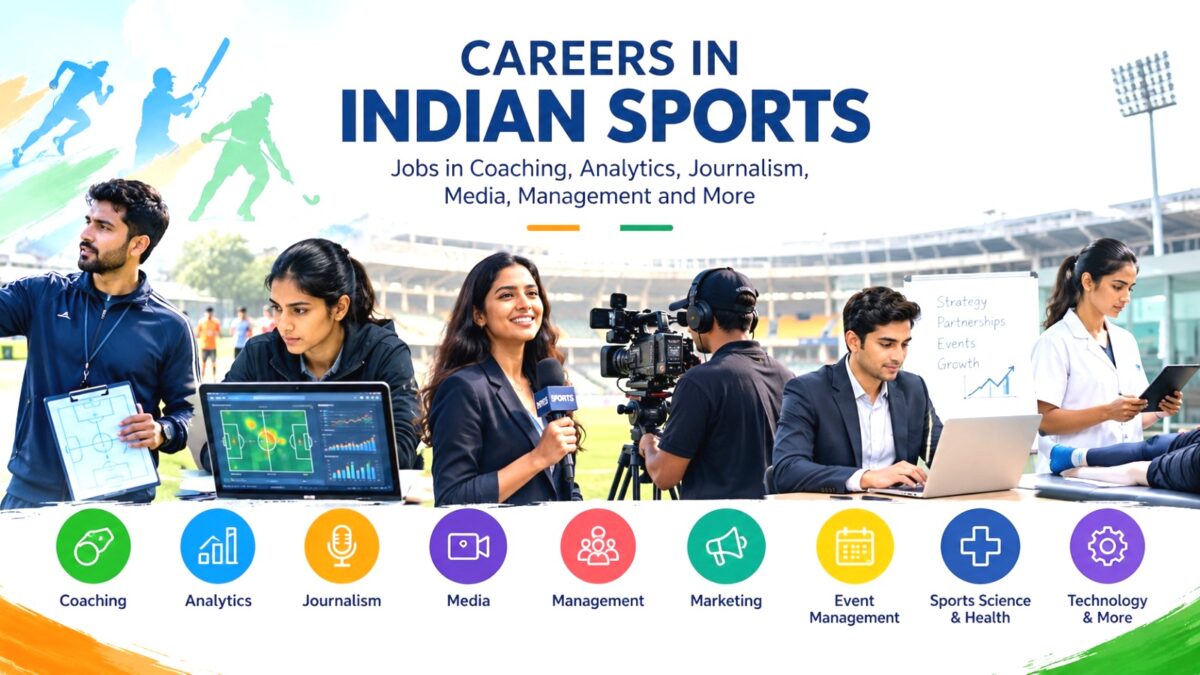
For a long time, many students in India believed that becoming an athlete was the only way to build a career in sports. However, the sports industry has changed a lot, and today there are many jobs that do not require a person to compete professionally. A person can work as a coach, analyst, journalist, content creator, event manager, physiotherapist, sports marketer, team manager, photographer, administrator or sports technology professional.
The growth of professional leagues, national competitions, sports academies and digital platforms has created more work across different parts of the sports industry. Cricket is still one of the biggest areas, but football, kabaddi, badminton, hockey, athletics, wrestling, basketball, table tennis and other sports also need trained professionals. The Khelo India programme itself includes areas such as talent development, coach and support staff development, sports technology, competitions and leagues, and training facilities.
This means students can enter the sports industry through different educational and professional routes. Some jobs need a specialised degree, while others value practical experience, communication skills, technical knowledge or a strong portfolio. Therefore, careers in Indian sports can be a good option for people who love sports but do not want to become professional players.
Why Are Sports Jobs Growing in India?
India’s sports sector now includes much more than matches and tournaments. There are professional teams, leagues, academies, broadcasters, digital media companies, sports technology companies, sponsorship agencies, fitness businesses, athlete management firms and sports event companies. A FICCI regulatory report published in 2025 noted that India’s sports industry had been growing and projected a 9.7% compound annual growth rate for the 2023–2026 period.
At the same time, government programmes have helped create a wider sports structure across different parts of the country. Khelo India works across grassroots participation, talent identification, competitions, training facilities, sports science and technology, while Sports Authority of India operates training centres and other high-performance programmes. This creates work not just for athletes, but also for coaches, analysts, administrators, support staff and other specialists.
The professional sports market has also changed the way sports are presented and consumed. A match now needs people for live production, video editing, social media, statistics, graphics, interviews, sponsorships, ticketing, venue operations and digital publishing. As a result, a person with the right skills can find a place in sports even without having played at a national or international level.
1. Career as a Sports Coach
Coaching is one of the most direct careers in Indian sports. A coach works with athletes and teams, plans training sessions, studies performance and helps players improve their game. Coaches can work with children at academies, school and college teams, state-level athletes, professional clubs or national-level programmes.
A person interested in coaching can start by developing strong knowledge of a particular sport. Formal coaching education and certifications can then help improve career opportunities. The Sports Authority of India has coaching roles across its centres, while Khelo India has also placed a strong focus on coach and support staff development.
Coaching is not limited to head coaches. There are also assistant coaches, development coaches, skill coaches and specialist coaches. A coach can also focus on areas such as strength and conditioning, goalkeeping, shooting, wrestling techniques, raid defence, batting, bowling or other sport-specific skills depending on the discipline.
Skills Needed for Coaching
A good coach needs sport knowledge, patience, communication skills and the ability to plan training. It is also useful to understand basic fitness, recovery, nutrition and injury prevention. Coaches also need to maintain records of athlete progress and communicate regularly with players, parents, team officials and other support staff.
2. Sports Analytics and Performance Analysis Jobs
Sports analytics has become an important career area for people who enjoy numbers, statistics and technology. A sports analyst studies match data, player statistics, video footage and performance information to help teams and athletes make better decisions. Depending on the sport, an analyst may study raids, tackles, shots, passes, possession, movement, fitness data or other performance indicators.
Performance analysts can work with professional teams, academies, federations and high-performance centres. For example, SAI’s recruitment information in 2026 included posts related to Performance Analysts, showing that this is now a recognised role within India’s sports system.
Sports analytics also connects sports with areas such as data science and artificial intelligence. Someone with knowledge of Excel, SQL, Python, statistics, data visualisation and video analysis can build a career in this field. However, technical skills alone are not enough because an analyst also needs to understand the sport and explain data in simple language to coaches and players.
What Does a Sports Analyst Do?
A sports analyst may prepare pre-match reports, opposition reports and post-match analysis. They can break down video clips, track player movements and identify patterns in a team’s performance. In professional sports, analysts may work closely with coaches to turn raw statistics into useful information for training and matches.
3. Career in Sports Journalism
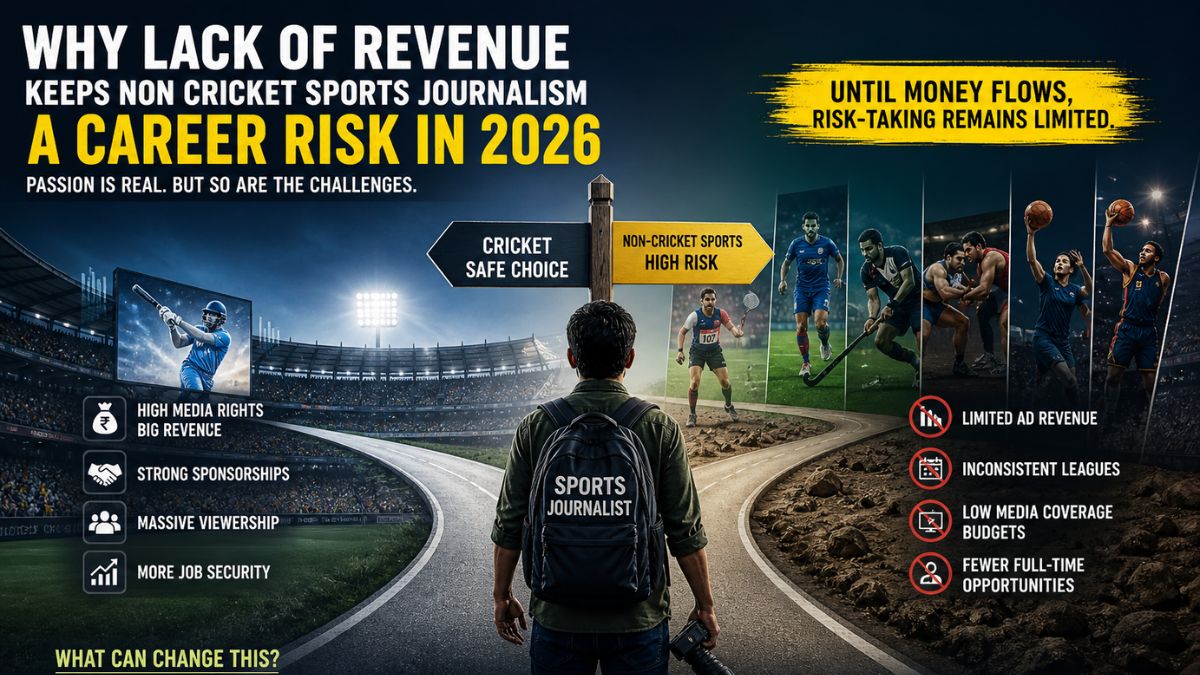
Sports journalism is a strong option for people who enjoy writing, reporting and following sports closely. Sports journalists work for newspapers, websites, magazines, television channels, radio stations and digital platforms. Their work can include match reports, interviews, features, player profiles, investigative stories, opinion pieces and tournament coverage.
The rise of digital sports media has also created new forms of sports journalism. A journalist may now write an article, conduct a video interview, create a short social media update and help prepare a web story on the same day. Therefore, journalists who can work across text, video and digital platforms can have an advantage.
A degree in journalism, mass communication or a related subject can provide a useful foundation, but practical experience is equally important. Students can start by covering school, college, university or local sports and build a portfolio of published work. Knowledge of SEO, social media, basic video editing and sports statistics can further improve their job options.
Skills Needed for Sports Journalism
Sports journalists need clear writing, research skills and strong knowledge of the sport they cover. They should know how to verify information, conduct interviews and meet deadlines. Good communication is also important because journalists often speak with athletes, coaches, officials and other professionals.
4. Sports Media and Broadcasting Careers
Sports media is much bigger than sports journalism. A television or digital sports production may require producers, directors, camera operators, commentators, video editors, graphic designers, researchers, social media managers and production assistants. Digital streaming has also created new opportunities for people working on live sports broadcasts.
People interested in this field can enter through journalism, mass communication, film and television production, graphic design, animation, digital marketing or other related courses. Practical knowledge of editing software, camera equipment, live production systems and social media can be useful depending on the job. Many companies also value candidates who understand how sports broadcasts work.
Commentary and presentation are other areas within sports media. Those interested in becoming sports anchors or commentators can build experience through local tournaments, college competitions and digital platforms. Speaking clearly, knowing the sport well and being able to prepare quickly are important skills for these roles.
5. Sports Management Jobs
Sports management is one of the broadest career options in the Indian sports industry. Sports managers may work with teams, leagues, academies, federations, athletes, events or sports businesses. Their work can involve planning, operations, marketing, finance, sponsorships, communication, logistics and administration.
Current sports management education programmes in India cover areas such as sports marketing, sponsorship, event operations, finance, sports law, analytics, organisation and administration, public relations, broadcasting and sports HR.
Sports management jobs can include team manager, event manager, operations manager, sports marketing executive, sponsorship executive, partnership manager, facility manager, athlete manager and sports administrator. The exact responsibilities depend on the organisation and the level of the role.
Who Can Work in Sports Management?
Students can enter sports management after studying sports management, business management, marketing, event management or related subjects. A general BBA or MBA can also be useful when combined with sports industry knowledge and practical experience. Internships at leagues, academies, teams, events and sports companies can help students understand how the industry works.
6. Sports Marketing and Sponsorship Careers
Every professional sports organisation needs marketing and sponsorship professionals. These employees help sports properties connect with brands, build campaigns and manage commercial partnerships. Their work can include sponsorship proposals, brand campaigns, social media promotions, events, advertising and client communication.
Sports marketing is suitable for people interested in both sports and business. A person with knowledge of digital marketing, social media, advertising, sales and communication can enter this field. Strong presentation and relationship-building skills are also useful because sponsorship work often involves regular communication with brands and partners.
Sponsorship professionals may work with leagues, teams, individual athletes, sports events or agencies. They can help prepare commercial proposals and find suitable brands for partnerships. On the agency side, they may also manage relationships between brands and sports properties.
7. Sports Event Management
India hosts a large number of sporting events, from school competitions and local tournaments to national championships and professional leagues. Every event needs people who can manage venues, schedules, transportation, equipment, registrations, accommodation, officials and other arrangements. This creates opportunities for sports event managers and operations professionals.
An event management professional may work before, during and after a tournament. Before the competition, the team may handle planning, venue preparation, vendors and logistics. During the event, operations staff coordinate different departments and solve practical issues, while after the event they may handle reports, payments and closing activities.
Courses in event management, sports management, hospitality or business administration can provide a starting point. However, practical event experience is especially valuable. Volunteering at college tournaments, marathons, local championships and sports events can help students understand the work.
8. Sports Physiotherapy and Sports Medicine
Athletes need medical and recovery support throughout their careers. This creates opportunities for physiotherapists, sports doctors, rehabilitation professionals and other medical specialists. Sports physiotherapists work on injury prevention, recovery, rehabilitation and physical movement.
This career usually requires professional education in physiotherapy or medicine followed by specialised training and experience in sports. SAI’s National Centres of Excellence include scientific staff working in areas such as physiotherapy, sports medicine, exercise physiology, biomechanics, sports psychology and strength and conditioning.
People entering this field should understand that sports medicine is a professional healthcare career and requires the appropriate qualifications. Working with athletes also requires careful documentation, communication and coordination with coaches and other medical professionals.
9. Strength and Conditioning Coach
Strength and conditioning is another growing area within sports science. These professionals work on an athlete’s strength, speed, mobility, fitness and physical preparation. Their programmes are usually designed according to the requirements of a particular sport and the individual athlete.
A career in this field can begin through degrees in sports science, exercise science, physical education or related subjects. Additional certifications and practical experience can help candidates work with academies, professional teams and high-performance athletes.
The role also involves tracking training loads and physical progress. Therefore, professionals in this field increasingly work with data and technology alongside traditional training methods.
10. Sports Psychology
Mental preparation is another important part of athlete support. Sports psychologists can work with athletes on areas such as focus, confidence, motivation, routine building, communication and mental preparation for competition.
A career in sports psychology normally requires a recognised educational background in psychology followed by suitable specialised training. Professionals may work with athletes individually or as part of a larger support team.
SAI’s recent recruitment archives have included sports psychologist positions alongside coaching and other support roles, showing the place of specialist support professionals within the organised sports system.
11. Sports Nutrition and Diet
Nutrition is another important career path for people interested in sports and science. Sports nutritionists help athletes plan food and hydration according to training, competition and recovery needs. They may work with individual athletes, teams, academies or high-performance centres.
Students interested in this career can study nutrition, dietetics or related subjects and then specialise in sports nutrition. Knowledge of training, recovery and different sport requirements can be useful when working with athletes.
Nutrition professionals also have to communicate clearly because food plans need to fit an athlete’s routine, training schedule and personal requirements. They may work closely with coaches, doctors, physiotherapists and strength and conditioning staff.
12. Sports Photography and Videography
The sports photography and videography can be an excellent career for people who enjoy cameras and visual storytelling. Sports photographers cover matches, training sessions, press conferences and events. Videographers may produce interviews, highlight videos, documentaries, social media clips and promotional content.
A formal degree is not always necessary to start in this area. A strong portfolio, knowledge of cameras and lenses, editing skills and experience covering live sports can be very valuable. Students can begin by photographing or filming local tournaments and building a professional portfolio.
Today, sports organisations also need short-form video content for websites and social media. Therefore, people who can shoot, edit and publish content quickly may find opportunities with teams, athletes, academies, media companies and sports brands.
13. Social Media and Digital Sports Content
Social media has created an entirely new group of sports jobs. Teams, athletes, leagues and sports brands need professionals to manage Instagram, YouTube, Facebook, X and other digital platforms. Jobs can include social media executive, content writer, video editor, creative designer, community manager and digital content producer.
A sports social media professional needs to understand both the sport and the platform. They may write captions, create reels, plan content calendars, cover live events and analyse social media performance. Knowledge of Canva, Photoshop, Premiere Pro, CapCut or similar tools can be useful depending on the position.
Content writing is another accessible entry point. Someone who understands sports and can write simple, accurate and engaging articles can work for sports websites, media companies, teams, agencies or brands. SEO knowledge can be especially useful for digital sports publishers.
14. Sports Technology Careers
Technology is becoming a bigger part of professional sports. Teams and organisations use software for scoring, performance tracking, athlete records, video analysis, tournament management, communication and data collection.
This creates career opportunities for software developers, product managers, UI/UX designers, data analysts, database specialists and technology support professionals. A person does not necessarily need a sports degree for these jobs, but understanding the sports use case can make their technical skills more useful.
The Khelo India scheme now lists sports technology as one of its strategic components, while SAI’s National Centres of Excellence also use specialised scientific equipment and performance assessment systems.
15. Sports Administration and Government Jobs
Government organisations, federations, universities and sports bodies also require administrative professionals. These roles can involve event planning, budgets, documentation, athlete services, infrastructure, procurement, communication and coordination.
Sports Authority of India continues to publish openings across different categories. Its 2026 job listings included positions such as Director, Assistant, High Performance Director, Section Officer, Assistant Director and Medical Officer, along with coaching and specialist roles.
The sports sector also has opportunities within universities and educational institutions. Sports departments need professionals to manage tournaments, sports calendars, facilities, scholarships, teams and relationships with sports federations. A 2025 Association of Indian Universities vacancy for Joint Secretary (Sports), for example, included responsibilities related to sports calendars, tournaments, federations, infrastructure, scholarships and sports administration.
16. Athlete Management and Sports Agents
Professional athletes often need help with contracts, sponsorships, schedules, media opportunities and commercial partnerships. Athlete managers and sports agents work on these areas and help athletes handle the business side of their careers.
This field requires strong communication and negotiation skills. Knowledge of marketing, contracts, sports law and sponsorship can be useful. A background in management, law, marketing or sports management can provide a suitable foundation.
An athlete manager may also coordinate with brands, media agencies, event organisers, teams and lawyers. As an athlete’s career grows, the manager may become responsible for more complex commercial and professional decisions.
17. Sports Law
Sports law is a specialised career for people interested in both law and sports. Lawyers working in sports may deal with contracts, sponsorship agreements, disciplinary matters, intellectual property, federation regulations, employment issues and disputes.
Students normally need to complete a law degree and can then build knowledge of the sports industry. Internships with law firms, sports organisations, federations or sports businesses can provide useful practical exposure.
Sports law is particularly relevant for professional athletes, leagues, teams and organisations that regularly deal with contracts and regulations. This makes legal knowledge an important part of the wider sports business ecosystem.
How to Start a Career in Indian Sports
The first step is to decide which side of sports interests you most. Someone who enjoys teaching may choose coaching, while a person who likes numbers can explore analytics. Similarly, people who enjoy writing can choose journalism or content, while those interested in business may prefer sports management, marketing or sponsorship.
Education can then be selected according to the chosen career. Journalism and mass communication can help with sports media, while sports management, BBA or MBA programmes can help with management roles. Data science and statistics can support analytics careers, while sports science, physiotherapy, psychology and nutrition require more specialised educational routes.
Practical experience should be treated as an important part of career building. Students can volunteer at tournaments, cover local games, manage college events, work on sports websites, create analysis reports or complete internships. A portfolio can often show an employer what a candidate can actually do.
Networking can also help, but it should be supported by real skills. Connecting with coaches, journalists, sports managers, analysts and event professionals can help a student understand different career paths. At the same time, continuously improving writing, communication, data, video, technology or management skills can make a candidate more prepared for job opportunities.
Careers in Indian Sports: Which Job Is Right for You?
| Career | Useful Educational Background | Important Skills |
| Sports Coach | Sports Coaching, Physical Education, Sport-specific certification | Sport knowledge, communication, planning |
| Performance Analyst | Data Science, Statistics, Sports Analytics | Data analysis, video analysis, Excel, Python |
| Sports Journalist | Journalism, Mass Communication | Writing, reporting, research |
| Sports Anchor | Journalism, Mass Communication, Media | Speaking, presentation, sports knowledge |
| Sports Producer | Media, Film, Broadcasting | Production, planning, coordination |
| Sports Manager | Sports Management, BBA, MBA | Management, communication, operations |
| Sports Marketing | Marketing, BBA, MBA | Digital marketing, sales, branding |
| Event Manager | Event Management, Sports Management | Planning, logistics, coordination |
| Sports Physiotherapist | Physiotherapy + sports specialisation | Rehabilitation, injury management |
| Sports Psychologist | Psychology + specialised training | Communication, counselling, mental skills |
| Sports Nutritionist | Nutrition, Dietetics | Nutrition planning, research |
| Sports Photographer | Photography, Visual Media | Camera skills, editing |
| Sports Content Creator | Journalism, Media, Digital Marketing | Writing, video, social media |
| Sports Technology Professional | Computer Science, IT, Data Science | Software, data, product skills |
| Sports Lawyer | Law | Contracts, regulations, legal research |
| Athlete Manager | Sports Management, Business, Marketing, Law | Negotiation, communication, networking |
Is a Sports Degree Necessary for a Career in Sports?
A sports degree can be helpful, but it is not required for every sports job. The requirement depends on the role. A physiotherapist, psychologist, nutritionist or lawyer needs a relevant professional qualification, while jobs in content, social media, photography and some management roles may place more value on skills and practical work.
For management careers, specialised sports management courses are available in India. Current programmes cover subjects such as sports marketing, sports finance, event management, analytics, sports law, public relations, broadcasting, HR and sports administration.
For coaching careers, formal certification and sport-specific knowledge are important. Khelo India’s current coaching development plan includes accreditation, continued learning and structured coaching education, while SAI operates coaching staff across its National Centres of Excellence.
How Students Can Build Experience Before Getting a Full-Time Job
Students do not have to wait until graduation to start building a sports career. They can begin by covering local sporting events, creating match reports, analysing games, assisting coaches, managing college competitions or producing social media content. Even small projects can become useful portfolio pieces when presented professionally.
For example, an aspiring sports analyst can create player performance reports using publicly available match data. A future sports journalist can publish interviews and match stories, while a future event manager can volunteer at tournaments and document the responsibilities handled during the event.
Internships are another practical route into the industry. Sports leagues, teams, media companies, academies, event agencies, federations and sports businesses regularly need temporary and junior support across different departments. Practical exposure can help a student understand which part of the sports industry suits their interests and skills.
Careers in Indian sports now cover a wide range of jobs beyond playing professionally. Coaching, performance analysis, journalism, broadcasting, sports management, marketing, event operations, sports science, physiotherapy, nutrition, psychology, photography, technology and athlete management are all part of the wider sports ecosystem.
The growth of professional leagues, digital sports media, academies, government programmes and sports technology has created different entry points for young professionals. Khelo India’s current programme includes areas such as competitions and leagues, talent development, training facilities, coach and support staff development and sports technology, while SAI continues to recruit professionals across coaching, administration, performance analysis and specialist support roles.
The best career choice depends on a person’s interests, education and skills. Someone who loves numbers may enjoy sports analytics, while someone who enjoys writing may choose journalism or digital content. At the same time, people interested in business, science, technology, health or event planning can also build careers in sports without becoming professional athletes.
Frequently Asked Questions About Careers in Indian Sports
What are the best careers in Indian sports?
There is no single best career for everyone. Popular options include sports management, coaching, sports analytics, journalism, broadcasting, marketing, event management, sports science, physiotherapy, sports psychology and digital content.
How can I get a sports job in India?
Start by choosing a specific career area and developing the required skills. Education, internships, volunteering, practical projects and a strong portfolio can all help when applying for sports jobs in India.
Can I work in sports without being an athlete?
Yes. Many sports jobs do not require professional playing experience. Sports organisations need professionals in management, analytics, media, journalism, marketing, technology, medicine, science, administration and event operations.
Is sports management a good career in India?
Sports management offers career options across teams, leagues, federations, academies, events, sponsorships, marketing, media and operations. Current sports management programmes in India cover many of these areas.
What qualifications are needed to become a sports analyst?
Qualifications vary by employer. Degrees or training in statistics, mathematics, data science, computer science or sports analytics can help, along with knowledge of the sport and tools such as Excel, SQL, Python and video analysis software.
Can journalism students work in sports media?
Yes. Journalism and mass communication are common starting points for careers in sports journalism, digital publishing, broadcasting, reporting, research and sports content.
Are there government jobs in sports?
Yes. Organisations such as the Sports Authority of India recruit for coaching, administrative, technical and specialist positions. SAI’s current job portal lists openings across several categories.
Which sports jobs have opportunities outside playing?
There are many options, including sports management, coaching, analytics, journalism, broadcasting, marketing, sponsorship, event management, physiotherapy, sports science, nutrition, psychology, technology, photography and administration.
Can a BBA or MBA graduate work in sports?
Yes. A BBA or MBA can be useful for sports management, marketing, sponsorship, business development, operations, HR and other business-side positions. Adding internships and knowledge of the sports industry can further improve career prospects.
Is sports management the only non-playing career in sports?
No. Sports management is only one part of the industry. Indian sports also needs coaches, analysts, journalists, broadcasters, medical professionals, sports scientists, nutritionists, psychologists, photographers, technology professionals and administrators.