
Top 5 Youngest Olympic Gold Medalists
Winning an Olympic gold medal is one of the biggest achievements in sport. Doing it as a teenager is even more unusual. Over the years, several young athletes have stood on the highest step of the Olympic podium, with some winning gold before they were even 14 years old.
The list of the youngest Olympic gold medalists includes athletes from diving, rowing, short-track speed skating and swimming. Some of them competed in individual events, while others won gold as members of relay or rowing teams.
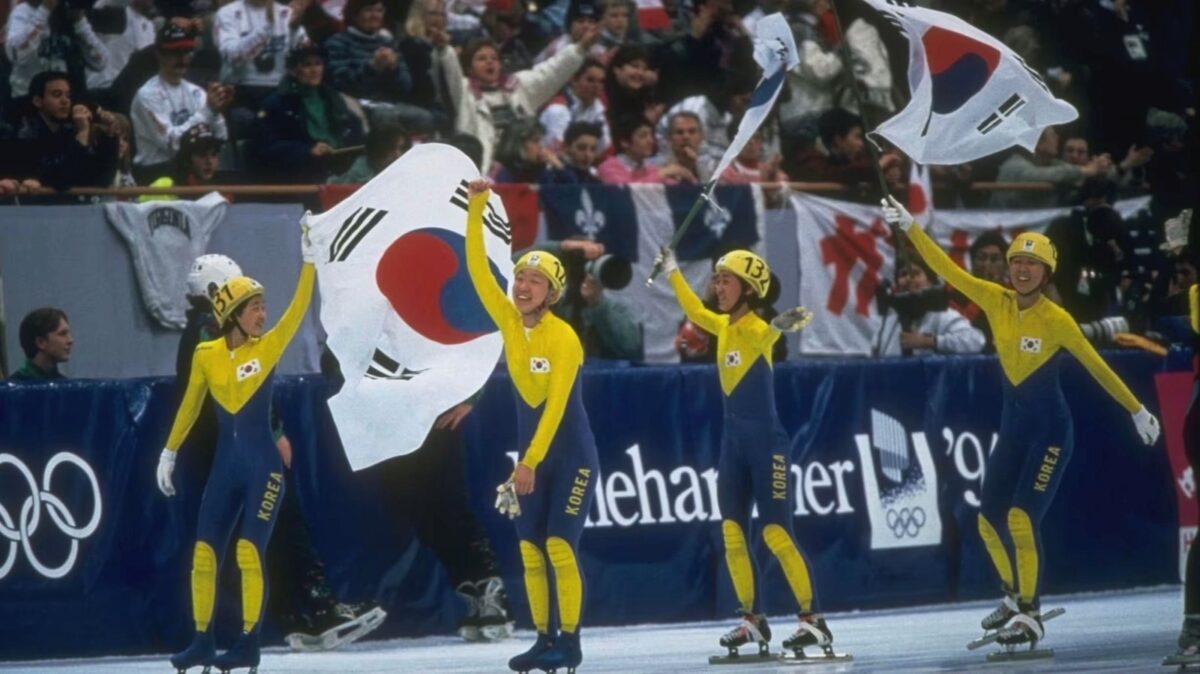
According to Olympic records, South Korean speed skater Kim Yun-Mi is the youngest Olympic gold medalist in the modern record list, winning gold at just 13 years and 85 days old at the 1994 Lillehammer Winter Olympics. American diver Marjorie Gestring, German rowing coxswain Klaus Zerta, Swiss rower Hans Bourquin and Chinese swimmer Nian Yun are also among the youngest athletes to win Olympic gold.
1. Kim Yun-Mi – 13 Years and 85 Days
South Korean short-track speed skater Kim Yun-Mi holds the record as the youngest Olympic gold medalist in widely cited Olympic records. She was only 13 years and 85 days old when she won gold at the 1994 Winter Olympics in Lillehammer, Norway.
Kim was born on December 1, 1980, in Seoul, South Korea. At Lillehammer, she was part of South Korea’s women’s 3,000m short-track relay team. The young skater helped her country win the event and, in doing so, became the youngest Olympic champion at the Winter Games.
Her age made the achievement even more unusual. Most Olympic athletes spend many years competing at senior level before they get the chance to fight for a medal. Kim, however, was still only 13 when she entered Olympic competition and left Lillehammer with a gold medal.
The 1994 victory was not the end of her Olympic story. Kim returned four years later for the 1998 Nagano Winter Olympics and helped South Korea win the women’s 3,000m relay gold once again. That made her a two-time Olympic gold medalist.
Her record has also become difficult to challenge because age rules in international short-track speed skating have changed over time. Guinness World Records lists Kim as the youngest ever female Olympic champion at 13 years and 85 days.
Kim’s story is a clear example of how young an Olympic champion can be. While she was part of a team rather than competing alone, her gold medal remains one of the youngest Olympic victories ever recorded.
2. Marjorie Gestring – 13 Years and 268 Days
Before Kim Yun-Mi took the overall youngest gold medal record, American diver Marjorie Gestring held it for many years.
Gestring won the women’s 3m springboard diving gold medal at the 1936 Berlin Olympics when she was only 13 years and 268 days old. The Olympic archives describe her as the youngest Olympic champion at those Games.
Born on November 18, 1922, Gestring was already making a name for herself in diving when she arrived at the Berlin Games. Her Olympic victory was remarkable because she was competing against much older athletes.
Her win also made her the youngest American to win an Olympic gold medal. She took the title in the 3m springboard event and finished ahead of more experienced divers.
Gestring’s Olympic career was unfortunately limited by circumstances outside sport. The 1940 Olympic Games were cancelled because of World War II, removing one of the major opportunities for her to compete again. She later tried to make the American team for the 1948 London Olympics but did not qualify.
Despite having only one Olympic appearance, Gestring’s name remained part of Olympic history for decades. She held the overall record for youngest Olympic gold medalist until Kim Yun-Mi won gold at Lillehammer in 1994.
Her achievement is also important in the history of women’s diving. At just 13, she became Olympic champion in one of the most technically demanding events of her time. The Olympic archives still list her 1936 gold as one of the most notable achievements by a young athlete.
3. Klaus Zerta – 13 Years and 283 Days
Klaus Zerta was only a few days older than Marjorie Gestring when he won Olympic gold, but his achievement came in a completely different sport.
Zerta was a German rowing coxswain who won gold in the men’s coxed pairs event at the 1960 Rome Olympics. He was 13 years and 283 days old at the time. Olympic record lists place him among the youngest male Olympic gold medalists, and several records identify him as the youngest confirmed male Olympic champion.
Unlike the rowers around him, Zerta’s role was not to pull an oar. The coxswain sits in the boat and helps guide the crew, calling out instructions and helping the rowers maintain their rhythm.
That meant Zerta was a key part of the Swiss-born? No — Zerta competed for the United Team of Germany in 1960, and his crew won the gold medal in the coxed pairs event.
Winning Olympic gold at 13 was an extraordinary achievement. Zerta was younger than almost every athlete around him and became a major part of Olympic record books because of his age.
His Olympic career, however, was very short. He did not compete at another Olympic Games after Rome. Later in life, he worked as a tennis coach and construction manager.
Zerta’s story is particularly interesting because rowing is often associated with physical strength and endurance. Yet the coxswain has a different role, based more on steering, timing and communication. At the 1960 Olympics, that role was filled by a 13-year-old who returned home with gold. His achievement has stood out in Olympic history for more than six decades.
4. Nian Yun – 13 Years and 287 Days
Nian Yun is one of the lesser-known names on the list, but her age at the 1996 Atlanta Olympics places her among the youngest Olympic gold medalists.
Born in China, Nian Yun competed in the women’s 4x100m freestyle relay at the 1996 Games in Atlanta. She was 13 years and 287 days old at the time. Olympic record lists place her among the youngest gold medalists in history.
Nian was also the youngest athlete to represent China at the Olympics for many years. China Daily reported that she competed in the relay at the age of 13 years and 287 days, a mark that stood as the country’s youngest Olympic participation record before it was later surpassed.
Swimming relays are different from individual races because the result depends on a whole team. Each swimmer completes one part of the race before handing over to the next member. Nian’s place in the Chinese relay team put her on the biggest stage in swimming while she was still a teenager.
The 1996 Atlanta Olympics were also a major Games for China’s swimming team. Nian’s participation meant that she was competing alongside athletes with far more experience, yet she still became part of a gold-medal-winning Olympic group.
Her age is what makes her stand out in Olympic history. At 13 years and 287 days, she was only a few weeks older than Klaus Zerta when he won his gold medal in 1960.
Nian Yun may not be as widely remembered as athletes such as Fu Mingxia or Momiji Nishiya, but her place on the list of youngest Olympic gold medalists shows that Olympic history includes many athletes whose achievements came at an extremely young age.
Her record also highlights the importance of relay events in Olympic history, where a young athlete can become an Olympic champion as part of a successful team.
5. Hans Bourquin – 13 Years and 299 Days
Hans Bourquin was another teenager who won Olympic gold in rowing. He represented Switzerland at the 1928 Amsterdam Olympics and won the men’s coxed pairs event.
Bourquin was only 13 years and 299 days old when he won the gold medal, according to Olympic record lists. Olympedia records that he was barely 14 at the time and served as the coxswain for Swiss rowers Karl and Hans Schöchlin.
His job was similar to the role played by Klaus Zerta more than three decades later. As the coxswain, Bourquin helped guide the boat while the rowers provided the main physical power.
The Swiss team had a close path to the final. In the opening round, Bourquin and his crew beat France by just two-tenths of a second. They then moved through the competition before facing France again in the final. Switzerland won the final, taking the gold medal.
Bourquin’s young age made the victory special in Olympic record books. He was not even 14 when he became an Olympic champion.
His story also shows why rowing appears several times in lists of the youngest Olympic gold medalists. Coxswains in rowing could be very young compared with the athletes rowing the boat. Their smaller size was useful because a lighter coxswain could help keep the boat’s total weight down.
Bourquin did not become one of the most famous Olympic athletes of his generation, but his name has remained in the record books because of his remarkable age when he won gold. His medal from Amsterdam is also a reminder that the Olympics have included very young competitors across different periods of history.
Youngest Olympic Gold Medalists
The five athletes above came from four different sports and represented four different countries. Kim Yun-Mi came from South Korea and won gold in short-track speed skating. Marjorie Gestring represented the United States in diving. Klaus Zerta competed in rowing for the United Team of Germany. Nian Yun represented China in swimming, while Hans Bourquin won rowing gold for Switzerland. Their ages were remarkably close.
| Rank | Athlete | Country | Age | Olympic Games | Sport/Event |
| 1 | Kim Yun-Mi | South Korea | 13 years, 85 days | Lillehammer 1994 | Short-track speed skating |
| 2 | Marjorie Gestring | USA | 13 years, 268 days | Berlin 1936 | 3m springboard diving |
| 3 | Klaus Zerta | United Team of Germany | 13 years, 283 days | Rome 1960 | Rowing, coxed pairs |
| 4 | Nian Yun | China | 13 years, 287 days | Atlanta 1996 | Swimming, 4x100m freestyle relay |
| 5 | Hans Bourquin | Switzerland | 13 years, 299 days | Amsterdam 1928 | Rowing, coxed pairs |
The ages above come from Olympic record lists and historical Olympic sources.
It is worth noting that Olympic records can vary depending on whether historians include team events, incomplete birth records and athletes from the earliest Olympic Games. Some early Olympic results involved very young competitors whose exact ages are uncertain. Because of that, different lists of the youngest Olympic champions can sometimes look different.
For example, Japanese diver Fu Mingxia won Olympic gold at 13 years and 345 days at the 1992 Barcelona Games. She is often included in popular lists of the youngest Olympic gold medalists because she was an individual champion and became one of the best divers in Olympic history.
Japanese skateboarder Momiji Nishiya is another famous name. She won the women’s street skateboarding gold at the Tokyo 2020 Olympics at 13 years and 330 days, making her one of the youngest individual Olympic champions and Japan’s youngest Olympic gold medalist.
However, when team events and detailed age records are included, athletes such as Nian Yun and Hans Bourquin appear ahead of Nishiya and Fu on some historical lists. That is why it is important to define what is being counted when ranking the youngest Olympic gold medalists.
Fu Mingxia and Momiji Nishiya: Two More Teen Olympic Champions
Although they fall outside the five names in the age-based list used above, Fu Mingxia and Momiji Nishiya deserve a mention because their Olympic gold medals came at an incredibly young age.
Fu Mingxia won the women’s 10m platform diving gold medal at the 1992 Barcelona Olympics when she was 13 years and 345 days old. She later won more Olympic gold medals and finished her career with four Olympic titles.
Her first Olympic gold made her one of the biggest young stars of the Barcelona Games. She went on to win two gold medals at the 1996 Atlanta Olympics and another gold at the 2000 Sydney Olympics.
More recently, Momiji Nishiya became one of the youngest individual Olympic champions when skateboarding made its Olympic debut at Tokyo 2020. She won the women’s street event at 13 years and 330 days. The Olympic research archive described her victory as one of the standout moments of the Tokyo Games, with Nishiya winning gold at 13.
Her victory was especially notable because it came in a new Olympic sport. Nishiya finished ahead of Brazilian skateboarder Rayssa Leal and fellow Japanese athlete Funa Nakayama in a teenage-heavy women’s street skateboarding podium.
A History of Teenagers Winning Olympic Gold
The stories of the youngest Olympic gold medalists show that teenagers have been part of the Games for a very long time.
Marjorie Gestring won her diving gold in 1936. Hans Bourquin had already become an Olympic champion in rowing eight years earlier, in 1928. Klaus Zerta followed in 1960, while Kim Yun-Mi made history at Lillehammer in 1994.
Then came a new group of young champions in the 1990s and 2000s, including Fu Mingxia and other teenage athletes. Decades later, Momiji Nishiya carried that tradition into skateboarding at Tokyo 2020.
One interesting point is that many of these athletes competed in sports where young athletes can reach a high level early. Diving and skating, for example, have produced several teenage Olympic champions. Rowing coxswains have also been much younger than the main rowers because of the different physical demands of the position.
The Olympic Games have changed greatly over the years, but the presence of young champions has remained a part of their history.
Related posts:
 Decision of Historic Safe Sports Policy implemented by IOA
 Boxers From Australia, Philippines To Train In India Before Olympic Qualifiers
 Paris Olympics 2024: Everything related to Indian Contingents Matches, Events, Live Streaming Information you want to know in Detail
 Paris Olympics 2024: Will India register victory against Australia in the Marquee event?