
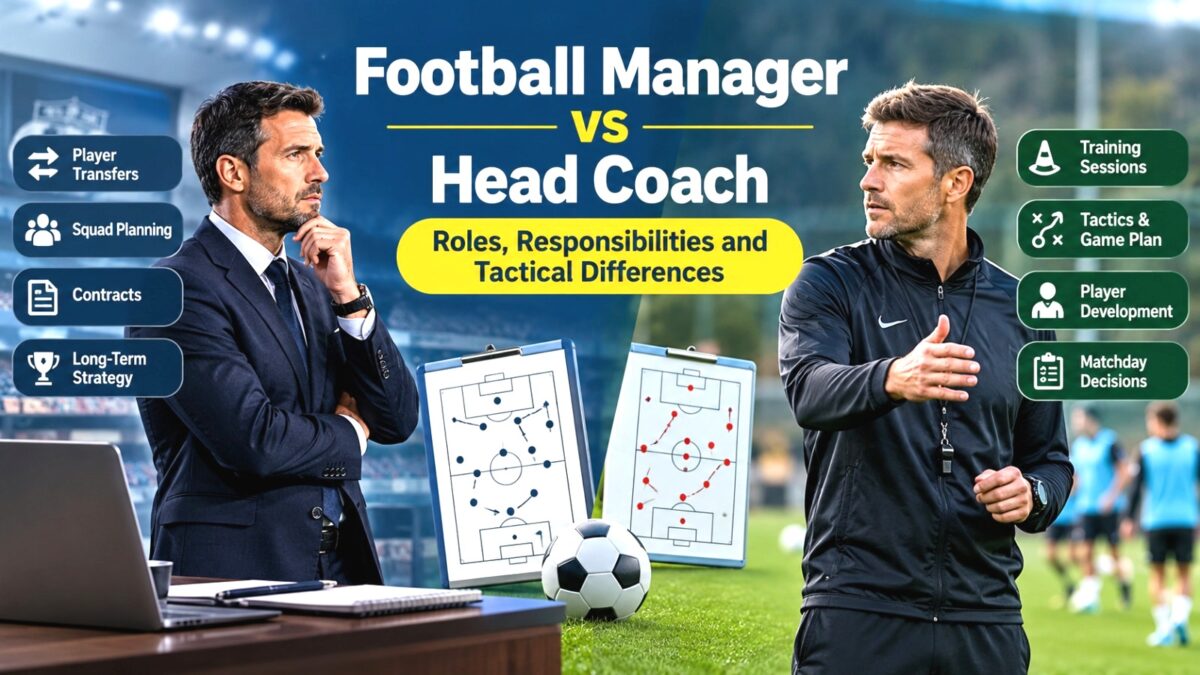
Football Manager vs Head Coach: Roles, Responsibilities and Tactical Differences
Football is a team sport, but the work behind a successful team goes far beyond the 90 minutes played on the pitch. Clubs need people who can select players, plan training sessions, build tactics, manage the dressing room and make important decisions throughout the season. Two titles that often come up in this discussion are football manager and head coach. Although people sometimes use these terms to describe the same person, their roles can be quite different depending on the club, country and competition.
In some football clubs, the manager controls almost every part of the first team, including player transfers, team selection, training and match tactics. In other clubs, the head coach mainly looks after the players and their performance on the pitch, while a sporting director or technical director handles transfers and other football-related decisions. Therefore, understanding the difference between a football manager and a head coach requires looking at their daily work, decision-making powers and approach to building a team.
The two roles also have many things in common. Both are responsible for preparing players for matches, choosing a suitable playing style and helping the team achieve its targets. However, the main difference often comes down to how much control they have over the club’s wider football operations. In this article, we explain the meaning of football manager and head coach, their roles and responsibilities, their tactical differences, and how clubs decide which structure works best.
What Is a Football Manager?
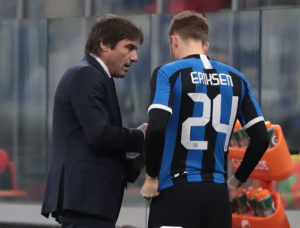
A football manager is usually responsible for leading the first team and making decisions about its overall football operations. The role often includes choosing the starting eleven, planning training, selecting tactics, managing players and working with the club’s leadership on transfers. In clubs where the manager has wide powers, they may also influence youth development, recruitment plans and the long-term direction of the team. The exact level of control depends on the club’s structure and the manager’s contract.
For example, a manager may identify a need for a new central defender because the team struggles to defend crosses or deal with fast attacks. They can discuss the problem with the recruitment department, suggest suitable players and help decide which signing fits the team’s style. At some clubs, the manager has the final say on the players they want to bring in. At others, the sporting director makes the final recruitment decision after consulting the manager.
In addition, a football manager has to balance immediate results with longer-term planning. They must prepare the team for the next match while also thinking about the squad’s age, fitness, contract situations and future needs. This makes the job wider than match preparation alone. A manager may spend a large part of the week in meetings with the coaching staff, analysts, medical team and club officials instead of working directly on the training pitch.
Main Responsibilities of a Football Manager
- Team selection and match preparation
The manager normally has an important role in selecting the starting eleven, substitutes and matchday squad. These decisions depend on player fitness, form, opponent strengths, injuries and the team’s tactical plan. A manager must also decide whether a player who performed well in the previous match should keep their place or whether a different option is better suited to the upcoming opponent.
- Tactical planning
A football manager decides how the team should approach matches and works with the coaching staff to prepare suitable plans. These plans may include the formation, pressing style, defensive line, attacking movements and set-piece routines. For example, a manager may choose a compact defensive shape against a strong attacking team but use a more aggressive pressing approach against an opponent that struggles to build attacks from the back.
- Player transfers and recruitment
At clubs where the manager has a wide role, they often help identify transfer targets and explain what the team needs. They may ask for a fast winger, a ball-playing defender or a midfielder who can control the pace of a match. However, recruitment decisions are not always made by the manager alone, as clubs may have a sporting director, recruitment team or board responsible for budgets and final approvals.
- Managing the dressing room
A manager needs to maintain good working relationships with players and staff. This includes setting standards, dealing with disagreements, giving players feedback and keeping the squad focused during difficult periods. Managing experienced players, young talents and substitutes requires different approaches because each player may have different needs, goals and expectations.
- Long-term squad planning
A manager may also help plan how the team should develop over several seasons. This can involve giving young players more first-team opportunities, deciding which positions need strengthening and considering the balance between experienced players and new signings. A good squad plan considers both the team’s present needs and the players who could contribute in the future.
What Is a Head Coach in Football?
A head coach is primarily responsible for improving players and preparing the first team to perform on the pitch. Their main work includes planning training sessions, developing tactics, selecting players for matches and helping the squad understand its playing style. The head coach works closely with assistant coaches, fitness coaches, goalkeeping coaches and analysts to prepare the team for different opponents.
Unlike a manager with broad powers, a head coach may have limited control over transfers, contracts and the club’s wider football strategy. A sporting director or technical director may be responsible for finding players, negotiating deals and deciding how the squad should be built. The head coach then works with the available players and helps them perform according to the team’s football plan.
For example, if a club signs a new striker, the head coach may work on how the player moves inside the penalty area, links up with midfielders and presses opposing defenders. However, the decision to sign that striker may have been made by the sporting director after discussions with the head coach and recruitment team. This division of responsibilities allows the coach to focus more closely on player development and match performance.
It is important to understand that the title alone does not reveal the full power of the role. Some head coaches have considerable influence over transfers and squad planning, while some football managers mainly focus on coaching and matches. Clubs use these titles differently, so their actual responsibilities must be understood from the club’s working structure rather than the job title alone.
Main Responsibilities of a Head Coach
- Planning training sessions
A head coach prepares training sessions based on the team’s needs and the upcoming opponent. These sessions may focus on passing, finishing, pressing, defensive positioning, movement and set pieces. The coach also works with fitness staff to make sure the workload suits the players and allows them to recover between matches.
- Developing players
Player development is one of the central parts of the head coach’s job. They help players improve their technical skills, decision-making, movement and understanding of tactics. A young midfielder, for example, may need to improve their awareness before receiving the ball, while a defender may need to learn when to step forward and when to hold their position.
- Creating a clear playing style
The head coach gives the team a clear idea of how it should play in different situations. This includes how to build attacks, win back possession, defend near the penalty area and move the ball into dangerous spaces. A consistent playing style helps players understand their roles and work together instead of making separate decisions without a common plan.
- Studying opponents
Before a match, the head coach and analysis team study the opposition’s strengths, weaknesses and usual patterns. They may look at how an opponent builds attacks, how its full-backs move forward and which players create chances. This information helps the coaching staff prepare a game plan that takes advantage of weaknesses while limiting the opponent’s strongest areas.
- Making matchday decisions
The head coach selects the starting team, gives instructions before the match and makes substitutions or tactical changes during the game. If the team is losing control of midfield, the coach may introduce another midfielder or change the team’s shape. These decisions require an understanding of the match, the players available and the amount of time remaining.
Football Manager vs Head Coach: Key Differences
Although football managers and head coaches share several responsibilities, their main areas of control can differ. A manager with broad powers often takes part in both team preparation and wider decisions about the squad. A head coach usually spends more time on training, tactics and player performance, while other senior staff handle recruitment and club planning.
The following table explains the most common differences between the two roles. These are general patterns rather than fixed rules, because each club can divide responsibilities in its own way.
| Area of responsibility | Football Manager | Head Coach |
| Team selection | Usually selects the starting team and substitutes | Usually selects the starting team and substitutes |
| Training sessions | Oversees or helps plan training | Often directly leads the training programme |
| Match tactics | Develops the game plan and tactical approach | Develops and teaches the game plan |
| Player transfers | May have major input or decision-making power | Often advises the recruitment team |
| Contract negotiations | May be involved in squad and contract planning | Usually has limited direct control |
| Youth development | May influence the club’s wider development plans | Often develops young players within the first team |
| Dressing-room management | Leads the squad and sets standards | Leads the squad and sets standards |
| Club-wide football planning | May have a wider role in football operations | Usually focuses more closely on team performance |
| Recruitment department | May work closely with or direct recruitment staff | Often works with a separate sporting director |
| Matchday changes | Makes substitutions and tactical adjustments | Makes substitutions and tactical adjustments |
The table shows that the clearest difference is often outside the match itself. Both roles generally involve choosing players, preparing tactics and managing the team during games. However, a manager may have a greater say in which players arrive at the club, while a head coach may receive a squad built by a separate recruitment department.
In practice, the distinction is not always clear. A club can appoint a head coach who influences every major transfer, or a manager who has little control over the club’s finances and recruitment. As a result, the club’s structure and the person’s actual authority are more useful indicators than the title alone.
Tactical Differences Between a Football Manager and a Head Coach
Tactics are a major part of both jobs, but there can be a difference in how they approach tactical planning. A football manager with wider responsibilities may need to consider whether the club’s squad, transfer plans and long-term playing style work together. A head coach may concentrate more directly on how the current group of players can carry out a specific game plan.
For example, a manager who wants to build a possession-based team may ask the recruitment department to find defenders who are comfortable passing the ball and midfielders who can receive it under pressure. This approach connects recruitment decisions with the playing style. A head coach operating within a separate sporting director’s structure may explain the same tactical needs but work with the players the club chooses to sign.
However, this does not mean managers are automatically better tacticians than head coaches. The title does not decide how good someone is at reading a game, coaching players or preparing a team. Tactical quality depends on the person’s knowledge, planning, communication and ability to adjust when the original plan is not working.
1. Choosing a Formation
A formation describes how players are arranged on the pitch, such as 4-3-3, 4-2-3-1 or 3-5-2. Both managers and head coaches choose formations based on their players, opponents and preferred style of football. They must also explain how players should move within that shape because the formation alone does not show how the team will attack or defend.
For example, a 4-3-3 formation can be used to press high, keep possession or defend in a compact shape. The coach may ask the wingers to stay wide and stretch the defence, or move inside to create space for overlapping full-backs. Similarly, a 3-5-2 system can help a team protect central areas while using wing-backs to provide width.
A manager with control over recruitment may also try to sign players who suit a preferred formation. However, both roles need to remain flexible because injuries, suspensions and changes in opponent tactics can make the original plan less suitable.
2. Attacking Tactics
Attacking tactics cover how a team moves the ball forward and creates chances to score. Teams may prefer short passes from the back, quick counter-attacks, long balls towards a striker or wide attacks using wingers and full-backs. The choice depends on the squad’s strengths, the available space and how the opposition defends.
A head coach might use training sessions to teach players how to make runs behind defenders, create passing triangles and move the ball quickly between different areas. The coach may also practise situations where a striker drops deeper to receive the ball while a winger runs into the space left behind. These repeated movements help players make better decisions during matches.
A manager with broader powers may support the same attacking plan by asking the recruitment department to find players who fit its needs. For instance, a team that relies on quick counter-attacks may need fast wide players and midfielders who can pass forward quickly. Nevertheless, the manager and head coach can be the same person, so these responsibilities may overlap.
3. Defensive Tactics
Defensive tactics focus on stopping opponents from creating chances. Teams can defend high up the pitch, press the player with the ball, protect the space in front of their penalty area or drop into a deep defensive shape. Both managers and head coaches decide how the team should defend, depending on the players available and the opponent’s style.
A head coach may use training exercises to teach the defensive line when to move forward and when to retreat. They may ask midfielders to block passing lanes, instruct full-backs to stop crosses and teach attackers how to press opposing defenders. Each player needs to understand when to challenge for the ball and when to protect space.
A manager who helps shape the squad may also consider defensive needs during recruitment. If the team regularly struggles against fast counter-attacks, they might look for a quicker centre-back or a midfielder who can protect the defence. Even then, the coach must work on team positioning because new signings alone cannot solve every defensive problem.
4. Pressing and Counter-Pressing
Pressing is the act of putting pressure on an opponent who has the ball to limit their time and passing options. A team may press high near the opponent’s penalty area or wait until the ball reaches a particular part of the pitch. Counter-pressing means trying to win the ball back quickly after losing possession, before the opposition has time to organise an attack.
The head coach normally works closely with players to develop pressing triggers and coordinated movements. For example, the team may press when an opponent receives the ball facing their own goal or takes a poor touch. If only one player presses while the others remain far away, the opposition can easily pass around the pressure.
A manager with a wider role may also consider whether the squad has enough energy, speed and depth to maintain an intense pressing style throughout a season. The tactical plan has to match the players’ physical condition and the number of matches they play. Otherwise, the team may struggle to maintain its level during a busy schedule.
5. Substitutions and In-Game Adjustments
Football tactics can change during a match, so the person leading the team must recognise when the original plan needs adjustment. If a team is struggling to keep possession, the coach may introduce a midfielder who is more comfortable on the ball. If the team needs a goal, they may bring on an additional attacker or move a winger closer to the striker.
Both football managers and head coaches normally make these matchday decisions. They must consider player fitness, available substitutes, the score, the time remaining and the opponent’s response. A change can involve replacing a player, changing a formation or giving the existing players new instructions.
The important point is that tactical changes should have a clear purpose. Adding another striker, for example, may increase the number of players near the goal, but it can also leave the midfield short of support. Coaches therefore need to understand what their team may gain and what it could lose with every change.
Football Manager vs Head Coach: Difference in Daily Work
The daily routine of a football manager can include a mix of team training, meetings, recruitment discussions and planning for upcoming matches. They may speak with the sporting director about possible signings, meet the medical team to review injuries and discuss the squad’s needs with assistant coaches. At larger clubs, they may also take part in discussions about youth development and the long-term direction of the first team.
A head coach’s day is often more focused on training and match preparation, although the exact routine varies from club to club. They may review match footage, prepare drills, discuss individual player performances and work with the analysis team to study the next opponent. After training, they may hold one-to-one meetings with players to review their progress and explain what they need to improve.
On a matchday, the two roles can look almost identical if both have control over the team. They prepare the starting line-up, explain the game plan, speak to players before kick-off and adjust tactics during the match. The difference is often more visible during the rest of the week, especially at clubs where recruitment and team coaching are handled by separate departments.
Football Manager vs Head Coach: Difference in Player Transfers
Transfers are one of the areas where the two roles can be most different. A football manager may identify which positions need strengthening, recommend specific players and take part in discussions about transfer targets. In clubs where managers have extensive authority, their approval can carry considerable weight when the club decides whom to sign.
However, many modern clubs operate with a separate sporting director or director of football. This person often leads the recruitment process, manages relationships with agents and helps ensure that transfer decisions match the club’s financial plans. The head coach explains the team’s playing needs and assesses whether a player fits the tactical system, while the recruitment department searches for suitable options.
This structure can make it easier for a club to follow a consistent plan when the head coach changes. Instead of rebuilding the entire squad after every appointment, the club can keep a wider football strategy and recruit players who fit that approach. Still, successful recruitment requires close communication because a player who looks good on paper may not fit the team’s actual needs.
Football Manager vs Head Coach: Difference in Player Development
Both managers and head coaches help players improve, but their involvement in development planning can vary. A head coach usually works directly with the first team and focuses on technical skills, fitness, tactical knowledge and decision-making. They may also provide young players with training opportunities and gradually introduce them into competitive matches.
A manager with wider responsibilities may also influence how the club develops players across different age groups. They can discuss promotion plans with academy coaches, decide which young players should train with the first team and consider whether a loan move would provide useful playing time. This requires cooperation between the first-team staff, youth coaches and recruitment department.
For example, a young defender may train with the senior team but receive limited minutes in matches. The head coach can work on the player’s positioning and decision-making, while the wider football department can decide whether a loan move would give them more regular game time. When these decisions are handled together, the player’s development can be planned more clearly.
Examples of Different Club Structures
Football clubs around the world use different leadership structures, and the titles attached to their senior staff do not always have the same meaning. Some clubs give the first-team manager broad authority over transfers and team decisions. Others divide these duties among a head coach, sporting director, technical director and recruitment department.
In a club with a traditional manager-led structure, the manager may help identify transfer targets, influence contract decisions and oversee the first team’s playing style. The manager still relies on specialists for medical care, fitness and scouting, but has a central role in bringing their work together. This structure gives the manager significant influence over how the squad is built and used.
In a club with a head coach-led structure, the sporting director may oversee squad planning and recruitment. The head coach then focuses on training, team selection, tactics and match performance, while regularly sharing feedback about the squad’s needs. This division can support continuity, although it depends on clear communication and agreement between the different departments.
Neither system is automatically better in every situation. A club may benefit from a manager with wide powers if the person has strong leadership and a clear plan. Another club may prefer a separate head coach and sporting director so that recruitment and squad planning remain consistent over time.
Manager vs Head Coach vs Sporting Director
The term sporting director is often used alongside football manager and head coach, but the role usually focuses on the club’s wider football plans. The sporting director may oversee recruitment, contracts, squad budgets and the connection between the first team and the academy. They often work with the head coach to understand tactical requirements and with club executives to ensure that recruitment decisions fit the available budget.
A football manager with broad powers may carry out some of the work normally done by a sporting director. However, the two roles are not automatically the same. In many clubs, the sporting director sets the wider recruitment plan, while the manager or head coach focuses on preparing and leading the first team.
The following table offers a simple guide to these three roles.
| Role | Main area of responsibility | Typical decisions |
| Football Manager | First-team leadership and, in some clubs, wider football operations | Team selection, tactics, transfers and squad planning |
| Head Coach | Training, player improvement and match performance | Training plans, formations, team selection and substitutions |
| Sporting Director | Wider football planning and squad building | Recruitment structure, transfer strategy and long-term squad planning |
These roles work best when their responsibilities are clearly defined. The head coach needs to communicate what the team requires, the sporting director needs to find suitable players within the club’s plan, and the club’s leadership needs to provide clear direction. When responsibilities overlap without clear agreement, disagreements can arise over transfers, team selection and the club’s playing style.
Skills Required to Become a Football Manager or Head Coach
Football managers and head coaches need a strong understanding of the game, but they also need communication and leadership skills. They must explain ideas clearly, build good working relationships and help players understand what is expected of them. They also need to remain organised because training, travel, match preparation and player recovery must fit into a busy schedule.
Tactical knowledge is another important skill. Coaches need to understand formations, attacking movements, defensive positioning, pressing systems and set pieces. They must also study match footage and use performance data where useful. Most importantly, they need to turn their ideas into clear instructions that players can follow on the pitch.
Decision-making is equally important because football rarely goes exactly according to plan. A manager or head coach may need to change a formation, adjust a training session or leave an important player out of the starting team. They must consider the available information, explain decisions when needed and take responsibility for how the team is prepared.
For managers who have wider responsibilities, knowledge of recruitment, squad budgets and long-term planning can also be useful. They need to understand how new signings fit into the team and how to balance immediate needs with future development. A head coach may place greater emphasis on training methods and player improvement, but an understanding of recruitment can still help them communicate their needs to the sporting director.
How Do Football Managers and Head Coaches Work With Assistant Coaches?
Neither role works alone. Assistant coaches support the main coach by planning training sessions, studying opponents and giving feedback to players. Depending on the club, an assistant may take charge of parts of training, work on defensive organisation or help prepare the team for a particular opponent.
Fitness coaches and medical staff also play an important role. They help manage physical workloads, support injury recovery and prepare players for the demands of the season. A goalkeeper coach focuses on the specialist needs of goalkeepers, while performance analysts study match footage and data to identify useful patterns. The manager or head coach brings this information together when preparing the team.
Clear communication within the coaching staff helps ensure that players receive consistent instructions. For example, the head coach may want the team to press high, while the fitness staff need to manage workloads across a series of matches. The staff must work together so the tactical plan fits the players’ physical condition and the demands of the schedule.
How to Become a Football Manager or Head Coach
The path into football management or coaching often begins with playing experience, coaching courses or work at youth and grassroots level. Playing professionally can provide a useful understanding of the game, but it is not the only route into coaching. People who study tactics, develop communication skills and gain practical experience can also work towards coaching positions.
Coaching qualifications are important for people who want to work in organised football. In India, aspiring coaches can explore the coaching education pathway offered by the All India Football Federation (AIFF). Those who want to coach in other countries must check the relevant national association’s rules and qualification requirements, because the licences needed for different levels of football can vary.
Practical experience is just as valuable as classroom learning. An aspiring coach can begin by helping at a local academy, working with school teams or assisting an experienced coach. These opportunities help build skills in session planning, player communication and match analysis. Over time, coaches may progress to more senior roles as they gain experience, complete relevant qualifications and show that they can help players improve.
Becoming a manager with wider authority can require additional experience in team leadership, recruitment and squad planning. Such roles may involve working with club executives, understanding transfer budgets and making decisions about the long-term direction of the first team. However, the exact path depends on the club, the competition and the opportunities available to the individual.
The main difference between a football manager and a head coach is usually the range of responsibilities attached to the role. A manager may oversee the first team while also playing a major part in recruitment, squad planning and wider football decisions. A head coach generally concentrates on training, player development, tactics and match performance, often working alongside a sporting director who leads recruitment and long-term squad planning.
However, these differences are not fixed across every football club. Some head coaches have considerable influence over transfers, while some managers have limited control over recruitment and budgets. Both roles normally involve preparing the team for matches, selecting players, making tactical decisions and managing the dressing room.
Ultimately, the title is only one part of the picture. To understand who makes the important decisions at a football club, it is necessary to look at the club’s leadership structure, the responsibilities given to each person and how the coaching staff work with the recruitment department. When these roles are clearly organised, the club can build a squad that suits its playing style and give its players a clear plan to follow throughout the season.
Frequently Asked Questions (FAQs)
1. What is the main difference between a football manager and a head coach?
A football manager may have wider responsibility for the first team, player transfers and squad planning. A head coach usually focuses on training, tactics, player development and match performance. However, the division of responsibilities varies from club to club.
2. Does a football manager have more power than a head coach?
Not always. A manager may have authority over transfers and wider football decisions, while a head coach may mainly handle the first team. Some head coaches have significant influence over recruitment, so their actual authority depends on the club’s structure.
3. Who decides which players a football club signs?
The decision may involve the manager or head coach, sporting director, recruitment department and club executives. At some clubs, the manager has a leading role in choosing transfer targets. At others, the sporting director manages recruitment and consults the head coach about the team’s needs.
4. Who is responsible for football tactics?
Both football managers and head coaches are usually responsible for tactical planning. They decide formations, attacking patterns, defensive systems and matchday adjustments. Assistant coaches and analysts often help prepare these plans and explain them to players.
5. Can a head coach become a football manager?
Yes. A head coach may take on a broader management role after gaining experience and being given more responsibility by a club. This can include involvement in recruitment, squad planning and other football operations, depending on the club’s needs.
6. What is the difference between a head coach and a sporting director?
A head coach usually leads training and prepares the team for matches. A sporting director normally oversees wider football planning, recruitment and squad-building decisions. The two roles work together to make sure the squad suits the club’s football plan.
7. Is a football manager the same as a coach?
Not necessarily. A coach mainly works on player preparation, tactics and performance, while a manager may have additional duties relating to recruitment and squad planning. However, many clubs use the terms differently, and one person can carry out both sets of responsibilities.