

Indian Football Crisis: 5 Major Reasons Behind the Decline of Indian Football
Indian Football is on Ventilator and there are several supporting statements to reach towards this conclusion.
Here we will talk about all those 5 Factors in detail which are hugely responsible towards Indian Football Crisis Scenario.
1. Lack of Competent Leaders in Federation:
What is needed to run any sports organization, you need some of the smartest and brilliant people who played the sport or have better understanding to run federations where they are clearly aware about problems Indian Football Ecosystem is facing and what can be done to eradicate that problem.
If you closely look at the Federation leadership from the Top you would realize the leadership totally incompetent and that possibility can be figured out based on the kind of decision they have taken in the past.
Indian football Federation Elections are not held on time and what we have seen in last few years that intention is not about building system rather than safeguarding their personal Interest.
2. Lack of System:
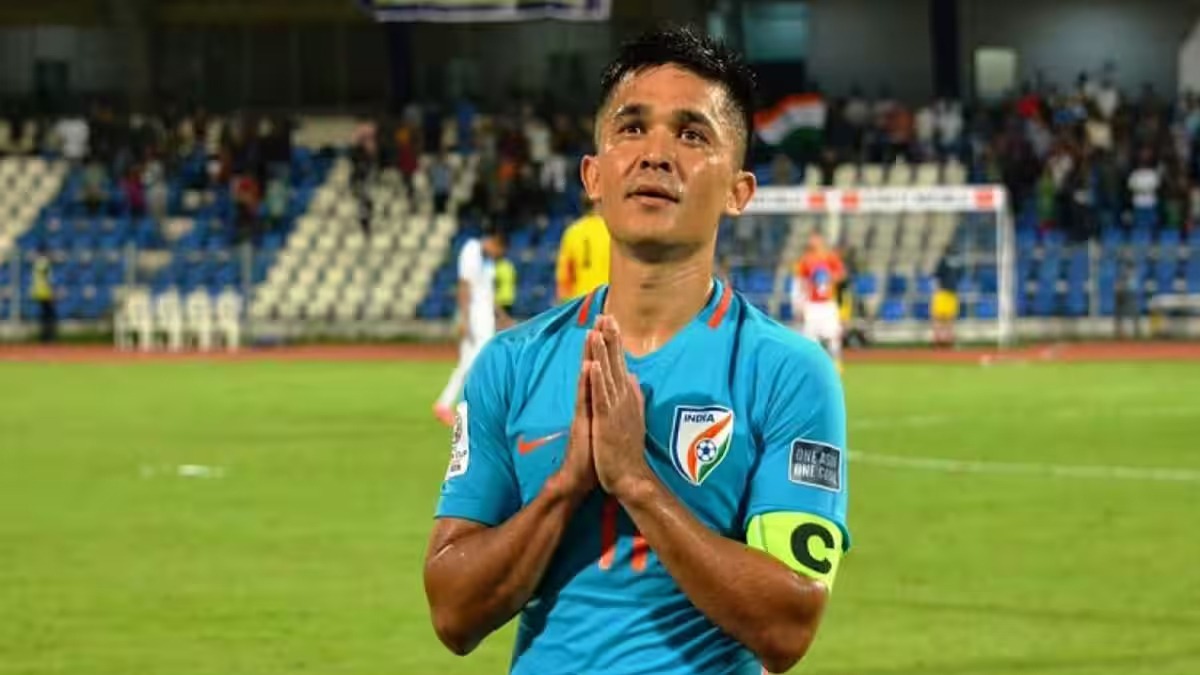
The Biggest responsibility which lies with any federation should be building systems in place.
Forget about building system they are not even bothered about if we will not build an ecosystem in future no Indian talent would be produced in wings to replace current one.
Instead they are focusing on bringing Overseas Indian players and Person of Indian Origin to play for National team.
This speaks a lot about thought process on how they are planning to build Indian Football.
3. Priorities and Scheduling:
In order to understand, AIFF Priorities are completely headed in wrong directions it can be explained by latest example- India said no to playing in FIFA Aseans Cup tournament where they can stampede authority and make name as Asian Football list at the same time they schedule match against Brazil for a friendly game.
Another important thing Under 15 Boys team preparation have just started instead of most teams who prepare for this event from last 1 year.
Overall all these incidents clearly indicate what’s wrong in Indian Football.
4. Indian Football and Budget Issue:
There was report which was published 1-2 years back where Ministry of Sports wasn’t happy with how funds they are allocating are poorly utilized by All India Football Federation.
Based on reports, states that Indian football Federation haven’t utilized full amount which was sanctioned to them.
Many believe that it was biggest turn off for Sports Ministry as federation is poorly managing financial expenses which is the need of an hour.
5. Focusing too much on ISL:
Indian Football biggest product “ISL (Indian Super League)” was created to promote local talent but the way things moved in coming years, where the league was constantly running on loss, franchise were paying huge money and most importantly major revenue source came from clubs but most profits were heading back to federation.
ISL over the years haven’t been able to help Indian Football at all, and stakeholders behind the scenes need to take some strict policy otherwise Future of Indian football looks dark for sure.
| # | Factor | Key Issue | How It Contributes to the Indian Football Crisis |
|---|---|---|---|
| 1 | Lack of Competent Leadership in the Federation | Leadership and governance concerns within the AIFF | A sports federation requires knowledgeable and capable administrators who understand the sport and its ecosystem. Delays in federation elections, governance concerns and decisions perceived as serving personal interests rather than long-term development indicate a lack of strategic leadership. |
| 2 | Lack of a Strong Football System | Absence of a sustainable grassroots-to-elite pathway | The federation’s biggest responsibility should be building a system that consistently produces future talent. Instead, greater reliance on Overseas Citizens of India (OCI), overseas-based Indian-origin players and other external options can raise questions about the development of India’s domestic talent pipeline. |
| 3 | Wrong Priorities & Scheduling | Strategic decisions and inadequate preparation | India’s football priorities have often come under scrutiny. Choosing certain friendlies over competitive opportunities and beginning preparation for age-group tournaments too late can hurt long-term development. The U-15 pathway particularly requires sustained preparation, scouting and exposure rather than short-term camps. |
| 4 | Budget & Financial Utilisation Issues | Concerns over utilisation of allocated funds | Reports of concerns over the utilisation of government-allocated funds raise questions about financial planning and execution. When resources are available but are not fully or effectively utilised, grassroots development, coaching, infrastructure and youth programmes can suffer. |
| 5 | Overdependence on the ISL | Excessive focus on India’s premier football league | The ISL was envisioned as a major platform to develop Indian football and promote domestic talent. However, the league alone cannot solve India’s structural problems. Without stronger grassroots development, youth systems, coaching and competitive pathways, the success of the league may not translate into a stronger national team or football ecosystem. |
| Question | Answer |
|---|---|
| 1. Why is Indian football facing a crisis? | Indian football’s problems are not linked to one isolated issue. The crisis is the result of several structural challenges, including governance concerns, weak grassroots development, inconsistent youth preparation, financial-utilisation questions, and an excessive dependence on the Indian Super League. India has passionate football fans and a large potential player base, but that potential needs to be converted into a sustainable development system. |
| 2. Is the All India Football Federation responsible for India’s football problems? | The AIFF has a central role because it is responsible for administering and developing football across the country. However, India’s football ecosystem involves state associations, clubs, academies, leagues, schools, coaches, players, sponsors and government institutions. Therefore, the responsibility cannot be placed entirely on one organisation. What is important is whether the overall system has clear accountability, measurable objectives and a long-term development strategy. |
| 3. Does Indian football need better leadership? | Yes. Modern football administration requires more than political or administrative experience. Leaders need to understand player development, commercialisation, grassroots football, coaching, sports science, infrastructure and international football. A strong federation should have professionals who can create long-term policies rather than repeatedly responding to short-term problems. |
| 4. Why is grassroots football important for India? | Grassroots football is the foundation of the national team. If children do not receive access to quality coaching, competitions and proper playing facilities at an early age, the country will struggle to produce elite players later. India needs a pathway where talented youngsters can progress from schools and local academies to youth teams, professional clubs and eventually the senior national team. |
| 5. Can overseas Indian-origin players solve India’s football problem? | Overseas Indian-origin players can certainly add quality and experience to the national team when they meet eligibility requirements. However, they should complement domestic development rather than replace it. If India wants sustained improvement, the country must continuously produce its own generation of technically strong and physically prepared footballers through academies and youth competitions. |
| 6. Is the ISL responsible for the decline of Indian football? | It would be unfair to blame the ISL alone. The league has increased visibility, professionalism, commercial interest and opportunities for Indian players. However, a successful professional league cannot independently fix grassroots development, coaching standards or youth football. The ISL needs to operate as one component of a larger football pyramid rather than being treated as the entire ecosystem. |
| 7. What should be the biggest priority for Indian football? | The biggest priority should be creating a sustainable player-development pathway. This should include school football, grassroots academies, state competitions, youth leagues, professional clubs, scouting networks, qualified coaches and regular international exposure. The objective should be to create thousands of competitive players so that the national team has a larger talent pool to choose from. |
| 8. Does financial management affect football development? | Absolutely. Football development requires consistent investment in coaching, infrastructure, competitions, scouting, travel and player welfare. If allocated resources are not utilised efficiently, important development programmes can suffer. Transparent budgeting, independent auditing and publicly measurable development targets can help ensure that available funds actually reach the areas where they are most needed. |
| 9. Why are youth teams important for India’s future? | Today’s U-15 or U-17 players could become tomorrow’s senior international players. Therefore, youth football cannot be treated as a short-term tournament exercise. Players need years of preparation, regular competitive matches, qualified coaching and exposure to stronger opposition. A properly designed youth system can create a continuous pipeline for the senior national team. |
| 10. Can India become a strong football nation? | Yes, but improvement will require patience and structural reform. India has a huge population, growing commercial interest and millions of football followers. The challenge is converting this potential into sporting results. Better governance, stronger grassroots programmes, improved coaching, quality youth competitions and a properly connected domestic football pyramid can gradually change India’s position in international football. |
| 11. What happens if structural reforms are ignored? | If the underlying problems remain unresolved, India may continue experiencing short-term improvements followed by periods of stagnation. Individual players or coaches may produce occasional success, but without a reliable development structure, those achievements will be difficult to sustain. The national team’s future ultimately depends on the quality of the system producing its next generation of players. |
| 12. What is the real solution to India’s football crisis? | There is no single solution. Indian football needs a coordinated approach involving the federation, state associations, clubs, academies, schools, government and private investors. The focus should shift from short-term headlines to measurable long-term outcomes: more registered players, better coaches, stronger youth competitions, improved facilities and a larger pool of internationally competitive Indian footballers. |
Related posts:
 Dennerby announces 23 member squad of Indian women’s football team for the upcoming tour of Brazil
 A Brief History and Origin of Mohun Bagan Football Club in Detail
 Asia Cup U-19 Women’s News: Indian Women’s Qualifies for the Event after 20 years
“We Indians Keep Trying to Do Things which we are ……” Said Indian Viral Football Coach Ranjit Bajaj in Exclusive Interview
Asia Cup U-19 Women’s News: Indian Women’s Qualifies for the Event after 20 years
“We Indians Keep Trying to Do Things which we are ……” Said Indian Viral Football Coach Ranjit Bajaj in Exclusive Interview