

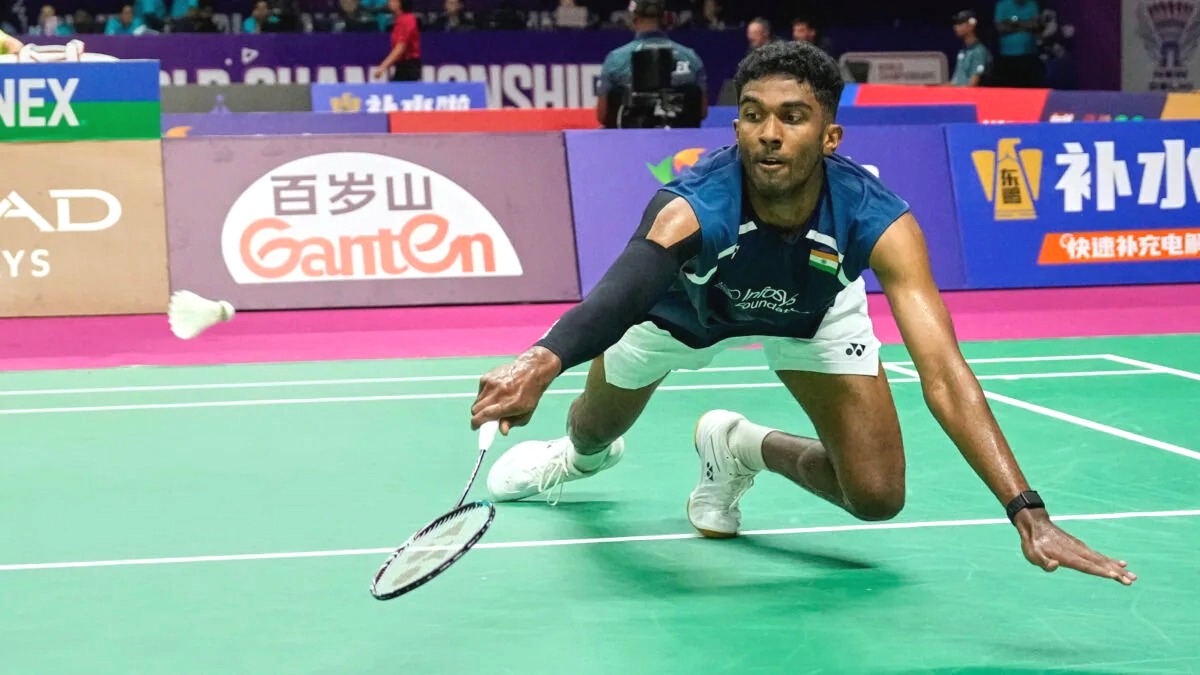
Ayush Shetty Outplayed World No. 1 Shi Yuqi in BWF World Championships
There are wins in sport that feel important because of the score. Then there are wins that feel special because of the way they happen. Ayush Shetty’s first-round victory over Shi Yuqi at the 2026 BWF World Championships in Delhi belongs to the second category.
The 21-year-old Indian did not just beat the defending champion and world No. 1. He beat him by changing the way the match was expected to be played. Everyone knew Ayush had a huge smash. At 6 feet 4 inches, he can hit the shuttle from a very high point, making his attack one of the biggest weapons in his game.
But against Shi Yuqi, the biggest surprise was not the smash. It was the lift. Ayush used high, deep lifts and clears to make Yuqi hit from uncomfortable positions. Again and again, the Chinese star was invited to attack, only to find that the shuttle was not sitting where he wanted it. The plan was simple, but it worked beautifully.
The final score of 21-14, 13-21, 21-19 tells us that this was a close match. However, it does not fully explain how well Ayush read the conditions, managed the pace and used his height.
For Indian badminton, this was another important chapter in the rise of a young singles player. For Ayush Shetty, it was also a personal answer to one of the toughest defeats of his young career.
Ayush Shetty vs Shi Yuqi: A First-Round Match That Felt Much Bigger
A first-round match at a World Championships can often bring a strange problem. One player wants to settle into the tournament, while the other has everything to gain and very little to lose.
Shi Yuqi entered this match as the defending champion and world No. 1. Ayush Shetty entered as the 22nd-ranked player and an unseeded opponent. On paper, the Chinese player had the bigger name. On the court, Ayush made that difference disappear.
The opening exchanges showed that this would not be a simple contest based on attack. Ayush had clearly prepared a plan. He wanted Yuqi to play a certain type of shot and then punish the reply.
That is where the high lift became so important.
A high lift can look like a defensive stroke, but in the right conditions, it can also be a trap. Ayush sent the shuttle high and deep, giving Yuqi the chance to attack. Yet the shuttle was often too high or too awkward for Yuqi to make a clean smash.
That small difference changed the rally.
Instead of getting the perfect attacking contact, Yuqi had to adjust. When he tried to hit harder, he made mistakes. When he tried to slow the rally down, Ayush was ready. When he increased the pace, the Indian was able to stay in the exchange.
That was the real story of the match. Ayush did not try to overpower Shi Yuqi at every moment. He made Yuqi uncomfortable first and attacked second.
The Lift Was Ayush Shetty’s Smartest Weapon
The most interesting part of Ayush’s win was that his best stroke was not always the one that looked the most dangerous. His smash was spectacular, but the lift created the chances for those smashes. This is why the match felt more like a chess game than a simple battle of power.
Ayush understood that Yuqi’s strength comes from rhythm and control. The Chinese player is among the best in the world when he can settle into his preferred pattern. He likes to control the shuttle, build the rally and choose the right moment to attack.
Ayush refused to make the match comfortable for him. He kept pushing the shuttle towards the back of the court. He mixed the height and pace of his shots. He also used the conditions inside the Indira Gandhi Indoor Stadium to his advantage.
In badminton, drift can affect how the shuttle moves through the air. A player who reads it well can use it to gain an advantage. A player who gets it wrong can suddenly find that a shot goes long, falls short or does not sit properly for an attack.
Ayush had clearly spent time understanding those conditions. His coaches also worked on it before the match. Coach Sagar Chopda said Ayush had asked about the court drift after watching another match. That may sound like a small detail, but in a match between two elite players, details can decide everything.
The Indian Had Learnt From His Asian Championships Defeat
Earlier in the year, he had reached the Asian Championships final. That run was a major moment in his career, but the final against Shi Yuqi ended badly for the Indian. Ayush ran out of energy and his game plan stopped working.
The loss exposed an issue that every young player faces at some point: getting the strategy right when the opponent is able to change the match. In Delhi, Ayush looked much more prepared. He did not repeat the same mistake.
The high lifts and clears were part of a more clear plan. Instead of rushing to finish points, he made Yuqi work. He did not fall into the trap of trying to smash every shuttle. That change was important.
The Asian Championships final gave Ayush a hard lesson. The World Championships gave him the perfect chance to show that he had learnt from it. And this time, he stayed in the match.
Ayush Shetty Took Control Early
The first game showed exactly how well his plan was working. Ayush moved ahead early and reached an 11-5 lead. His control of the rally was impressive, but what stood out most was how often he made Yuqi play one more shot.
The Chinese player, usually so calm around the net, made several errors. Yuqi was also forced to change his approach. At one stage, he increased the speed of the rallies, trying to take time away from Ayush.
That plan did not bring the result he wanted. Ayush was comfortable in fast exchanges too. One of the best points came when he stayed with the quick rally and finished with a cross-court smash that left Yuqi unable to respond.
That point showed that Ayush was not simply a player depending on height and power. He could also stay in fast rallies and find the right shot when the opening appeared. He went on to win the first game 21-14. For a player facing the world No. 1 and defending champion, that was a strong start.
Shi Yuqi Fought Back, But Ayush Stayed in the Match
Of course, a player like Shi Yuqi was never going to go away quietly. The second game showed why he is ranked No. 1. Yuqi raised his level, controlled more rallies and forced Ayush into difficult positions. His return game improved and the Indian found it harder to finish points.
The result was a 21-13 win for Yuqi. Suddenly, the match was level. This was where the mental side of the contest became important. Ayush had already shown that he could trouble the best player in the world. But the third game would test whether he could stay patient once the pressure increased.
Ayush Shetty Built a Huge Lead in the Decider
The third game looked almost perfect for Ayush at one stage. He raced to a 17-7 lead. At that point, it seemed the biggest hurdle had already been cleared. But badminton can change in a few points.
Yuqi began recovering shuttle after shuttle. Ayush became nervous and started making more mistakes. The simple shots that had worked earlier were suddenly not as clean.
The lead began to disappear. 17-7 became 18-14. Then the match moved to 19-18 and finally 20-19. The 10-point advantage was almost gone. This was the moment when the match could easily have slipped away.
Ayush later admitted that he had become nervous and kept telling himself to stay calm and continue attacking. His coaching bench also gave him a clear message: play one good rally. That advice was simple. But it was exactly what he needed.
The Final Point Was Not a Massive Smash
The final point of the match made the whole story even more interesting. Everyone expected Ayush to finish with one of his huge smashes. Instead, he used a forehand cross flick to move Yuqi away from the net. It was clever and controlled.
The point showed what Ayush had done throughout the match. He had not relied only on his biggest shot. He had used different strokes to create the right situation. That final point gave him a 21-19 win in the third game. Just like that, the world No. 1 was out in the first round.
Ayush Shetty’s Career Has Been Building Towards This Moment
Although this win was a major headline, Ayush Shetty did not suddenly appear in Delhi. His rise has been gradual.
Born in Mangaluru, Ayush has been one of the most interesting young names in Indian men’s singles for some time. His height immediately sets him apart. At around 6 feet 4 inches, he has a natural advantage in attack because he can contact the shuttle from a high point.
However, height alone does not make a top badminton player. Ayush has spent years developing a more complete game.
His progress became more visible on the international circuit as he started winning important matches and reaching deeper stages of major tournaments. His performances at the junior and senior levels helped him gain experience against stronger opponents.
The turning point in his recent career came with his run to the Asian Championships final.
Reaching that stage showed that he could compete with leading players. Losing the final then gave him a tough lesson about managing long matches and staying clear with his plan.
Instead of allowing that loss to define him, Ayush used it as something to learn from. That makes his victory over Yuqi even more interesting. He did not beat the world No. 1 by playing the same match again. He changed his approach.
A New Chapter in Ayush Shetty’s Career
The best young players are often identified by one quality that separates them from the rest. For Ayush Shetty, it has long been his height and his attacking game. But Delhi showed something else. It showed that he can think through a match. And he can find a way to win even when the first plan does not work perfectly.
That is a big part of becoming a top singles player. Ayush’s journey has already taken him from being a promising youngster from Mangaluru to a player capable of beating the best-ranked badminton player in the world. The Delhi World Championships gave him perhaps his biggest victory so far.