
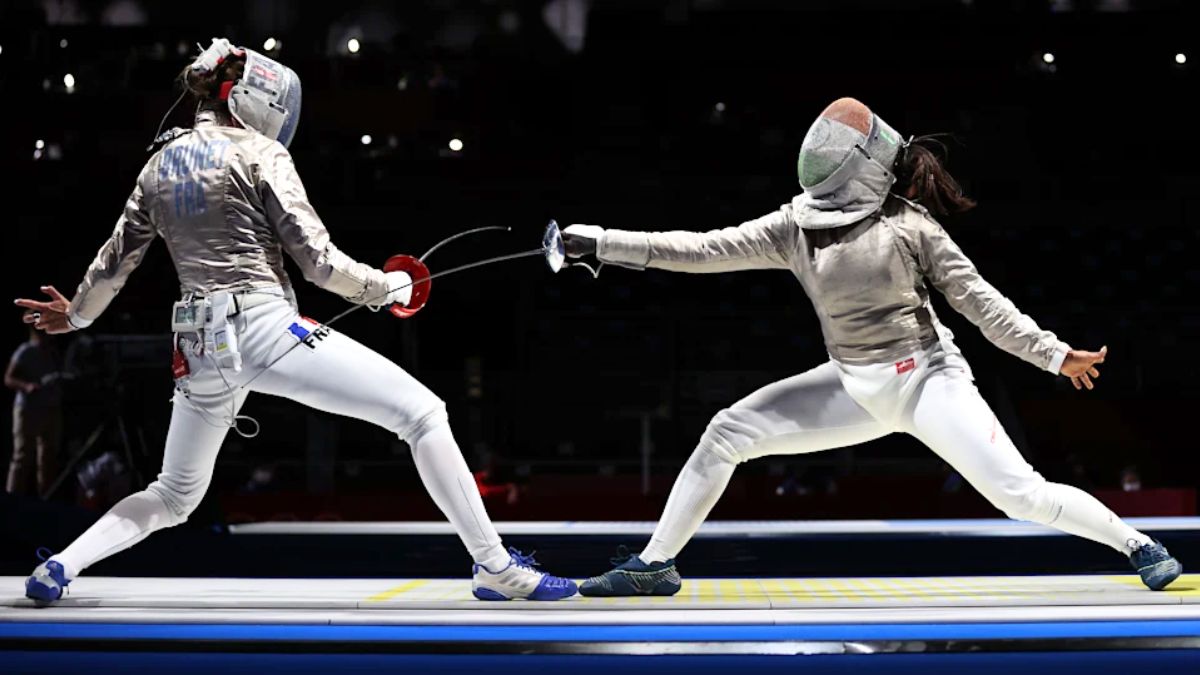
Fencing: Know What are The Rules and Regulations
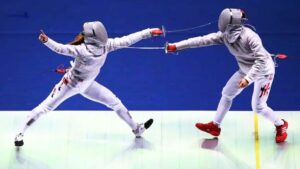
Fencing is a combat sport wherein two participants engage in swordplay. The discipline encompasses three primary sword variants: the foil, épée, and sabre. Remarkably, these swords derive their names from the specific fencing category they represent.
Also Read: History of Diving Event at Asian Games: India’s Diving Performance
Across the global fencing community, practitioners often specialize in a singular style or type to hone their expertise. The game aims to effectively use your weapon to hit your opponent while skillfully evading their strikes.
The world of fencing is overseen by the International Fencing Federation (FIE), based in Lausanne, Switzerland. This organization comprises 155 national groups, each officially acknowledged by their country’s Olympic Committee as the exclusive voice for Olympic-style fencing within that nation.
Rules
Fencing has specific rules regarding timing, priority (right of way), and the valid target area. Fencers must be quick, agile, and possess good reflexes to attack and defend effectively. Strategy and tactics play a crucial role in defeating opponents and scoring points.
- Foil: The foil is a light-thrusting weapon. Points are scored by hitting the opponent’s torso with the foil’s tip. The target area is restricted to the torso, including the back, but not the arms or legs.
- Epee: The epee is the same as the foil but heavier. Fencers received points by hitting any part of the opponent’s body with the tip. Unlike foil and sabre, there are no restrictions on the target area, and simultaneous touches can be scored.
- Sabre: The sabre is a cutting and thrusting weapon. Points are scored by hitting the opponent’s upper body, including the head, torso, and arms. Sabre has a faster pace due to its cutting actions.
Equipment
Fencers wear protective gear, including a mask, jacket, glove, and pants. The weapon is the most distinctive piece of equipment: a foil, epee, or sabre.
Engaging in forceful contact with your opponent, employing your hand to obscure the designated target area, or making incorrect foot placements might result in the referee imposing a penalty of points.
Olympic Inclusion
Fencing has been a part of the modern Olympic Games since its beginning in 1896. It is one of the few sports featured in every Olympic Games.
Scoring
A touch (point) is scored when a fencer lands a valid hit on the opponent according to the rules of the weapon being used. The number of touches needed to win a bout varies by the match type (individual or team) and the weapon.
Winner
The ultimate winner in fencing is determined by the accumulation of points through strategic swordplay, successfully hitting the opponent while minimizing vulnerabilities. The fencer who amasses the required number of points within the rules and regulations of their chosen weapon emerges victorious.
Fencing: Rules, Equipment, Scoring and Olympic History
| Category | Details |
|---|---|
| Definition | Fencing is a combat sport in which two participants engage in swordplay. |
| Main Weapons | The three primary weapons are Foil, Épée and Sabre. Each weapon represents a distinct fencing discipline. |
| Objective | The main objective is to hit the opponent with the weapon while avoiding their attacks. |
| Specialization | Fencers often specialize in one weapon to develop their technical skills, speed, reflexes and tactical ability. |
| Governing Body | The International Fencing Federation (FIE) governs international fencing. It is based in Lausanne, Switzerland. |
| FIE Membership | The FIE comprises 155 national federations, recognized by their respective Olympic Committees. |
| Key Skills Required | Speed, agility, quick reflexes, coordination, strategy and tactical awareness are essential in fencing. |
Fencing Weapons and Rules
| Weapon | Description | Valid Target Area | Scoring Method |
|---|---|---|---|
| Foil | A light thrusting weapon. | Torso, including the back; arms and legs are excluded. | Points are scored by hitting the valid target area with the tip of the foil. |
| Épée | Similar to the foil but heavier. | The entire body. | A touch can be scored by hitting any part of the opponent’s body with the tip. Simultaneous touches can count. |
| Sabre | A cutting and thrusting weapon. | Upper body, including the head, torso and arms. | Points can be scored through both cutting and thrusting actions, making sabre the fastest-paced discipline. |
Fencing Equipment
| Equipment | Purpose/Description |
|---|---|
| Mask | Protects the fencer’s face and head. |
| Jacket | Provides protection to the upper body. |
| Glove | Protects the hand holding the weapon. |
| Pants | Protect the lower body and legs. |
| Weapon | Fencers compete with one of three weapons: foil, épée or sabre. |
Penalties in Fencing
| Violation | Possible Consequence |
|---|---|
| Forceful or improper contact | May result in a penalty from the referee. |
| Obscuring the designated target area with the hand | Can lead to a penalty. |
| Incorrect foot placement or other rule violations | May result in penalties, including the awarding of points to the opponent. |
Olympic Inclusion
| Aspect | Details |
|---|---|
| Olympic Debut | Fencing has been part of the modern Olympic Games since 1896. |
| Olympic Significance | It is one of the few sports to have featured in every modern Olympic Games. |
Fencing Scoring and Winner
| Category | Details |
|---|---|
| Touch/Point | A touch is awarded when a fencer makes a valid hit according to the rules of the weapon being used. |
| Number of Points | The points required to win depend on the format of the bout, such as individual or team competition, and the applicable competition rules. |
| Winner | The fencer who reaches the required score or has the higher score within the prescribed rules wins the bout. |
| Winning Strategy | Success depends on effectively attacking the opponent, defending against attacks, maintaining distance and using tactical swordplay. |
Frequently Asked Questions (FAQs)
Q1. Why is feeling like you do not know enough actually a good sign for personal and professional growth?
Feeling like you do not know enough can be uncomfortable, but it often indicates that you are stepping outside your existing comfort zone. When people continue performing tasks they already understand, they may become more confident, but their learning curve can gradually become flatter. Growth often begins when you encounter unfamiliar situations, responsibilities, people, or challenges.
In a professional environment, this could mean taking on a new project, entering a new industry, managing a team for the first time, learning a new skill, or making decisions without having complete information. These experiences force you to ask questions, seek feedback, research solutions, and learn from mistakes.
The important distinction is between not knowing and refusing to learn. Not knowing something is completely normal. What matters is how you respond to that gap in knowledge. A growth-oriented person treats uncertainty as an opportunity to improve rather than as evidence of incompetence.
Looking back after six months and realizing how much you have learned can therefore be a powerful indicator of progress. The things that once seemed difficult may become routine, while new challenges appear at the next level.
This cycle continues throughout a career. As your responsibilities increase, you repeatedly enter situations where you are once again the least experienced person in the room. Instead of avoiding those situations, embracing them can accelerate learning.
Ultimately, growth is rarely about reaching a stage where you know everything. It is about developing the confidence to say, “I don’t know this yet, but I can learn it.”
Q2. How can professionals turn failure and uncertainty into opportunities for continuous improvement?
Professionals can turn uncertainty and failure into growth by treating every experience as a learning opportunity rather than simply judging it as successful or unsuccessful. A failed project, rejected idea, difficult conversation, or wrong decision can provide valuable information about what needs to change.
One effective approach is to conduct a simple review after completing an important task. Ask three questions: What worked? What didn’t work? What will I do differently next time? These questions transform an experience into practical knowledge.
Seeking feedback is equally important. People who are willing to ask colleagues, mentors, managers, clients, or experienced professionals for honest feedback can identify blind spots much faster. Sometimes the most valuable lesson comes from a question or criticism that initially feels uncomfortable.
Professionals should also become comfortable with experimentation. Not every idea will succeed, and expecting every attempt to produce perfect results can prevent people from trying ambitious things. Testing, measuring, learning, and improving creates a continuous development cycle.
Another important habit is documenting progress. Looking back at old work, decisions, or assumptions after several months can reveal how much your thinking has evolved. It also helps identify recurring mistakes and areas where you have developed genuine expertise.
Most importantly, professionals should avoid confusing confidence with knowledge. You do not need to know everything before starting something new. You need enough willingness to learn, adapt, ask questions, and keep moving forward.
The goal is not to eliminate the feeling of uncertainty. The goal is to become comfortable growing through it.