
Ranjit Bajaj Criticises India U15 World Cup Preparation: Why Long-Term Planning Matters
Ranjit Bajaj Questions India U15 World Cup Setup, Says Dual Appointment Lacks Logic
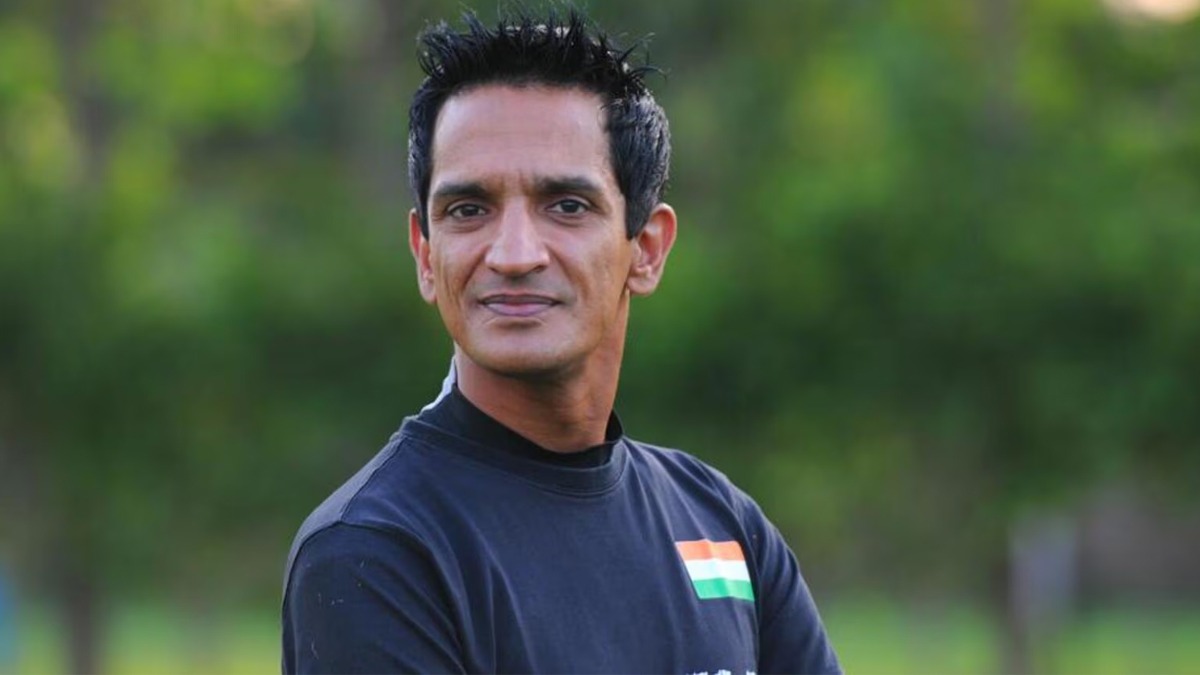
Minerva Academy owner Ranjit Bajaj has expressed strong dissatisfaction with his appointment as Team Manager alongside Bibiano Fernandes as Head Coach for the FIFA U15 World Cup & Festival.
Bajaj, known for his long-standing involvement in Indian youth football, did not hide his disappointment after the appointments were announced. His comments have raised questions about the structure of India’s youth football programme, the timing of preparations and whether short-term interventions can deliver meaningful results at the international level.
“I am not happy, I am very unhappy… This is the worse thing they could have done,” Bajaj said, making it clear that he strongly disagrees with the decision.
His biggest concern appears to be the decision to place him and Bibiano Fernandes in the same team-management structure, with Fernandes taking charge as head coach and Bajaj being appointed team manager.
“I don’t see the logic behind appointing me as manager and Bibiano as coach together,” Bajaj said.
The statement reflects more than a disagreement over roles. It points towards a broader debate about how India should prepare its young footballers for major international tournaments.
Youth football, by its very nature, requires continuity. Players need to be identified early, monitored regularly, exposed to the right training environment and developed through a clear tactical and physical philosophy. Coaches also need sufficient time to understand the strengths and weaknesses of a particular age group.
Bajaj highlighted exactly this issue while questioning the approach being followed for the upcoming tournament.
“Youth football is about long-term planning. You don’t start building a World Cup team two months before the tournament,” he said.
That argument goes to the heart of India’s challenges in youth football. A successful under-15 team cannot realistically be created only through a short preparation camp. The players may have talent, but developing them into a competitive international unit requires much more than selecting the best individuals.
They need tactical understanding, positional discipline, physical preparation, psychological support and experience playing together. Most importantly, they need consistency.
If a group of players is brought together only weeks before a major tournament, the coaching staff has limited time to establish a playing philosophy. There is also little opportunity to build chemistry between players, identify combinations and correct recurring mistakes.
For Indian football, this is particularly important because youth competitions should not only be viewed through the lens of immediate results. They are also an opportunity to create the next generation of senior international players.
The appointment of Bibiano Fernandes brings experience in Indian youth football. Fernandes has previously worked extensively with young players and has been involved in India’s youth national-team setup. His understanding of the domestic pathway could be valuable as India prepares for an important international assignment.
However, Bajaj’s comments suggest that the issue is not necessarily about the capability of an individual coach. Instead, the concern is about the overall structure and preparation timeline.
The role of a team manager is also significant. A manager can be expected to handle administrative coordination, logistics, communication and other responsibilities surrounding the team. But when someone with Bajaj’s experience in youth football is placed in that position, questions naturally emerge about how responsibilities will be divided and how footballing decisions will be coordinated with the head coach.
The key challenge now is ensuring that differences in opinion do not distract the players.
For an under-15 team, the environment surrounding the squad can be as important as the training itself. Young footballers need clarity, confidence and stability. They should not be caught in disagreements between administrators, coaches or other stakeholders.
The FIFA U15 World Cup & Festival therefore represents an important opportunity, but also a test of India’s broader youth-development philosophy.
If India wants to compete consistently at the highest level, youth football cannot depend entirely on last-minute camps and tournament-specific planning. A stronger system would involve long-term scouting, regular national camps, structured age-group competitions, access to sports science and nutrition, better coaching education and greater coordination between academies and the national setup.
India has several academies producing promising young players, and organisations such as Minerva Academy have played an important role in developing talent. The next step is to connect those individual efforts to a consistent national pathway.
Bajaj’s criticism has opened an important conversation. Whether one agrees with his assessment or not, his central point is difficult to ignore: international youth success is rarely built in a matter of weeks.
The focus will now shift towards preparation, coordination and ensuring that players receive the best environment before the tournament.
Despite the controversy surrounding the appointments, the priority should remain the same: giving India’s young footballers the opportunity to compete, learn and grow on the international stage.
Bajaj’s comments may have created a difficult moment, but they also underline a conversation Indian football needs to have—about planning, accountability, role clarity and, most importantly, the long-term development of its next generation.
Ranjit Bajaj Questions India U15 World Cup Setup, Says Dual Appointment Lacks Logic
| Topic | Details |
|---|---|
| Key Development | Minerva Academy owner Ranjit Bajaj has expressed strong dissatisfaction with his appointment as Team Manager, alongside Bibiano Fernandes as Head Coach, for the FIFA U15 World Cup & Festival. |
| Bajaj’s Reaction | Bajaj openly criticised the decision, saying: “I am not happy, I am very unhappy… This is the worse thing they could have done.” |
| Main Concern | Bajaj questioned the logic behind appointing him as Team Manager while Bibiano Fernandes takes charge as Head Coach. |
| Bajaj on Dual Appointment | “I don’t see the logic behind appointing me as manager and Bibiano as coach together.” |
| Broader Issue | His comments have triggered a wider debate about India’s youth football structure, preparation timelines, role clarity and long-term player development. |
| Youth Football Philosophy | Bajaj believes youth football requires long-term planning rather than short-term tournament preparation. |
| Preparation Concern | “Youth football is about long-term planning. You don’t start building a World Cup team two months before the tournament.” |
| Why Short-Term Preparation Can Be Difficult | A short preparation camp gives coaches limited time to establish tactics, understand players, develop combinations, build chemistry and correct mistakes. |
| Importance of Continuity | Young players need consistent coaching, regular monitoring, structured development and exposure to the right training environment from an early age. |
| Beyond Individual Talent | Selecting talented players alone is not enough. Players also need tactical understanding, positional discipline, physical preparation, psychological support and international experience. |
| Role of Youth Competitions | Youth tournaments should not be viewed only through the perspective of immediate results. They should also contribute to developing future senior international players. |
| Bibiano Fernandes’ Experience | Fernandes has extensive experience working with young Indian footballers and has previously been involved in India’s youth national-team setup. |
| Issue With Fernandes’ Appointment? | Bajaj’s comments appear to focus less on Fernandes’ individual capability and more on the overall structure, timing and division of responsibilities. |
| Team Manager’s Role | A Team Manager may be responsible for administrative coordination, logistics, communication and other team-related responsibilities. |
| Role-Clarity Question | Bajaj’s appointment raises questions about how responsibilities will be divided between the Team Manager and Head Coach, particularly when both have significant football experience. |
| Impact on Players | The priority should be ensuring that differences between stakeholders do not distract the young players. |
| Need for Stability | U15 players require clarity, confidence and stability. They should not be caught in disagreements between coaches, administrators or other stakeholders. |
| Bigger Test for Indian Football | The FIFA U15 World Cup & Festival is not only a tournament but also a test of India’s broader youth-development philosophy. |
| Long-Term Scouting | India needs systematic scouting and identification of talented players well before major international tournaments. |
| Regular National Camps | Consistent camps can help players become familiar with coaches, teammates, tactics and the national-team environment. |
| Age-Group Competitions | A stronger youth system requires structured and competitive age-group tournaments to provide players with regular high-level exposure. |
| Sports Science & Nutrition | Young players need better access to sports science, fitness programmes, recovery systems and professional nutrition support. |
| Coaching Education | Improving coaching education can help create a stronger development environment across academies and age groups. |
| Academy-National Team Coordination | Greater coordination between private academies and the national setup could create a more consistent pathway for talented youngsters. |
| Role of Minerva Academy | Minerva Academy has been involved in developing young Indian footballers, making Bajaj’s comments particularly relevant to the discussion around India’s youth-development ecosystem. |
| Central Question | Can India develop a competitive U15 World Cup team through short-term preparation, or does the country need a much more structured long-term pathway? |
| Immediate Priority | Despite the controversy, the focus should remain on preparation, coordination and creating the best possible environment for the players. |
| Long-Term Priority | India needs to build a sustainable youth football system based on planning, accountability, role clarity, scouting, coaching, sports science and player development. |
| Overall Takeaway | Bajaj’s criticism has opened an important conversation about how India prepares its youth teams. His central argument is that international youth success cannot realistically be built in just a few weeks. |
| What Comes Next | The attention will now shift towards how the team management works together, how the players are prepared and whether the U15 setup can deliver both competitive results and long-term developmental value. |
Key Quotes
| Speaker | Quote |
|---|---|
| Ranjit Bajaj | “I am not happy, I am very unhappy… This is the worse thing they could have done.” |
| Ranjit Bajaj | “I don’t see the logic behind appointing me as manager and Bibiano as coach together.” |
| Ranjit Bajaj | “Youth football is about long-term planning. You don’t start building a World Cup team two months before the tournament.” |
Key Takeaways
| Area | Key Takeaway |
|---|---|
| Planning | Youth development requires years of preparation, not only tournament-specific camps. |
| Leadership | Clear division of responsibilities between Team Manager and Head Coach is essential. |
| Player Development | Tactical, physical, psychological and technical development must happen together. |
| National Pathway | Academy development needs to be better integrated with the national-team structure. |
| Tournament Preparation | Short preparation windows can make it difficult to build team chemistry and tactical identity. |
| Future of Indian Football | U15 tournaments should be used as part of a long-term pathway towards senior international football. |
| Immediate Focus | Stakeholders must ensure that administrative or coaching disagreements do not affect the young players. |
| Bigger Question | The controversy highlights the need for a more consistent, accountable and long-term youth football development system in India. |
FAQs
1. Why did Ranjit Bajaj criticise the India U15 World Cup team setup?
Ranjit Bajaj criticised the India U15 World Cup team setup primarily because of the structure of his appointment and the limited preparation time available before the tournament. Bajaj was appointed Team Manager, while Bibiano Fernandes was named Head Coach. Bajaj questioned the logic behind having both roles together, saying that he was “very unhappy” with the decision.
His larger concern, however, appears to be about India’s approach to youth football. Bajaj argued that youth development requires long-term planning rather than assembling a team only a few months before a major international tournament. According to this philosophy, young players need regular scouting, national camps, tactical development, physical conditioning and sufficient time to build chemistry with their teammates.
The criticism therefore highlights a broader issue within Indian youth football: whether short-term tournament preparation can produce competitive international teams or whether India needs a more structured, long-term development pathway.
2. How can India improve its youth football development system?
India can improve its youth football system by creating a structured pathway that connects academies, state competitions and national age-group teams. Young players should be identified early and monitored consistently rather than being brought together shortly before international tournaments.
Regular national camps can help players understand tactical systems, while stronger age-group competitions can provide consistent competitive exposure. India can also improve access to qualified coaches, sports science, nutrition, strength and conditioning, injury prevention and psychological support.
Better coordination between academies and the national team setup would also allow coaches to track player development over several years. This would make it easier to identify weaknesses and create individual development plans.
Most importantly, youth tournaments should be treated as part of a long-term player-development process rather than isolated competitions. The ultimate objective should be to develop technically strong, tactically intelligent and physically prepared footballers capable of progressing into India’s senior national team. A sustainable system built around planning, continuity and accountability can give Indian youth football a stronger foundation for future international success.
| Question | Answer |
|---|---|
| Why did Ranjit Bajaj criticise the India U15 World Cup team setup? | Ranjit Bajaj criticised the India U15 World Cup team setup primarily because of the structure of his appointment and the limited preparation time available before the tournament. Bajaj was appointed Team Manager, while Bibiano Fernandes was named Head Coach. Bajaj questioned the logic behind having both roles together, saying that he was “very unhappy” with the decision.His larger concern, however, appears to be about India’s approach to youth football. Bajaj argued that youth development requires long-term planning rather than assembling a team only a few months before a major international tournament. Young players need regular scouting, national camps, tactical development, physical conditioning and sufficient time to build chemistry with their teammates.The criticism therefore highlights a broader issue within Indian youth football: whether short-term tournament preparation can produce competitive international teams or whether India needs a more structured, long-term development pathway. |
| How can India improve its youth football development system? | India can improve its youth football system by creating a structured pathway that connects academies, state competitions and national age-group teams. Young players should be identified early and monitored consistently rather than being brought together shortly before international tournaments.Regular national camps can help players understand tactical systems, while stronger age-group competitions can provide consistent competitive exposure. India can also improve access to qualified coaches, sports science, nutrition, strength and conditioning, injury prevention and psychological support.Better coordination between academies and the national team setup would allow coaches to track player development over several years and create individual development plans.Most importantly, youth tournaments should be treated as part of a long-term player-development process rather than isolated competitions. The ultimate objective should be to develop technically strong, tactically intelligent and physically prepared footballers capable of progressing into India’s senior national team. A sustainable system built around planning, continuity and accountability can give Indian youth football a stronger foundation for future international success. |
Related posts:
 BD-ET vs IND-ET Dream11 Prediction, Live Score & Bangladesh U-23 vs India-U23 Cricket Match Dream11 Team: Emerging Teams Asia Cup 2019
 DAL vs SAS Dream11 Prediction, Live Score & Dallas Mavericks vs San Antonio Spurs Basketball Match Dream Team: NBA 2019-20 Regular Season
 TKR vs JAM Dream11 Prediction: Live Score & Today Match Prediction for TKR vs JAM (Match 6 CPL 2020)
 GUY vs SLZ Dream11 Prediction: Live Score & Today Match Prediction for GUY vs SLZ (Match 10 CPL 2020)