
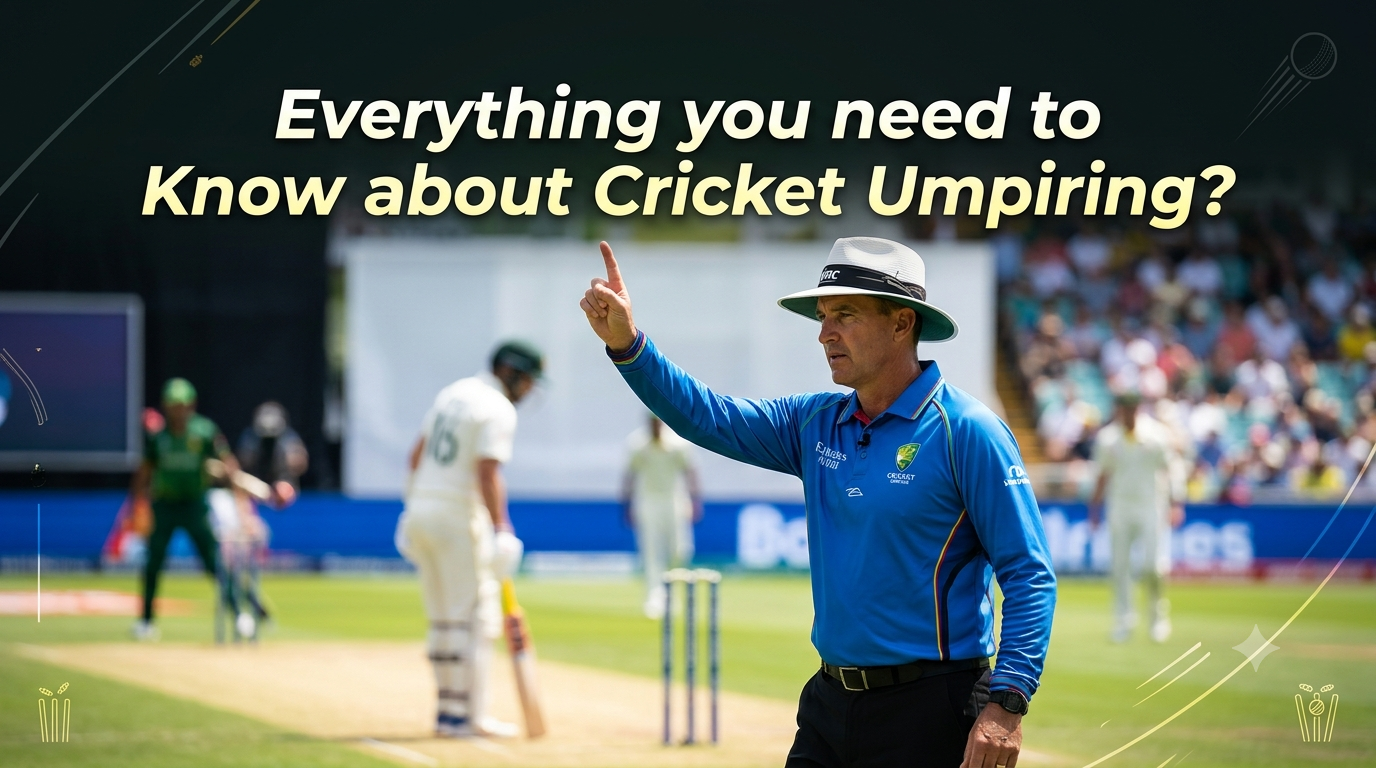
Cricket Umpires Explained: Roles, Signals, Reviews and Decision-Making
One of least talked about component in International Cricket should be Umpiring or Referring.
Considering all technological advancements and living in 21st century it all goes down to all sorts of topics which are discussed effectively or efficiently barring Umpiring topics which never comes into mainstream media recommendation.
Here in this article we will reveal each and everything related to Cricket Umpiring where we will explain each and every sub topics Roles, Signals, Reviews and Decision-Making to be shared in the below format:
- Roles of Cricket Umpires:
The Role of Cricket Umpires is spanned across different position they occupy which include- On Field Umpire, Common Umpire Signals as well TV Umpires and Fourth Umpires.
Let us share intricacies about it one by one in the below format:
A. On -Field Umpires: Any Cricket match you have witnessed you might have seen 2 officials standing on the ground to commensurate the proceedings of any match.
The one standing at the bowler crease are one of the umpires and the one standing on the leg known as leg umpires.
The On- Field Umpires collectively are responsible for decision around – Leg Before Wicket( LBW), Caught- Behind, General Legality of any delivery, run-outs, stumpings and close catches.
B. 3rd/Tv Umpire:
3rd Umpire also popularly referred as “TV Umpire” as off-field official who reviews edge detectors also referred as “Ultra edge” , Ball Tracking ( Hawk- Eye) also tracking slow motion replays on screen.
C-. Fourth Umpire: This Umpire is responsible for Overseeing all players code of conduct during crux of any match, that changes any scores or decisions related to game.
Let’s Move quickly towards another segment known as Umpire signals to be shared in the below format:
Before we dive deep into anomalies of Umpiring in Gentlemen’s game, we need to make sure we understand how symbolic these signals and how apt Umpires should be while officiating as the moment their decision stands out wrong anything can change in crux of the match.
Let’s decode some of the most commonly used signals in sequential format:
- Out: Raised index finger above the head
- Not Out : No hand signal (verbal call of “not out”)
- Wide Bal: l Both arms stretched out horizontally
- No Ball: One arm extended horizontally
- Four Runs : Waving One hand back and forth across the chest
- Six Runs: Raising both hands above the head
- Byes : One arm extended straight up above the head
- Leg Byes: Tapping a raised knee with the hand
- Free Hit : Circling the hand/arm in the air above the head
- Short Run: Tapping the nearest shoulder with the fingertips
- Dead Ball: Crossing and uncrossing the wrists below the waist
- Third Umpire / TV Review: Drawing a square shape in the air with both hands
2. Review/ Decision Making :
This is another important category where Umpires role comes in handy, also in the era of technology this needs to be one of the most important factor to drive decision related to Cricket.
Let me further break it down and explain each and everything in detail to be shared in the below format:
A- Decision Review System:
This methodology was introduced to remove blatant human errors on the dismissals which includes- LBW and Caught behind.
B- Player Challenges:
When it comes to understanding player challenges which include- On Field challenge or field captain challenges where they immediately signal “T” or a square with their hands.
C- Umpire’s Call:
If the decision taken by players especially Technology Review ( Like Hawk- Eye for review) which remains too close to call and ball is clipping close to stumps, where on field decision and pre-defined narrow margins.
C- Umpire Referrals:
When it comes to On- Field Umpires that can also deter run outs also clean catches(low catches above as well as above the turf) also third umpire is required where final ruling is yet to be done.
D. Pressure Based Umpiring Decisions:
Cricket umpires often have to make important decisions within seconds, even when thousands of spectators, millions of viewers and players are closely watching their actions. A single decision can influence the direction of a match, particularly during the final overs of a T20 international, a closely contested ODI or a decisive session in Test cricket.
Umpires must remain calm, focused and impartial throughout the game. Their decisions are based on the Laws of Cricket, playing conditions and the evidence available at the moment. Although technology has improved the accuracy of officiating, it cannot eliminate every element of human judgement. Umpires must also communicate clearly with players and fellow officials while ensuring that emotions do not influence their decisions.
E- Communication Between Umpires:
Communication between the on-field umpires, third umpire and fourth umpire is another important component of modern cricket officiating. Each official has specific responsibilities, and coordination helps ensure that decisions are made according to the applicable playing conditions.
For example, when a close run-out occurs, the on-field umpire can refer the decision to the third umpire for a review of the available camera angles. The third umpire examines whether the batter’s bat or body was grounded behind the crease before the bails were completely dislodged. The final decision is then communicated to the on-field umpire.
Similarly, communication is essential when dealing with boundary catches, potential obstructions, disputed deliveries and other incidents requiring additional examination. Clear signals and accurate information help avoid confusion and allow the match to continue smoothly
Officials must also ensure that players follow the Laws of Cricket and the relevant competition’s code of conduct. They monitor dangerous bowling, unfair play, dissent and other incidents that could affect the spirit of the game.
When a player challenges a decision aggressively or repeatedly questions an umpire’s authority, the officials must handle the situation professionally. Depending on the circumstances, they may issue warnings, report misconduct or apply the relevant disciplinary procedures.
Maintaining discipline becomes especially important during high-pressure international matches, where rivalries and match situations can intensify emotions. An experienced umpire understands how to communicate firmly without unnecessarily escalating a disagreement.
F. Technology Based Decisions:
Technology has significantly changed how cricket decisions are reviewed. Ball-tracking systems assist with LBW decisions, UltraEdge helps identify possible contact between the bat and ball, and slow-motion replays provide additional evidence in close catches and run-outs. Other tools, including ball-tracking visualisations and electronic scoreboards, support the broader match-management process.
However, technology should be understood as a decision-support mechanism rather than a complete replacement for human officials. Different systems have specific purposes, and their use depends on the competition’s playing conditions and the review protocols in place.
| Umpire role | Position | Main responsibilities |
|---|---|---|
| On-field umpires | Two officials on the field: one usually stands at the bowler’s end, while the other stands at square leg. | Make decisions on LBW appeals, caught-behind appeals, delivery legality, run-outs, stumpings, and close catches. |
| Third umpire (TV umpire) | Off the field, reviewing footage and technology. | Reviews referrals using tools such as UltraEdge, ball-tracking, and slow-motion replays. |
| Fourth umpire | Off the field, supporting match operations. | Oversees match procedures and assists with matters such as player conduct and the implementation of decisions or changes to the score. |
The future of umpiring could involve improvements in automated ball-tracking, communication systems and the speed at which replay evidence is processed. These developments may help reduce delays and improve consistency across international cricket.
Nevertheless, the ability to interpret the Laws, manage players, communicate under pressure and make impartial decisions will remain essential qualities for every cricket umpire.
Cricket umpiring is a specialized responsibility that combines technical knowledge, concentration, communication and sound judgement. From the two on-field umpires to the third and fourth umpires, every official contributes to the effective administration of a match. As cricket continues to embrace technological advancements, the balance between human expertise and reliable evidence will remain central to fair competition.
Frequently Asked Question related to Cricket Umpiring (FAQ):
Q-1. How many umpires are there in an international cricket match?
Answer: An international cricket match generally involves four main umpiring officials: two on-field umpires, one third umpire and one fourth umpire. The two on-field umpires make decisions during play, while the third umpire assists with referrals and video reviews. The fourth umpire supports match administration and other assigned responsibilities. A match referee also oversees disciplinary matters and compliance with relevant playing conditions.
Q-2. What are the main responsibilities of an on-field cricket umpire?
Answer: On-field umpires are responsible for enforcing the Laws of Cricket and the applicable playing conditions. . They also monitor player conduct, ensure that the match proceeds fairly and communicate decisions through recognized signals. Their responsibilities require concentration, impartiality and a thorough understanding of cricket regulations.
Q-3. What is the role of the third umpire in cricket?
Answer: The third umpire, also known as the TV umpire, assists the on-field officials by reviewing incidents referred for video examination. The third umpire examines the available camera angles and other permitted technology before communicating the decision to the on-field umpire. The exact scope of reviews depends on the competition’s playing conditions.
Q-4. What is the difference between a third umpire and a fourth umpire?
Answer: The third umpire primarily handles referrals requiring video evidence and other duties assigned under the relevant playing conditions. The fourth umpire supports match operations, including responsibilities involving replacement balls, drinks, equipment and other administrative arrangements. Their precise duties vary by competition. Both officials contribute to the smooth functioning of a match, but their responsibilities are different.
Q-5. What are the most common hand signals used by cricket umpires?
Answer: Umpires also use specific signals for byes, leg-byes, short runs, dead balls and referrals.
Q-6. What is the Decision Review System (DRS) in cricket?
Answer: The Decision Review System is a technology-assisted process that allows teams to challenge certain on-field decisions. It helps officials reassess dismissals and other eligible incidents using available evidence.
Q-7. How many reviews can a cricket team use during a match?
Answer: The number of unsuccessful reviews available to a team depends on the format and the competition’s playing conditions. Teams generally receive a specified allowance of unsuccessful player reviews per innings or match situation. Successful reviews and certain types of umpire-initiated checks may be treated differently.
Q-8. What does Umpire’s Call mean in cricket?
Answer: Umpire’s Call is a provision used in certain DRS decisions, particularly when assessing whether a delivery would have hit the stumps for an LBW dismissal. It applies when the ball-tracking result falls within specified marginal zones. In such circumstances, the original on-field decision is maintained. This provision recognizes the limits of measurement accuracy and the importance of the initial decision in borderline situations.
Q-9. Can a cricket umpire change a decision after signaling out?
Answer: Yes, an umpire can correct a decision in accordance with the Laws of Cricket and the applicable playing conditions. If an umpire realizes that an error has occurred, the decision may be corrected before the match proceeds beyond the permitted point for making that correction. The procedure depends on the nature of the decision and the rules governing the match.
Q-10. How does technology help cricket umpires make better decisions?
Answer: Technology provides additional evidence that can support umpiring decisions. Ball-tracking systems estimate the trajectory of a delivery, Ultra-Edge helps identify possible contact between the bat and ball, and slow-motion replays assist in examining catches, run-outs and boundary incidents. The third umpire interprets this evidence according to the relevant protocols. Technology improves the review process, but human judgement and the Laws remain essential.
My Perspective:
Overall Cricket Umpiring is talk of the town also least talked about Topic in cricketing fraternity, where credit should be taken by stakeholders where these topics should be vividly covered , and rest of the decision making process, should be taught on tv where variety of things should be taught so everyone could understand the possible challenges related to Umpiring also it would be taught in such a way so that it becomes one of the most covered or interesting subject to understand.
Cricket Umpiring are also one of the least discussed but most fiery stuff where Umpires are blamed even for small mistakes also we have seen instances where entire blame is thrown on them to producing fabricated decision/results.