

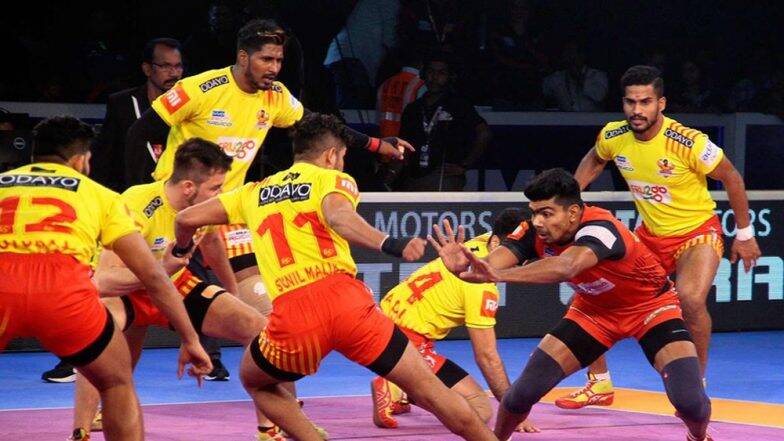
All the rules of Pro Kabaddi League in detail
Pro Kabaddi League is the second most eyeballed marquee event in India after IPL with 43.5 crore views. Over the last 8 seasons PKL has seen increase in the viewership, as PKL is a 40 minute package full of entertainment and action between the 2 sides.
But, the problem is that most of the supporters of PKL are not acquainted with the rules of the game. While the 2021 Pro Kabaddi season is on most of the questions of the fans are hoped to be answered below as we discuss about the rules of PKL.
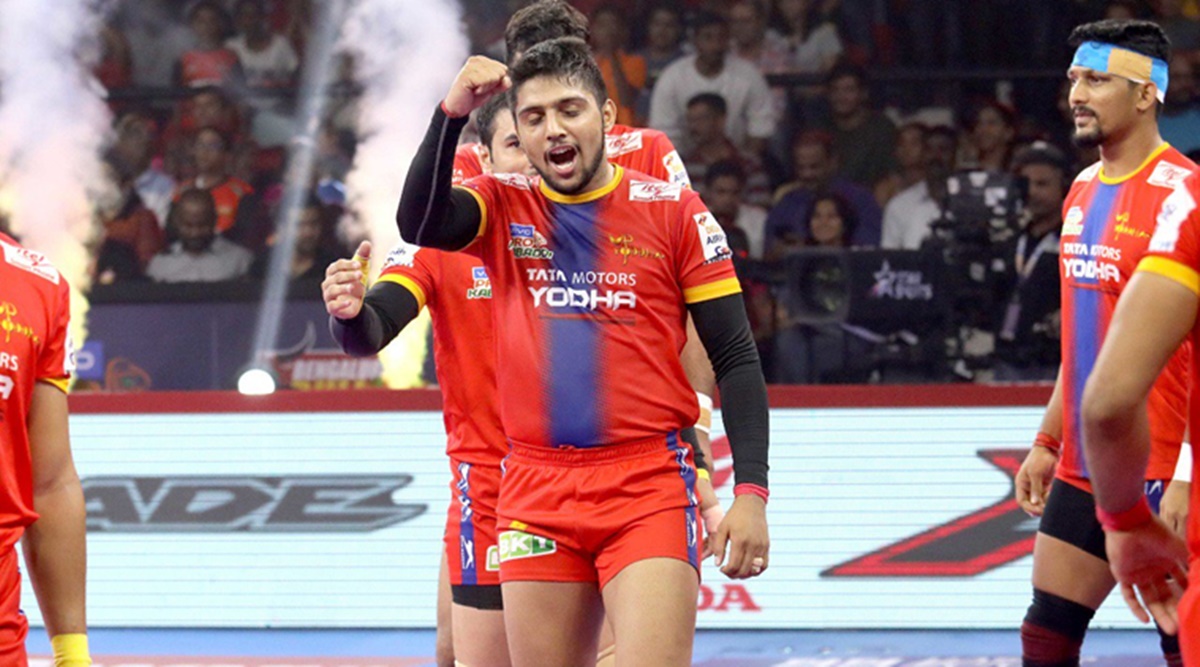
Kabaddi Rules:
Kabaddi is played between 2 Teams with seven player`s each who play on opposite sides of the court. The motive of the teams is to score the most points, and the team with the most points is announced as the winner. The points can be scored via two aspects- attacking and defending.
Points can be scored by attacking and defending. Attacking includes a “Raider” entering into opponent`s side to tag as many defender as they can without getting pinned to the ground.
Rule while Raiding:
- When a raider is in the opposing court, he must keep uttering Kabaddi and can only stop once he come back to his court. If the raider pauses, then he has to get back to his own court without scoring any pint.
- The raider cannot be grabbed by anything other than his limbs and torso, and it is closely monitored by the officials.
- Athletes cannot step out of the court, and doing so might result in the loss of a point. There is a specific zone called lobby which is active only when the raider has made a contact with the defender.
- After 2 consecutive empty raids, the attacking team have to make a “do-or-die” raid, and if they fails to score a point in “do-or-die” raid then in result, defending team will get a point.
- If a team gets all-out then the opposite team gets 2 points in result for getting the opposition all-out.
SUPER 10:
When a raider scores ten or more raid point in a single game, then the achievement is called Super 10. The points could be either bonus or touch points but the points should not be awarded to the overall team, such as technical points.
HIGH 5:
Scoring 5 or more tackle points by a defender in a game by a single player is known as High 5.
DOUBLE:
A double in Kabaddi is very rare; it can only be scored by an all-rounder. When an all-rounder scores both Super 10 and High 5 in a single game, then this achievement is known as Double.
SCORING SYSTEM:
- When a team wins a match then they will be awarded 5 points, whereas 3 points for a draw or a tie.
- If a team loses by a margin of less than seven points the they gets 1 point.
The Pro Kabaddi League have grown exponentially over the years and credit for stakeholders who have worked hard behind the scenes to make this entity extremely successful.
Let’s Update some more rules which have been brought in existence to make league even more interesting to be shared in the below format:
1.Simplified Points System:
The simplified Points System have made Pro Kabaddi League Interesting, which means Team Winning any game will be awarded 2 points in case they lose they will get no points and the same condition applies in case of draw.
2. Fewer League Matches:
A Total 108 matches which was played before have been significantly reduced 18 matches per side instead of 21 matches which makes the number of league stage matches down to 50-60.
3. All Tie Match Breaker have been introduced where both teams will be awarded 5 chances to go for raid in case there is no result there will be Golden Raid and the ones who will win it will be given opportunity for raid.
4. Playoffs Structure: The Playoffs structure have been changed as the team who finishes between 5th to 8th place out of 12 teams once League stage is concluded, will play among each other.
The teams who finishes at 3rd-4th place will compete against each other.
The ones who will finish at Top 2 place will directly qualify for Final Qualifier.
All these rules have made Pro Kabaddi League Season even more interesting and made last season even more iconic.
Pro Kabaddi League Season was mamooth ride credit should be given to all stakeholders who have worked hard behind the scenes to make this even more iconic.
| Category | Rule / Information |
|---|---|
| Team Size | Kabaddi is played between 2 teams, with 7 players on each side. |
| Objective | The objective is to score more points than the opposition through attacking and defending. |
| Raiding | A raider enters the opponent’s half to tag defenders and return safely to their own half. |
| Raiding Chant | The raider must continuously utter “Kabaddi” while in the opponent’s half and can stop only after returning to their own half. |
| Raider Contact | A raider cannot be grabbed by anything other than the limbs and torso. |
| Boundary Rule | Players stepping outside the court can result in a point being awarded to the opposition. |
| Lobby | The lobby becomes active only after the raider makes contact with a defender. |
| Do-or-Die Raid | After 2 consecutive empty raids, the team must attempt a do-or-die raid. Failure to score gives the defending team a point. |
| All-Out | When a team gets all-out, the opposition receives 2 points. |
| Super 10 | A raider scoring 10 or more raid points in a single game achieves a Super 10. Bonus and touch points count, while technical points do not. |
| High 5 | A defender scoring 5 or more tackle points in a single game achieves a High 5. |
| Double | An all-rounder achieving both a Super 10 and High 5 in the same game records a Double. |
| Simplified Points System | A team receives 2 points for a win and no points for a loss or draw. |
| League Matches | Teams play 18 league matches instead of the earlier 21, reducing the total league-stage matches to around 50–60. |
| Tie-Breaker | In a tied match, both teams receive 5 raid chances. If still tied, a Golden Raid is used to decide the winner. |
| Playoffs – 5th to 8th | Teams finishing 5th to 8th compete among themselves after the league stage. |
| Playoffs – 3rd & 4th | Teams finishing 3rd and 4th compete against each other. |
| Top 2 Teams | Teams finishing in the top 2 directly qualify for the Final Qualifier. |
Frequently Asked Questions
Q1. What are the most important rules a new fan should understand while watching a Pro Kabaddi League match?
Kabaddi is played between two teams, with seven players representing each side on the court. The primary objective is straightforward: score more points than the opposition through attacking and defending. The attacking player is called the raider. During a raid, the raider enters the opponent’s half and attempts to tag defenders before safely returning to their own side. The raider must continuously utter “Kabaddi” while inside the opponent’s court and can stop only after returning to their own half. If the raider pauses, they must return without scoring a point.
The raider also has to remain within the playing area. Stepping outside the court can result in a point for the opposition. The lobby is another important part of the court, but it becomes active only when the raider makes contact with a defender. This means new viewers need to understand that the lobby does not automatically become part of the playing area during every raid.
The defending team attempts to stop the raider and prevent them from returning safely. The raider cannot be grabbed by anything other than the limbs and torso, with officials closely monitoring such situations. Another important rule is the do-or-die raid. After two consecutive empty raids, the attacking team must attempt a do-or-die raid. If the raider fails to score a point during this raid, the defending team receives a point.
An all-out is another major scoring situation. When an entire team is eliminated, the opposition receives two points. Understanding raids, tackles, boundaries, the lobby, do-or-die raids and all-outs gives a new fan a basic understanding of how points are created during a match. These rules also explain why momentum can change rapidly and why every raid can become important during a Pro Kabaddi League contest.
Q2. What do Super 10, High 5 and Double mean in Pro Kabaddi League?
Super 10, High 5 and Double are three important individual achievements that help fans understand player performances during a Pro Kabaddi League match. A Super 10 is achieved when a raider scores ten or more raid points in a single game. The points can come through bonus or touch points, while technical points are not counted towards the achievement. Therefore, the Super 10 specifically highlights a raider’s ability to consistently contribute through successful raids and scoring opportunities.
A High 5 is the defensive equivalent of a major individual achievement. When a defender scores five or more tackle points in one game, the performance is recognised as a High 5. It reflects a defender’s contribution in stopping opposition raiders and helping the team collect points through successful defensive actions. While raiders often attract attention because of their attacking responsibilities, High 5 performances highlight the importance of defenders in determining the result of a match.
The Double is a particularly notable achievement because it requires an all-rounder to perform at a high level in both areas. When an all-rounder records both a Super 10 and a High 5 in the same match, the achievement is called a Double. This means the player has contributed significantly through both raiding and defending.
These achievements make individual performances easier for supporters to understand. A Super 10 indicates a highly productive raiding performance, while a High 5 represents an outstanding defensive contribution. A Double combines both achievements and therefore demonstrates an all-round performance. Together, these terms have become important parts of the language used around Pro Kabaddi League matches and help supporters quickly identify standout individual performances during a game.
Q3. How has the Pro Kabaddi League format and scoring system evolved to make matches more interesting?
The Pro Kabaddi League has introduced changes to its competition structure and scoring system to make the league more interesting and easier to follow. One of the important changes is the simplified points system. Under this approach, a team receives two points for winning a match, while a losing team receives no points. The same condition applies in case of a draw, meaning teams do not receive points for a tied match.
The league schedule has also been reduced. Earlier, a total of 108 matches were played, while teams previously played 21 matches each. The revised structure reduces the number of matches, with teams playing 18 league matches instead. As a result, the total number of league-stage matches comes down to around 50–60. This creates a more compact league stage.
Another important addition is the tie-breaker system. If a match remains tied, both teams receive five opportunities to raid. If there is still no winner after those chances, a Golden Raid is introduced. The team winning this decisive opportunity gets the chance to raid and determine the outcome.
The playoff structure has also been changed. Teams finishing between fifth and eighth after the league stage compete among themselves. The teams finishing third and fourth compete against each other, while the top two teams receive a direct qualification route to the Final Qualifier.
These changes have added greater structure and competitiveness to the league. The simplified points system makes the standings easier to understand, the reduced schedule creates a shorter league stage, the tie-breaker provides a clear method for deciding tied matches, and the revised playoff structure gives teams different qualification routes based on their league-stage positions. Together, these changes have contributed to making the Pro Kabaddi League format more competitive and engaging for supporters.
Final Perspective:
When you look at Pro Kabaddi League it has became 2nd most successful league in India post IPL where fans come in huge number to support their favorite team.
Also some of the players have become household names, and credit should be given to Star Sports who have made this league even more iconic.
The Pro Kabaddi League, next season all set to start from October 2026 onwards where teams would be playing big time when it is needed the most.
Related posts:
 Ashu Malik Biography: Age, Height, Early Life, Kabaddi Career, Girlfriend, Net Worth and Stats
 PKL 2021: Key players of today’s contest between Haryana Steelers vs U Mumba and Up Yoddha vs Tamil Thalaivas
 PKL 2021: Key battles of today’s contest between Bengal Warriors vs Tamil Thalaivas and U Mumba vs Puneri Paltan
 James Namaba Kameti UP Yoddha Kabaddi Player Biography