
Football Ground Size & Dimensions
Football, which has another name called ‘Soccer’ is one of the oldest and the most popular team sports the world has ever produced. This is one such game that has a huge number of crazy fans all around the world as it is one of the most engaging games. It consists of 11 players each with different positions to play.
Every game has few rules and tactics so football has, apart from that the field, and its dimension plays an important role too. It is played on grass turf or the green colored artificial surface which has to be rectangular in shape with specific dimensions. The game is played with a spherical ball and the objective is to put or kick the ball to other teams’ netted regions without using the hands or arms which in result known as a goal.
The team which scores the maximum number of goals in a match is declared as winners. The time duration of the game is 90 minutes with two halves of 45 minutes each and if the result doesn’t come either it will be declared a draw or the extra minutes and penalty shoot outs will take place depending upon the format of the game they played.

 Digital marketing that shows up in revenue
Dimensions of the Football Ground
Federation Internationale de Football Association (FIFA) is the international governing body for football, but the Laws of the Game themselves are written and updated by The International Football Association Board (IFAB). The Football Ground dimensions of the football field are specified in Law 1 (The Field of Play) of the IFAB Laws of the Game. When you have knowledge about every titbit of a game, in that scenario watching and playing it becomes much easier and enjoyable. Many of you might not have the exact idea regarding the field dimensions of this game and so, here I am with my write-up to provide you brief information regarding that.
Similar Stories
Ground Dimensions & Goal Post Sizes
Let’s take a glance of Football Ground dimensions, Measurements, and different parts.
The Football Size
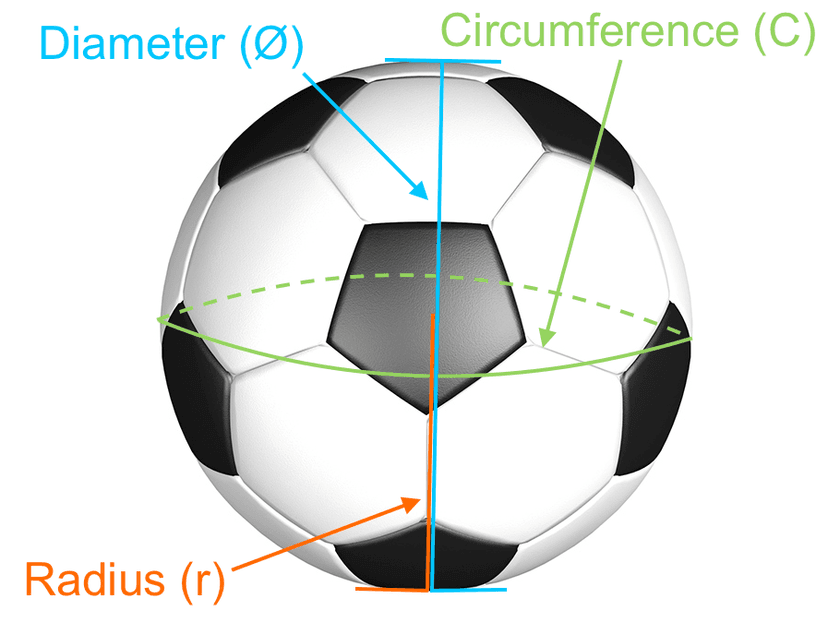
The ball used for this game is spherical in shape with a circumference of 68-70 centimeters. It weighs 410-450 grams (14-16 ounces) at the start of the match and is made of a suitable material, according to Law 2 of the Laws of the Game. Football Size 5 is the ball that should be used for those playing proper football who are aged fourteen and up. Depending on two factors the age of the player and the diversity of the game that they’re playing, however, there are several different balls that can be used. Below are the football circumference for different age groups and game variations.
| Age | Ball | Size |
| 3-6 | 2 | (Midi ball) |
| 6-9 | 3 | |
| 9-14 | 4 | |
| 14+ | 5 |
# Kids’ & Youth Football Circumference
– U-6, U-7, & U-8: Size 3 is the official football ball for toddlers and young children. It has a circumference of 23-24 inches and a weight of 11-12 ounce.
– U-9, U-10, & U-11: Size 4 is the official football-size for children aged between 9 and 13 years old. It has a circumference of 25-26 inches and a weight of 11-13 ounce.
– U-12, U-13 & up: The regulation size soccer ball, size 5, is played by youth players when they reach the age of 14. Size 5 is also the ball used in high school football games.
Youth ball sizes are set by each national association, not by the Laws of the Game. In England, The FA is changing its youth match formats from the 2026/27 season (3v3 for under-7s and 11v11 from under-14s), so check your county FA for the ball size used in each age group.
# The following are the specifications of an official football Size 5:
1. Circumference: 68 to 70 cm (27 to 28 inches)
2. Weight: 410 to 450 grams at the start of the match
3. Official Pressure: 0.6 to 1.1 atmosphere at sea level (8.5 to 15.6 PSI)
4. Diameter: about 21.6 to 22.3 cm (8.5 to 8.8 inches), worked out from the circumference
5. Radius: about 10.8 to 11.1 cm (4.3 to 4.4 inches)
Football Field Dimensions & Measurement
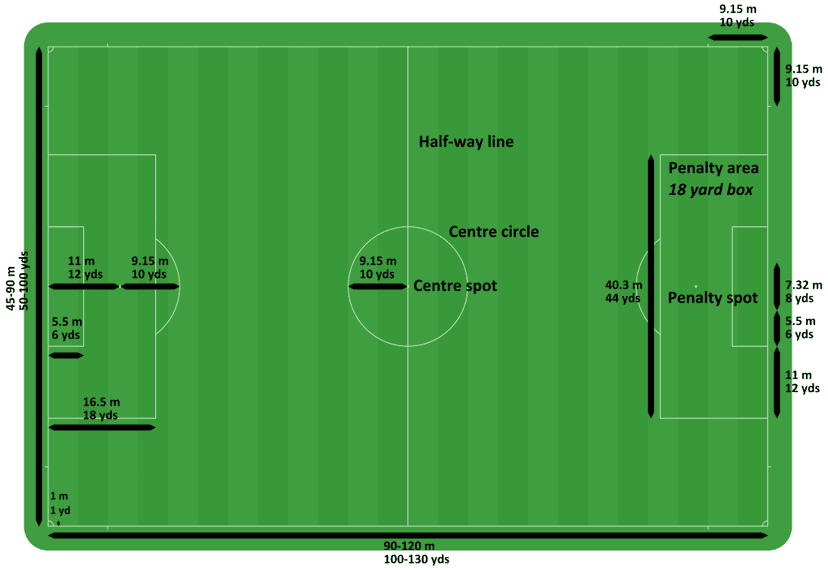
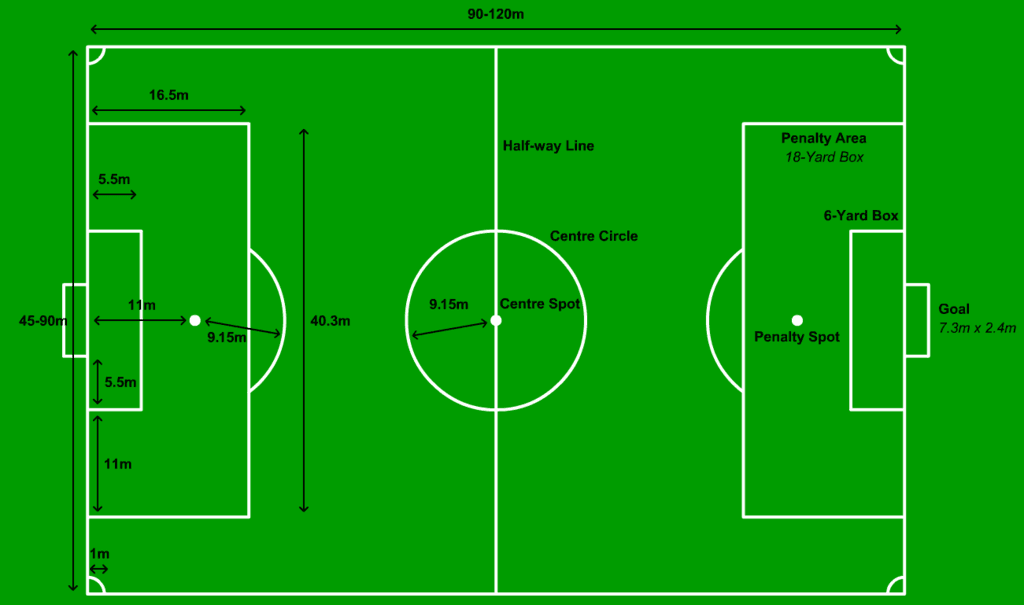
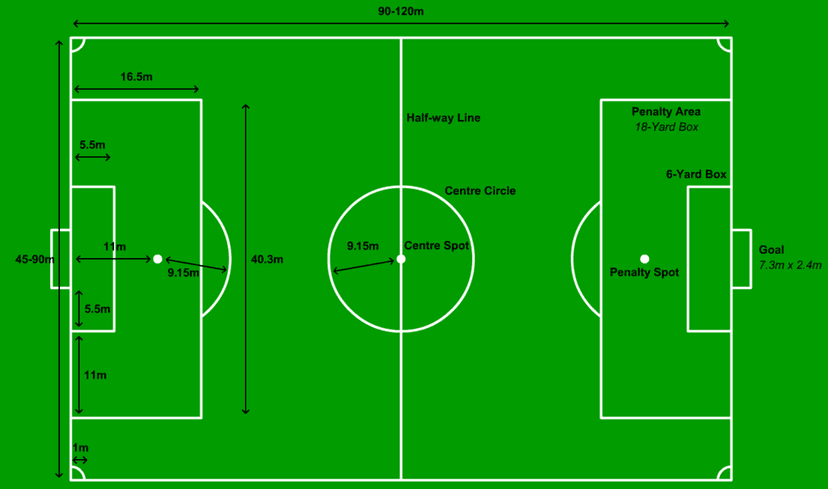
The playing area is a rectangular green field with outlines marked on it. These lines are boundary lines. The longer lines are called touchlines whereas shorter lines of a rectangular field are called goal lines. All lines must be the same width, not more than 12 centimeters, and the touchline must always be longer than the goal line. For international matches, the touchlines must be 100 to 110 meters long and the goal lines 64 to 75 meters long. The Centre mark is marked at the center of the halfway line of the pitch. Upon that, a circle of radius of 9.15 meters is marked around it. The match starts from the center of the pitch itself.
The official football dimensions and measurements are those set out in Law 1 of the Laws of the Game, which IFAB publishes and FIFA applies worldwide.
According to Law 1, a football field should have specific minimum and maximum dimensions:
– The length of touchline has to be minimum of 90 metres (100 yds) and maximum of 120 metres (130 yds).
– The width of goal-line has to be minimum of 45 metres (50 yds) and maximum 90 meters (100 yds).
For international matches the rules are somewhat different:
– The length has to be a minimum of 100 meters (110 yds) and a maximum 110 meters (120 yds).
– The width has to be a minimum of 64 meters (70 yds) and a maximum of 75 meters (80 yds).
The standard size at most top stadiums is 105 x 68 meters (114.8 x 74.4 yds). The Premier League requires 105 x 68 meters unless its Board permits otherwise, and UEFA requires exactly 105 x 68 meters for its top two stadium categories (3 and 4). Some famous stadiums and the reported dimensions of their football fields:
1. Barcelona- Camp Nou : 105 x 68 metres
2. England- Wembley: 105 x 68 metres
3. Manchester United- Old Trafford: 105 x 68 metres
4. Arsenal- Emirates Stadium: 105 x 68 metres
5. AC Milan- San Siro: 105 x 68 metres
6. Bayern Munich- Allianz Arena: 105 x 68 metres
7. Chelsea- Stamford Bridge: 103 x 67 metres
8. Liverpool- Anfield: 101 x 68 metres
Football Goal Post Size
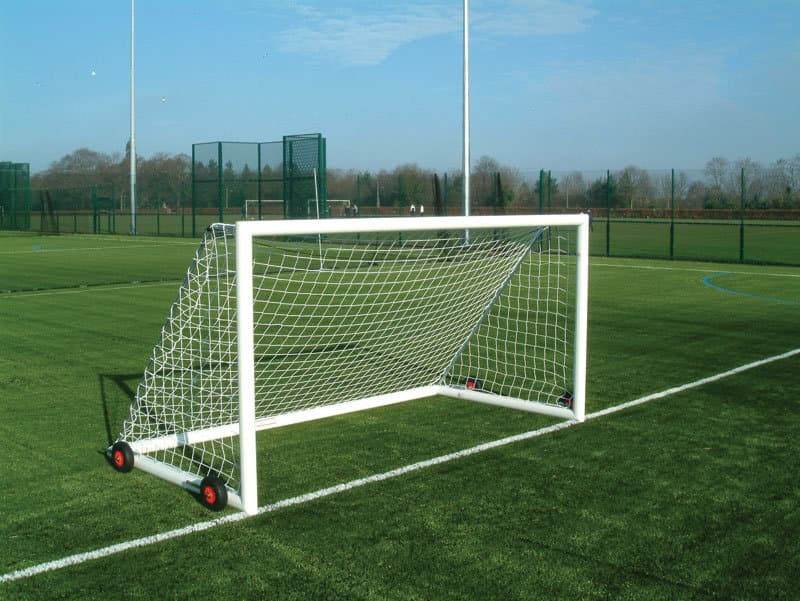
In Football Ground dimensions, Goalposts are placed at the center of each goal line. It consists of two equidistant posts standing upright to a horizontal crossbar with a net fixed on the backside. The distance between two equidistant posts is 7.32 meters and the distance from the lower edge of the horizontal crossbar to the ground should be 8 feet (2.44 meters). The goalposts and the crossbar must be white and have the same width and depth, which must not exceed 12 cm. They may be square, rectangular, round, elliptical or a hybrid of these shapes, but both goals must have the same shape. A straight goal line is created between the two posts and a goal is scored when the ball crosses the goal line.
Penalty Area Size & Dimension
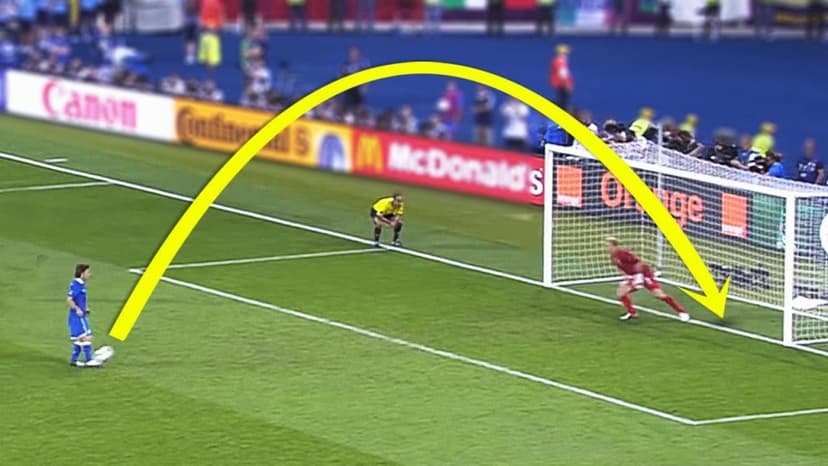
The Penalty area is the box where a goalkeeper can use his hands to hold the ball and is recognized as the goalkeeper’s area. The fouls committed inside the penalty area are punished by rewarding a penalty kick to other teams. The penalty box is the most critical area in football where players cautiously carry their game. The Penalty area includes the goal area/box, the Penalty mark from where penalty kick is being taken, and an arc on the top of the penalty box which is in the shape of ‘D’ commonly known as Penalty arc.
Coming to the dimension part of the penalty area, it is 44 yards (40.32 m) wide and 18 yards (16.5 m) long in which goalpost of 8 yards is placed. Its side lines are drawn 16.5 m from the inside of each goalpost. A penalty mark is made with a distance of 12 yards (11 m) from the mid-point between the goalposts and an arc of a circle with a radius of 10 yards (9.15 m) from the center of each penalty mark is drawn outside the penalty area.
Goal Box Size & Dimension
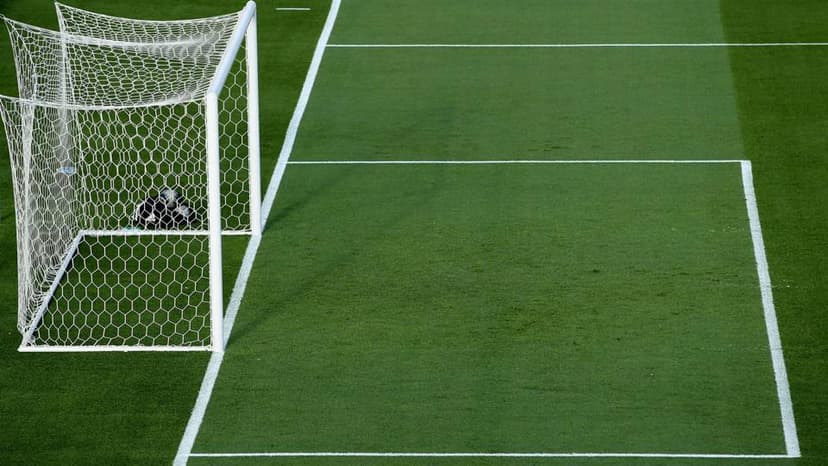
The goal box is another box built inside the penalty area. It is a 6-yard (5.5 m) long and 20-yard (18.32 m) wide box inside the penalty area, with its side lines drawn 5.5 m from the inside of each goalpost. That is why it is often called the six-yard box.
Each football goal size is specifically designed to suit the needs of specific age groups and team-sizes.
The Football Association’s (FA) recommendations of which goalpost size is suitable for each age or team size:
– 11 A-Side: The 11 a side game for under-15s and older age groups, including senior football, commend a football goal size with the dimensions 24ft x 8ft (7.32m x 2.44m). This is the goal post size used for all leagues and tournaments around the world.
However, for players who come under under-13 and 14 categories, the football goal dimensions are reduced to 21ft x 7ft (6.4m x 2.13m), although The FA says 24ft x 8ft goals are also acceptable for this age group.
– 9-A Side Games: The 9 a side game for under-11 and 12 commend a football goal with dimensions of 16ft x 7ft. This was proposed by FA, introduced to the guidelines in 2013. This was done as an intermediate step between the 7 a side and 11 a side games. This is done to advancement from one type of football game to another.
– 7-A Side Games: Both the 7 a side and 5 a side games for age ranges under & 10 and under 8 & 7 respectively, recommend the use of a 12ft x 6ft (3.66m x 1.83m) football goal post. This goal post is commonly expressed to as a ‘Mini Soccer’ football goal post.
– 5-A Side Games: On regular, the term “5 a side posts” refers to goalposts that measure to the dimensions 12ft x 4ft (3.66m x 1.22m), or 16ft x 4ft (4.88m x 1.22m). This football goal post size is designed to be used on smaller artificial turfs and in indoor 5 a side games.
These FA recommendations are from The FA Handbook 2025/26. From the 2026/27 season The FA is changing youth match formats under its Future Fit plan, with 3v3 as the entry format for under-7s and 11v11 starting at under-14s, so the goal size used by a particular age group may change. Always check your county FA or league handbook.
Corner Flags in Football Ground
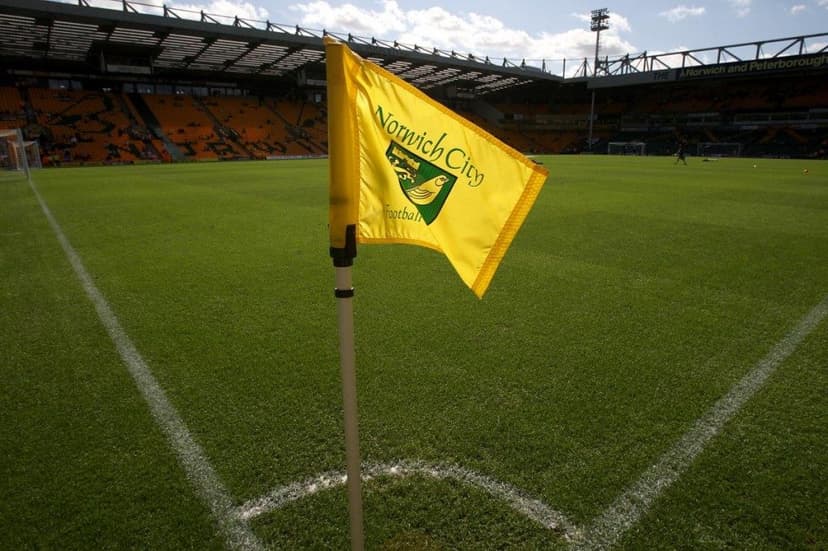
In Football Ground dimensions, Corner flags commonly known as flag posts which should be not less than 1.5 meters high, with a non-pointed top, are situated at each corner of the rectangular field. At each of the flag, a radius of the 1-meter arc is made facing towards the field where a corner kick is taken. A corner kick is awarded when the whole ball crosses the goal line, on the ground or in the air, having last touched a player of the defending team, and no goal is scored. Since the 2025/26 Laws, a corner is also awarded if the goalkeeper holds the ball in their hands for more than eight seconds, and since 2026/27 if a team delays taking its own goal kick.
Interchange Area in Football Ground
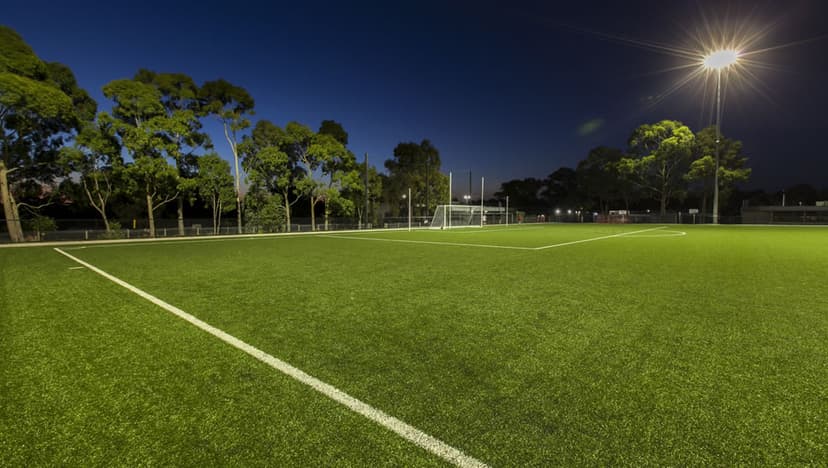
Interchange area is an area where substitutes of players take place. In 11-a-side football the Laws of the Game do not mark out a separate interchange zone. Under Law 3, a substitute enters the field at the halfway line, during a stoppage in play, after the player being replaced has left and after a signal from the referee. Since the 2026/27 Laws, the player being replaced must leave the field within ten seconds of the substitution being shown; if not, the substitute has to wait until the first stoppage after one minute of play.
Center Mark in Football Ground
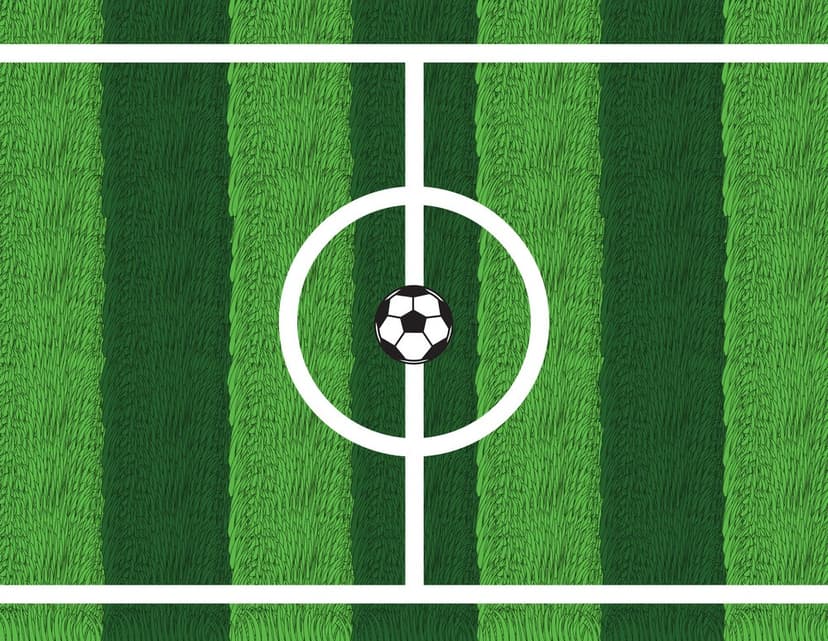
In Football Ground dimensions, “Center mark” as the name denotes, is a spot in the middle of the center circle at which the ball is placed during kickoff. A play starts in every half from the center mark itself.
Technical Area in Football Ground
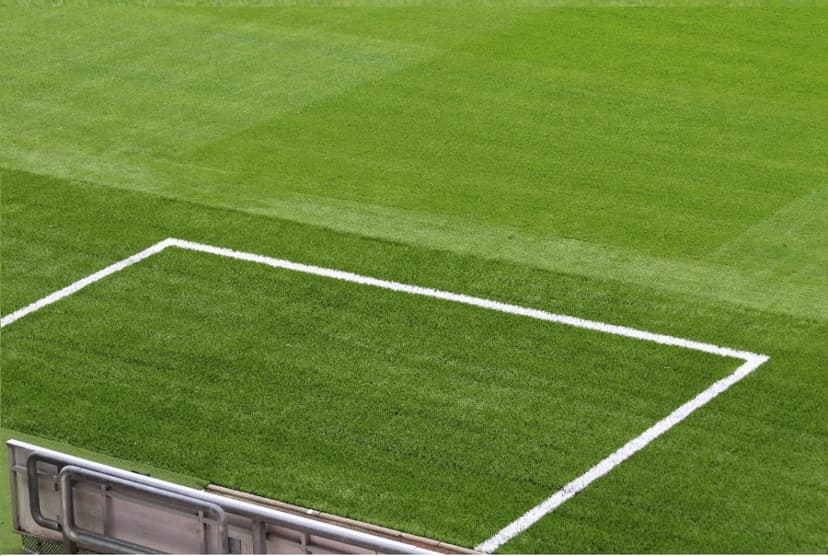
The technical area includes the dugout of both the teams where a box is created in front of each team’s dugout outside of the rectangular field. One person or the manager or the coach is allowed to instruct players within the box. Under Law 1, the technical area extends 1 meter on either side of the designated seated area and forward to within 1 meter of the touchline, it must be marked, and the competition rules set how many people may occupy it.
Law 1 Updates and Recommended Pitch Sizes (2025–2026)
IFAB made no changes to Law 1 (The Field of Play) or Law 2 (The Ball) in either the 2025/26 or the 2026/27 Laws of the Game. The 2026/27 Laws came into force on 1 July 2026 and focus on other areas, such as the ten-second rule for substitutions, a five-second countdown for deliberately delayed throw-ins and goal kicks, and players leaving the field for one minute after on-field treatment. All of the measurements in this article therefore still apply.
Competitions often set a fixed size within the Law 1 range. The Premier League Handbook says the pitch should be 105 x 68 meters unless the Premier League Board allows otherwise, which is why a few older grounds are slightly smaller. UEFA’s Stadium Infrastructure Regulations (enforcement date 1 June 2025) require 100–105 x 64–68 meters for category 1 and 2 stadiums and exactly 105 x 68 meters for category 3 and 4 stadiums.
Space around the pitch matters too. The FA recommends a run-off of at least 3 yards (or 3 meters) around natural grass pitches. For clubs in the football pyramid the minimum safety run-off is 1.83 meters (6 feet), ideally at least 2 meters, and new grounds should provide at least 3 meters.
Let it be for watching or for playing, sports is an inseparable part of almost everyone’s life. From now every time you will watch football you will have the knowledge of the Football Ground dimensions and will be able to relate with this article.