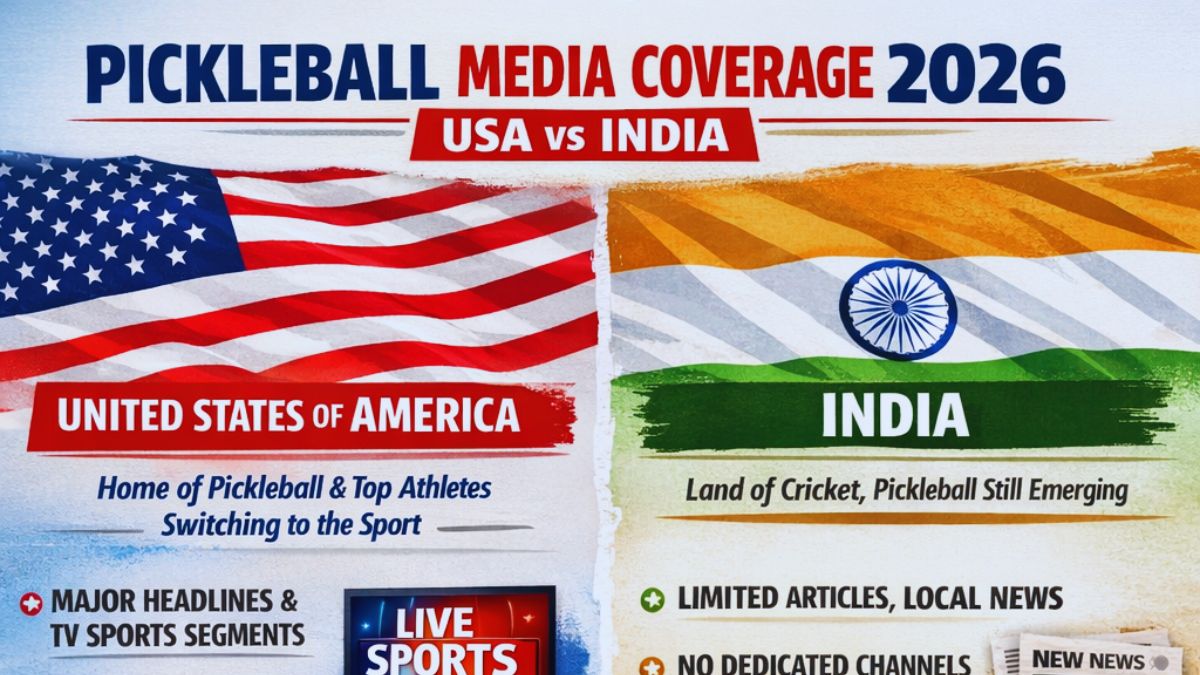
Comparative Analysis of Pickleball Media Coverage in 2026: United States vs India
In 2026, pickleball stands at two very different stages of media evolution in the United States and India. While the sport shares the same court dimensions globally, the scale, intensity, and maturity of media coverage differ significantly between the two markets. The contrast is not merely about participation numbers—it is about ecosystem depth, broadcast presence, narrative framing, and cultural positioning.
United States: From Backyard Game to Mainstream Sports Property
Pickleball originated in the United States in the 1960s, and its growth over the past decade has been nothing short of extraordinary. What was once considered a recreational pastime has transformed into a professional sporting ecosystem with structured leagues, sponsorship portfolios, athlete branding, and broadcast partnerships.
One major indicator of its credibility is the migration of former tennis professionals and high-performance athletes into competitive pickleball circuits. Organizations such as Major League Pickleball and the Professional Pickleball Association have created viable career pathways. These leagues offer structured contracts, prize money, and media visibility—factors that naturally attract elite athletes seeking both competitive longevity and commercial opportunity.
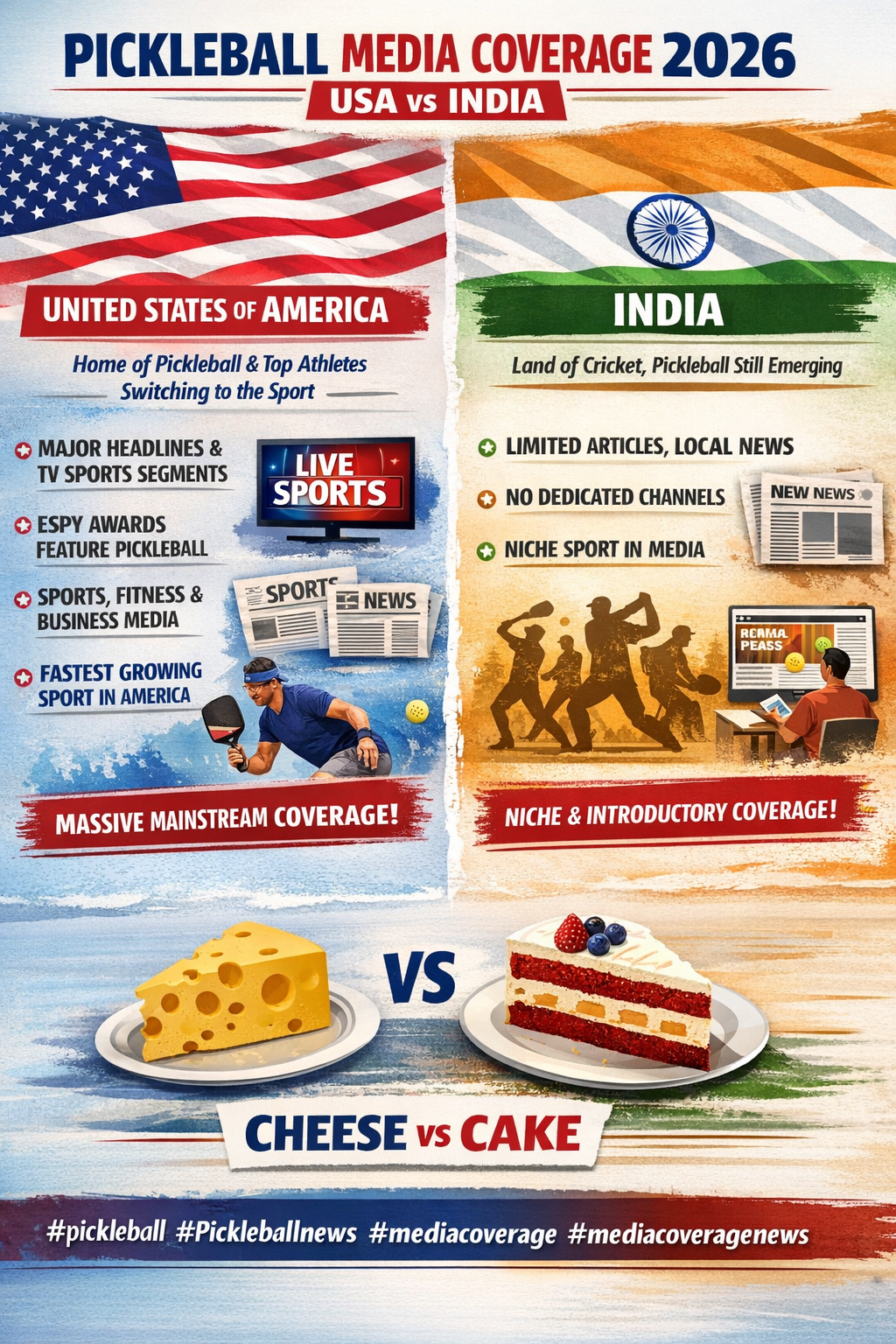
The most significant differentiator, however, lies in media treatment. In the United States, pickleball coverage is extensive and diversified. It regularly features in national newspapers, sports business columns, television segments, digital sports platforms, and lifestyle publications. Major networks allocate broadcast slots, analysts discuss tournament outcomes, and podcasts dissect league developments. The sport is no longer introduced as a novelty—it is discussed as an established property within the broader sports economy.
A powerful symbolic shift has been its presence at the ESPY Awards, produced by ESPN since 1993. Inclusion in a long-standing American sports awards platform signals cultural validation. Just a few years ago, such recognition would have seemed premature. Today, it reflects pickleball’s acceptance within mainstream athletic discourse.
Another critical element is narrative framing. U.S. media consistently positions pickleball as the “fastest growing sport in America.” This phrase appears across sports journalism, investment reports, health publications, and entrepreneurial analysis. Coverage often extends beyond match results to include participation statistics, franchise valuations, facility investments, and celebrity ownership stories. In effect, pickleball is presented not only as a sport but as a business sector, a fitness movement, and a lifestyle phenomenon.
In short, by 2026 the United States demonstrates a mature pickleball media ecosystem: broad coverage, consistent storytelling, strong broadcast integration, corporate sponsorship alignment, and millions of active participants. The sport enjoys mainstream sporting narratives rather than niche categorization.
India: Emerging Visibility Within a Cricket-Dominated Landscape
India presents a markedly different media reality. Interest in pickleball is rising, and new leagues and urban clubs are emerging. However, the depth of media penetration remains limited when compared to the United States.
To draw a simple analogy, comparing U.S. and Indian coverage today is like comparing cheese with cake—both valuable, but fundamentally different in composition and maturity. India’s sports media ecosystem remains heavily centered on cricket. The dominance of the Indian Premier League and the influence of the Board of Control for Cricket in India create a high concentration of attention, advertising revenue, and broadcast bandwidth around cricket properties. As a result, emerging sports often struggle to secure sustained prime-time visibility.
Pickleball coverage in India is currently concentrated in digital articles, press releases, startup-focused features, and introductory explainers. Business publications may highlight investment potential, while lifestyle sections discuss it as a trending urban activity. However, consistent televised segments, syndicated sports bulletins, or dedicated pickleball desks within mainstream media organizations remain rare.
The framing of the sport also differs. In India, pickleball is typically described as an “upcoming sport,” a “new urban trend,” or a “rapidly growing recreational activity.” These labels suggest potential rather than established authority. Media narratives are still in the awareness-building phase rather than performance analysis or ecosystem evaluation.
Broadcast exposure is another gap. While leagues may generate localized excitement, they often rely heavily on social media amplification rather than national television distribution. Unlike in the United States—where professional circuits are integrated into structured sports programming—Indian pickleball largely operates within digital-first channels.
This does not imply a lack of opportunity. On the contrary, India’s demographic profile, rising middle-class participation in fitness activities, and growing interest in alternative sports create fertile ground for expansion. However, mainstream recognition depends on systemic media integration: consistent coverage cycles, athlete storytelling, grassroots reporting, and institutional backing.
Conclusion: Ecosystem Maturity vs Emerging Momentum
By 2026, the United States represents a mature pickleball media environment characterized by mainstream acceptance, broadcast presence, investment analysis, and cultural integration. India, meanwhile, reflects emerging momentum—growing interest but limited structural media depth.
The difference is not rooted in talent or enthusiasm. It lies in narrative infrastructure. Media systems determine whether a sport is perceived as niche or mainstream. In the United States, pickleball has crossed that threshold. In India, it is still building toward it.
For India to bridge the gap, the path forward requires more than leagues. It demands consistent media strategy, dedicated sports journalism resources, broadcast experimentation, and long-term storytelling investment.
Only then will pickleball transition from “emerging trend” to “established sporting pillar” within the Indian media landscape.
Comparative Analysis of Pickleball Media Coverage in 2026
United States vs India
| Parameter | United States (2026) | India (2026) |
|---|---|---|
| Stage of Media Evolution | Mature and mainstream sports property | Emerging and developing visibility |
| Historical Context | Originated in the 1960s; evolved from backyard game to professional ecosystem | Recently introduced; still in awareness-building phase |
| Professional Ecosystem | Structured leagues, sponsorship portfolios, athlete branding, broadcast partnerships | New leagues and urban clubs emerging, but ecosystem still forming |
| Athlete Migration | Former tennis professionals and elite athletes switching due to viable career pathways | Limited high-profile athlete migration; mostly early adopters and enthusiasts |
| League Structure | Structured contracts, prize money, media visibility | Localized leagues; limited national broadcast integration |
| Media Coverage Depth | Extensive and diversified | Limited and concentrated |
| Print Media Presence | Regularly featured in national newspapers and sports business columns | Appears in digital articles and business/lifestyle features |
| Television Coverage | Major networks allocate broadcast slots; tournament discussions and analysis common | Rare consistent televised segments; minimal syndicated sports coverage |
| Digital Media Integration | Strong presence across digital platforms, podcasts, analyst discussions | Heavily reliant on social media and digital-first promotion |
| Awards & Cultural Validation | Inclusion at the ESPY Awards produced by ESPN (symbol of mainstream acceptance) | No comparable national sports award integration |
| Narrative Framing | Positioned as the “fastest growing sport in America” | Framed as “upcoming sport,” “urban trend,” or “rapidly growing recreational activity” |
| Business Coverage | Investment reports, franchise valuations, celebrity ownership, facility investments widely covered | Business media highlights startup potential and growth possibilities |
| Broadcast Integration | Integrated into structured sports programming | Limited national television distribution |
| Media Treatment | Discussed as an established sports economy property | Treated as niche and introductory |
| Cultural Positioning | Mainstream sporting narrative | Niche sport within cricket-dominated ecosystem |
| Dominant Competing Sport | Multi-sport competitive media environment | Cricket dominance (IPL ecosystem & BCCI influence) limits bandwidth |
| Participant Base Narrative | Millions of active participants; broad acceptance | Growing participation; still expanding awareness |
| Ecosystem Maturity | High ecosystem depth and narrative infrastructure | Early-stage narrative infrastructure |
| Growth Phase | Established mainstream integration | Emerging momentum |
| Primary Gap Identified | None — mature structure | Lack of consistent media strategy, dedicated journalism resources, broadcast experimentation |
| Overall Media Position | Mainstream sport | Niche sport |
Final Comparative Insight
| United States | India |
|---|---|
| Ecosystem Maturity | Emerging Momentum |
| Mainstream Acceptance | Awareness-Building Phase |
| Structured Media Integration | Limited Structural Media Depth |
| Cultural Validation Achieved | Cultural Validation in Progress |