
Decoding the Honest Pickleball Ecosystem in Middle East for the year 2026 in detail
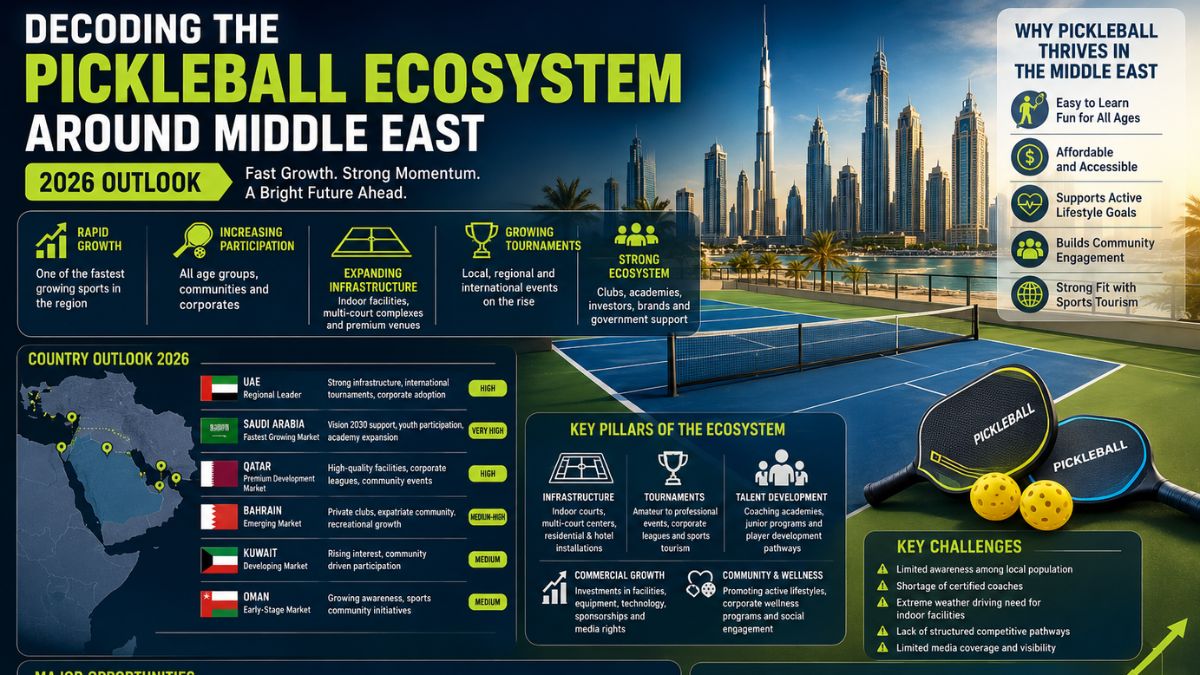
The Middle East has emerged as one of the fastest-growing regions for pickleball outside North America. By 2026, the sport has evolved from a niche recreational activity into a structured ecosystem involving clubs, tournaments, academies, real estate developers, hospitality brands, sports investors, and government-backed sports initiatives. Countries such as the UAE, Saudi Arabia, Qatar, Bahrain, Kuwait, and Oman are increasingly viewing pickleball as a sport that aligns with their broader goals of promoting active lifestyles, community engagement, sports tourism, and international sporting events.
United Arab Emirates: The Regional Leader
The UAE continues to lead the Middle East pickleball movement. Dubai and Abu Dhabi have become key hubs for courts, leagues, and corporate tournaments. Premium sports clubs, schools, and residential communities are incorporating dedicated pickleball facilities into their infrastructure.
Several factors contribute to the UAE’s dominance:
- High expatriate population familiar with the sport.
- Strong sports infrastructure.
- Growing number of certified coaches.
- Active participation from corporate organizations.
- Increasing sponsorship opportunities.
Dubai has positioned itself as a destination for international pickleball tournaments, attracting players from Europe, Asia, and North America. The sport is increasingly being integrated into wellness and lifestyle programs across luxury communities.
Saudi Arabia: The Biggest Growth Opportunity
Saudi Arabia represents the largest untapped market in the region. Under Vision 2030, the Kingdom continues to invest heavily in sports participation and community development. Pickleball fits perfectly into these objectives because it is accessible, affordable, and suitable for all age groups.
Sports authorities, schools, and private operators are introducing pickleball courts in Riyadh, Jeddah, and Dammam. The growth is being supported by:
- Government-backed sports initiatives.
- Rising youth participation.
- Expansion of sports academies.
- Increasing demand for recreational sports.
Industry experts believe Saudi Arabia could become the largest pickleball market in the Middle East within the next five years if current growth trends continue.
Qatar and Bahrain: Premium Market Development
Qatar and Bahrain are focusing on quality rather than scale. Both countries have strong sports cultures and high disposable incomes, creating favorable conditions for pickleball expansion.
In Qatar, sports clubs and educational institutions are actively introducing the sport to new audiences. Corporate leagues and community competitions are becoming more common. Bahrain is witnessing growth through private clubs, expatriate communities, and recreational sports centers.
These markets may remain smaller than the UAE and Saudi Arabia but are expected to generate significant participation rates relative to their population size.
Infrastructure and Court Development
One of the biggest trends in 2026 is dedicated infrastructure development. Initially, most facilities relied on temporary conversions of tennis or badminton courts. However, increasing demand has encouraged operators to build permanent pickleball venues.
Key infrastructure trends include:
- Indoor climate-controlled facilities.
- Multi-court pickleball centers.
- Pickleball-inclusive residential developments.
- Hotel and resort installations.
- Community sports hubs.
Indoor facilities are particularly important because of extreme summer temperatures across much of the region.
Tournament Ecosystem
The competitive landscape has expanded significantly. Amateur, intermediate, and professional events are now being organized across multiple Middle Eastern countries.
Tournament growth is being driven by:
- International federations.
- Regional pickleball associations.
- Private event organizers.
- Corporate sponsors.
- Sports tourism initiatives.
Many events now combine competition with networking, wellness activities, and entertainment, creating broader commercial value beyond the matches themselves.
Commercial and Investment Opportunities
The Middle East pickleball ecosystem is attracting growing investor interest. Several business opportunities are emerging:
- Court construction and facility management.
- Coaching academies.
- Equipment distribution.
- Tournament operations.
- Sports technology solutions.
- Sponsorship and media partnerships.
Real estate developers are increasingly marketing pickleball courts as premium lifestyle amenities. Hotels and resorts are also using the sport to attract tourists seeking active vacation experiences.
Challenges Facing the Ecosystem
Despite strong momentum, several challenges remain:
- Limited awareness among local populations.
- Shortage of certified coaches.
- Need for structured player pathways.
- Extreme weather conditions.
- Limited regional media coverage.
Addressing these challenges will require collaboration between federations, governments, private operators, and international stakeholders.
The Road Ahead
By the end of 2026, pickleball is expected to transition from an emerging sport to a recognized recreational and competitive activity across the Middle East. The UAE will likely remain the regional leader, while Saudi Arabia could become the fastest-growing market. Qatar, Bahrain, Kuwait, and Oman are expected to strengthen their positions through targeted investments and community programs.
The region’s combination of modern infrastructure, strong government support, growing sports participation, and increasing international visibility creates a favorable environment for long-term growth. As more facilities, tournaments, and development programs are introduced, the Middle East is well positioned to become one of the world’s most important emerging pickleball markets over the next decade.
| Category | Middle East Pickleball Ecosystem 2026 |
|---|---|
| Industry Status | One of the fastest-growing emerging sports ecosystems outside North America |
| Growth Stage | Transitioning from recreational activity to structured sports ecosystem |
| Key Growth Drivers | Government support, sports tourism, real estate integration, community participation, wellness trends |
| Major Stakeholders | Federations, clubs, academies, investors, real estate developers, hospitality brands, sponsors |
Country-Wise Analysis
| Country | Ecosystem Status | Key Highlights | Growth Potential |
|---|---|---|---|
| United Arab Emirates (UAE) | Regional Leader | Strong infrastructure, expatriate participation, international tournaments, corporate leagues | High |
| Saudi Arabia | Fastest Growing Market | Vision 2030 support, youth participation, sports investments, academy expansion | Very High |
| Qatar | Premium Development Market | Sports-focused economy, club participation, corporate competitions | High |
| Bahrain | Emerging Market | Private clubs, expatriate community growth, recreational adoption | Medium-High |
| Kuwait | Developing Market | Growing awareness and community-driven participation | Medium |
| Oman | Early-Stage Market | Limited but increasing interest through sports communities | Medium |
UAE Pickleball Ecosystem 2026
| Parameter | Status |
|---|---|
| Market Position | Regional Leader |
| Major Cities | Dubai, Abu Dhabi |
| Court Development | Rapid growth in dedicated facilities |
| Tournament Activity | High |
| Corporate Participation | Strong |
| Coaching Ecosystem | Expanding |
| Investment Interest | High |
Saudi Arabia Pickleball Ecosystem 2026
| Parameter | Status |
|---|---|
| Market Position | Largest Growth Opportunity |
| Government Support | Vision 2030 Driven |
| Major Cities | Riyadh, Jeddah, Dammam |
| Youth Participation | Growing Rapidly |
| Academy Development | Increasing |
| Infrastructure Investment | Significant |
| Future Potential | Highest in Middle East |
Infrastructure Trends
| Infrastructure Segment | 2026 Trend |
|---|---|
| Dedicated Pickleball Courts | Increasing |
| Indoor Facilities | Strong Demand |
| Multi-Court Complexes | Expanding |
| Residential Communities | Incorporating Courts |
| Hotels & Resorts | Adding Pickleball Facilities |
| Community Sports Centers | Growing Adoption |
Tournament Ecosystem
| Segment | Status in 2026 |
|---|---|
| Amateur Tournaments | Rapid Growth |
| Intermediate Events | Increasing |
| Professional Events | Expanding |
| Corporate Leagues | Popular |
| International Participation | Growing |
| Sports Tourism Events | Emerging Opportunity |
Commercial Opportunities
| Business Segment | Opportunity Level |
|---|---|
| Court Construction | High |
| Facility Operations | High |
| Coaching Academies | High |
| Equipment Distribution | Medium-High |
| Event Management | High |
| Sponsorship Sales | Growing |
| Sports Technology | Emerging |
| Media Rights | Long-Term Opportunity |
Real Estate & Hospitality Impact
| Sector | Pickleball Integration |
|---|---|
| Residential Communities | Premium Amenity |
| Luxury Apartments | Court Inclusion |
| Villas & Townships | Recreational Feature |
| Hotels | Guest Engagement Activity |
| Resorts | Sports Tourism Offering |
| Corporate Campuses | Employee Wellness Program |
Key Challenges
| Challenge | Impact |
|---|---|
| Limited Local Awareness | Slows Mass Adoption |
| Coach Shortage | Restricts Player Development |
| Weather Conditions | Necessitates Indoor Facilities |
| Media Coverage | Limited Exposure |
| Structured Pathways | Still Developing |
| Tournament Consistency | Varies by Country |
Ecosystem SWOT Analysis
| Strengths | Weaknesses |
|---|---|
| Government-backed sports growth | Limited awareness among locals |
| Modern sports infrastructure | Shortage of certified coaches |
| Strong expatriate participation | Nascent competitive pathways |
| Growing investment interest | Limited regional media coverage |
| Opportunities | Threats |
|---|---|
| Sports tourism growth | Competition from established sports |
| Real estate partnerships | Economic fluctuations |
| Corporate wellness programs | High facility operating costs |
| International tournaments | Slow grassroots penetration |
2026 Middle East Pickleball Market Outlook
| Parameter | Outlook |
|---|---|
| Participation Growth | Strong |
| Infrastructure Expansion | Rapid |
| Tournament Growth | High |
| Investment Activity | Increasing |
| Sponsorship Interest | Growing |
| Government Support | Positive |
| Sports Tourism Potential | Significant |
| Long-Term Sustainability | Strong |
Expert Forecast (2026–2030)
| Country | Future Outlook |
|---|---|
| UAE | Continue as Regional Hub |
| Saudi Arabia | Largest Market by Participation |
| Qatar | Premium Tournament Destination |
| Bahrain | Strong Community Growth |
| Kuwait | Steady Expansion |
| Oman | Emerging Development Market |
Final Verdict
| Metric | Assessment |
|---|---|
| Overall Ecosystem Maturity | Developing to Growth Stage |
| Most Advanced Market | UAE |
| Fastest Growing Market | Saudi Arabia |
| Best Investment Opportunity | Infrastructure & Academies |
| Biggest Future Driver | Government-Led Sports Participation |
| Regional Growth Outlook | Very Positive |
| Middle East Pickleball Rating (2026) | 8.5/10 |
Frequently Ask Questions(FAQ):
| Question | Answer |
|---|---|
| Why is the Middle East considered one of the most promising regions for pickleball growth in 2026? | The Middle East has become one of the most promising regions for pickleball growth in 2026 because it combines strong government support, world-class sports infrastructure, rising health awareness, and increasing investment in recreational activities. Countries such as the UAE, Saudi Arabia, Qatar, Bahrain, Kuwait, and Oman are actively promoting sports participation as part of broader wellness and community development strategies. Pickleball benefits from being easy to learn, affordable to play, and suitable for participants of all age groups, making it attractive for families, schools, corporate organizations, and senior citizens alike. The UAE continues to lead the region with dedicated courts, international tournaments, and a growing coaching ecosystem. Saudi Arabia is emerging as the fastest-growing market due to Vision 2030 initiatives that encourage sports participation and infrastructure development. Qatar and Bahrain are also investing in premium sports facilities and community programs that support pickleball adoption. Another important factor is the involvement of real estate developers and hospitality brands. Residential communities, luxury hotels, and resorts are increasingly incorporating pickleball courts as lifestyle amenities to attract residents and visitors. Corporate wellness programs are also driving demand as companies seek engaging activities for employees. While challenges such as limited awareness, coach shortages, and extreme weather conditions remain, indoor facilities and structured development programs are helping address these issues. The growing number of tournaments, sponsorship opportunities, equipment suppliers, and academy operators further strengthens the ecosystem. As sports tourism continues to expand across the region, pickleball is expected to benefit from international participation and event-driven growth. Overall, the combination of infrastructure, investment, government support, and community engagement makes the Middle East one of the most exciting emerging pickleball markets globally and positions the region for significant long-term growth over the next decade. |
Related posts:
 Pickleball Sports: Complete Price of Pickleball Equipments in India for the year 2025 in Detail
 Why Indian Mainstream Media is Ignoring Pickleball Coverage in 2026?
 10 Pickleball Documentaries & Shows Every Sports Professional Should Watch in 2026
 Sumadhura Centre Court Pickleball League: A New Chapter for Bengaluru’s Sporting Culture