
USA Pickleball Ecosystem 2026: Growth, Business, Investments, Courts, Players & Future of Pickleball Industry in America
Decoding the Honest Pickleball Ecosystem in USA 2026: How America Built a Multi-Billion-Dollar Sports Industry
Pickleball in the United States has evolved far beyond being just a recreational backyard activity. In 2026, the sport has become one of the most powerful examples of how modern sports ecosystems are built through accessibility, community culture, infrastructure, technology, entertainment, and business innovation.
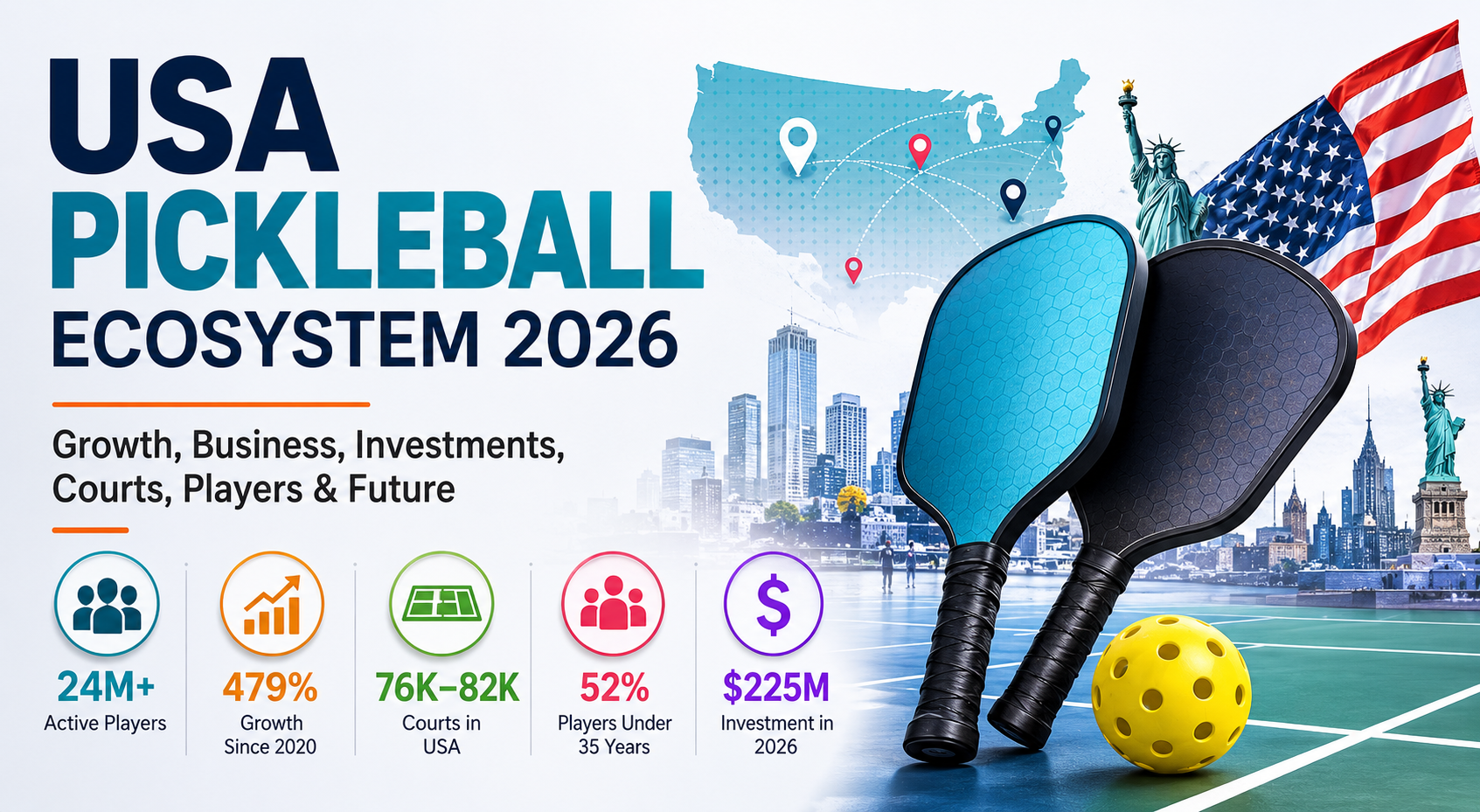
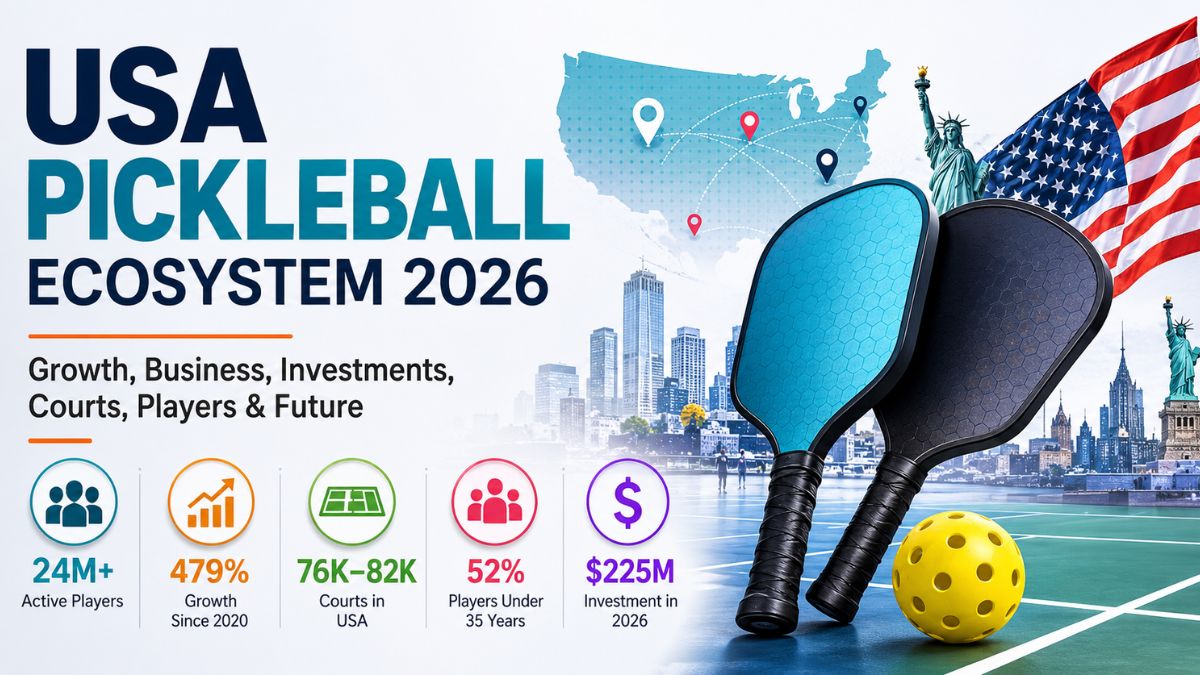
The most impressive aspect of the USA pickleball ecosystem is the sheer participation growth. According to multiple industry reports, the United States now has more than 24 million active pickleball players, making it the fastest-growing sport in the country for several consecutive years. Participation has increased nearly 479% since 2020, which reflects how rapidly the game has entered mainstream sports culture. Unlike many traditional sports that require years of training, expensive infrastructure, or elite athletic ability, pickleball became successful because of its simplicity and inclusivity.
Accessibility remains the biggest strength of the American pickleball model. The sport can be played by children, working professionals, senior citizens, and even first-time athletes with minimal learning barriers. The court size is smaller compared to tennis, the rules are easier to understand, and the equipment costs are relatively affordable. This low-entry barrier has allowed the sport to spread quickly through schools, public parks, apartment communities, private clubs, and recreational centers.
One of the biggest myths surrounding pickleball was that it was only meant for older people. However, the demographic shift in 2026 tells a completely different story. More than 52% of players in America are now under the age of 35, while women participation has also increased significantly to nearly 46%. The average player age has dropped rapidly over the past few years, showing how the sport has successfully entered youth and urban culture. Social media platforms, content creators, influencers, and recreational sports communities have played a major role in making pickleball look trendy, social, and aspirational.
Infrastructure development has become another major pillar of the ecosystem. The USA currently has nearly 76,000 to 82,000 pickleball courts across the country, including indoor and outdoor facilities. Despite this massive expansion, demand still continues to exceed supply in many cities. Experts estimate that America may still require another 25,000 to 40,000 courts by 2028 to meet growing participation levels. Indoor pickleball facilities are especially booming because they allow year-round play regardless of weather conditions. Real estate developers, fitness chains, and sports entrepreneurs are increasingly viewing pickleball courts as profitable long-term investments.
The professional ecosystem surrounding pickleball has also grown aggressively. Major League Pickleball (MLP) and the PPA Tour are now attracting huge sponsorships, broadcast partnerships, and celebrity ownership groups. Investors no longer see pickleball as a temporary sports trend. Instead, it is now viewed as a scalable entertainment and business property with long-term commercial potential. In 2026, Pickleball Inc. reportedly secured a historic investment worth approximately $225 million, proving that institutional investors strongly believe in the future of the sport.
Another major reason behind the growth of the ecosystem is the rise of the pickleball business economy. The industry is no longer dependent only on players and tournaments. Multiple sectors are now connected to the sport including paddle manufacturing, apparel brands, coaching businesses, analytics companies, recovery products, software platforms, court booking applications, and content creation businesses. Companies like Selkirk have built powerful brand identities through community engagement, athlete partnerships, and digital storytelling. This has created an entire economy around the sport rather than limiting it to just competition.
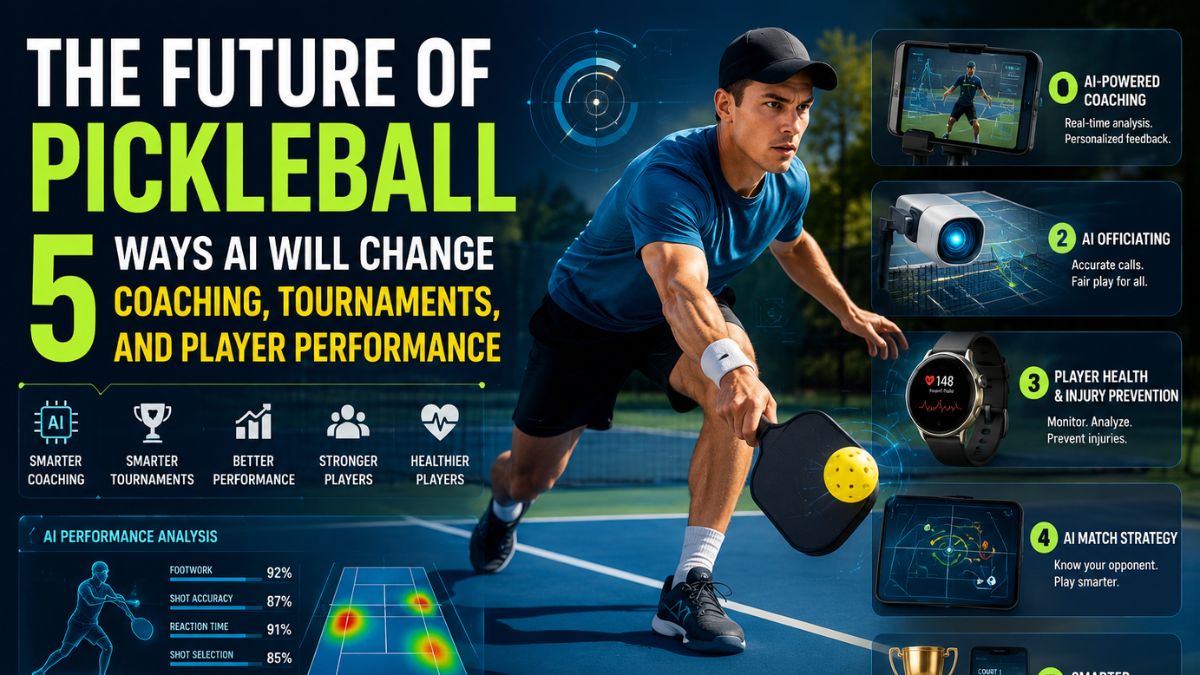
Technology is also becoming deeply integrated into the ecosystem. Smart court systems, AI-driven performance analysis, digital coaching platforms, mobile booking apps, and wearable fitness tracking tools are increasingly becoming common in the American pickleball market. These innovations are helping players improve performance while also enhancing fan engagement and operational efficiency for clubs and leagues.
However, despite the impressive growth, the ecosystem still faces several challenges. Noise complaints remain one of the biggest issues associated with pickleball courts in residential communities. Since the game produces repetitive paddle sounds, several neighborhoods have raised concerns regarding noise pollution. Court-sharing conflicts between tennis and pickleball players have also become common in many public facilities across the USA. Rising operational costs, oversaturation risks in certain markets, and inconsistent infrastructure planning are additional concerns that industry experts continue to discuss.
The honest reality is that pickleball’s success in America was never driven by professional athletes alone. The sport became successful because it combined accessibility, entertainment, business opportunities, community engagement, digital content, and lifestyle branding into one ecosystem. Pickleball has effectively positioned itself as more than just a sport — it has become a social movement and cultural trend.
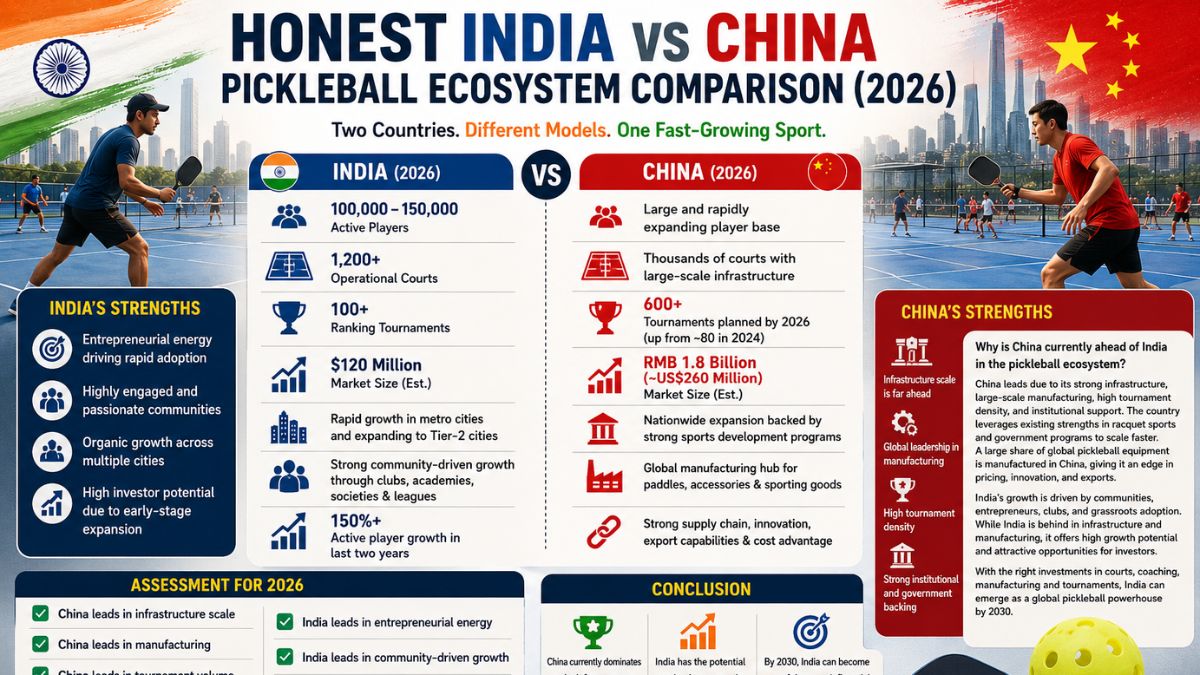
For countries like India, the American pickleball ecosystem offers valuable lessons. Building sustainable sports ecosystems requires more than organizing tournaments. Long-term success depends on grassroots participation, infrastructure development, content creation, youth engagement, sponsorship ecosystems, and community-building strategies. The future of pickleball globally will belong to countries and organizations that understand how to combine sports with culture, business, and digital storytelling.
In 2026, the USA stands as the strongest example of how a modern sports ecosystem can scale rapidly when accessibility, investment, and community-driven growth work together.
| Category | Honest Reality of USA Pickleball Ecosystem in 2026 |
|---|---|
| Total Players | USA has crossed 24 million active pickleball players, making it the fastest-growing sport in America. |
| Participation Growth | The sport has grown nearly 479% since 2020 due to accessibility and community-driven adoption. |
| Age Demographics | More than 52% of players are under 35 years old, showing strong youth engagement. |
| Women Participation | Women now contribute nearly 46% of the total player base, creating a balanced ecosystem. |
| Accessibility Factor | Lower equipment cost, simple rules, and smaller court size make pickleball easy for beginners. |
| Infrastructure | USA currently has around 76,000–82,000 pickleball courts across parks, clubs, gyms, and private facilities. |
| Future Court Demand | Experts believe America may still need another 25,000–40,000 courts by 2028. |
| Indoor Facilities | Indoor pickleball centers are rapidly increasing due to year-round playing opportunities. |
| Professional Leagues | Major League Pickleball (MLP) and PPA Tour are driving professional expansion and fan engagement. |
| Investments | Pickleball Inc. secured nearly $225 million investment in 2026, showing strong investor confidence. |
| Business Ecosystem | The industry now includes coaching businesses, booking apps, analytics companies, apparel brands, and recovery products. |
| Equipment Market | Paddle and equipment brands are generating massive revenues through retail and digital communities. |
| Technology Integration | AI coaching, smart courts, wearable tracking, and analytics platforms are becoming common. |
| Social Media Impact | Influencers and creators helped pickleball become trendy among urban youth audiences. |
| Community Culture | Pickleball is now viewed as a social and lifestyle activity rather than only a competitive sport. |
| Tourism & Events | Cities are hosting pickleball festivals, amateur leagues, and destination tournaments for tourism growth. |
| Major Challenges | Noise complaints, court-sharing conflicts with tennis, and rising infrastructure costs remain key concerns. |
| Oversaturation Risk | Some American cities are beginning to face oversupply concerns due to rapid expansion. |
| Biggest Success Formula | Accessibility + Community + Business + Content + Infrastructure created the winning ecosystem. |
| Global Learning | Countries like India can learn the importance of grassroots development, creator economy, and infrastructure planning from the USA model. |
Frequently Asked Question (FAQ)
Q1. Why has the pickleball ecosystem in the USA become so successful in 2026 compared to many other emerging sports?
The pickleball ecosystem in the United States has become highly successful in 2026 because the sport managed to grow beyond traditional competition and evolved into a complete lifestyle and business ecosystem. Unlike many sports that depend heavily on professional leagues or elite athletes, pickleball became popular because it was accessible, affordable, social, and easy to learn for people of all age groups. The smaller court dimensions, lower equipment costs, and beginner-friendly nature of the game helped millions of Americans quickly adopt the sport across parks, schools, clubs, gyms, and residential communities.
.
Another major reason behind the success is infrastructure development. America rapidly invested in building thousands of indoor and outdoor courts, allowing communities to easily access playing facilities. The rise of dedicated pickleball clubs and indoor centers also created year-round participation opportunities, especially in urban markets. Alongside infrastructure, strong community culture played a massive role in the sport’s expansion. Pickleball became more than just a game — it became a social activity that connected families, professionals, creators, and fitness enthusiasts.
The business side of the ecosystem also accelerated growth significantly. Professional leagues like Major League Pickleball and the PPA Tour attracted sponsorships, celebrity investors, media attention, and technology companies. Brands started investing heavily in paddles, apparel, analytics, coaching platforms, and digital content creation. Social media influencers and creators further helped pickleball become trendy among younger audiences, removing the old perception that it was only a retirement sport.
Most importantly, the USA ecosystem succeeded because multiple industries worked together simultaneously — infrastructure, community engagement, business investment, content creation, technology integration, and grassroots participation. This combination transformed pickleball from a recreational activity into one of the fastest-growing sports industries in the world by 2026.
Related posts: