Pickleball is regarded as one of the most Popular game in India and Credit should be given to all Stakeholders who have worked hard behind the scenes to make this entity extremely popular.
Here in this article we will reveal factor which might dent Pickleball Popularity big time in times to come to be shared in the below format:
***Premium Memberships or Access: Before we dwell further into technicalities of Premium Memberships or Access the word simply mean “Anything which is created for specific set of audience reaching in certain financial bracket (Other words all those sports which require upper class to play this sport as cost of playing which includes equipment’s and miscellaneous things are expensive which include- Golf and Tennis which is not inclusive for all”
So far the sport is growing big time and court capacity and players size is increasing what the sport is lacking systems in place.
The Sport is inclusive for all with distinct age groups from 18 years to 65+ years old could compete under one roof.
The Sport is growing big time at the moment as there is no age as well as financial barrier the moment latter comes up with premium models trust me it won’t grow at the same pedestal it would filter brackets.
When we speak about sport like Golf and Tennis we see there is huge entry hindrance in the same capacity you don’t want Pickleball to fall as it would certainly diminish the sprit of this popular game who was once touted as next big thing in Sports.
Pickleball needs massive support from stakeholders to grow this sport towards next level and inclusiveness is only think which could move this combat sport in right direction.
More Details about Pickleball Premium Memberships which could Destroy Pickleball Popularity in India to be shared in the below format:
Pickleball is currently one of the fastest-growing sports in India. Courts are coming up in metros, communities are forming, and more people are discovering the sport every day.
But there is a question the ecosystem must ask itself early: Will premium memberships limit the sport’s growth?
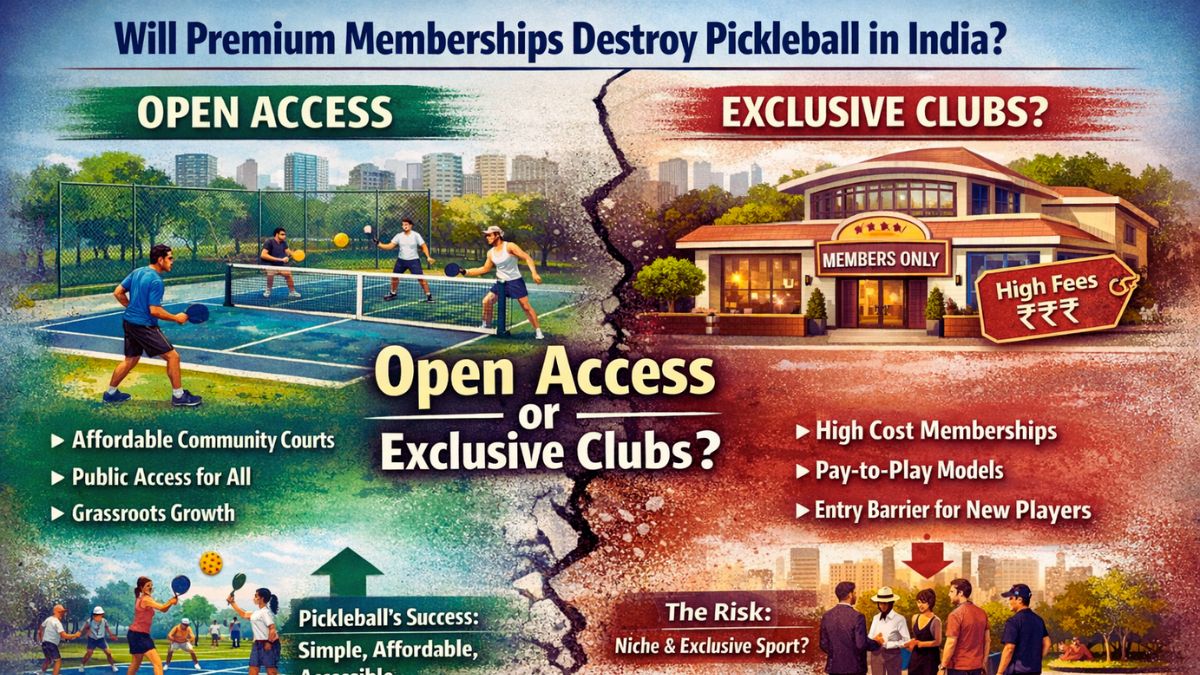
In many cities, access to pickleball courts is increasingly tied to high club memberships or expensive pay-per-play models. While premium infrastructure helps improve facilities and professionalism, it can also unintentionally create entry barriers for new players.
The real strength of pickleball globally has always been its simplicity, affordability, and accessibility. That’s exactly why the sport exploded in countries like the United States—public courts, community parks, and open participation allowed anyone to pick up a paddle and start playing.
If India’s pickleball ecosystem becomes too exclusive too early, the sport risks being perceived as a niche lifestyle activity rather than a mass participation sport.
The opportunity in India is massive.
But long-term popularity will depend on how accessible the sport remains for beginners, students, and local communities.
A balanced model may be the answer:
• Premium clubs for structured play and events
• Community courts for grassroots participation
• School and university integration for long-term growth
Pickleball has the potential to become India’s next big recreational sport. The question is simple:
Will we build an open ecosystem — or an exclusive one?
| Topic | Explanation |
|---|---|
| Growth of Pickleball in India | Pickleball is regarded as one of the fastest-growing sports in India today. The credit goes to multiple stakeholders including players, organizers, promoters, and community leaders who have worked tirelessly behind the scenes to popularize the sport across cities and communities. |
| Purpose of the Discussion | While the sport is growing rapidly, it is important to analyze certain factors that could potentially impact its long-term growth and popularity in India. One such factor is the introduction of premium memberships or restricted access models. |
| Meaning of Premium Memberships or Access | Premium memberships refer to facilities or sports environments that are accessible only to a specific set of people belonging to a certain financial bracket. In such models, participation often requires high membership fees, expensive equipment, or additional costs. |
| Examples of Similar Sports | Sports such as Golf and Tennis often operate within premium club ecosystems where high costs and memberships create entry barriers. These sports are sometimes perceived as elite activities rather than mass participation sports. |
| Current Strength of Pickleball | One of the biggest strengths of pickleball today is its inclusiveness. People from different age groups, ranging from 18 to 65+ years, can participate and compete together. This cross-generational accessibility has helped the sport grow rapidly in India. |
| Current Growth Phase | Pickleball is currently witnessing rapid growth with increasing number of courts, players, and communities. The sport is expanding organically because it has minimal financial and age-related barriers. |
| Potential Risk of Premium Models | If access to pickleball courts becomes heavily dependent on premium memberships or expensive pay-per-play models, it may limit participation and create financial filters for new players. |
| Accessibility as a Global Strength | Globally, the popularity of pickleball—especially in the United States—was driven by its accessibility. Public parks, community courts, and open participation allowed people from all economic backgrounds to try the sport easily. |
| Risk of Becoming an Exclusive Sport | If India adopts an overly exclusive infrastructure model too early, pickleball risks being perceived as a niche lifestyle activity rather than a mass participation sport. |
| Impact on Future Growth | Entry barriers related to cost or memberships may slow down grassroots adoption and restrict the natural growth of the sport among students, young players, and community athletes. |
| Learning from Other Sports | Experiences from sports like Golf and Tennis demonstrate that high entry costs can limit participation. Pickleball stakeholders must ensure the sport does not face similar barriers. |
| Role of Stakeholders | Administrators, investors, academies, and community leaders must work together to maintain the sport’s inclusive nature while still building quality infrastructure. |
| Balanced Growth Model | A sustainable approach may involve a balastic approach |
Q-1: Talk a Little Bit About Pickleball Memberships?
Premium memberships in pickleball usually refer to access models where players must pay a fixed subscription fee to use courts or facilities. These memberships are often offered by private clubs, sports complexes, or gated communities that provide well-maintained courts, professional coaching, and organized tournaments. While such facilities help improve infrastructure and create structured playing environments, they also introduce a financial requirement for participation. For players who are new to the sport or simply looking to play recreationally, the cost of membership may discourage them from exploring pickleball. In a developing sports ecosystem like India, where the sport is still expanding, too many premium-only facilities may reduce the accessibility that originally helped pickleball grow quickly.
2. Why is accessibility considered important for the growth of Pickleball in India?
Accessibility has always been one of pickleball’s strongest advantages compared to many other sports. The game requires minimal equipment, the rules are easy to understand, and players from different age groups can participate together. This simplicity has allowed communities around the world to adopt the sport quickly. In India, accessibility is especially important because the majority of sports participation happens through schools, public parks, and community centers. If courts are easily available and affordable, more people will try the sport, leading to larger player bases and stronger grassroots development. When accessibility is limited, participation naturally becomes restricted to a smaller group of people, which can slow the sport’s overall expansion.
3. Can Premium Clubs and Open Community Courts coexist in the Pickleball ecosystem?
Yes, both models can coexist if managed carefully. Premium clubs can provide high-quality infrastructure, coaching programs, and professional tournaments that help raise the sport’s competitive standards. At the same time, community courts and public sports facilities can ensure that beginners and recreational players still have opportunities to learn and play the game. Many successful sports ecosystems around the world follow this balanced model. The key is to avoid a situation where the majority of courts become restricted to exclusive memberships. If a healthy mix of premium facilities and open public courts exists, the sport can grow both professionally and recreationally at the same time.
4. How could expensive access models affect the long-term popularity of Pickleball?
If playing pickleball becomes too expensive, it may change the perception of the sport. Instead of being seen as a simple and inclusive recreational activity, it might begin to resemble sports that are often associated with elite social groups. This shift in perception can limit participation among students, young athletes, and community players who may not be able to afford high membership fees. Over time, a smaller participation base can also affect tournament participation, talent identification, and the overall sports culture around the game. Maintaining affordability therefore becomes important for preserving the mass appeal that has helped pickleball gain popularity globally.
5. What steps can stakeholders take to keep Pickleball inclusive in India?
Stakeholders such as sports federations, investors, academies, and community organizers can take several steps to maintain the inclusive nature of pickleball. Developing courts in public parks, schools, and universities can significantly increase accessibility for younger players. Organizing community leagues and beginner-friendly tournaments can also encourage new participants to join the sport. In addition, partnerships between private clubs and local communities could allow limited public access hours at affordable rates. By focusing on grassroots development along with professional infrastructure, stakeholders can ensure that pickleball continues to grow as a sport that welcomes people from all backgrounds and age groups.