

Big Breaking: Delhi High Court recognized Indian Pickleball Association as National Sports Federation
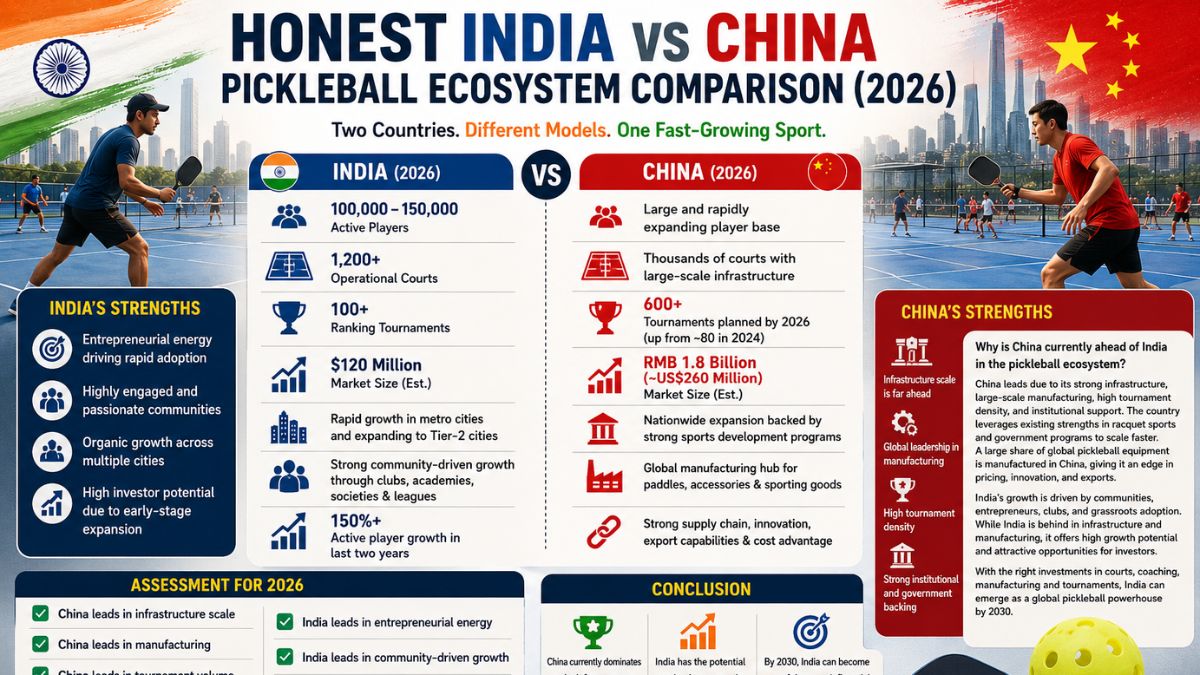
Pickleball is touted as second most popular Sport in India as per current data and insights suggest that , most popular game is all set to become 1,000 crore Sports Industry in 2031.
Here in this article, we will talk in detail about Federation tussle, based on certain developments, Delhi High Court have passed judgement in favor of Indian Pickleball Association as official federation.
There was constant tussle happening between AIPA ( All India Pickleball Association) which has massive ground level support in comparison to IPA(Indian Pickleball Association) as official recognized by National Sports Federation.
There was case going from quite some time, Delhi High Court have recognized IPA it would be interesting to see how AIPA would feature.
More Details on this incident and Fiasco
Pickleball has quietly but rapidly emerged as one of the most talked-about sports in India’s evolving sporting landscape. According to current data, participation trends, and ecosystem insights, pickleball is now being touted as the second most popular sport in the country in terms of recreational adoption, community engagement, and new infrastructure development. What makes this growth even more remarkable is that the sport is still in its formative years when compared to legacy Indian sports.
Industry projections suggest that pickleball is on course to become a ₹1,000 crore sports industry by 2031, driven by a combination of factors—urban density, ease of play, low entry barriers, corporate adoption, gated community culture, and rising interest from brands and investors. However, like many fast-growing sports ecosystems, pickleball in India has not been immune to administrative and governance challenges.
At the center of recent developments lies a long-running federation tussle that has now reached a crucial turning point following a judgment by the Delhi High Court, which ruled in favor of the Indian Pickleball Association (IPA) as the official federation.
The Federation Divide: IPA vs AIPA
For the past few years, Indian pickleball has operated under a cloud of uncertainty due to the existence of two prominent bodies—
IPA (Indian Pickleball Association)
AIPA (All India Pickleball Association)
While the IPA held official recognition as a National Sports Federation, AIPA built what many consider a stronger grassroots ecosystem. AIPA focused heavily on state associations, local tournaments, community outreach, and rapid expansion at the district and city levels. This led to widespread participation and significant on-ground visibility.
On the other hand, IPA’s recognition positioned it as the governing authority in official and administrative matters, including international alignment, federation protocols, and representation in national-level discussions.
This dual structure created confusion across the ecosystem—players, coaches, sponsors, tournament organizers, and even international bodies often found themselves uncertain about affiliation, legitimacy, and future pathways.
Legal Battle and Delhi High Court Judgment
The dispute between the two federations was not new. The matter had been under legal consideration for quite some time, reflecting deeper questions around governance, recognition, and authority within Indian pickleball.
In a significant development, the Delhi High Court passed a judgment recognizing the Indian Pickleball Association (IPA) as the official federation. This ruling effectively clarified the legal standing of IPA and reinforced its position as the recognized governing body.
From an administrative standpoint, the judgment brings temporary clarity to a fragmented ecosystem. For sponsors, broadcasters, international partners, and policy stakeholders, a single recognized federation simplifies engagement and long-term planning.
However, the verdict also raises important questions about the future role of AIPA, given its deep grassroots presence and widespread support at the ground level.
The Grassroots Reality: AIPA’s Influence
Despite the legal recognition of IPA, it would be inaccurate to overlook the influence and contribution of AIPA. Over the years, AIPA has played a critical role in popularizing pickleball across India, especially in Tier-2 and Tier-3 cities.
Its emphasis on participation-first models, frequent tournaments, affordable access, and state-level development helped create a broad base of players—an essential ingredient for any sport aspiring to scale sustainably.
Many athletes, coaches, and academies owe their entry into pickleball to AIPA-led initiatives. This is why the ecosystem now watches closely to see how AIPA will feature going forward—whether through collaboration, restructuring, or a revised role within the sport’s governance framework.
Why Pickleball Works in India
Pickleball’s explosive growth in India is not accidental. The sport aligns perfectly with India’s unique sporting and social dynamics:
High population density allows rapid adoption in compact spaces
Low infrastructure cost compared to tennis or squash
Short learning curve, making it accessible across age groups
Appeal to both recreational and competitive players
Strong traction in gated communities, corporate parks, and schools
This “density play” has allowed pickleball to scale faster than many traditional sports, especially in urban and semi-urban regions.
The ₹1,000 Crore Opportunity
Looking ahead to 2031, the ₹1,000 crore industry projection is built on multiple revenue streams:
Court construction and infrastructure
Equipment and apparel
Leagues and tournaments
Coaching and academies
Media rights and digital content
Brand partnerships and sponsorships
For this potential to fully materialize, institutional clarity and ecosystem alignment will be crucial. Governance stability often becomes the foundation upon which commercial growth is built.
What Comes Next?
The Delhi High Court verdict may mark the end of one chapter, but it also opens another. The biggest question now is whether the Indian pickleball ecosystem can move towards collaboration rather than fragmentation.
If the recognized federation can integrate grassroots strengths, protect athlete interests, and build transparent systems, pickleball’s future in India remains exceptionally bright.
As the sport continues its march towards becoming one of India’s biggest sporting success stories, the coming years will determine whether governance keeps pace with growth—or becomes the bottleneck in an otherwise booming journey.
| Section | Details |
|---|
| Sport Overview | Pickleball is being touted as the second most popular sport in India based on current participation data, community engagement, and infrastructure growth. |
| Industry Projection | The sport is projected to become a ₹1,000 crore sports industry by 2031, driven by urban density, ease of play, low entry barriers, and growing brand interest. |
| Article Focus | This article examines the federation tussle in Indian pickleball and the recent Delhi High Court judgment recognizing the Indian Pickleball Association (IPA). |
| Key Development | The Delhi High Court ruled in favor of IPA, recognizing it as the official federation governing pickleball in India. |
| Federations Involved | IPA (Indian Pickleball Association) and AIPA (All India Pickleball Association) |
| IPA’s Position | IPA holds official recognition as a National Sports Federation, managing administrative governance, international alignment, and official representation. |
| AIPA’s Position | AIPA has massive grassroots and ground-level support, with strong presence in states, districts, and community-driven tournaments. |
| Nature of the Tussle | A prolonged governance conflict created confusion among players, coaches, sponsors, and organizers regarding legitimacy and affiliation. |
| Legal Battle | The case had been ongoing for a significant period, highlighting deeper issues of authority, recognition, and governance in Indian pickleball. |
| Court Verdict Impact | The judgment provides temporary institutional clarity, especially for sponsors, broadcasters, and international partners. |
| Unanswered Question | Despite the verdict, it remains to be seen how AIPA will feature going forward given its grassroots influence. |
| Grassroots Reality | AIPA played a key role in expanding pickleball in Tier-2 and Tier-3 cities through affordable access and frequent tournaments. |
| Ecosystem Contribution | Many players, coaches, and academies entered the sport through AIPA-led initiatives. |
| Why Pickleball Works in India | High population density, compact court requirements, low infrastructure costs, short learning curve, and multi-age appeal. |
| Density Advantage | India’s “density play” has enabled pickleball to scale faster than many traditional sports in urban and semi-urban regions. |
| Revenue Streams | Court infrastructure, equipment & apparel, leagues & tournaments, coaching & academies, media & digital content, brand partnerships. |
| Growth Requirement | To realize the ₹1,000 crore potential, governance stability and ecosystem alignment are essential. |
| What Comes Next | The verdict closes one chapter but opens another—collaboration vs fragmentation will define the sport’s future. |
| Future Outlook | If grassroots strengths are integrated and athlete interests protected, pickleball’s future in India looks extremely bright. |
Related posts:
 What is Exact Difference between Pickleball and Tennis? Let’s Explore in Detail
 Pickelball vs Tennis vs Badminton: Which Sports Makes Business Sense in India?
 Is Pickleball Cheaper or More Expensive than Badminton?
 Why Pickleball in India Is Neither a Rich Man’s Sport Nor a Massy Sport — It’s a Hybrid