
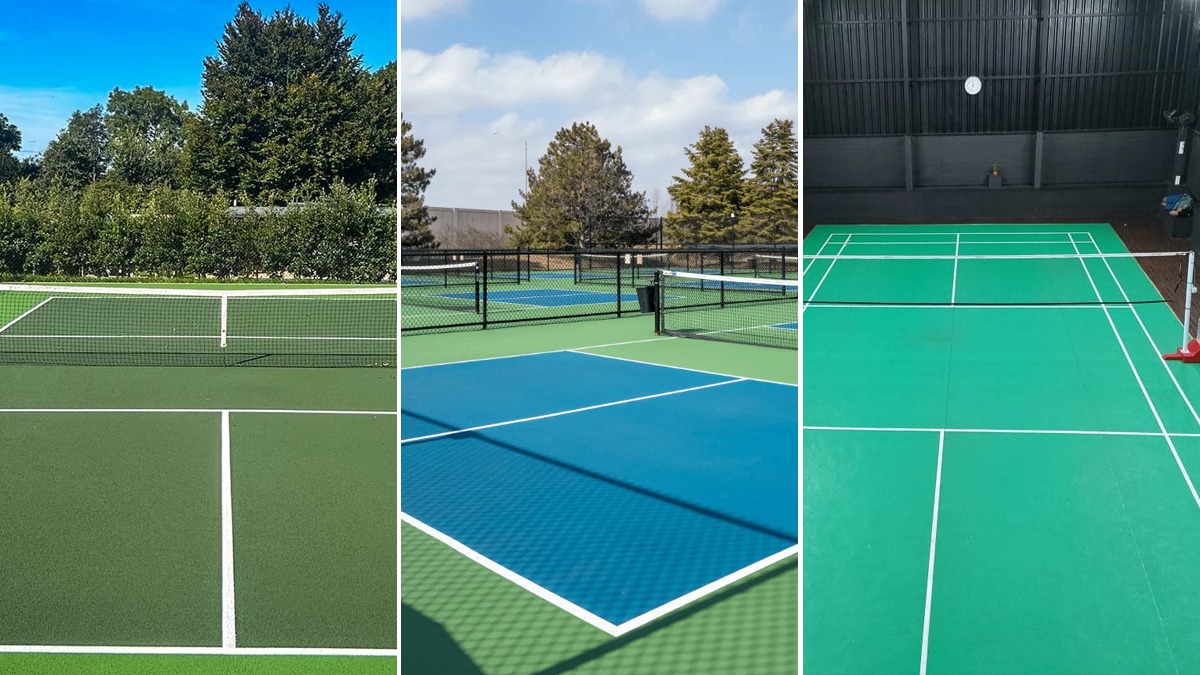
Pickelball vs Tennis vs Badminton: Which Sports Makes Business Sense in India?
Pickleball as Sport has grown exponentially and credit should be given to Stakeholders who have worked hard behind the scenes to make this entity extremely popular.
Here in this article we will reveal difference between – Pickleball, Tennis and Badminton one by one to be shared in the below format:
As India’s sports infrastructure ecosystem evolves beyond traditional formats, racket sports are emerging as viable business opportunities for private investors, academies, and community entrepreneurs. Among these, Pickleball, Badminton, and Tennis stand at very different points on the cost, accessibility, and return-on-investment (ROI) spectrum. While all three sports have their own demand curves and audience bases, their commercial viability varies significantly based on capital requirements, participation demographics, and monetization models.
This article examines these three sports from a purely professional and business-oriented perspective, focusing on initial setup costs, revenue generation, scalability, and long-term sustainability.
Pickleball: Low Entry Cost, Fastest ROI, Mass Adoption Potential
Pickleball is currently the most cost-efficient and fastest-growing racket sport ecosystem in India. The initial cost of setting up a pickleball court typically ranges between ₹3 lakh and ₹8 lakh, depending on land availability, flooring quality, lighting, and basic amenities. Compared to other racket sports, this low entry barrier has encouraged rapid adoption by private operators, housing societies, schools, and multi-sport facilities.
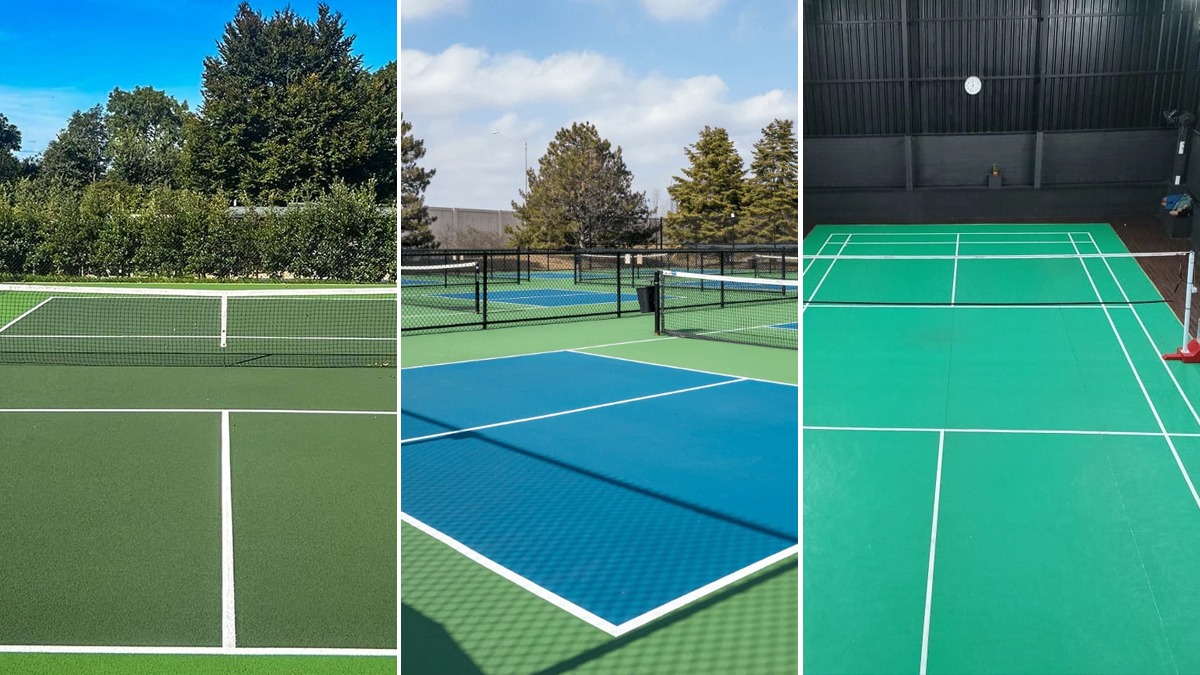
One of pickleball’s biggest strengths lies in its gender-neutral and age-agnostic nature. The sport can be played competitively or recreationally by teenagers, working professionals, senior citizens, and women with equal ease. This significantly expands the daily utilization window of courts, allowing operators to monetize mornings, afternoons, evenings, and weekends without dependency on a single user group.
From a business standpoint, pickleball offers one of the quickest ROIs in the Indian sports infrastructure space, often within 3 to 6 months. Revenue streams include hourly court bookings, monthly memberships, amateur tournaments, corporate events, and community leagues. Unlike coaching-heavy sports, pickleball does not require long-term skill development programs to attract players, which reduces dependency on specialized coaches.
Industry projections indicate that over 2,500 pickleball courts are expected to be built across India by 2028, largely concentrated in Tier 1 and emerging Tier 2 cities. This growth is driven by urban lifestyle shifts, limited time commitment, smaller playing areas, and the sport’s strong social appeal. For investors looking at scalable, quick-turnaround sports ventures, pickleball currently presents the most favorable risk-to-reward ratio.
Badminton: Established Market, Medium-Term ROI, Coaching-Driven Revenue
Badminton occupies a very different position in India’s sports business landscape. It is already a well-established and aspirational sport, with strong participation at the school, college, and professional levels. However, the ROI model for badminton is fundamentally long-term, typically ranging between 1 to 2 years, depending on location, operational efficiency, and coaching quality.
Setting up a badminton facility involves higher capital expenditure than pickleball, especially for indoor wooden or synthetic courts, roofing, lighting, ventilation, and compliance with playing standards. While casual play contributes to some revenue, the majority of income in badminton facilities comes from structured coaching programs, long-term training batches, and performance-focused academies.
Another critical factor affecting ROI in badminton is dependency on external variables. These include the reputation of coaches, tournament exposure for players, scholarship tie-ups, school partnerships, and parental willingness to invest in long-term athlete development. Without strong coaching credentials or competitive pathways, monetization becomes limited.
Badminton facilities also face higher operational costs, including maintenance of wooden flooring, shuttle expenses, coaching salaries, and utilities. As a result, while badminton remains a stable and credible sport business, it requires patience, strong branding, and consistent reinvestment. It is better suited for operators with a long-term vision rather than quick capital recovery expectations.
Tennis: High Capital Investment, Niche Audience, Longest ROI Cycle
Tennis sits at the premium end of the racket sports ecosystem in India. The average cost of developing a tennis facility often exceeds ₹25 lakh, especially when accounting for professional-grade courts, fencing, lighting, clubhouse facilities, and land usage. In urban areas, land cost alone significantly raises the investment threshold.
Unlike pickleball or badminton, tennis caters to a niche and relatively elite audience. Participation is driven largely by subscriptions, private coaching sessions, and long-term memberships rather than mass walk-in usage. This inherently limits court utilization density, particularly during non-peak hours.
From a financial perspective, tennis offers the slowest ROI, generally taking 4 to 5 years to break even. Revenue models rely heavily on monthly subscriptions, personalized coaching, junior development programs, and elite training pathways. However, player acquisition costs are high, and churn is more frequent due to the sport’s steep learning curve and physical demands.
Tennis is also an expensive sport in itself. Equipment costs, coaching fees, tournament travel, and training commitments act as natural entry barriers for mass participation. While the sport carries prestige and long-term brand value, it is not ideally suited for operators seeking rapid financial returns or scalable community-driven models.
Final Assessment: Choosing the Right Sport for the Right Objective
From a purely commercial standpoint, pickleball stands out as the most efficient, scalable, and ROI-friendly sport among the three. Badminton offers stability and credibility but demands patience and coaching excellence, while tennis remains a high-investment, long-gestation premium sport aimed at a limited audience.
Ultimately, the choice depends on an investor’s risk appetite, capital availability, target demographic, and long-term vision. However, in the current Indian sports ecosystem, pickleball is uniquely positioned to bridge affordability, inclusivity, and profitability in a way few sports can match.
Comparative Analysis of Pickleball, Badminton, and Tennis in India
(Business, Infrastructure & ROI Perspective)
Overview: Racket Sports in India
| Aspect | Insight |
|---|---|
| Ecosystem Shift | India’s sports infrastructure is moving beyond traditional formats |
| Investor Interest | Growing focus from private investors, academies, and communities |
| Key Differentiator | Capital cost, accessibility, ROI timeline, and scalability |
| Sports Compared | Pickleball, Badminton, Tennis |
| Evaluation Lens | Setup cost, revenue model, ROI, sustainability |
Pickleball: Low Entry Cost, Fastest ROI, Mass Adoption
| Parameter | Details |
| Sport Positioning | Fastest-growing racket sport in India |
| Initial Setup Cost | ₹3 lakh – ₹8 lakh |
| Infrastructure Needs | Smaller courts, basic flooring, lighting |
| Accessibility | Gender-neutral, age-agnostic |
| Target Audience | Teenagers, professionals, senior citizens, women |
| Court Utilization | High, across all time slots |
| Revenue Streams | Hourly bookings, memberships, amateur tournaments, corporate events, community leagues |
| Coaching Dependency | Low |
| ROI Timeline | 3–6 months |
| Scalability | Very high |
| Growth Projection | 2,500+ courts expected by 2028 |
| Key Growth Drivers | Urban lifestyle, limited time commitment, social appeal |
| Risk-to-Reward Ratio | Most favorable |
Badminton: Established Market, Medium-Term ROI
| Parameter | Details |
| Sport Positioning | Aspirational and well-established |
| Initial Setup Cost | Moderate to high |
| Infrastructure Needs | Indoor courts, wooden/synthetic flooring, roofing, ventilation |
| Accessibility | Skill-oriented |
| Target Audience | School, college, competitive players |
| Revenue Model | Coaching batches, academies, long-term training |
| Coaching Dependency | Very high |
| ROI Timeline | 1–2 years |
| External Dependencies | Coach reputation, tournaments, scholarships, school tie-ups |
| Operational Costs | High (maintenance, shuttles, salaries, utilities) |
| Scalability | Moderate |
| Business Nature | Stable but long-term |
| Ideal For | Operators with patience and long-term vision |
Tennis: Premium Sport, Longest ROI Cycle
| Parameter | Details |
| Sport Positioning | Premium, elite-centric |
| Initial Setup Cost | ₹25 lakh+ |
| Infrastructure Needs | Professional courts, fencing, lighting, clubhouse, land |
| Accessibility | Niche audience |
| Target Audience | Elite and subscription-based players |
| Revenue Model | Subscriptions, private coaching, junior programs |
| Coaching Dependency | High |
| ROI Timeline | 4–5 years |
| Court Utilization | Limited outside peak hours |
| Player Acquisition Cost | High |
| Entry Barriers | Equipment cost, coaching fees, travel |
| Scalability | Low |
| Business Nature | Prestige-driven, long-gestation |
Final Assessment: Business Suitability Comparison
| Criteria | Pickleball | Badminton | Tennis |
| Entry Cost | Low | Medium | High |
| ROI Speed | Fastest | Medium | Slowest |
| Mass Adoption | Very High | High | Low |
| Coaching Dependence | Low | High | High |
| Scalability | Excellent | Moderate | Limited |
| Risk Profile | Low | Medium | High |
| Ideal Investor Type | Quick-turnaround, community-focused | Long-term academy builders | Premium niche operators |
Conclusion
| Insight | Observation |
| Most ROI-Friendly Sport | Pickleball |
| Most Stable Ecosystem | Badminton |
| Most Premium Offering | Tennis |
| Best Fit for India’s Current Market | Pickleball |
| Key Advantage of Pickleball | Affordability, inclusivity, profitability |
Pickleball currently stands at the intersection of low capital requirement, high participation, and rapid monetization, making it uniquely positioned in India’s evolving sports economy.
Related posts:
 Pickleball Sports: Let’s Understand the market of this Popular Sport in Detail with numbers
 Pickleball Sports: Complete Price of Pickleball Equipments in India for the year 2025 in Detail
 What is Exact Difference between Pickleball and Tennis? Let’s Explore in Detail
 Pickleball Markets: How Big is Pickleball Market in Delhi and Mumbai?