
Why Pickleball is Growing Rapidly in Southeast Asia in 2026?
The pickleball ecosystem in Southeast Asia has transformed dramatically in 2026. What was once considered a casual American recreational sport has now become one of the fastest-growing sports industries across countries like Malaysia, Vietnam, Singapore, Thailand, and the Philippines.
However, beyond the hype on social media, the real ecosystem presents a mixed picture. The sport is growing rapidly, but there are still major gaps in professionalism, infrastructure planning, coaching systems, and long-term sustainability.
The biggest strength of Southeast Asia’s pickleball ecosystem is accessibility. Unlike tennis or golf, pickleball is easier to learn, cheaper to play, and requires less space. This has allowed malls, community centers, badminton halls, rooftops, and even old tennis courts to convert into pickleball venues very quickly. In highly urban countries like Singapore, court bookings have exploded over the past two years, with thousands of monthly reservations now taking place at public sports facilities.
Malaysia has emerged as one of the strongest pickleball markets in Asia. Cities like Kuala Lumpur, Penang, and Johor Bahru now host structured leagues, DUPR-rated events, and international tournaments. The country’s ecosystem is moving from recreational play toward organized competition. Multiple private operators are investing in indoor facilities, branded leagues, and regional partnerships.
Vietnam, meanwhile, has arguably become the biggest surprise story in Asian pickleball. The sport has grown at an unbelievable pace in Hanoi, Ho Chi Minh City, and Da Nang. Reports suggest Vietnam currently has one of the highest participation rates in Asia, with awareness increasing by more than 150% in recent years. The country has rapidly converted football grounds and aging tennis courts into pickleball complexes, creating a strong recreational ecosystem.
One major reason for Southeast Asia’s success is its strong badminton culture. Additionally, the social nature of the sport perfectly fits Southeast Asian urban lifestyles where people prefer community-based fitness activities over isolated gym culture.
Corporate investment is also accelerating growth. Major companies and banks in Singapore and Malaysia are now sponsoring tournaments and community events. Singapore’s National Stadium hosting large-scale pickleball events in 2026 is a clear indication that the sport has entered the mainstream sports business conversation.
But despite the rapid growth, the ecosystem still faces several serious challenges.
The first problem is sustainability. Many experts believe the sport is still heavily dependent on trend culture and social media momentum. Some local communities already believe the market is becoming oversaturated, especially in urban Malaysia where too many courts and businesses opened too quickly. While participation remains strong, not every commercial venue is profitable.
The second challenge is the lack of structured grassroots development. Most Southeast Asian countries still do not have fully developed school systems, junior pathways, or certified coaching ecosystems for pickleball. The majority of growth is recreational rather than performance-oriented. This means the sport is expanding fast socially but not necessarily developing elite talent at the same pace.
Another major issue is infrastructure quality. Many facilities are semi-indoor or temporary conversions instead of professionally designed pickleball complexes. In countries with humid climates like Vietnam and Thailand, heat and weather conditions also impact playing experiences.
There are also concerns around governance and professionalism. Since the sport is growing faster than administrative systems can handle, tournament standards, officiating quality, ranking systems, and player management still vary significantly between countries. Competitive events are improving, but the ecosystem remains fragmented compared to established sports.
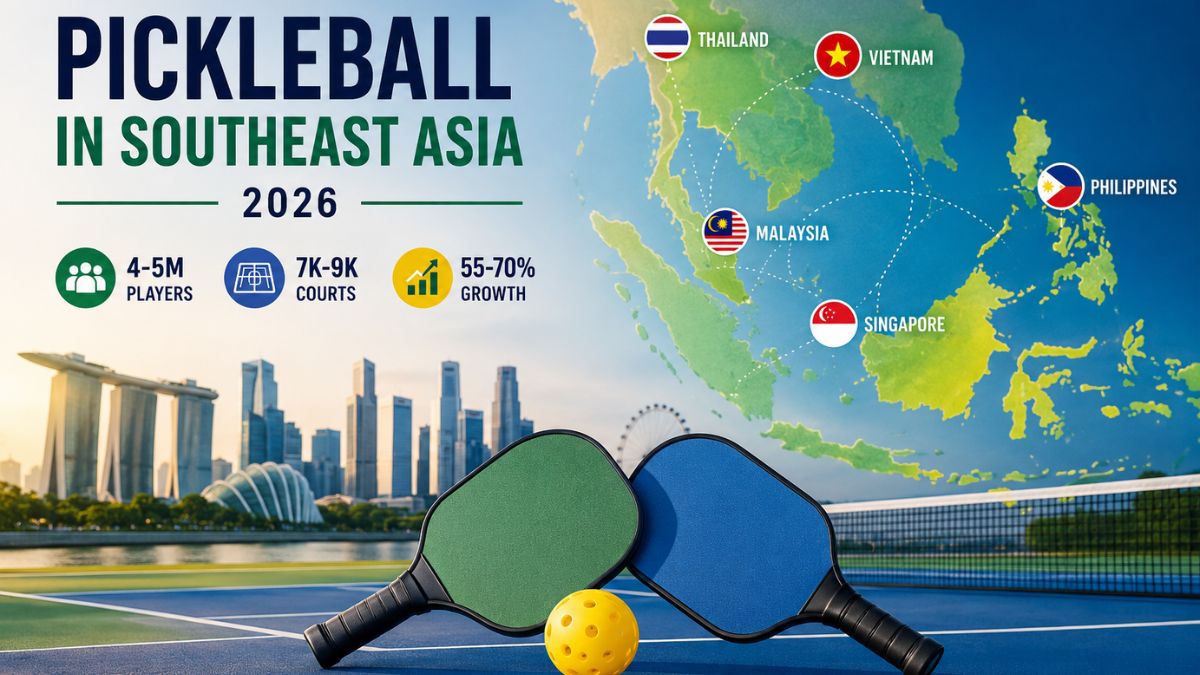
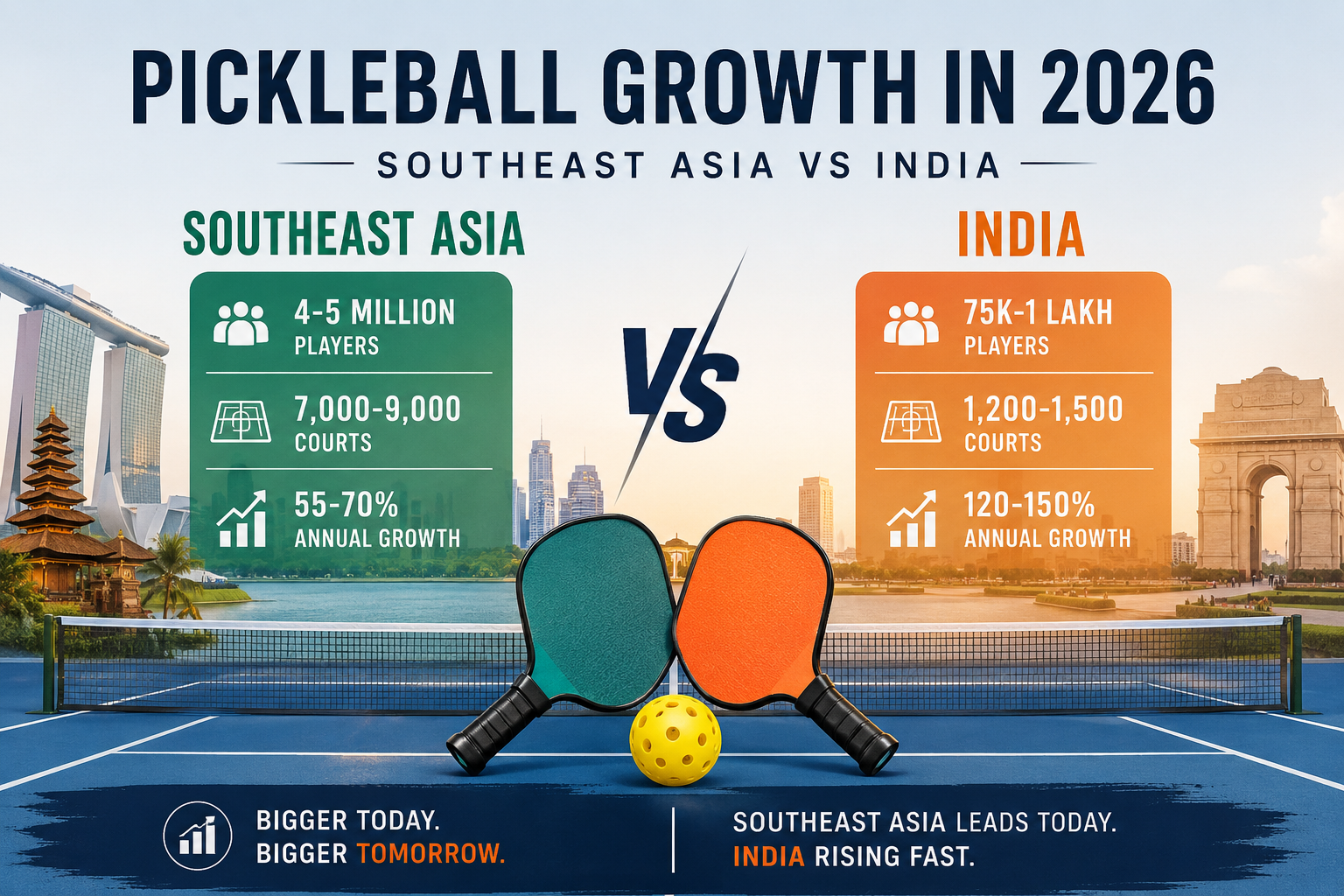
Still, the numbers are impossible to ignore. Across Southeast Asia, the region is estimated to have nearly 4 to 5 million active pickleball players in 2026 along with thousands of courts and hundreds of tournaments annually. Regional growth rates are estimated between 55% and 70% year-on-year.
The honest reality is this: Southeast Asia currently has the strongest pickleball ecosystem in Asia because it combines accessibility, urban culture, private investment, and community engagement better than most regions. However, the sport is still in its early commercial phase. The next five years will determine whether pickleball becomes a long-term sporting industry in Southeast Asia or remains a temporary recreational trend driven by hype and rapid expansion.
| Category | Southeast Asia Pickleball Ecosystem in 2026 |
|---|---|
| Leading Countries | Malaysia, Singapore, Thailand, Vietnam, Philippines |
| Estimated Active Players | 4–5 Million |
| Dedicated Courts | 7,000–9,000 |
| Annual Growth Rate | 55–70% |
| Ecosystem Strength | Strong recreational and community culture |
| Major Growth Driver | Easy accessibility and lower cost compared to tennis |
| Popular Playing Venues | Malls, rooftops, badminton halls, converted tennis courts |
| Malaysia’s Role | Structured leagues, DUPR events, indoor facilities |
| Vietnam’s Growth | One of Asia’s fastest-growing pickleball markets |
| Corporate Involvement | Brands, banks, and private operators investing heavily |
| Biggest Advantage | Community engagement and urban participation |
| Key Challenge | Oversaturation and long-term sustainability |
| Grassroots Development | Still limited in schools and junior systems |
| Infrastructure Quality | Many temporary or converted facilities |
| Governance Issues | Fragmented tournament and ranking systems |
| Future Outlook | Strong potential but long-term sustainability still uncertain |
Frequently Asked Questions (FAQs)
Q1. Why is Southeast Asia currently ahead of India in building a stronger pickleball ecosystem in 2026?
Southeast Asia is currently ahead of India in pickleball development because the region already had a strong recreational sports culture, better urban sports infrastructure, and faster private investment adoption. Countries like Malaysia, Singapore, Thailand, and Vietnam quickly understood that pickleball is easier to commercialize compared to many traditional sports. The sport requires smaller playing areas, lower investment costs, and attracts both young and older audiences, making it ideal for urban Asian cities where space is limited.
Another major reason behind Southeast Asia’s rapid growth is the availability of badminton and tennis infrastructure that could easily be converted into pickleball courts. Many indoor badminton facilities and unused tennis courts were transformed into pickleball venues, helping the sport expand rapidly without needing massive construction investments. Corporate participation has also been a major factor. Multiple private clubs, fitness chains, shopping malls, and local brands began organizing community tournaments and leagues, which helped build awareness at a grassroots level.
Social media also played an important role in Southeast Asia’s growth. Influencers, creators, and lifestyle communities promoted pickleball as a social and fitness-driven activity rather than only a competitive sport. This made the game highly attractive for working professionals, young adults, and families looking for community-based sports experiences.
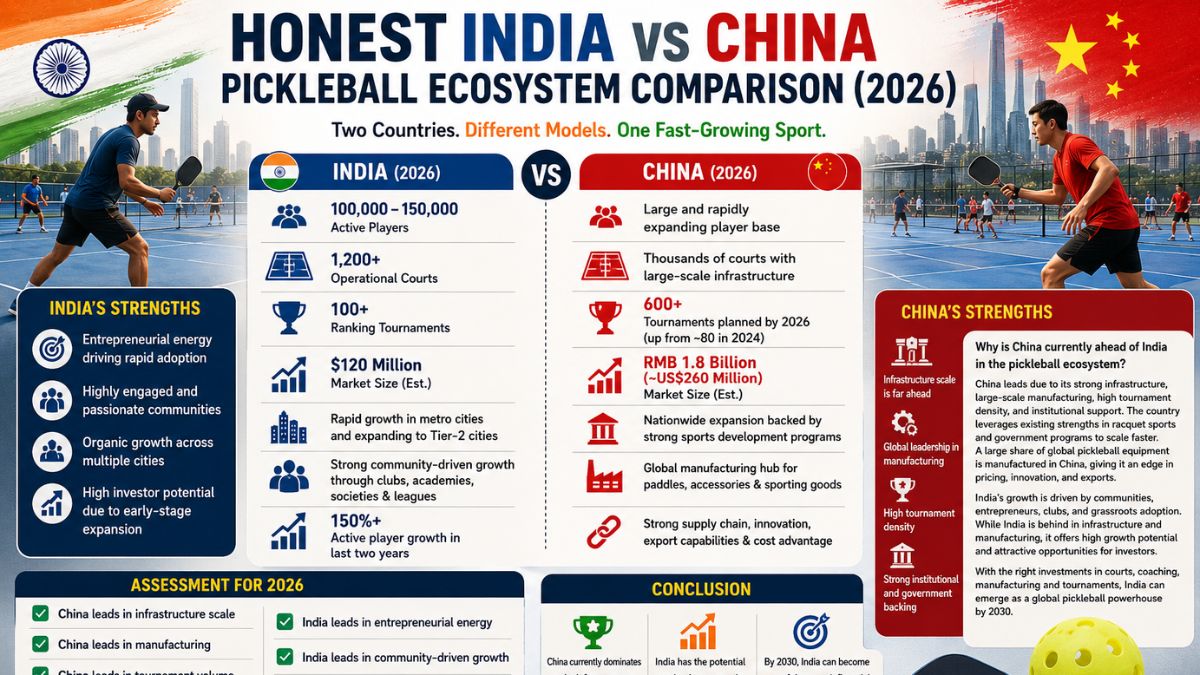
In comparison, India is still in an early growth phase. While India’s percentage growth is extremely high, the country still lacks enough dedicated infrastructure, coaching systems, and organized community-level leagues compared to Southeast Asia. However, India’s long-term potential remains enormous because of its population scale and increasing urban sports culture.
Q2. What are the biggest challenges facing the Southeast Asian pickleball ecosystem in 2026 despite its rapid growth?
Despite the rapid expansion of pickleball across Southeast Asia, the ecosystem still faces several major challenges that could impact its long-term sustainability. One of the biggest concerns is market oversaturation. In countries like Malaysia and Vietnam, many new pickleball facilities and businesses opened within a short period because of the sport’s sudden popularity. While participation numbers remain strong, experts believe not every commercial venue may survive in the long run if growth slows down in the coming years.
Another major challenge is the lack of structured grassroots development systems. Most Southeast Asian countries currently focus heavily on recreational participation rather than elite athlete development. Schools, junior academies, and certified coaching programs are still limited in many regions. Without proper youth pathways, the sport may struggle to consistently produce world-class professional players despite having millions of recreational participants.
Infrastructure quality is another issue. Although thousands of courts now exist across the region, many are temporary or converted facilities rather than professionally designed pickleball complexes. Weather conditions in tropical countries also create challenges for outdoor play, especially in humid environments.
Governance and standardization remain additional concerns. Tournament management, player rankings, officiating quality, and federation structures vary widely between countries. Since the sport is growing faster than its administrative systems, many parts of the ecosystem still operate in a fragmented manner.
The honest reality is that Southeast Asia currently has one of the strongest pickleball ecosystems in Asia, but the next five years will determine whether the sport can transition from a fast-growing recreational trend into a fully sustainable professional sports industry.
| FAQ | Answer |
|---|---|
| Why is Southeast Asia currently ahead of India in building a stronger pickleball ecosystem in 2026? | Southeast Asia is ahead because countries like Malaysia, Singapore, Thailand, and Vietnam already had strong recreational sports cultures, better urban infrastructure, and faster private investment adoption. Existing badminton and tennis facilities were quickly converted into pickleball courts, helping rapid expansion without massive construction costs. Corporate brands, fitness chains, malls, and clubs also started investing in leagues and tournaments. Social media creators and lifestyle communities further helped popularize pickleball as a social fitness activity. Compared to this, India is still in an early growth phase with limited infrastructure and coaching systems, although India’s growth percentage remains extremely high. |
| What are the biggest challenges facing the Southeast Asian pickleball ecosystem in 2026 despite its rapid growth? | The biggest challenge is long-term sustainability. Many facilities and businesses opened quickly because of the sport’s sudden popularity, especially in Malaysia and Vietnam, creating concerns around market oversaturation. Another issue is the lack of structured grassroots systems such as school programs, junior academies, and certified coaching pathways. Infrastructure quality also remains inconsistent because many courts are temporary or converted facilities instead of professional complexes. Weather and humidity affect outdoor play in several Southeast Asian countries. Governance is another concern as tournament standards, rankings, officiating quality, and federation systems still vary across countries. While Southeast Asia currently has one of Asia’s strongest pickleball ecosystems, the next few years will decide whether the sport becomes a sustainable professional industry or remains primarily a recreational trend. |
Related posts:
 Is Pickleball a “Massy” or “Rich” Sport in India? A Parameter-by-Parameter Reality Check?
 5 Things You Need to Keep in Mind While Building a Pickleball Court in India
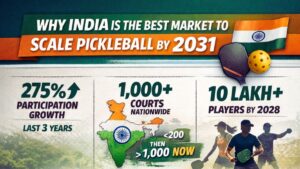 Why India Is the Best Market to Scale Pickleball by 2031?
 Everything You Need to Know About Pickleball Indoor vs Outdoor Balls (Specifications, Weight & Materials)