

Why Indian Mainstream Media is Ignoring Pickleball Coverage in 2026?
Why Coverage Is the Real Growth Engine for Emerging Sports in India
India is not short of sporting talent. Nor is it short of sporting ambition. What we are often short of is attention bandwidth beyond cricket.
Cricket in India is not just a sport; it is an industry, an emotion, and a 24/7 content machine. The dominance of cricket coverage is understandable given its audience size, commercial backing, and historical momentum. However, when emerging sports struggle to scale, we often rush to question federations, infrastructure, sponsorship models, or athlete quality. Rarely do we question the visibility ecosystem.
Emerging sports do not fail because they lack talent. They struggle because they lack narrative.
Pickleball is a perfect case study. Across Indian cities—Mumbai, Delhi, Ahmedabad, Bengaluru, Hyderabad—courts are filling up. Corporate professionals are playing before office hours. Retired athletes are transitioning into the sport. Young players are taking it up competitively. Tournaments are being organised at state and national levels. Brands are testing waters. Leagues are being conceptualised.
From a product–market fit perspective, pickleball checks several boxes:
It is easy to learn.
It requires relatively lower infrastructure investment compared to many indoor sports.
It appeals to multiple age groups.
It encourages community participation.
It offers competitive depth at advanced levels.
In startup language, this is a sport with organic adoption curves. Yet, it lacks sustained storytelling.
When was the last time we saw:
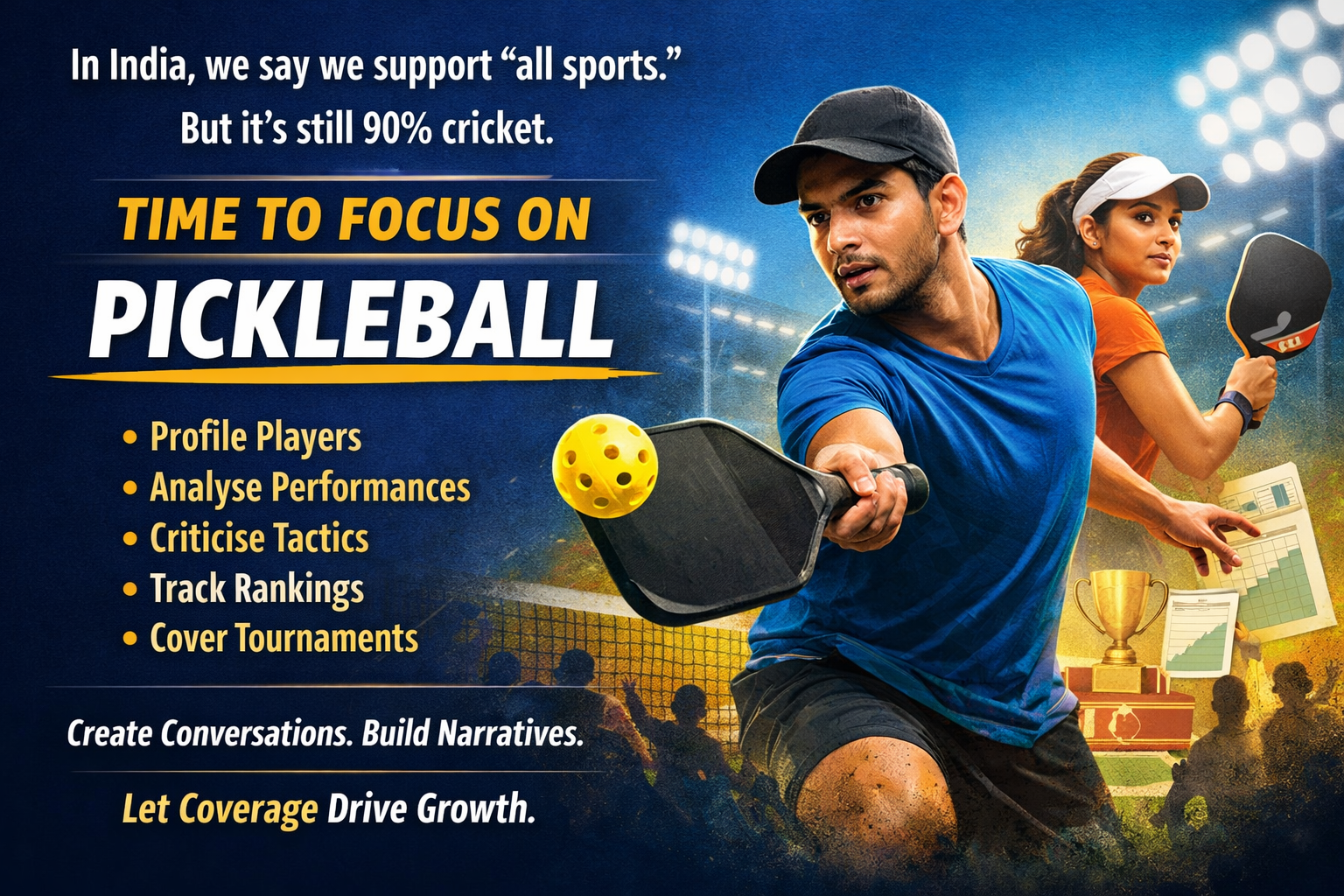
A deep-dive profile on India’s top pickleball players?
Tactical breakdowns of high-level matches?
Data-backed performance analysis?
Rivalry narratives between top-ranked competitors?
Structured coverage of rankings and seasonal performance arcs?
Without these elements, a sport remains recreational in perception—even if it is competitive in reality.
Media coverage does not just report growth. It accelerates it.
Look at how other sports in India have evolved once they received structured storytelling. Kabaddi transformed when leagues, player auctions, stats analysis, and behind-the-scenes content became mainstream. Badminton gained massive traction once players’ journeys, training regimes, and international battles became regular headlines. Even grassroots football communities grow exponentially when hyperlocal creators start documenting their stories.
Visibility creates validation.
When players are profiled, they become aspirational.
When performances are analysed, they become accountable.
When tactics are discussed, the sport becomes intellectual.
When rankings are tracked, competition becomes measurable.
When tournaments are covered seriously, legitimacy increases.
This is how ecosystems mature.
For media professionals and creators, this is also an opportunity. In a cricket-saturated market, differentiation lies in depth and foresight. The first movers in covering emerging sports often become category leaders. They build authority before the wave peaks.
Pickleball today is at a narrative inflection point in India. The participation graph is rising. Infrastructure is slowly expanding. Private academies are emerging. Corporate leagues are experimenting. International exposure is increasing. But the conversation layer is thin.
And conversation is currency.
Sponsors follow eyeballs.
Investors follow engagement.
Young athletes follow heroes.
Communities follow stories.
If we genuinely want India to become a multi-sport nation—not just in participation but in culture—we need diversified timelines. That doesn’t mean reducing cricket. It means expanding the lens.
Imagine a digital ecosystem where:
Weekly pickleball performance reports trend on LinkedIn.
Tactical breakdown reels circulate on Instagram.
Long-form interviews with players appear on YouTube.
Tournament previews and reviews appear across sports portals.
Data dashboards track ranking movements.
Podcasts debate selection, strategy, and development pathways.
Suddenly, the sport moves from “weekend hobby” to “serious competitive discipline” in public perception.
And perception drives opportunity.
As creators, journalists, analysts, and sports entrepreneurs, we hold more power than we often acknowledge. Algorithms reward consistency. Audiences reward clarity. Emerging sports reward early believers.
The next big sports narrative in India will not wait for permission. It will be built by those who choose to document it before it becomes obvious.
So perhaps the question is not:
“Why are emerging sports not growing fast enough?”
Perhaps the better question is:
“Are we talking about them enough?”
Because sports don’t grow only because they are played.
They grow because they are discussed, debated, celebrated, and critiqued.
Let’s not wait for scale to start coverage.
Let coverage create the scale.
Would love to hear your perspective—especially from fellow media professionals, league operators, athletes, and sports investors.
| Section | Key Insight | Explanation / Details |
|---|---|---|
| Core Argument | Coverage is the real growth engine for emerging sports in India | Emerging sports struggle not due to lack of talent, but due to lack of visibility and sustained narrative. |
| India’s Sporting Landscape | Talent and ambition exist, attention bandwidth does not | India has strong sporting talent, but coverage remains heavily concentrated around cricket. |
| Cricket’s Dominance | Cricket is a 24/7 content machine | Strong audience size, commercial backing, and historical momentum make cricket the dominant coverage priority. |
| The Real Gap | Visibility ecosystem is weak | Discussions often question federations, infrastructure, and sponsorships—but rarely media visibility. |
| Core Problem | Emerging sports lack narrative | Without storytelling, even competitive sports are perceived as recreational. |
| Case Study | Pickleball in India | Growing participation across Mumbai, Delhi, Ahmedabad, Bengaluru, Hyderabad; tournaments, leagues, brands, and academies emerging. |
| Market Strength | Product–market fit exists | Easy to learn; low infrastructure investment; multi-age appeal; community-driven; competitive depth. |
| Adoption Pattern | Organic growth curve | Participation is increasing naturally, but storytelling is not keeping pace. |
| Missing Media Elements | Lack of structured storytelling | No deep-dive player profiles, tactical breakdowns, data analysis, rivalry narratives, ranking arcs. |
| Perception Issue | Recreational vs Competitive gap | Without structured coverage, public perception limits the sport’s seriousness. |
| Role of Media | Coverage accelerates growth | Media does not just report growth—it actively fuels and legitimises it. |
| Learning from Other Sports | Structured storytelling drives scale | Kabaddi and badminton gained traction through leagues, stats, player journeys, and consistent coverage. |
| Visibility Impact | Visibility creates validation | Player profiling builds aspiration; analysis builds accountability; rankings build measurable competition; serious coverage builds legitimacy. |
| Ecosystem Development | Narrative maturity leads to ecosystem maturity | Consistent discussion strengthens the entire sporting structure. |
| Opportunity for Media | First movers gain authority | Covering emerging sports early allows creators to become category leaders before peak scale. |
| Current Stage of Pickleball | Narrative inflection point | Participation rising; infrastructure expanding; academies emerging; corporate leagues experimenting; international exposure increasing; conversation layer still thin. |
| Economic Reality | Conversation is currency | Sponsors follow eyeballs; investors follow engagement; athletes follow heroes; communities follow stories. |
| Multi-Sport Vision | Expand lens beyond cricket | Not reducing cricket coverage, but diversifying sports timelines. |
| Ideal Media Ecosystem | Structured digital presence | Weekly performance reports; tactical reels; long-form interviews; tournament previews; ranking dashboards; debate podcasts. |
| Perception Shift | Hobby to serious discipline | Consistent coverage transforms public perception and unlocks opportunity. |
| Stakeholder Responsibility | Creators hold power | Algorithms reward consistency; audiences reward clarity; emerging sports reward early believers. |
| Central Question | Are we talking about them enough? | Growth is linked to discussion, debate, celebration, and critique—not just participation. |
| Final Call | Let coverage create scale | Do not wait for scale to begin coverage; coverage itself drives scale. |
Related posts:
 Pickleball Sports: Let’s Understand the market of this Popular Sport in Detail with numbers
 Is Indian Sports Media Really Covering Pickleball or Not? With Facts
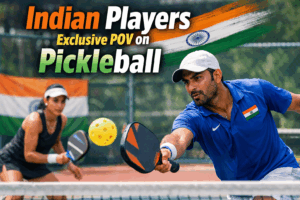 Biggest Takeaways From Indian Players Experience Playing Pickleball in India
 Why Middle-Tier Indian Pickleball Players Struggle to Survive Financially?