

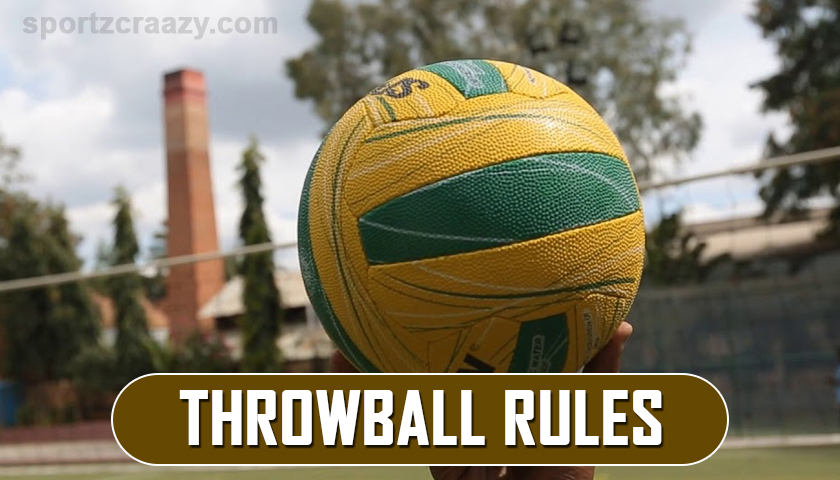
Throwball Game Rules, Court Measurement, Tips & Techniques
Throwball Games Rules & Techniques
‘Throwball’ is a game that could be played indoors or outdoor with 2 teams which consists of 7 players in each. The game shares its roots with volleyball and whilst, on the surface, it may look similar but there are some fundamental differences. Like volleyball, it is played on a court that is split into two with a net in the middle but the playing surface of the court is much larger than a regular volleyball court. The governing body of this game is the International Throwball Federation (ITF).
It is thought to have originated in England, descended from a popular game played by women, and then exported to India via the YMCA who brought it to Chennai in the 1940s. The first rules for Throwball were written by Harry Crowe Buck of the YMCA in 1955 and the sport gradually grew in popularity over the next few years, with the Throwball Federation of India being formed in 1985.
Throwball Court Measurement
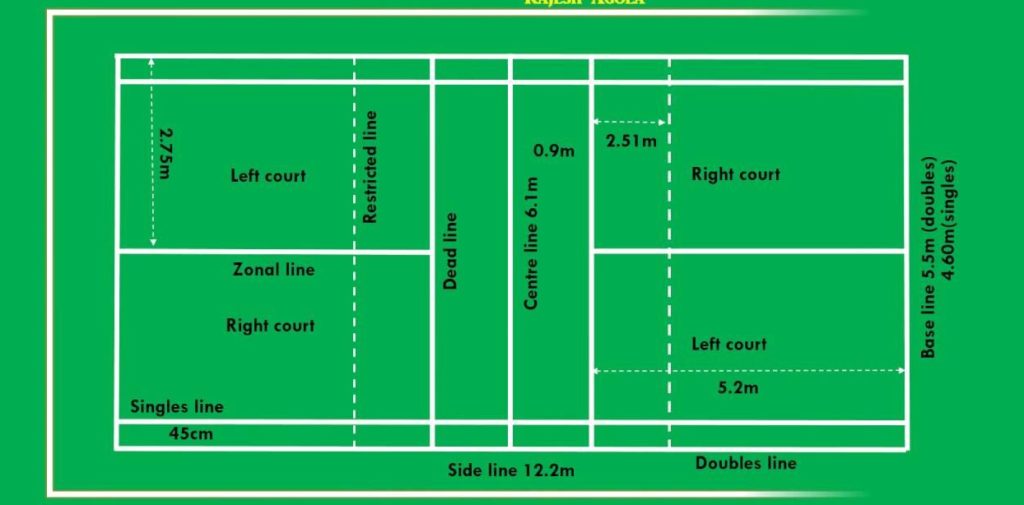
Throwball court that measures 12.2m x 18.3m with a neutral box at either side of the center measuring 1.5m. A net is placed across the center of the throwball court at a height of 2.2m.
The playing court is somewhat larger than a throwball court at 12.20 by 18.30 metres (40.03 ft × 60.04 ft) with a neutral box 1 metre (3 ft 3.37 in) on either side of the centre. The height of the net is 2.2 metres (7.22 ft). The ball is similar to a volleyball but maybe slightly larger. While in volleyball the ball is hit or volleyed throughout the play, in throwball the ball is thrown over the net, where a member of the other team tries to catch the ball and quickly throw it back across the net.
Related Stories
Throwball Games Rules
- Throwball is played on a court that measures 12.2m x 18.3m with a neutral box at either side of the centre measuring 1.5m.
- A net is placed across the centre of the court at a height of 2.2m.
- Throwball shall be played between two teams, each consisting of twelve players, seven of whom can be active on the pitch at any one time. The remaining five players are substitutes.
- Throwball uses rally scoring in which points can only be scored when serving.
- Matches should be played for the best of three sets, each set’s winner being the first to score 15 points.
- Service is done immediately after the referee’s whistle at the start of the game and after a point is scored. It is done from behind the backline towards any area of the opposition’s half.
- Points are lost in Throwball if a team fails to return a serve or throw such as by hitting the net of failing to catch the ball and then throw it back.
- Balls should not be volleyed as in volleyball but should be caught and then thrown quickly. Any ball being released should be done so from on or above the shoulder line only.
- Passes are not allowed in Throwball, as soon as a player receives the ball, they should return it over the net immediately.
- Two players cannot catch the ball simultaneously.
- All players should be appropriately dressed with a team jersey and shorts with their number being printed on the back of the jersey.
Related Stories
How to Play the Throwball Game?
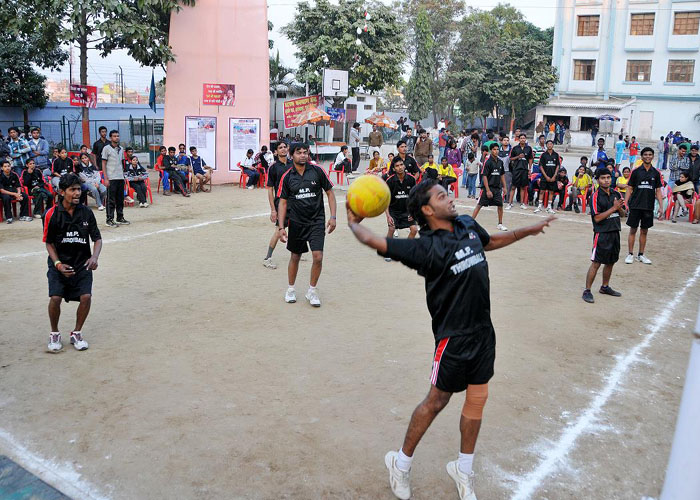
The game might sound easy but it isn’t. The players are trained in a manner that will help them adapt to their skills. There are many training tests that are conducted for the players to boost the way their game plan is. This is beneficial as they will understand the rules and work on getting more efficient by time. The game is more exciting than it sounds and has particular rules for it, which is illustrated below:
- Throwball shall be played between two teams, each consisting of twelve players, seven of whom can be active on the pitch at any one time. The remaining five players are substitutes.
- Throwball uses rally scoring in which points can only be scored when serving.
- Matches should be played for the best of three sets, each set’s winner being the first to score 15 points.
- Service is done immediately after the referee’s whistle at the start of the game and after a point is scored. It is done from behind the backline towards any area of the opposition’s half.
- Points are lost in throwball if a team fails to return a serve or throw such as by hitting the net of failing to catch the ball and then throw it back.
- The team will have 6 players who will begin the game, keeping in mind of having 3 other substitutes.
- On the scheduled date, all team members will have to be present 15 minutes prior to the game otherwise the negligence to do so can declare the opponent team as the winner.
- When you receive the ball you cannot juggle with it.
- If the ball is thrown at the person and it is caught by them, they need to throw it back immediately or within a timeframe of 3 seconds.
- When a payer is serving the ball, they cannot cross the service line using their single hand.
- When the ball is in hand, playing with it and shifting it from right to left or vice versa is not allowed.
- While the game is being played, any act of pushing is not allowed.
- When the service ball is being thrown, it needs to ensure that the ball shouldn’t touch the net.
- When the game is prolonging, the payers need to keep in mind that they cannot touch the net for whatever reasons but the ball they use can.
- When the game is being played, two players cannot touch the ball at the same time.
- Once the ball is in the hands, it needs to be thrown back directly after the whistle blows or within 5 seconds.
- While aiming or catching, players have to strictly use their hands to enforce their actions, their body or legs cannot be a part of it.
- In the case of the substitutes, their turn will only arise when they have to serve or in case of any injury which is again an exception.
- A timing break of two minutes is allowed in the game.
More Details About Throwball as Sport:
Throwball is a dynamic team sport that combines speed, coordination, anticipation and tactical thinking. Players catch the ball and throw it across the net toward the opposing side. However, once a competitive rally begins, the game becomes much more intense. Quick decisions, accurate throws, strong communication and intelligent positioning can determine the outcome of a single point. This balance between simplicity and strategy helps attract players at school, college and grassroots levels in India.
One of the most exciting features of Throwball is its fast-moving rallies. Players do not have much time to react when the ball comes toward them. A quick catch followed by an immediate return can keep the opposition under pressure, while an unexpected throw can completely change the direction of a rally. Since every exchange can develop differently, spectators rarely know how a point will finish. This unpredictability gives Throwball an energetic character and makes even short rallies exciting to watch.
Teamwork is another essential part of the sport. Unlike games where individual brilliance can dominate, Throwball demands collective effort. Players must communicate constantly, understand each other’s positions and respond quickly to changing situations. Effective communication can prevent defensive mistakes and help players prepare for powerful or cleverly placed throws.
Reflexes also play a major role. A fast throw, sudden change of direction or difficult ball can test a player’s reaction speed within seconds. Players need sharp hand-eye coordination and the confidence to respond without hesitation. A successful save can keep a rally alive, while a delayed reaction can immediately give the opposition an advantage. This makes Throwball a sport where concentration has to remain high from the beginning of a point until its final moment.
Strategy can be equally important. Experienced players look for open areas on the court, study the positioning of opponents and choose different throwing angles to create pressure. Instead of repeatedly relying on power, they can change the speed, direction and placement of their throws. Targeting a weak defensive area or exploiting a gap can produce a point without requiring the strongest possible throw. This tactical dimension makes Throwball increasingly interesting as players gain experience.
Another important advantage is its inclusive nature. Throwball can be introduced to different age groups and skill levels, making it particularly suitable for educational institutions and community competitions. Schools and colleges can use the sport to encourage physical activity while also developing communication, discipline and teamwork. Beginners can understand the basic concept relatively quickly, while competitive players can continue developing advanced skills and tactical awareness over time.
India has developed a strong grassroots connection with Throwball. The sport has found space in schools, colleges, clubs and state-level competitions, giving young players opportunities to participate and compete. Its relatively straightforward format makes it accessible to new participants, while organized competitions provide a pathway for players who want to take the sport more seriously. This grassroots ecosystem has helped Throwball remain visible among emerging and established team sports.
A team that appears to be struggling can quickly recover through a few successful catches, intelligent throws and well-coordinated defensive moves. Because rallies can turn rapidly, players must avoid losing concentration after a mistake or becoming overconfident after winning a point. This creates a competitive environment in which resilience and mental strength matter alongside physical ability.
Throwball also has considerable spectator appeal. Powerful throws, quick catches, diving saves, sudden defensive reactions and constant communication create a lively atmosphere around the court. The emotional response of teammates after a crucial point adds another layer of excitement. The basic format can be understood quickly, allowing audiences to follow the action without needing extensive knowledge of complicated rules.
The biggest attraction of Throwball is its distinct identity. It may remind viewers of volleyball because of the net and court structure, while its catching-and-throwing action creates similarities with handball. Yet it is neither simply volleyball nor handball. The combination of these elements gives Throwball its own character. Players must catch under pressure, control the ball, decide quickly and deliver an accurate return, often within a very short period.
The sport also encourages continuous learning. Players can improve their catching technique, throwing accuracy, movement, positioning and decision-making through regular practice. Gradually, coaches can introduce drills that focus on reaction speed, coordination and teamwork, helping teams become more consistent. This learning curve keeps the game engaging because players can clearly see how better communication and smarter choices improve their performance.
A beginner can enjoy the basic excitement of catching and throwing, while an experienced player can appreciate positioning, timing, communication and tactical variation. Its fast rallies, teamwork, reflex-based action, strategic possibilities, inclusiveness and strong grassroots presence make it more than a recreational activity. Throwball offers a complete team-sport experience where one smart decision can change a rally, one great save can shift momentum and one well-placed throw can decide the point. That blend of simplicity, intensity and strategy is what makes Throwball increasingly interesting for players, institutions, organizers and spectators alike.







Post a Comment
You must be logged in to post a comment.