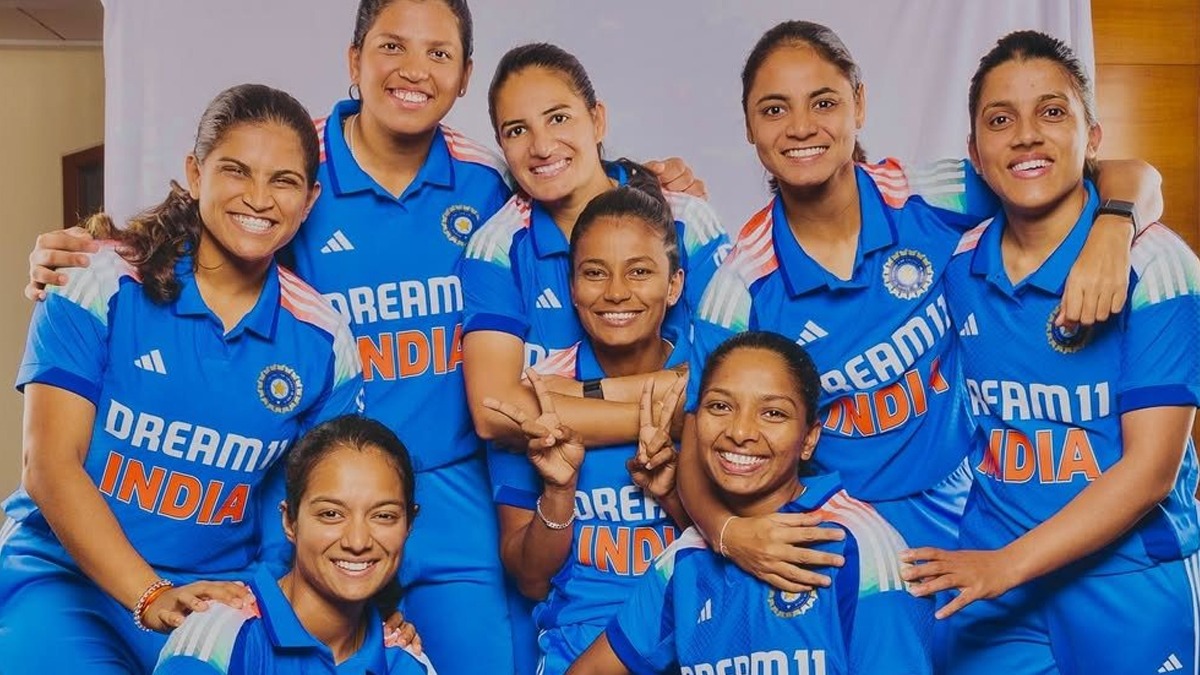
India’s women’s cricket team has shown great skill in batting and bowling during the ongoing Women’s World Cup 2025. However, one big problem continues to hurt their chances – poor fielding and dropped catches. Despite winning both matches against Sri Lanka and Pakistan, the team has already dropped five catches in just two games. This fielding issue could become a serious problem when they face stronger teams like Australia, England, and South Africa.
Five Dropped Catches Already in World Cup 2025
The Indian women’s cricket team has dropped five catches in their first two World Cup matches. While they managed to win both games against Sri Lanka and Pakistan, these missed chances could prove costly against tougher opponents. In comparison, other top teams have been much better with their catching – Australia has dropped only one catch, while New Zealand and England have dropped none so far.
The fielding problems are not new for this Indian team. Captain Harmanpreet Kaur has often spoken about the need to improve their catching after matches. Even after beating Pakistan by 88 runs, Harmanpreet said the team “let ourselves down on the field” and got “so many chances which we unfortunately dropped”.
Richa Ghosh’s Wicket-Keeping Problems
Wicket-keeper Richa Ghosh has been the biggest concern behind the stumps. Against Pakistan, she dropped a total of four catches, which is now a record for most drops by a wicket-keeper in a single ODI match. This included two chances from Sidra Amin, who went on to score 81 runs and gave Pakistan their best batting performance.
Richa’s wicket-keeping problems are not limited to the World Cup. During the ODI series against Australia before the tournament, she dropped three catches in one match alone. Her movement behind the stumps has been poor – she often takes an early step to the left and then struggles to reach balls going the other way.
The numbers show just how bad Richa’s keeping has been. She has a catching efficiency of only 53% in recent ODI series – meaning she drops almost half the chances that come her way. For a wicket-keeper, this is a very poor record that puts extra pressure on the bowlers.
Team India’s Poor Catching Record in 2025
India’s overall fielding statistics in 2025 make for worrying reading. In 16 ODI matches played this year, the team has taken 65 catches but dropped 41 others. This gives them a catching efficiency of just 61.3%, which ranks them among the worst in world cricket.
To put this in perspective, 12 out of 15 teams that have played ODIs in 2025 have better catching efficiency than India. The team has also made 78 misfields and missed 45 run-out chances during the year. These numbers show that fielding problems affect the entire team, not just individual players.
The contrast with other top teams is stark. Since January 2024, New Zealand has a catching efficiency of 79%, South Africa 77%, Australia 76%, and England 72%. India’s 66% efficiency in this period puts them in the same category as weaker teams like Bangladesh (64%) and Pakistan (63%).
The fielding issues become even more serious when India faces strong opposition. During their recent ODI series against Australia, India dropped 13 catches while Australia dropped only seven. This difference played a big role in India losing the series 2-1.
In the first match against Australia, Jemimah Rodrigues dropped Phoebe Litchfield when she was on 0, and she went on to score 88 runs. Captain Harmanpreet also dropped Litchfield when she was on 56. In the same match, Deepti Sharma dropped Beth Mooney when she was on 58.
The second ODI saw even more drops from India. Richa Ghosh dropped Georgia Voll on 0 and then Beth Mooney on 0. She later dropped Ellyse Perry on 25. Other players like Harleen Deol, Radha Yadav, and Kranti Gaud also dropped catches in that series.
Impact on Match Results
These dropped catches often change the course of matches. When teams like Australia get extra chances, they usually make the most of them. For example, in the third ODI against Australia, Georgia Voll was dropped three times and went on to help her team score 412 runs – their joint highest total ever.
Against Pakistan in the World Cup, Sidra Amin was dropped twice by Richa Ghosh and once by another fielder. She used these chances well and scored 81 runs, which was Pakistan’s highest individual score in the match. If those catches had been taken, Pakistan might have been bowled out for a much lower total.
The Indian team management knows that these mistakes cost them games. After the Australia series, both captain Harmanpreet Kaur and vice-captain Smriti Mandhana admitted that dropped catches made the difference between winning and losing.
While Richa Ghosh has been the worst performer, other usually reliable fielders have also struggled. In recent series, established players like Jemimah Rodrigues, Harmanpreet Kaur, Deepti Sharma, and Pratika Rawal have all dropped simple catches.
Among the regular fielders, Jemimah Rodrigues has been the most reliable with 10 catches and 77% efficiency. Captain Harmanpreet Kaur (73%) and fast bowler Arundhati Reddy (70%) are other players who catch well most of the time. However, the team needs all players to maintain these standards consistently.
Radha Yadav is considered the best fielder in the team, but she has not been playing regularly. The team misses her safe hands in crucial moments during matches.
As India moves forward in the World Cup 2025, they will face much stronger batting line-ups. Teams like Australia, England, and South Africa have powerful batters who can punish any team that gives them extra chances through dropped catches.
The upcoming matches will be much harder than the games against Sri Lanka and Pakistan. Australia, the defending champions, have shown excellent fielding standards with only one dropped catch so far. England and New Zealand have been perfect with their catching in their opening matches.
India’s batting and bowling have been strong enough to win matches even with poor fielding. However, in knockout games or close contests, every chance becomes crucial. The team cannot afford to drop catches against teams like Australia if they want to win the World Cup.
The fielding problems suggest issues with training and preparation. Despite having long training camps before series, the team’s catching efficiency keeps changing dramatically. It went from 86% against the West Indies to just 53% against Ireland in the space of few months.
This inconsistency shows that the players are not maintaining proper fielding standards regularly. The coaching staff needs to work on building better habits during training sessions. Simple catching practice is clearly not enough – the team needs to work on specific situations and pressure moments.
The fact that even experienced players like Harmanpreet Kaur and Deepti Sharma drop easy catches suggests that the problem is not just about individual skill. It might be related to concentration, pressure handling, or team fielding systems.
Despite these fielding problems, India still has the talent to do well in the World Cup 2025. They have won 12 out of 16 ODI matches this year, showing that their overall cricket is strong enough to compete with anyone.
The team needs to focus on taking their chances when they come. Simple catches must be held, and wicket-keeper Richa Ghosh needs to improve her glovework quickly. The upcoming matches against stronger teams will test whether India can fix these problems in time.
The Indian women’s cricket team has everything needed to win the World Cup – good batters, skilled bowlers, and home advantage. However, their fielding issues could prevent them from achieving their dream unless they improve immediately. The difference between winning and losing the World Cup might come down to holding onto the catches that matter most.
The fielding statistics from the first two World Cup matches and recent series paint a clear picture. India needs much better catching and overall fielding if they want to beat the best teams and win their first World Cup title. Time is running out to fix these problems before facing the toughest challenges of the tournament.