

How Pickleball Is Expanding in the Middle East: Insights from a Dubai Sports Entrepreneur?
Q1. Patrick, could you begin by sharing your professional journey and what initially drew you toward pickleball as a sport and business opportunity?
My journey began in professional tennis. I competed on the ITF circuit, played Davis Cup and ATP events, and earned a Division I scholarship at the University of Mississippi (Ole Miss), where we were ranked top five in the U.S. I graduated in International Business before transitioning into a 16-year corporate career in Dubai within media representation.
Entrepreneurship was always the goal. After closely studying global trends in racket sports, I identified pickleball as a major opportunity. While it was growing rapidly in the U.S., it had virtually no presence in the Middle East. I saw a clear gap in the market and raised capital from friends and family to launch the region’s first dedicated pickleball club.
It was the right sport, at the right time, in the right market.
Q2. How do you assess the long-term growth potential of pickleball across the Middle East region?
I see significant long-term potential for pickleball in the Middle East. The sport is expanding globally, and the region’s multicultural cities create natural cross-border influence. Today, almost everyone has a friend or family member abroad who has started playing pickleball. That social exposure accelerates adoption locally.
What makes pickleball especially powerful is its accessibility. The entry barrier is low, yet the game is challenging to master, which keeps players engaged long term. From an infrastructure standpoint, courts can be developed relatively efficiently, both indoors and outdoors, making scalability realistic.
However, sustained growth will require structured development—more facilities, formal federation support, and stronger institutional frameworks. The demand is emerging; now the ecosystem must mature around it.
Q3. Dubai has emerged as a key sporting hub globally. How is it positioning itself within the evolving pickleball ecosystem?
Dubai is already a global hub for sport, tourism, and international business. Its geographic position between Europe and Asia, combined with strong infrastructure and investment appetite, makes it an ideal market for emerging sports like pickleball.
However, in terms of formal positioning within the pickleball ecosystem, progress has largely been driven by private initiatives rather than institutional frameworks. The next important step is the formation of an official federation in the UAE and, eventually, across the region. That structure will accelerate growth, attract international events, and create long-term sustainability.
Clubs like Picklers provide a strong foundation, and we remain fully open to supporting future governing bodies with experience, operational insight, and strategic direction to ensure the sport develops properly in the UAE.
Q4. Pickleball is often described as both a “premium lifestyle sport” and a “mass participation sport.” How do you interpret this dual identity, particularly in the Middle Eastern context?
I don’t like to categorize pickleball into one segment. The beauty of the sport is that it’s truly for everyone. Whether you visit clubs in the U.S., Europe, Asia, or Africa, you’ll see people from completely different backgrounds connecting effortlessly on the court. That inclusivity is what makes pickleball special.
In the Middle East, the same dynamic is emerging. Yes, premium indoor facilities exist and naturally come with a certain positioning. But at its core, pickleball is highly accessible, you can set up a court almost anywhere with minimal equipment and simply play.
It can be premium in experience, yet universal in participation. That duality is its strength.
Q5. To what extent is pickleball’s growth in the region aligned with broader sports diversification strategies such as Vision 2031 initiatives?
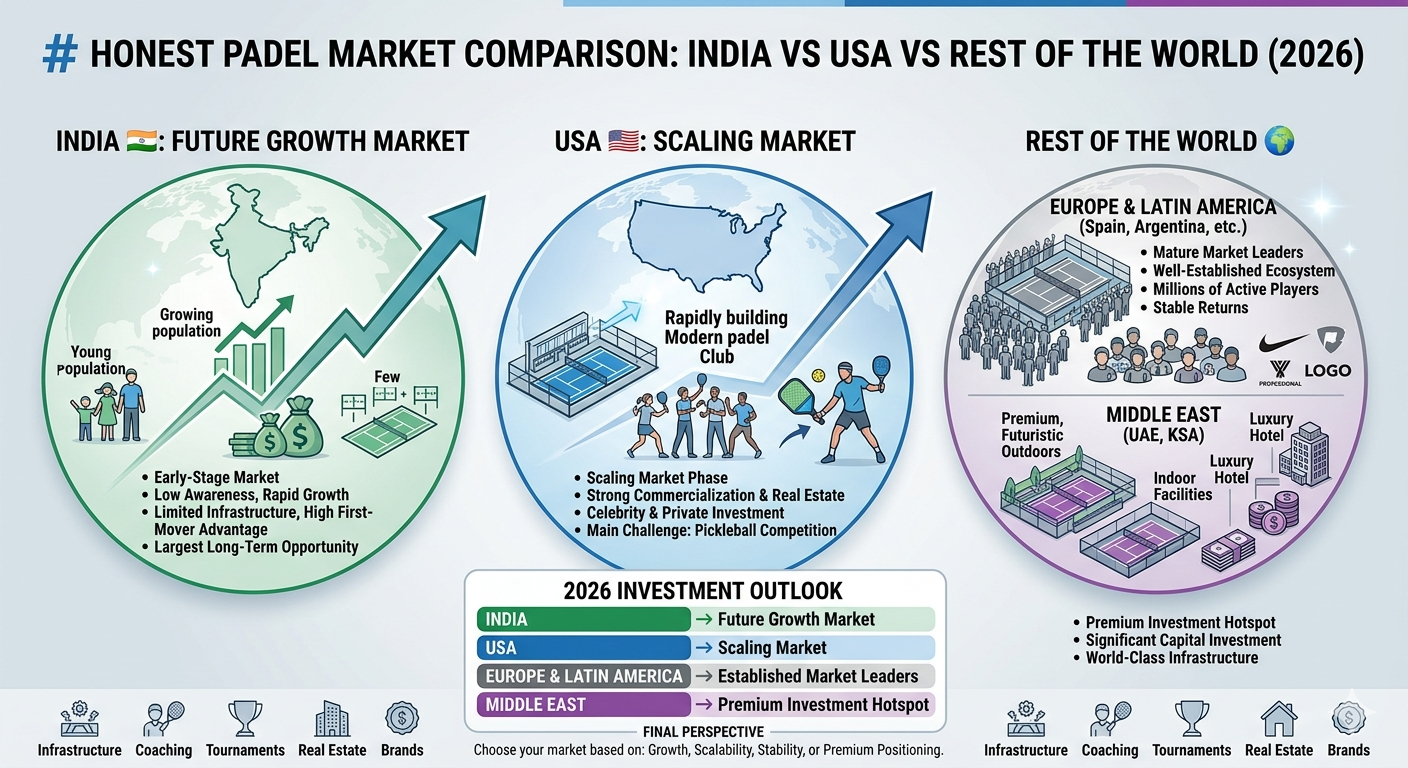
Pickleball is still extremely new in the UAE and the wider region. Unlike padel, which experienced rapid investment and large-scale rollout, pickleball’s growth has so far been driven primarily by private initiatives. Picklers, for example, launched only about a year and a half ago as the first dedicated club in the region.
For pickleball to reach mass participation levels, we will need broader infrastructure development and institutional backing. Greater alignment with government-led diversification strategies such as Vision 2031 would significantly accelerate growth.
While we have not yet seen direct government investment into pickleball, I am optimistic that as awareness and participation increase, formal support will follow in the near future.
Q6. What are the primary infrastructural and operational challenges facing pickleball development in the Middle East?
Pickleball is still very new to the Middle East, so the biggest challenge is simply the lack of courts and infrastructure. One club can attract players within its immediate area, but many people who are curious about the sport may live too far away to access a facility. Until more courts are developed across the region, exposure will remain limited.
That said, building courts alone is not enough. Facilities need to be professionally managed, with coaching programs, community events, and structured activities that introduce new players to the sport. Without proper direction and programming, courts alone will not generate sustainable participation. The real growth will come from well-run clubs that actively build communities around the sport.
Q7. American investors and leagues have played a significant role in professionalizing pickleball globally. How do you see U.S. capital and expertise influencing the Middle Eastern market?
Pickleball’s massive popularity in the United States has been instrumental in giving the sport global credibility and momentum. The professional leagues, media coverage, and investment happening in the U.S. have created a strong reference point that helps accelerate adoption internationally, including in the Middle East.
However, for investment to succeed in this region, local expertise is essential. International investors cannot simply replicate the U.S. model here without adapting to local markets. Successful growth will likely come through partnerships between international investors and local operators who understand the culture, the market dynamics, and how to build communities around the sport.
Q8. Could you elaborate on the structure and competitiveness of emerging pickleball leagues within the Middle East?
At the moment, the Middle East has very few structured pickleball leagues, which represents a significant opportunity for the sport. Most activity currently revolves around clubs, social play, and local tournaments.
As the number of courts and players grows, we will naturally begin to see the emergence of organized leagues and competitive circuits across the region. This is an area with tremendous potential, especially as the player base continues to expand.
Q9. How would you evaluate the current state of sponsorship, grassroots development, and media coverage for pickleball in the region?
At this stage, sponsorship, grassroots development, and media coverage for pickleball in the Middle East are still very limited. The sport is in its early stages and has not yet reached the level of visibility seen in more established markets.
Clubs like Picklers are working hard to help grow the sport by introducing new players, organizing events, and actively promoting pickleball through social media and community engagement. While progress is being made, the sport remains small compared to its potential in the region.
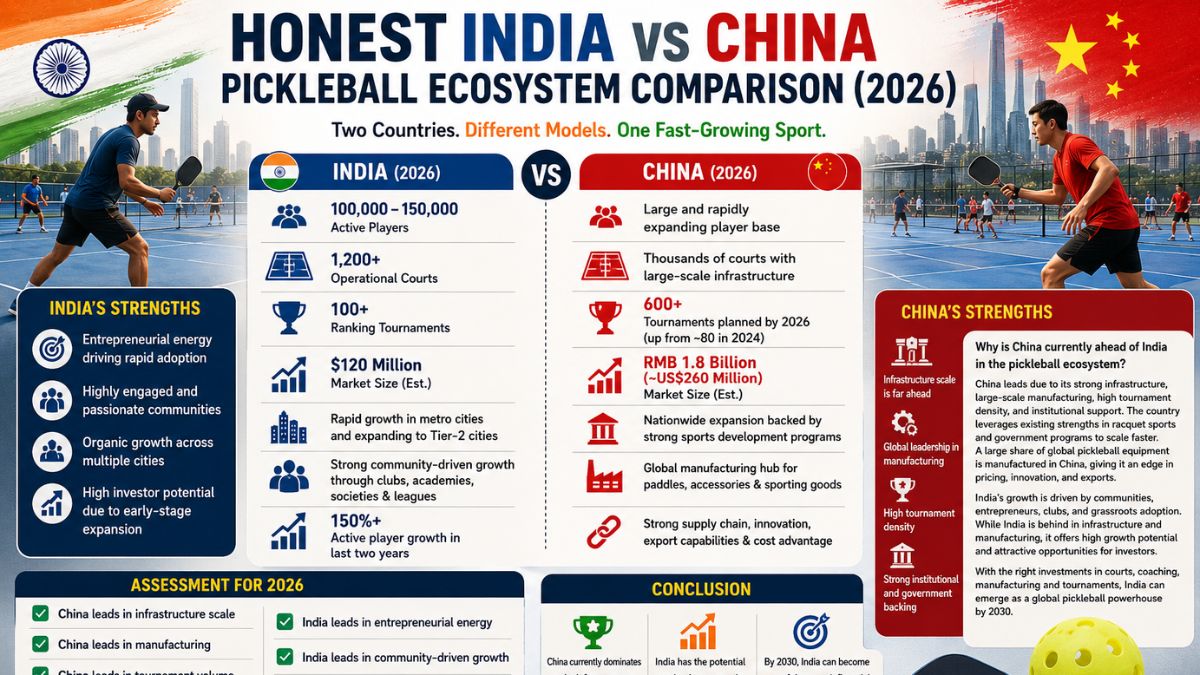
Q10. From a stakeholder and investment perspective, how do you view India as a potential growth market for pickleball?
India is one of the most exciting emerging markets for pickleball. The sport is growing extremely quickly there and, given the country’s population of more than a billion people, the long-term potential is enormous.
However, as with any market, success will depend on local leadership and expertise. Investors and stakeholders need partners who truly understand the local landscape and can build the sport from the ground up. From a global perspective, India is certainly a market that many in the pickleball ecosystem are watching closely.
CLOSING.
Pickleball in the Middle East is still in its early chapters, but the potential is enormous. Our goal at Picklers is not just to run a club, but to help build the ecosystem. Developing players, communities, and opportunities so the region can become one of the world’s most exciting pickleball markets.”
| Question | Key Insights / Response Summary |
|---|---|
| Q1. Patrick, could you begin by sharing your professional journey and what initially drew you toward pickleball as a sport and business opportunity? | Patrick began his career as a professional tennis player, competing on the ITF circuit, Davis Cup, and ATP events. He later earned a Division I scholarship at the University of Mississippi and studied International Business. After a 16-year corporate career in Dubai’s media industry, he explored entrepreneurship. Observing pickleball’s rapid growth in the United States and the absence of the sport in the Middle East, he raised capital from friends and family to launch the region’s first dedicated pickleball club. |
| Q2. How do you assess the long-term growth potential of pickleball across the Middle East region? | The Middle East has strong long-term potential due to its multicultural population and global exposure to sports trends. Pickleball’s low entry barrier and scalable infrastructure make it suitable for both indoor and outdoor facilities. However, sustainable growth will require more courts, formal federations, and institutional frameworks to support the ecosystem. |
| Q3. Dubai has emerged as a key sporting hub globally. How is it positioning itself within the evolving pickleball ecosystem? | Dubai already has strong infrastructure and global sporting appeal. Growth in pickleball has mainly been driven by private clubs. The next step is establishing an official federation in the United Arab Emirates, which would help attract international tournaments and provide long-term structural development. |
| Q4. Pickleball is often described as both a “premium lifestyle sport” and a “mass participation sport.” How do you interpret this dual identity? | Pickleball is unique because it connects people from all backgrounds. While premium indoor clubs exist, the sport itself remains highly accessible since courts can be built almost anywhere with minimal equipment. This combination of accessibility and quality experience makes pickleball both inclusive and aspirational. |
| Q5. To what extent is pickleball’s growth aligned with broader sports diversification strategies such as Vision 2031 initiatives? | Pickleball is still in its early stages in the region. Unlike padel, which saw rapid government investment, pickleball growth has largely been driven by private operators. Alignment with long-term national sports diversification strategies like Vision 2031 could accelerate development significantly. |
| Q6. What are the primary infrastructural and operational challenges facing pickleball development in the Middle East? | The biggest challenge is the limited number of courts and facilities. Many interested players cannot access courts due to distance. Beyond infrastructure, professionally managed clubs with coaching programs, events, and community engagement are essential to create sustainable participation. |
| Q7. How do you see U.S. capital and expertise influencing the Middle Eastern pickleball market? | The professional leagues and investments in the United States have helped legitimize pickleball globally. However, international investors must partner with local operators who understand the regional culture and market dynamics to ensure sustainable growth. |
| Q8. Could you elaborate on the structure and competitiveness of emerging pickleball leagues in the Middle East? | Currently, structured leagues are limited in the region. Most activity revolves around club play and local tournaments. As more courts and players emerge, organized leagues and competitive circuits are expected to develop naturally. |
| Q9. How would you evaluate the current state of sponsorship, grassroots development, and media coverage for pickleball? | Sponsorship, grassroots development, and media exposure remain limited because the sport is still new. Clubs are actively promoting pickleball through social media, community events, and beginner programs to expand awareness and participation. |
| Q10. From an investment perspective, how do you view India as a potential growth market for pickleball? | India is seen as one of the most exciting emerging pickleball markets due to its massive population and fast adoption of new sports. However, successful growth will require strong local leadership and partnerships that understand the local sports ecosystem. |
| Closing Perspective | Pickleball in the Middle East is still in its early stages but has enormous potential. The long-term vision is to build a complete ecosystem that develops players, communities, facilities, and competitive opportunities so the region can become a major global pickleball market. |