
Meet Vozinha The Goalkeeper World is Now Talking About
There are World Cup stories that stay with you for years. The upset no one saw coming. The player who came from nowhere and changed everything. The moment that reminded you why football is the most beautiful sport in the world.
The story of Vozinha is all of that and more.
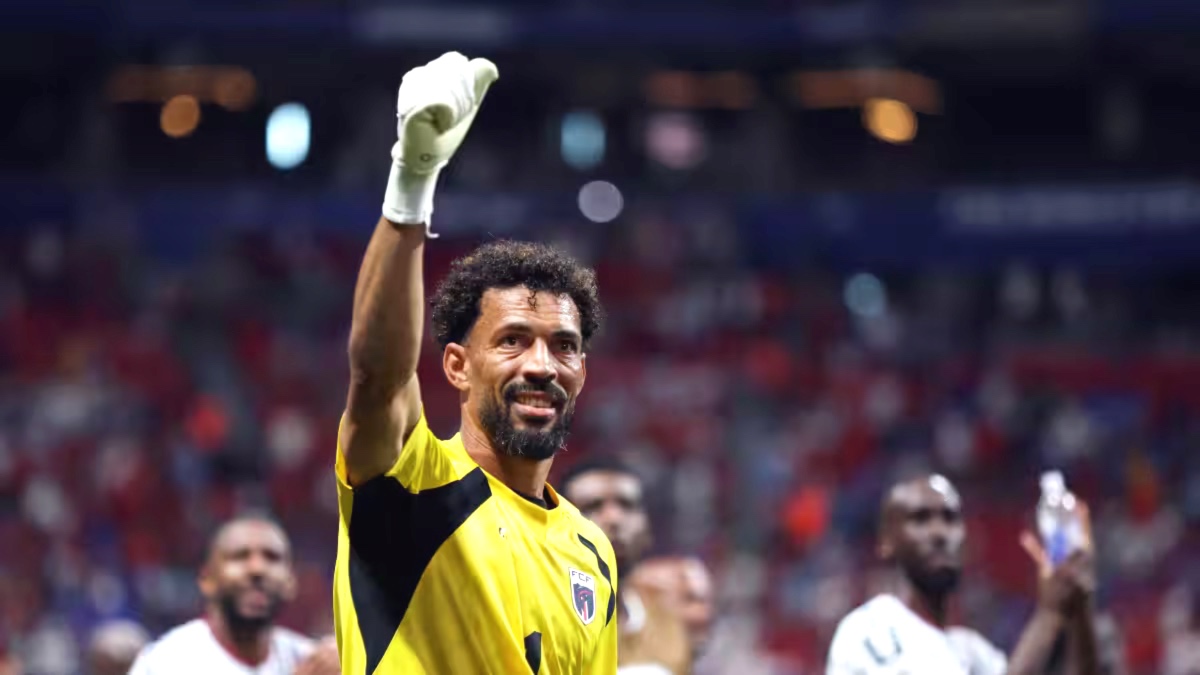
On June 15, 2026, at Atlanta Stadium, a 40-year-old goalkeeper from Cape Verde, a small island nation of just 530,000 people, stood between his team and one of the most powerful football nations on the planet. For 95 minutes, he stopped everything Spain threw at him. Seven saves. Zero goals. One historic 0-0 draw.
By the time the final whistle blew, the world had a new name to remember: Vozinha.
Who Exactly Is Vozinha?
His real name is Josimar José Evora Dias. He was born and raised in Mindelo, a city on the island of São Vicente in Cape Verde. He grew up in a tough neighbourhood, playing football in the streets with boys who were much older than him.
“In my neighborhood, the boys were much older. And I always played in the street, getting beaten up a lot,” he once said in an interview with FIFA. “Well, I was also very good with my feet, I was competitive and rebellious, I didn’t like to lose. I took a lot of hits.”
That early experience of fighting for his place on a football pitch would turn out to be a preview of the rest of his career.
As for the nickname, it comes from his grandparents. In Portuguese, “Vozinha” roughly means “little voice.” His father was in the military, his mother was working, and so for a big part of his childhood, it was his grandparents who raised him. They gave him that name, and it stuck.
He did not always love it. “Nobody in Cape Verde knew me by that name. But I didn’t like it at first, it drove me crazy,” he has said. But when he moved to Angola to play football and found another goalkeeper named Josimar, he had a choice to make. “I said, ‘I’m not going to put Josimar II on my shirt.’ And if everyone knew me as Vozinha in Cape Verde, that’s what was going to stick.”
So Vozinha it became. And in Atlanta, it became the name millions of people searched for on the internet.
A Career That Did Not Come Easy
Not every footballer’s path is clean and simple. Some players get spotted early, join big academies, and are on professional contracts by their teens. Vozinha’s story was nothing like that.
He was good enough to be one of the best goalkeepers on his island. But that alone was not enough to get selected. There was another problem.
“I was one of the best keepers on my island, but I was small. Even when I performed well, I wasn’t selected because of my height.”
Think about that for a moment. You are talented, you are working hard, and you are still being told no, not because of how you play, but because of how tall you are.
Still, he kept going. He kept showing up. And eventually, the opportunities came, just later than most.
“I started playing professional football when I was 25 years old, in 2012. It was too late for a person like me,” he admitted. But he did not stop there. Over the years, he played for clubs in Angola, Moldova, Cyprus, Slovakia and Portugal. Nine clubs. Five countries. A football life built entirely on persistence and a refusal to give up.
Even at the international level, there were moments when he thought about walking away. “I thought about leaving the national team, but then I continued because of this dream.”
That dream, it turns out, was this World Cup.
Cape Verde at the 2026 FIFA World Cup
For a country with a population smaller than many cities, just making it to the World Cup is a massive achievement. The 2026 edition in the United States, Canada and Mexico is Cape Verde’s first-ever World Cup appearance. It is not an exaggeration to say that this is the biggest moment in the country’s football history.
Cape Verde entered Group H alongside Spain, Uruguay and Saudi Arabia. On paper, they were the underdog. The team ranked lowest, the team with the least World Cup experience, the team that many expected to struggle.
Their first match was against Spain, the 2010 World Cup winners, the reigning European champions, ranked second in the world. If you were writing a script to test Cape Verde right away, this would be it.
95 Minutes That Changed Everything
Spain came to Atlanta ready to win. They had the squad, the experience and the quality to beat almost anyone on their day. Lamine Yamal, Dani Olmo, Nico Williams, these players did not even start the match. They came off the bench, which tells you everything about the depth Spain had available.
The numbers from the game tell the full story of how one-sided it was in terms of possession and chances. Spain had 27 shots. Cape Verde had six. Spain won 11 corners. Spain completed over 700 passes. At times, it felt less like a football match and more like a shooting practice session for Spain.
And yet, the scoreline at the end read: Spain 0 – 0 Cape Verde.
The reason? Vozinha.
Save after save, he was there. Ferran Torres tried and failed. Aymeric Laporte headed one toward goal and found Vozinha in the way. When Lamine Yamal came on and started creating danger with his dribbling and quick movement, the goalkeeper stayed calm and organised. He kept directing his teammates, kept talking, kept positioning himself perfectly.
Seven saves in total. Each one important. Each one keeping Cape Verde’s historic clean sheet alive.
Former Scotland winger Pat Nevin, watching the match, summed it up simply: “Vozinha has lit up this game.”
Among goalkeepers aged 40 or older, only Northern Ireland’s Pat Jennings, who made 10 saves against Brazil at the 1986 World Cup, has made more saves in a single World Cup match. That is the company Vozinha now belongs to.
At 40 years and 12 days old, he also became the oldest player ever to appear in a nation’s first-ever World Cup match. Only Egypt’s Essam El Hadary was older when making his own World Cup debut.
The Player of the Match Award, And What He Said
When the final whistle went, Vozinha received the Player of the Match award. Standing in front of the cameras, visibly emotional, he could barely hold back his tears.
“The dream has come true,” he said.
But what came next was even more moving.
“I cried because I grew up with my grandparents. Unfortunately they were not here. They died a few years before. They were everything for me, everything for my life.”
And then he spoke about his mother.
“And also because of my mum. She didn’t manage to be here because of the visa. Because of the money you have to pay for the visa, we didn’t manage on time. I would like her to be here.”
Those words hit differently. Here was a man who had just played the biggest game of his life, against one of the best teams in the world, and his first thoughts were about the people he loves. The grandparents who raised him and gave him his name. The mother who could not afford to get a visa in time to be there.
Football can be a sport of big money, big stadiums and big egos. And then, every now and then, it gives you a moment like this.
He also made sure to share the credit with his team. “The performance is a performance for everyone. I am the man of the game, but this award is for all my colleagues, because without them, nothing is possible.”
And when asked about Cape Verde’s ambitions at the tournament, he was clear: “Everyone thought that we came here just to enjoy the World Cup, but no. We know that we have teams that we will always respect, because this is our first time, but we are here to compete, and we are here to fight for our country.”
From 50,000 Followers to 5 Million in Hours
After the match, something extraordinary happened on social media.
Before the game against Spain, Vozinha had around 50,000 followers on Instagram. A decent number for a goalkeeper playing in the Portuguese second division, but nothing remarkable by World Cup standards.
Then Brazilian broadcaster CazeTV urged its viewers to follow him during its live coverage of the match. What happened next was something that no one, including Vozinha, could have expected. Within hours, his follower count had jumped past five million.
When reporters told him about it, his reaction was perfect. “That is crazy,” he said.
He had no idea. He had just been focused on saving shots.
For someone who spent years being told he was too small, who only turned professional at 25, who played across five countries just to keep his career going, the sudden attention from millions of people around the world was just one more unbelievable chapter in an already unbelievable story.
The 40-Year-Old Who Proved Everyone Wrong
What makes Vozinha’s story so powerful is not just one great match. It is everything that came before it.
It is the little boy in Mindelo, getting knocked around by older kids in the street but never stopping. It is the young goalkeeper who was passed over because of his height, even when he was the best on his island. It is the 25-year-old who finally got his first professional contract and decided to make the most of it, no matter how late it had come.
It is nine clubs and five countries and countless flights and adjustments to new languages, new teammates, new coaching styles. It is years of thinking about leaving the national team but choosing to stay, because the dream was still alive somewhere inside him.
And then, at 40, on the biggest stage football offers, against one of the best teams in the world, it all came together.
Seven saves. Five million followers. One unforgettable night in Atlanta.
Vozinha did not just stop Spain. He showed everyone that it is never too late to reach your dream, as long as you keep showing up.
Related posts:
 Most Successful Teams in FIFA World Cup History | Most World Cup Winners in Football History
 FIFA World Cup 2026: Which Teams have Possibly Qualified for Next Year Sporting Event?
 2026 FIFA World Cup: The Most Climate-Damaging Tournament, Says Report
 From Paul the Octopus to AI Models: How FIFA World Cup Predictions Have Changed Forever