Indian Football is struggling at the moment, back in 1950s, Indian team were often called as “Brazil of Asia” where they have several stalwart players including the likes of- Forward, Defenders and Goalkeepers.
If these players have come up the ranks, credit should be given to Coach also Known as One Man Army “Syed Abdul Rahim” who literally scouted players by travelling all parts of India and several times he backed his decision against All India Football Federation officials.
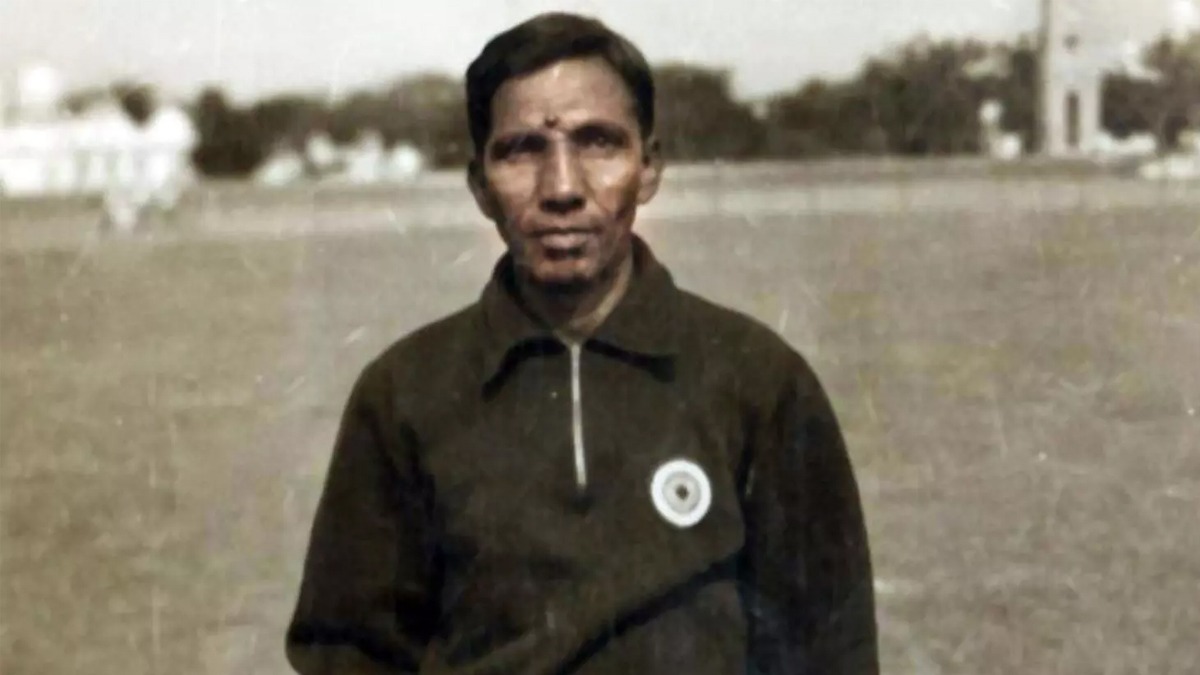
Here in this article, we will reveal each and everything about Syed Abdul Rahim and what made him so special to be shared in the below format:
1. Syed Abdul Rahim, is born on 17th August 1909 where he started playing football from 1920 onwards where our football flourished in the city and he started playing with the likes of- B.K Iyengar, Riasat Ali, Aftab Ali, Sher Khan and Mehboob Khan and all these names were popular player of that era.
2. RaCoach Syed Abdul Rahim right from the moment, he handled coaching responsibilities, where he was the secretary of Hyderabad Football Association from 1943 till his death on 11th June 1963.
3. The most special thing about him could be perfectly summed as “He started coaching at those times when formal coaching in India were barely existed”.
4. He was teacher by Profession, he was a well-read person, a practical Psychologist, great tactician, motivator and disciplinarian.
5. He achieved glory as Coach for Hyderabad City Police, which was touted as one of the most successful teams back in 50s.
6. Rahim’s Coaching was very methodical, moves planned for a match were first theatrically approved on blackboard and later the same thing was executed by rest of the teammates.
7. Syed Abdul Rahim is a hard task master, on and off the field, where he made sure team culture is full of discipline and he always encouraged to read or analyze the game but allowed his team to watch movies.
8. He was brilliant task master when it comes to establishing man to man marking, which played crucial role whether it is related to formations, or combinations come in handy to make sure Top notch footballing skills could be executed by them.
9. He was also chain smoker which literally you don’t relate to him considering his health habits and issues.
10. In International Football, Rahim’s achievements are numerous even before Brazil popularized and started operating in 4-2-4 system in the 1958 World Cup, and he was the first one to introduce in Indian team.
11. His coaching acumen could be briefly summed up as where he took brave call as Coach instead of deep-lying center forward they used Samar Badru Banerjee in the withdrawn, as playmaker’s role.
12. According to Hakeem, “No Country in the world had even attempted that formations then” eventually India register victory against Australia by 4-2 in the semi-finals.
13. As Coach he guided Indian National team in 1952 and 1954 when it comes to 1959 Meredeka Tournaments, where Men in Blue finished as runner Up in the four team final round group league.
14. He also guided Indian team as coach where they won gold medals in the inaugural edition in 1951 Delhi edition followed by 1962 Asian Games in Jakarta.
15. Hyderabad will remember SA Rahim as someone who played an important role in popularizing the game in the city with their innovative coaching methods and many have praised him for even organizing tournaments in the city to improve distinct players dribbling and goal scoring ability where specifically focused on making sure they could enhance their left and right foot effectively.
16. For Junior players he used to organize Height restricted tournaments namely five a side games in local parks thus the flow of talent in Hyderabad football was consistent for Over three decades.
17. Back after his message, Indian team have showed remarkable dedication and adaptability to win final by 2-1 against the favorites, South Korea.
18. In 1962 Asian Games Medal, India beat Thailand by 4-1 followed by victory against Japan 2-0 and South Vietnam 3-2 in the semi finals and these semifinal victory came after a titanic struggle, as Vietnam back in those days have formidable team.
19. Coach Rahim, had instilled great spirit Inside team and that self belief transformed to bring out the best performance from Indian team.
20. He also used to conduct coaching classes, for footballers and trained scores of coaches and referees where they could learn the nuances of the game.
21. Overall he was visionary men and many football experts believe that if he would have survived he would have taken Indian football to giant strides.
| S.No. | Details |
|---|---|
| 1 | Syed Abdul Rahim was born on 17th August 1909. He started playing football from 1920 onwards in Hyderabad, alongside popular players of that era such as B.K. Iyengar, Riasat Ali, Aftab Ali, Sher Khan, and Mehboob Khan. |
| 2 | He served as the secretary of the Hyderabad Football Association from 1943 until his death on 11th June 1963. |
| 3 | Rahim began coaching at a time when formal coaching structures in India barely existed. |
| 4 | By profession, he was a teacher – a well-read person, practical psychologist, great tactician, motivator, and disciplinarian. |
| 5 | He achieved glory as coach of the Hyderabad City Police team, one of the most successful teams in the 1950s. |
| 6 | His coaching was methodical – moves planned for a match were first demonstrated on the blackboard and then executed on the field. |
| 7 | He was a strict taskmaster on and off the field, ensuring discipline in team culture. He encouraged players to analyze the game and even allowed them to watch movies for relaxation. |
| 8 | He emphasized man-to-man marking, which became crucial for formations and combinations to execute top-level footballing skills. |
| 9 | Despite his disciplined approach, Rahim was a chain smoker, which often affected his health. |
| 10 | Internationally, he was the first to introduce the 4-2-4 system to the Indian team, even before Brazil popularized it in the 1958 World Cup. |
| 11 | He took a brave tactical call by deploying Samar Badru Banerjee as a withdrawn playmaker instead of a deep-lying center forward. |
| 12 | According to Hakeem, “No country in the world had even attempted that formation then.” This led India to a 4-2 victory against Australia in the semi-finals. |
| 13 | He guided India in the 1952 and 1954 Olympics and also at the 1959 Merdeka Tournament, where India finished runner-up in the four-team final round group league. |
| 14 | Under his guidance, India won gold medals in the inaugural Asian Games (1951, Delhi) and in the 1962 Asian Games (Jakarta). |
| 15 | Hyderabad remembers Rahim for popularizing football in the city with innovative coaching methods and organizing tournaments to improve dribbling and goal-scoring, focusing on both feet. |
| 16 | For junior players, he organized height-restricted five-a-side games in local parks, ensuring a steady flow of talent in Hyderabad football for over three decades. |
| 17 | With his inspiring message, India showed remarkable dedication and adaptability to defeat South Korea 2-1 in the 1962 Asian Games final. |
| 18 | In the 1962 Asian Games campaign, India beat Thailand 4-1, Japan 2-0, and South Vietnam 3-2 in the semi-finals, which was considered a titanic struggle against a formidable team. |
| 19 | Rahim instilled great spirit and self-belief in his team, enabling players to bring out their best performances. |
| 20 | He also conducted coaching classes for footballers, training scores of coaches and referees to learn the finer nuances of the game. |
| 21 | Overall, Rahim was a visionary, and many football experts believe that had he lived longer, Indian football would have made giant strides. |
More Details about him
Stats & Contextual Figures Related to Syed Abdul Rahim Era
| Metric / Area | What is Known / Estimated |
|---|---|
| Hyderabad City Police Team Success | Under Rahim, Hyderabad City Police (his club-level team) was among the top teams in Indian football during the 1950s. They won many local tournaments and were dominant in the Hyderabad Football Association region. Exact number of trophies is hard to pin from available public sources. |
| Tenure Duration | He was secretary of Hyderabad Football Association from 1943 till his death in 1963, a period of 20 years active in administrative and coaching roles. |
| International Tournaments | Rahim led India in several major tournaments: the inaugural Asian Games gold in 1951 (Delhi); again Asian Games gold in 1962 (Jakarta). India under him also played and finished well (runners up or strong positions) in tournaments like Merdeka in 1959. |
| Formation Innovation | He introduced a version of the 4-2-4 system with the Indian team before it was popularized globally (Brazil’s usage recognized in 1958 World Cup etc.). This suggests that formation innovation under him pre-dated many modern references. |
| Big Matches Wins | Under his coaching: India beat strong teams such as Thailand (4-1), Japan (2-0), South Vietnam (3-2) in the semi-finals in the 1962 Asian Games. Also India beat South Korea 2-1 in the final of that edition. |
| Duration of Player Scouting & Talent Pipeline | Rahim’s work spanned decades; he organized youth and local tournaments (five-a-side, height restricted etc), which means over 30 years of continuous talent flow in Hyderabad. This contributes to sustained supply of good players. |
| Defensive / Tactical Discipline | Implicit stats in terms of goals conceded in major matches are hard to quantify exactly, but his teams were reputed to defend well, maintain man-to-man marking, disciplined formations. India’s scorelines in that era vs Asian teams reflect relatively stable defensive performances. |
Important Questions(FAQ):
Q1. Who was Syed Abdul Rahim and why is he regarded as the architect of Indian football?
Syed Abdul Rahim, born on 17 August 1909, is widely regarded as the father of modern Indian football. A teacher by profession, he brought discipline, vision, and tactical intelligence into the sport at a time when structured coaching barely existed in India. As secretary of the Hyderabad Football Association (1943–1963), he tirelessly scouted talent from across the country. Players like Samar Badru Banerjee and Chuni Goswami thrived under his mentorship. Known as a strict disciplinarian, Rahim demanded professionalism both on and off the field. At the same time, he motivated his players by encouraging study of the game, tactical analysis, and even lighter activities like watching films to build team bonding. His combination of tough love and modern methods made him one of the greatest Indian coaches of all time.
Q2. What were his biggest achievements as coach of India and Hyderabad?
Rahim earned fame with the Hyderabad City Police team, which became a powerhouse in the 1950s. His coaching was methodical—strategies were first explained on a blackboard before being executed on the pitch. He revolutionized Indian football by introducing man-to-man marking and the 4-2-4 formation even before Brazil used it in the 1958 World Cup. Internationally, his most celebrated moments came as coach of India’s national team:
1951 Asian Games (Delhi): Guided India to its first-ever football gold.
1962 Asian Games (Jakarta): Inspired India to another gold, beating Thailand, Japan, Vietnam, and finally South Korea in a thrilling final.
Merdeka Tournaments (1959 & 1964): Took India to the finals, proving the team’s competitive edge in Asia.
His strategies often baffled stronger teams, and victories against nations like Australia highlighted his tactical genius.
Q3. What was Syed Abdul Rahim’s legacy in Indian football?
Rahim was more than a coach—he was a visionary. He organized local tournaments in Hyderabad, including height-restricted and five-a-side games, ensuring a steady flow of young talent for decades. His methods encouraged two-footed play, dribbling excellence, and tactical awareness, laying the foundation for India’s “Golden Era” in football. Even though he passed away in 1963, experts believe that had he lived longer. Today, he is remembered not only as a successful coach but also as a pioneer who changed the very DNA of Indian football.