
Is Pickleball Replacing Badminton in India for the year 2026?
Pickleball is certainly regarded as one of the fastest growing Sport in India and Credit should be given to stakeholders who have worked hard behind the scenes to make this entity extremely popular.
By 2031, Based on distinct research and expert predictions, this combat sport most likely to become second most popular Sports in India post Cricket in 2031.
Here in this article, we will reveal Can this popular sport replace Badminton to be shared in the below format based on facts and strategies:
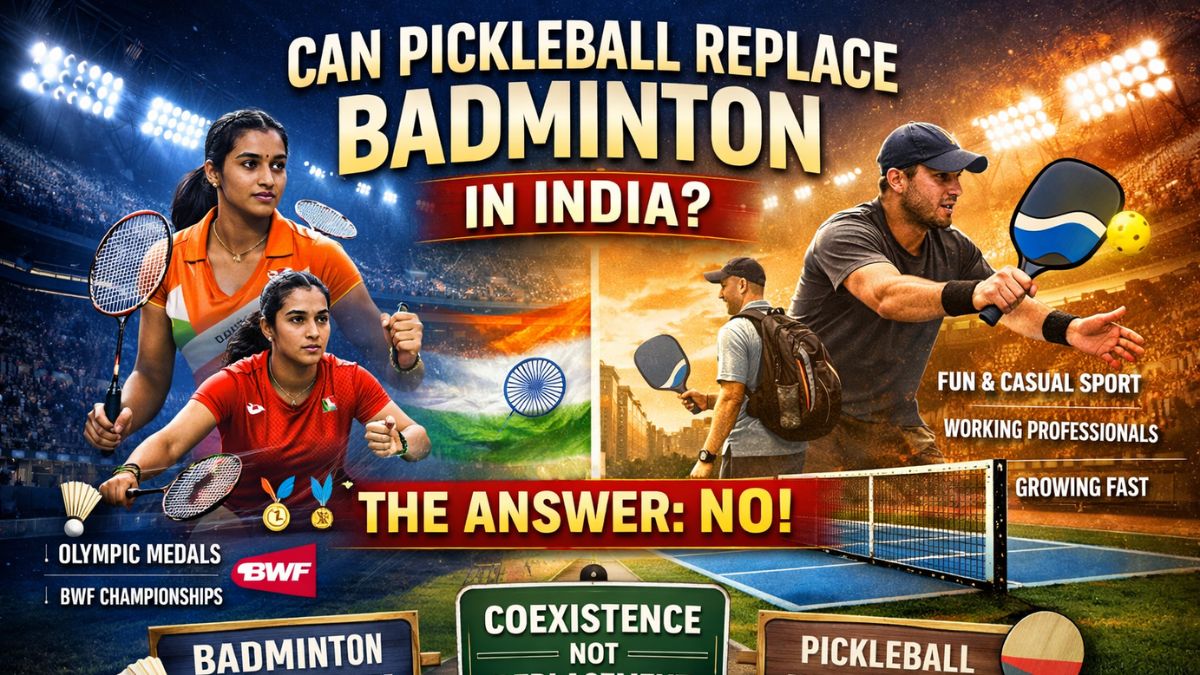
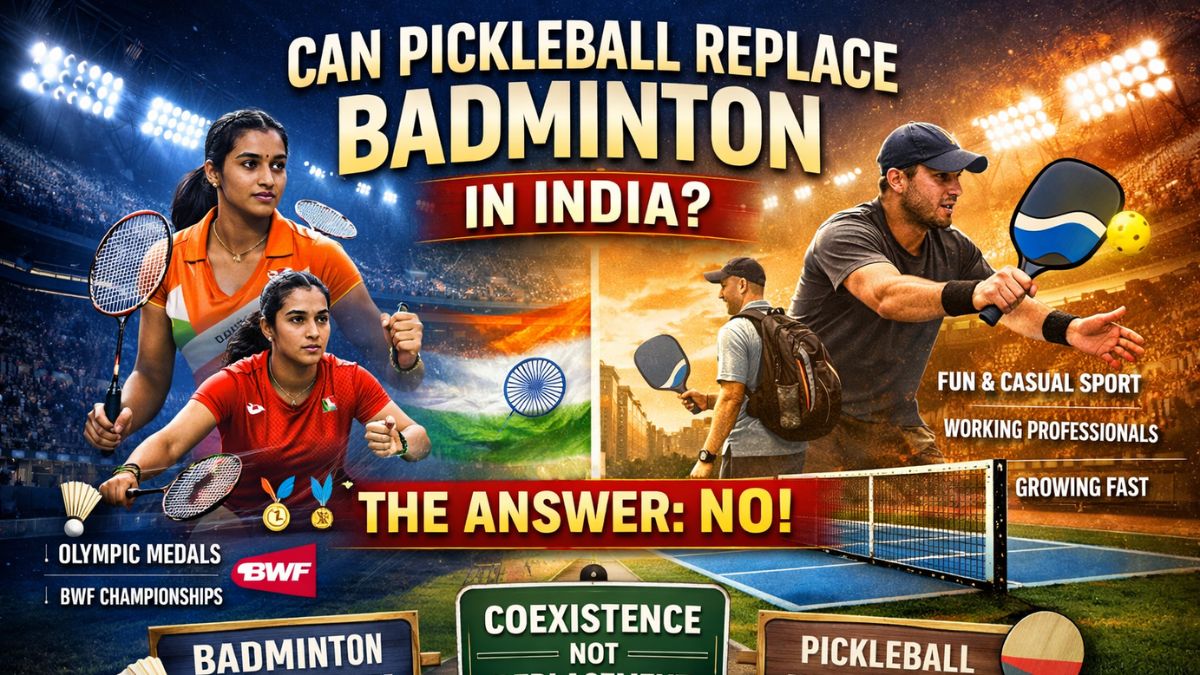
The answer would be “NO” it would not replace Badminton at all and there are several reasons behind it which include:
- Badminton is already an established sport in India where tournaments are happening on regular basis.
- Distinct Champions have come out from this popular sport which include- PV Sindhu, Saina Nehwal and many more where they can earn medals for Country.
- There is Structuring Coaching in process where players could be groomed and develop for next level.
- An ecosystem have been build in such a way all the pathways programs are clearly well written and defined to the best of their ability.
- Overall, Badminton is seen as serious sport on the other end, Pickleball is seen as causal sport and mostly sport where players who are competing are mostly office going people.
- If you need to understand, Badminton and Pickleball it is seen as – Badminton is seen as serious Cricketing stuff on the other end, Badminton is seen as IPL where entertainment and sports come together under one roof.
- Overall, Badminton will always exist when it compare to Pickleball it still needs system in place to make this sport grow big time as there are several flaws which still needs to be addressed to make it one shot thing.
However, User might have different take on it but all they need right set of planning and methods to make another popular sport.
Pickleball is certainly regarded as one of the fastest-growing sports in India, and credit should go to stakeholders who have worked tirelessly behind the scenes to build its visibility and accessibility.
By 2031, based on emerging research trends and expert projections, this sport has the potential to become one of the top-growing recreational activities in the country—possibly even competing for the No. 2 spot after cricket in terms of participation.
However, when we address the key question—Can Pickleball replace Badminton in India?—the answer remains NO. And the reasons go deeper than just popularity; they are rooted in structure, legacy, and ecosystem strength.
Badminton in India is not just popular—it is institutionalized. With a strong governing body like the Badminton Association of India, the sport has a nationwide presence, structured tournaments, and a clear pipeline from grassroots to elite competition. Events ranging from district-level championships to global tournaments like the BWF World Championships ensure continuous exposure and competitive growth for athletes.
India has also produced world-class champions such as PV Sindhu and Saina Nehwal, who have not only won Olympic medals but have inspired an entire generation to take up the sport professionally. These role models reinforce badminton’s identity as a serious, career-oriented sport.
In contrast, Pickleball is still in its developmental phase in India. While it is expanding rapidly in urban centers, its current perception leans more toward a recreational or lifestyle sport rather than a high-performance discipline. Most participation comes from working professionals, fitness enthusiasts, and social communities rather than full-time athletes aiming for international glory.
Another critical difference lies in coaching and infrastructure. Badminton benefits from established academies, certified coaching systems, and long-term athlete development programs. From early training to elite performance pathways, everything is mapped out. Pickleball, on the other hand, lacks a standardized coaching curriculum and consistent talent identification systems across the country.
That said, Pickleball’s growth story is far from insignificant. Its low entry barrier—smaller courts, simpler rules, and less physically demanding gameplay—makes it highly inclusive. This is particularly appealing in a country like India, where urban space constraints and busy lifestyles limit access to traditional sports. Pickleball fits perfectly into gated communities, corporate campuses, and recreational clubs.
Additionally, the sport is benefiting from strong social media traction and community-driven events. Influencer marketing, startup-backed leagues, and increasing investments are gradually building a semi-professional ecosystem. If stakeholders focus on creating structured tournaments, youth academies, and international exposure, Pickleball could transition from a casual activity to a competitive sport over the next decade.
However, replacing badminton is a different challenge altogether. Badminton’s Olympic legacy, government support, and deep-rooted cultural acceptance give it a long-term advantage that cannot be easily disrupted. Instead of replacement, the more realistic scenario is coexistence—where badminton continues to dominate the competitive landscape, while Pickleball thrives as a mass-participation sport.
In conclusion, Pickleball does not need to replace badminton to succeed. Its real opportunity lies in carving out its own identity—bridging the gap between fitness, fun, and competition. With the right strategy, infrastructure, and governance, it can become a major sporting pillar in India—but alongside badminton, not in place of it.
Pickleball vs Badminton in India: Can It Replace?
| Category | Pickleball | Badminton |
|---|---|---|
| Current Growth | One of the fastest-growing sports in India, especially in urban areas | Already a well-established and widely played sport across India |
| Popularity Outlook (2031) | Expected to become one of the top participation sports | Will continue to remain among top competitive sports |
| Core Nature | Recreational, social, lifestyle-driven sport | Professional, competitive, performance-driven sport |
| Ecosystem Strength | Still developing with fragmented structure | Strong, well-defined ecosystem with structured pathways |
| Governing & Structure | Limited standardization and centralized systems | Backed by Badminton Association of India with clear governance |
| Tournaments & Exposure | Growing number of local/community events | Regular district, national & global events like BWF World Championships |
| Indian Champions | Yet to produce global icons at scale | Legends like PV Sindhu and Saina Nehwal |
| Olympic Presence | Not yet a strong Olympic sport for India | Strong Olympic medal-winning history |
| Coaching & Development | Limited structured coaching systems | Advanced coaching ecosystem with academies and talent pathways |
| Participation Base | Office-goers, fitness enthusiasts, recreational players | Grassroots to elite athletes aiming for professional careers |
| Accessibility | High (easy to play, smaller courts, low entry barrier) | Moderate (requires proper courts, training, and equipment) |
| Infrastructure | Growing in gated societies, clubs, and urban spaces | Established infrastructure across schools, academies, and stadiums |
| Perception | Casual, fun, and social sport | Serious, competitive, and career-oriented sport |
| Comparison Analogy | IPL-style (entertainment + sport) | Traditional cricket-style (pure competition & legacy) |
| Challenges | Lack of structure, coaching, and global competitive depth | Minimal—already mature ecosystem |
| Future Potential | Massive growth as a mass-participation sport | Sustained dominance in competitive sports ecosystem |
Final Verdict
| Key Question | Answer |
|---|---|
| Can Pickleball replace Badminton in India? | NO |
| Why? | Badminton’s legacy, structure, Olympic success, and ecosystem are too strong to be replaced |
| Future Scenario | Coexistence – Pickleball will grow as a participation sport, while Badminton remains a competitive powerhouse |
Strategic Insight
| Area | Opportunity for Pickleball |
|---|---|
| Structure | Build governing frameworks and national circuits |
| Grassroots | Introduce youth academies and school programs |
| Professional Pathway | Create leagues and ranking systems |
| Branding | Position as “accessible + competitive” rather than just casual |
| Investment | Attract sponsors, media, and institutional backing |
1. Why is Pickleball growth extremely faster in India?
Unlike many traditional sports, it does not require large playing areas or expensive infrastructure. The sport is easy to learn, which allows beginners to start playing within a short time without extensive training. Additionally, corporate culture and gated communities have played a significant role in its growth, as it fits well into recreational and social settings. Social media exposure, influencer promotions, and community tournaments have further accelerated its popularity, especially among working professionals seeking a balance between fitness and fun.
2. What makes Badminton more established than Pickleball in India?
Badminton has a long-standing history in India, supported by structured governance, consistent tournaments, The presence of international competitions and Olympic success has strengthened its credibility as a serious sport. Over the years, India has produced globally recognized players who have inspired younger generations to pursue badminton professionally. Moreover, the availability of coaching academies, certified trainers, and institutional backing ensures that talent development is systematic and sustainable, something Pickleball is still working towards building.
3. Can Pickleball become a professional sport in India in the future?
Yes, Pickleball has the potential to evolve into a professional sport in India, but it will require strategic development. Establishing a strong governing framework, standardized coaching systems, and national-level tournaments will be key steps. While it may not replace established sports like badminton, it can carve out its own niche by transitioning from a recreational activity to a structured competitive sport over time.
| Question | Answer |
|---|---|
| 1. Why is Pickleball growth extremely faster in India? | Pickleball is growing rapidly in India due to its accessibility and ease of play. It does not require large playing areas or expensive infrastructure, making it ideal for urban spaces. The sport is simple to learn, allowing beginners to start quickly without extensive training. Additionally, corporate culture and gated communities have boosted its adoption as a recreational and social activity. Social media exposure, influencer promotions, and community tournaments have further accelerated its popularity, especially among working professionals seeking a balance between fitness and fun. |
| 2. What makes Badminton more established than Pickleball in India? | Badminton has a long-standing presence in India, supported by structured governance and regular tournaments. The sport’s international competitions and Olympic success have strengthened its credibility as a serious discipline. India has produced globally recognized players who inspire younger generations to pursue it professionally. Moreover, strong coaching academies, certified trainers, and institutional backing ensure a systematic and sustainable talent development pathway—something Pickleball is still developing. |
| 3. Can Pickleball become a professional sport in India in the future? | Yes, Pickleball has the potential to become a professional sport in India with the right strategic development. Building a strong governing structure, introducing standardized coaching systems, and organizing national-level tournaments will be crucial. Increased investments, media coverage, and competitive leagues can further support its growth. While it may not replace established sports like badminton, it can create its own niche by evolving from a recreational activity into a structured competitive sport. |
Overall, Pickleball as Sport would certainly reach bigger heights especially the federation have been officially recognized and they would certainly bring next command in chain and bring system in place to make this popular racquet sport in Mainstream Media Entity.
Related posts:
 Pickleball Sports: Let’s Understand the market of this Popular Sport in Detail with numbers
 Top 5 Indian Celebrities to Acquire Teams in Pickleball League so far in Detail
 Can Pickleball Overtake Cricket in India by 2031? Growth, Numbers & Reality Check
 5 Profitable Business Ideas in Indian Pickleball Industry You Can’t Miss in 2026