

India’s Pickleball Crisis: Why Middle-Class Athletes Are Quitting the Sport
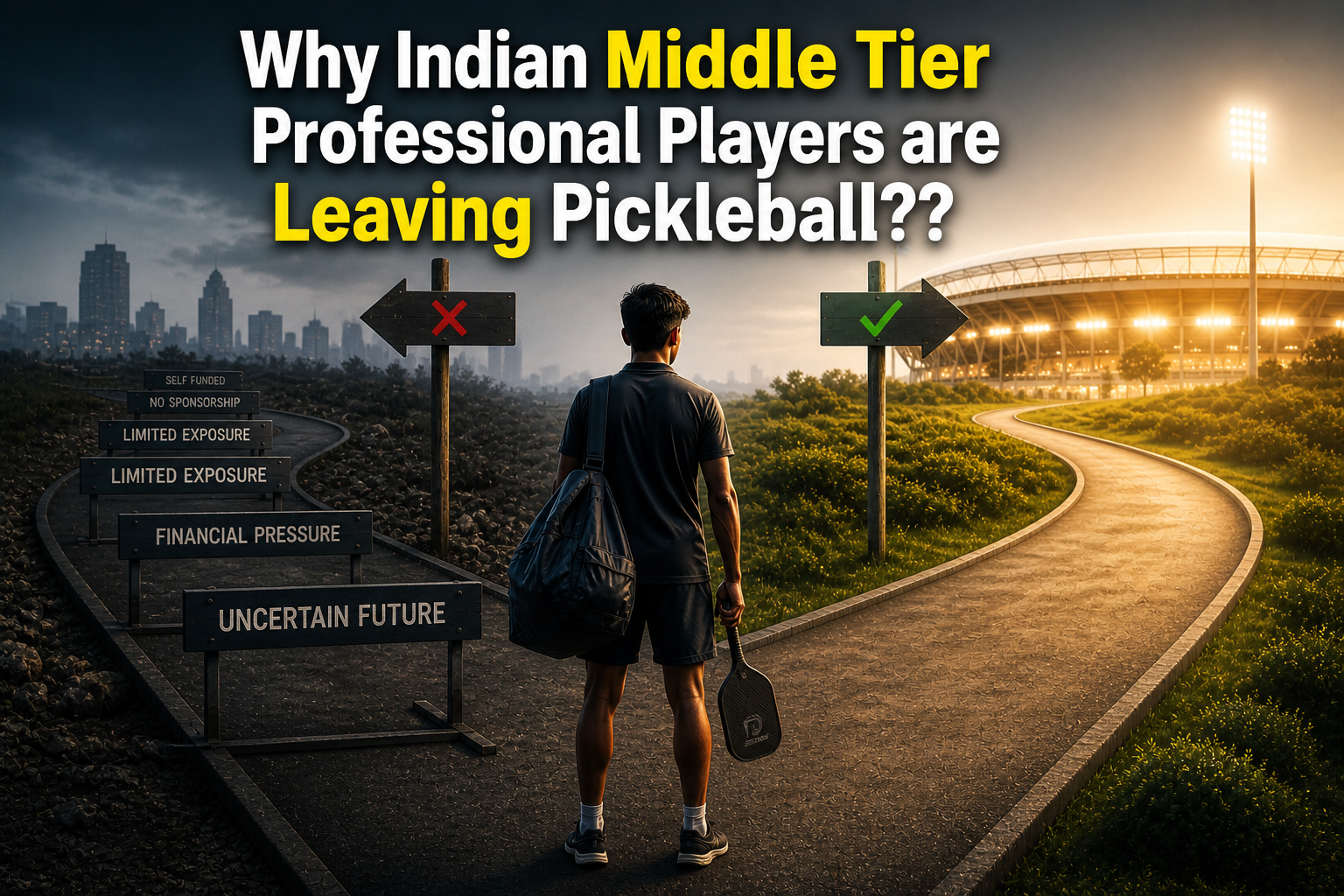
India is quietly losing its middle-tier athletes—not the superstars who headline tournaments, and not the casual hobbyists who play for recreation, but the layer in between. These are the players who form the backbone of any sporting ecosystem: talented enough to compete at national levels, disciplined enough to commit years to training, yet not privileged enough to sustain themselves within a broken system. In emerging sports like pickleball, this issue is becoming increasingly visible—and increasingly urgent.
The uncomfortable truth is this: these athletes are not walking away because they lack ability. They are stepping away because the system makes it nearly impossible to stay.
Responsibility for this situation does not lie with a single stakeholder. Instead, it reflects a collective failure across multiple layers of the sports ecosystem.
At the top are federations and governance bodies. In many cases, athletes face inconsistent tournament calendars, last-minute scheduling changes, and a lack of clarity around rankings and qualification pathways. Without a predictable structure, players cannot plan their training cycles, financial commitments, or career progression. When tournaments are delayed or cancelled, it doesn’t just disrupt competition—it directly impacts livelihoods.
Then come sponsors and brands, whose investment strategies tend to be heavily skewed toward established stars. While backing elite athletes makes marketing sense, it leaves the majority of competitive players without financial support. For middle-tier athletes, visibility is limited, which further reduces their chances of attracting sponsorships. It becomes a cycle where lack of exposure leads to lack of funding, and lack of funding limits performance and growth.
State associations, too, play a role in this gap. While many have succeeded in expanding grassroots participation, the pathway from participation to professionalism remains weak. There is often little structured support for athletes transitioning from local competitions to national or international stages. Without clear progression systems, players find themselves stuck—good, but going nowhere.
Another major gap is the absence of professional league depth. Unlike sports with established ecosystems, pickleball in India lacks a stable circuit of leagues that offer contracts, match fees, or long-term engagement. Beyond a handful of events, there is no reliable earning model. Athletes are left to fund their own careers with no assurance of returns.
Overlaying all of this is the socio-economic reality of India. For most middle-class families, sport is still seen as a high-risk pursuit rather than a viable profession. By the age of 22 to 25, financial pressures begin to mount. Education loans, family responsibilities, and societal expectations push athletes toward more stable career paths. Without institutional backing, continuing in sport often feels like an irresponsible choice, no matter how passionate or talented the individual may be.
The challenges faced by these athletes are deeply practical and relentless. Most are self-funded—covering training, travel, equipment, and tournament fees out of their own pockets. There is no consistent income stream, making long-term planning difficult. Access to quality coaching, sports science, and recovery support is limited. Media visibility is minimal, which affects both morale and marketability. There is little to no injury insurance, and almost no structured career transition support. Over time, the mental toll of uncertainty, financial stress, and lack of recognition leads to burnout.

This is not a problem of talent. It is a problem of system design.
If India is serious about building a strong sporting future—not just in pickleball, but across disciplines—then the focus must shift toward strengthening this middle layer.
One of the most immediate solutions is the creation of structured Tier-2 and Tier-3 leagues. Not every competition needs to operate at the scale of a premier league. Smaller, city-based or regional leagues with guaranteed match fees can provide athletes with consistent opportunities to compete and earn. Stability, even at a modest level, can make a significant difference.
There is also a need to rethink sponsorship models. Instead of concentrating budgets on a handful of stars, brands can invest in broader athlete categories—for example, supporting the top 50 ranked players in a sport. This approach not only diversifies risk but also builds a larger talent pool over time.
Athlete stipend programs could further ease financial pressure. Monthly retainers for players within a defined ranking bracket would provide basic security, allowing them to focus on training and performance rather than survival.
Equally important is transparency. Federations must publish annual calendars and adhere to them. Predictability builds trust, and trust encourages long-term commitment from athletes.
Hybrid career pathways can also play a crucial role. Partnerships with corporates for flexible jobs, education programs, and post-career planning can help athletes balance financial stability with sporting ambition. Knowing there is a future beyond active competition makes it easier to stay in the system longer.
Finally, the role of media and content platforms cannot be overlooked. Stories of middle-tier athletes rarely get told, yet these narratives are powerful. Increased visibility can attract sponsorships, build fan bases, and create a sense of recognition that goes beyond medals.
India’s sporting ambitions cannot rest solely on a few elite performers. True depth comes from a strong, supported, and sustainable middle tier. Until that layer is protected and nurtured, the system will continue to lose some of its most dedicated athletes—not because they failed, but because the ecosystem failed them.
India’s Middle-Tier Athlete Crisis – Structured Breakdown
| Section | Key Points |
|---|---|
| Core Issue | India is losing its middle-tier athletes—not stars or hobbyists, but the backbone of the sports ecosystem. These players are skilled enough for national competition but lack financial and systemic support to sustain careers. |
| Reality Check | Athletes are not quitting due to lack of talent. They are leaving because the system is unsustainable and unpredictable. |
| Nature of the Problem | This is not a single-point failure. It is a collective breakdown across federations, sponsors, associations, and societal structures. |
Stakeholder Responsibility
| Stakeholder | Challenges Created |
|---|---|
| Federations & Governance Bodies | Inconsistent calendars, delayed tournaments, unclear ranking systems, lack of transparency. This creates uncertainty in career planning and financial stability. |
| Sponsors & Brands | Majority of funding goes to elite athletes. Middle-tier players lack visibility, leading to fewer sponsorship opportunities and limited growth. |
| State Associations | Focus on grassroots participation but weak progression pathways. Limited structured support for athletes moving to higher levels. |
| Professional Ecosystem | Lack of Tier-2/Tier-3 leagues. No contracts, match fees, or stable income opportunities. |
| Socio-Economic Factors | Middle-class pressure forces athletes (age 22–25) to prioritize stable careers due to financial responsibilities and societal expectations. |
Challenges Faced by Middle-Tier Athletes
| Category | Issues |
|---|---|
| Financial | Self-funded training, travel, equipment, and tournaments. No steady income. |
| Infrastructure | Limited access to quality coaching, sports science, and recovery systems. |
| Visibility | Minimal media coverage reduces recognition and sponsorship potential. |
| Security | No injury insurance or long-term financial safety nets. |
| Career Stability | No structured post-career pathways or fallback options. |
| Mental Health | Burnout due to uncertainty, financial stress, and lack of recognition. |
Core Insight
| Insight |
|---|
| This is not a talent problem. It is a system design failure that is pushing capable athletes out of professional sport. |
Way Forward / Solutions
| Solution Area | Recommended Actions |
|---|---|
| League Structure | Develop Tier-2 & Tier-3 leagues with guaranteed match fees and consistent competition opportunities. |
| Sponsorship Model | Shift from star-focused funding to category-based support (e.g., top 50 ranked players). |
| Athlete Support | Introduce stipend programs or monthly retainers for national-level players. |
| Governance सुधार (Improvement) | Publish transparent annual calendars and maintain scheduling discipline. |
| Career Pathways | Create hybrid models with corporate tie-ups, flexible jobs, and education support. |
| Media & Content | Increase storytelling around middle-tier athletes to improve visibility and commercial value. |
Journalistic Perspective:
| Final Thought |
|---|
| India’s sporting success depends on strengthening its middle tier. Without systemic support, the ecosystem will continue losing dedicated athletes—not due to lack of talent, but due to structural failure. |
Frequently Ask Questions(FAQ):
1. Why are middle-tier athletes in India leaving professional sports like pickleball?
Answer:
Middle-tier athletes in India are leaving not because of a lack of talent, but due to an unsustainable ecosystem that makes long-term participation extremely difficult. These players often operate without financial backing, which means they must self-fund training, travel, equipment, and tournament participation. Unlike elite athletes who receive sponsorships and institutional support, middle-tier players struggle with inconsistent income and limited visibility. Additionally, irregular tournament calendars and last-minute scheduling changes disrupt both performance planning and financial stability. Without a structured league system offering contracts or match fees, there is no predictable earning pathway. Over time, this uncertainty creates immense mental and financial pressure. By their early to mid-20s, many athletes face societal and family expectations to pursue stable careers, especially in a country where sports is still considered risky. The absence of injury insurance, career transition programs, and professional support systems further accelerates dropout rates. Ultimately, these athletes are forced to choose sustainability over passion, making their exit less about choice and more about survival.
2. What structural changes are needed to retain and support middle-tier athletes in India?
Answer:
To retain middle-tier athletes, India needs a systemic overhaul that prioritizes stability, accessibility, and long-term career viability. First, the introduction of structured Tier-2 and Tier-3 leagues is critical, as they can provide consistent competition and guaranteed match fees, even if at a smaller scale. This creates a basic earning ecosystem. Second, sponsorship models must evolve from focusing only on top stars to supporting a broader pool of athletes, such as funding the top-ranked 50 players in a sport. Third, athlete stipend programs can provide monthly financial support, reducing immediate economic pressure. Transparency in governance is equally important—federations must publish and adhere to fixed annual calendars to build trust and allow athletes to plan effectively. Additionally, hybrid career pathways through corporate partnerships can offer flexible employment and education opportunities, ensuring financial security alongside sporting ambitions. Finally, stronger media coverage and storytelling around non-elite athletes can improve visibility, attract sponsors, and build a more inclusive sports narrative that values depth, not just stardom.

I am Ankit Chaubey currently pursuing Masters in Journalism and Mass Communication along with that I have done a TV Broadcasting Course from Sporjo and holds Diploma in Journalism and Mass Communication from RK Films and Media Academy New Delhi. I have played carrom at City level. Love watching Cricket, Chess, Esports and Indian Football. Working in Sportzcraazy from last 3.5 years.