

Understanding Betting Odds: A Simple Guide for New Bettors
Betting odds are simple features of sports betting, but if you are a beginner in the betting sector, you may find them a little complex. In this guide, the fundamentals will be explained with the aim of providing you with an insight of what betting odds entail and how best to apply them.
What Are Betting Odds?
Betting odds are the probability of an event occurring and the amount of money that can be won in the event that the bet is successful. As it has been mentioned, both can be offered in fractional, decimal, and moneyline formats. It is important to know these odds so as to make appropriate bets. You can also learn about Live Betting Sites.
Types of Betting Odds

Betting odds
- Fractional Odds
There are fractional odds used frequently in the UK and Ireland. They are written in fraction form such as 5/1 – read five to one. This likely translates to for every ₹1 you bet, you could win ₹5, should the bet that you placed is successful. - Decimal Odds
Decimal odds are favoured in Europe, Canada and Australia. These odds are in decimal form that is in the form of a decimal number such as 6.0. The figure signifies the payoff you are to get in case you win the stake besides the stake you placed. For example, if one has a ₹100 stake and the odds of winning the bet are 6.0 would return ₹600. - Moneyline Odds
Money line odds, also called American odds, are commonly used in the United States. They are given either as a positive or as negative value. A positive number, e.g., +500 indicates how much money you would be paid if you bet on 100 dollars and a negative number, like -200 will show you that you need to bet $200 for you to gain a profit of hundred dollars.
How to Read Betting Odds?
How to read odds
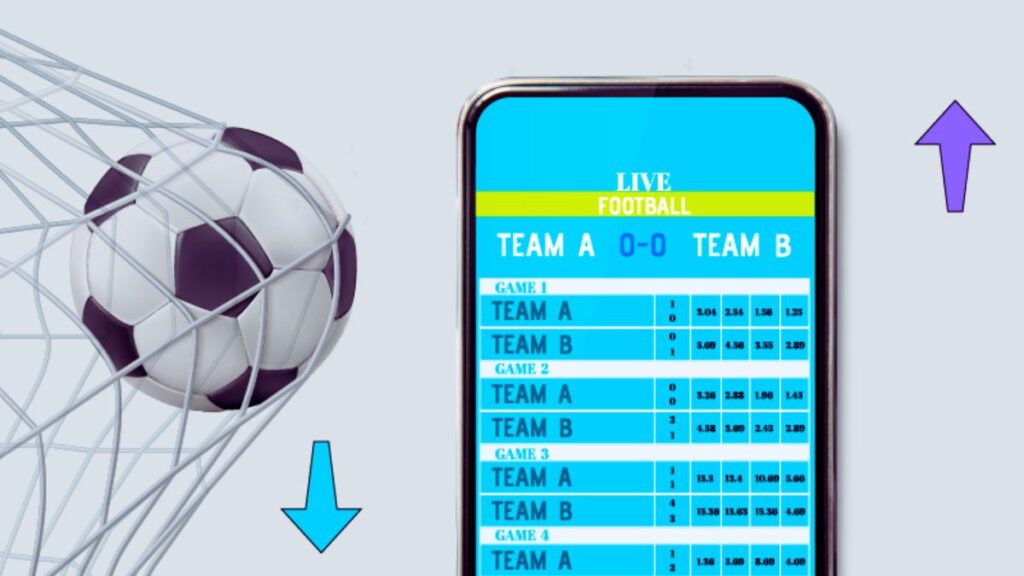
Knowing how to read betting odds is important. Here’s a quick guide:
- Favourite vs. Underdog: Whenever two teams or two players compete, there is always one side that is expected to triumph (the favourite) and the other side that is expected to lose (the underdog). The odds reflect this. Favourites have lesser probability hence giving a lesser amount and this is in contrast to the underdogs who have better probability hence denote a higher amount.
- Implied Probability: Odd can also be used to tell you the expected probability of an event. For instance; probability with odds of 2. 0 (decimal) means there is a 50:50 chance of the event’s occurrence.
Also read: How to Get Started with Sports Betting Online
Tips for Using Betting Odds
- Start Small: For a beginner in betting, it is advisable to go for small stakes first in an attempt to learn how to read and analyse odds.
- Shop Around: Sometimes, the odds for the same event may differ with one bookmaker to another, though not by a very big margin. Compare odds across different sites in order to get the most value.
- Use Tools: Site menus often offer calculators that allow angling for odds conversion and probable winnings, it only makes it easier to comprehend what one is placing his/her bet on.
FAQs
What are fractional odds?
Fractional odds – like 5/1 – explain how much it’s possible to win, in terms of the stake. For every ₹1 wagered, you stood a chance to win ₹ 5.
How does decimal odds work?
Decimal odds are the total amount you get when you win your bet including the stake. For instance, chances are 6.0 means that a ₹100 bet would yield ₹600.
What are moneyline odds?
Moneyline odds are common in the United States A positive figure for example +500 shows how much you would win for a ₹100 stake Moneyline odds are common in the United States; A positive figure for example +500 means that for a stake of ₹ 100 you can win ₹ 500.