
Uncomfortable Truth: CSK Might Now Be Better Off Without MS Dhoni
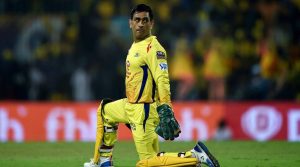
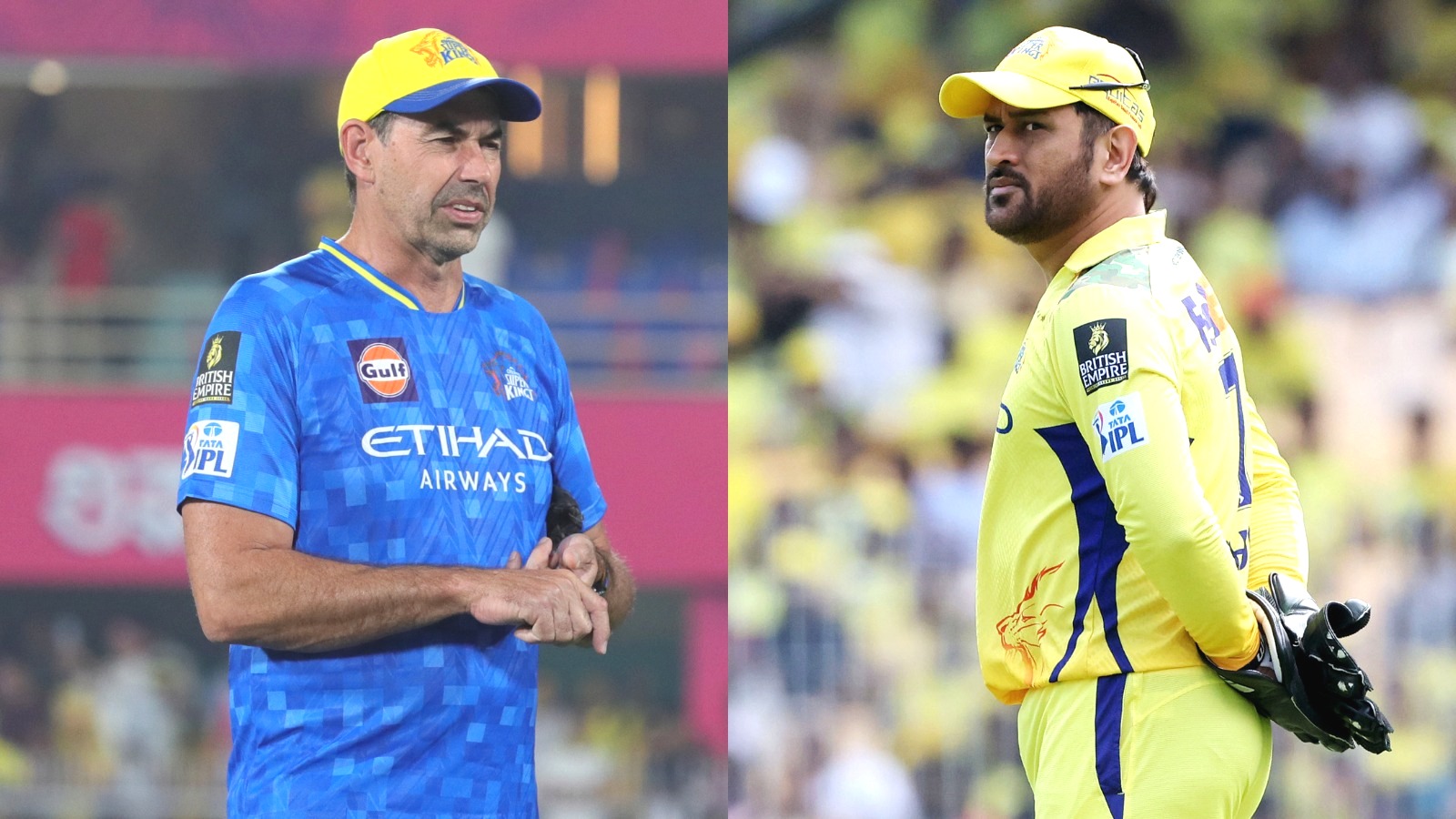
IPL 2026 has reached an important stage for Chennai Super Kings, and the biggest talking point is still MS Dhoni’s absence from the playing XI. CSK have played six matches without him so far, and there is still no clear update on whether he will take the field against Mumbai Indians next.
MS Dhoni’s injury and IPL 2026 absence
Before IPL 2026 began, Chennai Super Kings confirmed that MS Dhoni had picked up a calf strain and would miss at least the first two weeks of the tournament. He has been undergoing rehabilitation for this injury, and that is why he has not featured in the early part of the season.
This injury came after years of pushing his body for one more season of IPL, even as his role on the field kept changing. In IPL 2025, despite being in his mid‑40s, Dhoni still played all 14 matches for CSK and scored 196 runs at a strike rate of around 135. However, the workload, especially on his knees and lower body, has become harder to manage with time.
Now, six games into IPL 2026, CSK have only two wins, and their campaign is under pressure already. In such a situation, the easy emotion is to say, “Bring MS Dhoni back into the XI as soon as he is fit.” But when we look closely at the numbers and the current squad, the picture becomes more complex.
The legend and the current reality
Nobody can deny what MS Dhoni has done for Chennai Super Kings. He has led them to multiple IPL titles and turned the franchise into one of the most stable teams in T20 cricket. Over the years, he became the face of CSK, and his calm presence behind the stumps and in the middle order shaped the team’s identity.
However, Dhoni is now 44. In the last few years, he has carried knee issues and other niggles and even went through surgery after the 2023 season. From that point, CSK clearly started to reduce his batting workload and kept him mostly for short finishing roles and leadership value. His time at the crease has gone down, even though his impact in a few balls has often looked dramatic.
This is where the key question comes in: does it still make cricket sense to bring him back into the XI in the middle of IPL 2026, especially when he is coming off another injury layoff?
Dhoni’s shrinking batting workload
If we look at the last three IPL seasons before 2026, Dhoni’s role with the bat has become very limited in terms of balls faced. Across 44 matches, he has faced only 275 deliveries, which comes to an average of just about 6.25 balls per match. That means he is often walking in for only one over, or slightly more than that, before the innings ends.
For a franchise building a balanced T20 batting line‑up, it is not easy to give a full spot in the XI to a batter who, by design, faces so few balls. That slot could also be used for a younger player who can bat higher, face more deliveries, and give four overs in the field if needed, or at least add more flexibility to the batting plan.
In T20 cricket, where every ball counts, CSK must ask themselves if they can afford a batter who usually comes out only for the final five or six balls. The emotional value is huge, but the tactical value has reduced compared to Dhoni’s peak years.
Batting at No. 7, 8 and 9
Dhoni’s batting positions in recent years also tell a clear story. He has mostly batted at No. 7, No. 8 or even No. 9 in the IPL. That is very low for a batter who once used to command the middle order.
Here is a simple look at his returns by position in the last three seasons:
- At No. 7: 25 innings, 444 runs, average 34.2, strike rate 133.7, dot‑ball percentage 37.3.
- At No. 8: 14 innings, 236 runs, average 47.2, strike rate 173.5, dot‑ball percentage 33.1.
- At No. 9: 3 innings, 31 runs, average 15.5, strike rate 147.6, dot‑ball percentage 47.6.
On paper, the averages and strike rates at No. 7 and 8 still look decent. But these figures come from very short cameos, where he often faces less than 10 balls. When you combine that with the dot‑ball percentages, you can see that even Dhoni needs a few balls to get going, and with so few deliveries left, that is not always easy.
At No. 9, the numbers are even more revealing. That position is usually more for bowlers who can bat a bit, not for someone who was once the main finisher of the side. For a team that wants long‑term stability and a strong batting core, this is not an ideal role for such a senior player.
Season‑by‑season returns since 2020
It also helps to track Dhoni’s IPL batting numbers year by year since 2020, because that is when his decline with the bat first became a real talking point:
- IPL 2020: 200 runs in 14 matches, strike rate 116.27.
- IPL 2021: 114 runs in 16 matches, strike rate 106.54.
- IPL 2022: 232 runs in 14 matches, strike rate 123.40, with one fifty.
- IPL 2023: 104 runs in 16 matches, strike rate 182.45.
- IPL 2024: 161 runs in 14 matches, strike rate 220.54.
- IPL 2025: 196 runs in 14 matches, strike rate 135.17.
From 2020 to 2022, his strike rate was modest for a finisher, and his total runs per season were also low by his old standards. In 2023 and 2024, his strike rate shot up above 180 and even 220, but this came from very short appearances where he often faced fewer than 10 balls in an innings. By 2025, he still scored 196 runs, but again, his main job was to swing hard at the end rather than build an innings.
These numbers show a clear shift. Dhoni has moved from being a middle‑overs anchor and finisher to a pure late‑overs cameo player. That shift is understandable with age and injuries, but it changes how CSK should think about his place in the XI in IPL 2026.
Sanjay Manjrekar’s sharp assessment
Former India batter and current broadcaster Sanjay Manjrekar has openly spoken about Dhoni’s late‑order cameos in recent seasons. On Sportstar’s “Insight Edge” podcast, he said that Dhoni was “increasingly finding it tough to deliver” and called some of those three‑ or four‑ball innings “a bit of a joke,” especially when they were hyped up in the coverage as if they were long knocks.
Manjrekar also pointed out that teams like CSK and Mumbai Indians sometimes stay too attached to their big names from the past. In his view, these teams can get stuck in history instead of picking players who are at their peak for the current T20 era. He stressed that IPL is a modern format where being current with fitness, power, and intent is more important than going by reputation.
His words may sound harsh, but they force teams and observers to look beyond emotion and focus on what is happening on the field right now.
The wicketkeeping and reflex factor
Apart from batting, Dhoni has also been CSK’s first‑choice wicketkeeper for most of his IPL career. Even in his late 30s and early 40s, he was still one of the sharpest keepers in the league, with safe hands and quick movement behind the stumps.
But wicketkeeping is a tough job on the body, especially on knees and back. At 44, with a history of knee trouble and now a calf strain, it is natural to expect that his reflexes and movement may not be the same as before. That does not mean he is suddenly poor with the gloves, but it does raise questions about whether he can keep for 20 overs, game after game, in a long tournament like IPL 2026.
If his movement is even slightly slower, that can affect sharp stumpings, quick takes down the leg side, and overall agility behind the stumps. For a side that prides itself on tight fielding and smart use of DRS, this is another point CSK must weigh while thinking of bringing him back into the XI this season.
Why bringing Dhoni back mid‑season is a tough call
On paper, adding Dhoni to the XI brings experience, game sense, and calm. He has seen every sort of situation in T20 cricket, and his presence alone can steady a dressing room. However, from a pure cricket and planning point of view, there are several issues CSK must consider.
First, if he comes back only as a No. 8 or No. 9 batter who will likely face 5–8 balls, CSK are using a full batting spot for a very small share of the innings. That puts more load on the top six to score the bulk of the runs, and if they fail, there is not much depth left.
Second, his current role does not easily allow him to move up the order and play a longer knock. Given his recent fitness record and the way CSK have used him, it seems unlikely that they would suddenly push him to No. 4 or No. 5 and ask him to bat 30 balls. That limits tactical options.
Third, bringing him back would likely push a younger batter or a keeper‑batter to the bench. In a season where CSK have already invested heavily in youth, that is a serious trade‑off. It is not only about this season’s results; it is also about building match experience for players who could serve the franchise for many years.
CSK’s big bet on youth: Kartik Sharma and Prashant Veer
At the IPL 2026 auction, Chennai Super Kings made headlines by going hard for two uncapped Indian players: wicketkeeper‑batter Kartik Sharma and all‑rounder Prashant Veer. Both were picked up for a huge amount of 14.2 crore each, making them joint‑most expensive uncapped Indian players in IPL history.
Kartik Sharma, a 19‑year‑old wicketkeeper‑batter from Rajasthan, impressed teams with his explosive batting in the Syed Mushtaq Ali Trophy and his ability to handle both keeping and finishing roles. Veer, a 20‑year‑old left‑arm spin all‑rounder from Uttar Pradesh, also drew interest from several teams before CSK finally secured him. These signings showed that CSK were ready to reshape their core with young Indian talent, especially in the lower middle order and keeper positions.
By paying such a high price, CSK have sent a clear message: they see these two as long‑term investments who should play big roles, not just sit on the bench. That is why the decision on Dhoni’s playing spot becomes even more sensitive in IPL 2026. Every game where Dhoni plays as keeper and lower‑order batter is a game where Kartik Sharma, for example, misses a chance to learn, adapt, and grow at the IPL level.
Grooming the next generation inside CSK
From a team‑building point of view, the current season is a golden chance for CSK to groom players like Kartik Sharma and Prashant Veer. Both are young, both have shown promise in domestic cricket, and both offer the kind of skills that are in high demand in T20 leagues around the world.
If Kartik is given the gloves and a defined batting role at No. 5, 6 or 7, he can adapt to the pressure of finishing games and reading situations. That learning curve cannot be created in practice sessions alone; it needs time in real matches. Similarly, Veer can be used as a flexible all‑round option, bowling his overs and chipping in with the bat.
Keeping them on the bench for long stretches while a 44‑year‑old, injury‑prone player is preferred over them would raise serious questions about the use of resources. For a team that has always been praised for its planning, CSK will not want to fall into that trap.
Balancing emotion, respect and team needs
The central tension for CSK in IPL 2026 is very clear. On one side is MS Dhoni, a player who has given the franchise almost everything and who still carries a huge amount of respect in the dressing room. On the other side is the reality of T20 cricket, where fitness, fast scoring, and fresh energy often decide matches.
Balancing these two sides is not easy. It is one thing to honour Dhoni’s career and keep him as a key figure in the squad; it is another to keep playing him even when his on‑field role has become very narrow. The management has to weigh leadership, tactical value, and the need to develop young talent, all at the same time.
In IPL 2026, CSK also have to think about the number of games left, the points table, and how many matches they can afford to treat as trial runs. When a team has only two wins from six games, every future match carries more pressure, and each selection call becomes more important.
Is there still room for Dhoni in CSK’s XI in IPL 2026?
Looking at everything together – injury status, age, shrinking batting role, keeping workload, and the presence of high‑value young players – the idea of bringing MS Dhoni straight back into the starting XI mid‑season becomes a very tough cricket call.
If CSK decide to focus fully on the future, they may lean towards giving extended runs to Kartik Sharma as wicketkeeper‑batter and to Prashant Veer as an all‑round option. That would match the money spent on them and give the team more power and flexibility.
If they look at form and role, the numbers of the last few years suggest Dhoni is no longer the ideal No. 7, 8, or 9 for a long IPL season. His batting time has shrunk to a handful of balls per match, and his body has needed more protection with each passing year.
The final choice rests with the CSK management. But when we strip away the sentiment and look only at the cricket logic in IPL 2026, the case for moving on from Dhoni in the playing XI – and using this season to build a new core – looks stronger than ever.