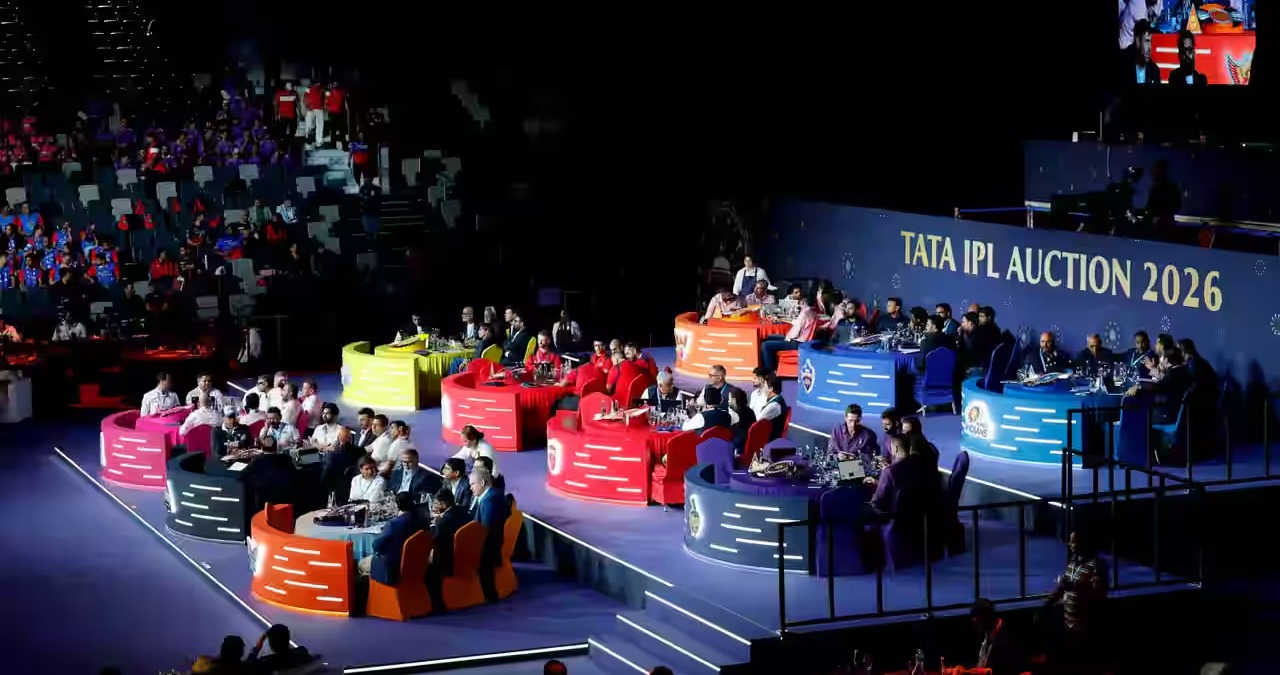
The Indian Premier League 2026, have been concluded successfully, where 77 players were sold with Cameron Green received maximum amount 25.20 Crore.
With this amount He became the most expensive player in marquee event other thing which came into consideration anything above 18 crore given to Overseas player will be given back to BCCI Player Welfare Fund.
The Biggest Question which arises why 25.20 crore is not the full amount which he will receive, as we have seen several players placed their name in the auction in order to earn more money.
In that case Cameron Green would get 18 crore remaining 7.20 crore will be given back to BCCI Welfare Fund.
What is BCCI Player Welfare Fund?
The BCCI Player Welfare Fund is an initiative Build by BCCI( The Board of Control for Cricket in India) where any amount 18 crore will be used for Indian domestic talent player welfare program, infrastructure and financial aspect which will help them to grow to the best of their ability.
This initiative is not applied for Indian talent, it is only applicable on overseas players also the amount will be used for retired players development.
More Details about BCCI Player Welfare Fund:
IPL 2026 Auction: Why Cameron Green’s ₹25.20 Crore Isn’t What He Actually Takes Home
The Indian Premier League (IPL) 2026 auction concluded successfully, once again reinforcing the tournament’s status as the most powerful and financially influential cricket league in the world. With franchises going all out to secure marquee players, the auction witnessed intense bidding wars, strategic decision-making, and record-breaking moments. In total, 77 players were sold across categories, but one name dominated headlines more than any other — Cameron Green.
The Australian all-rounder emerged as the most expensive player of the IPL 2026 auction, attracting a massive bid of ₹25.20 crore. While the figure itself made history, it also sparked widespread discussion and confusion among fans and analysts alike. The biggest question that arose was simple yet significant: Will Cameron Green actually receive the entire ₹25.20 crore?
The answer lies in a lesser-known but extremely important BCCI policy — the BCCI Player Welfare Fund.
The ₹25.20 Crore Question: What Really Happens to the Money?
At first glance, a ₹25.20 crore price tag suggests that Cameron Green will take home the full amount as his IPL salary. However, under the latest BCCI regulations, overseas players are subject to a unique financial structure.
According to the rule, any amount exceeding ₹18 crore paid to an overseas player does not go directly to the player. Instead, the surplus amount is redirected to the BCCI Player Welfare Fund.
This means that while Green remains the most expensive buy on paper, ₹7.20 crore of the bid amount will be transferred to the BCCI Player Welfare Fund, and not into the player’s personal earnings.
This regulation has fundamentally changed how overseas player contracts are perceived in the IPL.
Why Do Players Still Enter the Auction Despite This Rule?
A natural question follows — if overseas players cannot take home the full amount
The answer lies in the IPL’s unparalleled value beyond just salary figures.
Firstly, the IPL remains the biggest global platform for cricketers. A strong IPL season boosts a player’s market value worldwide, opening doors to sponsorships, brand endorsements, franchise leagues across countries, and long-term career stability.
Secondly, even ₹18 crore is a significant amount, making the IPL one of the most lucrative leagues for overseas players despite the cap. No other T20 league offers comparable financial security, exposure, and competitive quality.
Lastly, being picked at a high price reinforces a player’s brand value. For someone like Cameron Green, being the most expensive player enhances his reputation as a premium all-rounder in world cricket.
What Is the BCCI Player Welfare Fund?
The BCCI Player Welfare Fund is a structured initiative created by the Board of Control for Cricket in India to strengthen the grassroots and long-term ecosystem of Indian cricket.
The core idea behind the fund is simple yet impactful — redirect financial resources generated by the IPL into areas that ensure the future growth and sustainability of cricket in India.
Any amount exceeding ₹18 crore paid to overseas players is funneled into this fund, ensuring that the league’s commercial success directly contributes to cricket development beyond the spotlight.
Where Is the Welfare Fund Used?
The BCCI Player Welfare Fund is designed to support multiple aspects of Indian cricket, particularly those that do not receive mainstream attention.
1. Indian Domestic Player Welfare
A significant portion of the fund is allocated toward the welfare of domestic cricketers. This includes financial support, medical assistance, insurance coverage, and post-retirement aid for players who represent India at the domestic level but never reach the international stage.
2. Infrastructure Development
The fund helps improve cricket infrastructure across smaller cities and towns. Better training facilities, pitches, gyms, rehabilitation centers, and academies allow young talent to develop under professional conditions.
3. Retired Players’ Support
Many former cricketers face financial instability after retirement. The welfare fund provides support for retired players who contributed to Indian cricket but lack long-term financial security.
IPL 2026 Auction & BCCI Player Welfare Fund – Vertical Tabular Overview
| Category | Details |
|---|---|
| Event | Indian Premier League (IPL) 2026 Auction |
| Auction Status | Concluded successfully |
| Total Players Sold | 77 players |
| Most Expensive Player | Cameron Green |
| Auction Price | ₹25.20 crore |
| Record Achievement | Became the most expensive player in the marquee event |
| Key Rule Highlight | Any amount above ₹18 crore paid to an overseas player is redirected to the BCCI Player Welfare Fund |
| Main Question Raised | Why ₹25.20 crore is not the full amount Cameron Green will receive |
| Maximum Amount Payable to Overseas Player | ₹18 crore |
| Amount Deducted from Cameron Green’s Bid | ₹7.20 crore |
| Final Amount Cameron Green Receives | ₹18 crore |
| Destination of Excess Amount | BCCI Player Welfare Fund |
| Policy Applicability | Applicable only to overseas players |
| Policy Not Applicable To | Indian players |
| Reason Players Still Enter Auction | IPL’s global platform, exposure, brand value, sponsorships, and career growth |
| IPL’s Global Value | Biggest and most influential T20 league in the world |
| Player Brand Impact | High auction price boosts global reputation and market value |
| BCCI Player Welfare Fund Definition | An initiative built by the Board of Control for Cricket in India (BCCI) |
| Purpose of Welfare Fund | Strengthening grassroots and long-term Indian cricket ecosystem |
| Primary Use of Fund | Indian domestic talent welfare, infrastructure, and financial support |
| Domestic Player Support Areas | Financial aid, medical assistance, insurance, post-retirement support |
| Infrastructure Development Areas | Training facilities, pitches, gyms, academies, rehabilitation centers |
| Retired Players Support | Financial assistance for retired cricketers facing instability |
| Grassroots Development | Support for junior cricket, state associations, and age-group tournaments |
| Objective of the Initiative | Ensuring IPL revenue contributes to cricket development beyond glamour |
| Reason Indian Players Are Exempt | They form the backbone of IPL and domestic cricket system |
| Governance Perspective | Reflects BCCI’s long-term vision |
| Financial Balance Goal | Keeps the league financially balanced |
| Impact on Indian Cricket | Direct benefits to domestic players and infrastructure |
| Overall Outcome | Commercial success aligned with cricket development |
| Historical Significance | Cameron Green’s bid marks a landmark moment in IPL history |
| Final Conclusion | IPL 2026 auction reinforced a model where revenue growth supports Indian cricket’s future |
4.By investing in junior cricket, state associations, and age-group tournaments, the fund ensures that talented players from economically weaker backgrounds are not denied opportunities due to financial constraints.
Why Is This Rule Not Applied to Indian Players?
One of the most important aspects of this policy is that it does not apply to Indian players. Indian cricketers receive the full amount they are bid for at the auction.
Indian players form the backbone of the IPL and the national cricket ecosystem. Allowing them to earn their full auction value ensures financial stability, motivation, and long-term commitment to Indian cricket.
Additionally, Indian players are already part of the domestic system that the welfare fund aims to strengthen. Hence, taxing their earnings would defeat the purpose of the initiative.
From a governance perspective, this policy reflects the BCCI’s long-term vision. The IPL is not just a commercial product; it is a tool for building cricket’s future in India.
By capping overseas earnings and redirecting surplus funds, the BCCI ensures that:
The league remains financially balanced
Indian domestic cricket benefits directly from IPL revenue
Retired and underrepresented players are supported
Infrastructure and talent pipelines continue to improve
Rather than limiting the IPL’s growth, this policy strengthens its foundation.
Final Thoughts
Cameron Green’s ₹25.20 crore price tag will go down in IPL history as a landmark moment. While he may not personally receive the full amount, his record-breaking bid symbolizes the evolving economics of the league.
The introduction of the BCCI Player Welfare Fund ensures that IPL’s financial success translates into meaningful impact beyond the glamour — supporting domestic players, retired cricketers, and the next generation of Indian talent.
In essence, the IPL 2026 auction did more than just sell players. It reinforced a model where there is equal commercial success and cricket development go hand in hand.
Frequently Asked Question(FAQ):
1. Where is the money from the BCCI Player Welfare Fund used?
The BCCI Player Welfare Fund supports multiple areas of Indian cricket that often remain outside the spotlight. A significant portion of the fund is allocated to the welfare of domestic players, including financial assistance, medical support, insurance, and post-retirement aid. The fund is also used for infrastructure development, such as upgrading training facilities, pitches, gyms, academies, and rehabilitation centers across smaller cities and towns. Additionally, retired players who contributed to Indian cricket but face financial instability receive support through this initiative. The fund also plays a role in grassroots development by supporting junior cricket, state associations, and age-group tournaments.
2. Why is this rule not applied to Indian players in the IPL auction?
The BCCI Player Welfare Fund rule applies only to overseas players and not to Indian cricketers. Indian players receive the full amount they are bid for during the IPL auction. This exemption exists because Indian players form the backbone of both the IPL and the national cricket structure. Allowing them to retain their full auction value ensures financial stability, motivation, and long-term commitment to Indian cricket. Since Indian players are already part of the domestic system that the welfare fund aims to strengthen, applying the same deduction to them would undermine the initiative’s core purpose.
3. Why do overseas players still enter the IPL auction despite the ₹18 crore cap?
Despite the payment cap, the IPL remains the most influential and lucrative T20 league in the world. Even ₹18 crore represents a significant financial reward for overseas players. More importantly, the IPL provides unmatched global exposure, helping players enhance their market value, attract sponsorships. Being picked at a high price also boosts a player’s brand value and reputation. For Cameron Green, becoming the most expensive player of IPL 2026 strengthens his status as a premium all-rounder in world cricket, making the auction participation worthwhile beyond the salary figure alone.
| FAQ No. | Question | Answer |
|---|---|---|
| 1 | Where is the money from the BCCI Player Welfare Fund used? | The BCCI Player Welfare Fund supports multiple areas of Indian cricket that often remain outside the spotlight. A significant portion of the fund is allocated to the welfare of domestic players, including financial assistance, medical support, insurance, and post-retirement aid. The fund is also used for infrastructure development, such as upgrading training facilities, pitches, gyms, academies, and rehabilitation centers across smaller cities and towns. Additionally, retired players who contributed to Indian cricket but face financial instability receive support through this initiative. The fund also plays a role in grassroots development by supporting junior cricket, state associations, and age-group tournaments. |
| 2 | Why is this rule not applied to Indian players in the IPL auction? | The BCCI Player Welfare Fund rule applies only to overseas players and not to Indian cricketers. Indian players receive the full amount they are bid for during the IPL auction. This exemption exists because Indian players form the backbone of both the IPL and the national cricket structure. Allowing them to retain their full auction value ensures financial stability, motivation, and long-term commitment to Indian cricket. Since Indian players are already part of the domestic system that the welfare fund aims to strengthen, applying the same deduction to them would undermine the initiative’s core purpose. |
| 3 | Why do overseas players still enter the IPL auction despite the ₹18 crore cap? | Despite the payment cap, the IPL remains the most influential and lucrative T20 league in the world. Even ₹18 crore represents a significant financial reward for overseas players. More importantly, the IPL provides unmatched global exposure, helping players enhance their market value and attract sponsorships. Being picked at a high price also boosts a player’s brand value and reputation. For Cameron Green, becoming the most expensive player of IPL 2026 strengthens his status as a premium all-rounder in world cricket, making the auction participation worthwhile beyond the salary figure. |