
How to Improve Game Sense in BGMI: Simple Tips, Stats and Strategies to Play Smarter
BGMI is not only about shooting accurately. A player can have good aim and still lose fights because of poor positioning, late rotations, bad decisions or a lack of information. This is where game sense in BGMI becomes very important. Game sense means understanding what is happening around you, reading the situation, predicting what other players may do and choosing the safest and smartest option.
Good game sense does not come from playing one or two matches. It grows slowly through experience, observation and regular practice. For example, a player who knows that an enemy squad may hold a ridge near the next zone can prepare early instead of rushing into an open area. Similarly, understanding when to fight and when to leave can save a full squad from an unnecessary battle.
In BGMI, small decisions can change the result of a match. Knowing where to land, how much loot to collect, when to rotate, where to take cover and how to use information from footsteps can give you an advantage even before a gunfight starts. Therefore, improving game sense is mainly about making better decisions again and again.
What Is Game Sense in BGMI?
BGMI game sense is the ability to understand the match and make good decisions based on the information available to you. It includes several things such as map awareness, enemy tracking, positioning, zone reading, rotation, timing, communication and resource management. In simple terms, game sense means knowing what to do, when to do it and why to do it.
Suppose you hear footsteps inside a building. A player with weak game sense may immediately rush inside. A smarter player may first check the number of enemies, listen for footsteps from different directions, look at the zone and decide whether the fight is worth taking. This small difference in decision-making can have a big impact on the match.
Game sense also helps when you have limited information. You will not always know where an enemy is hiding. However, the last known location, open doors, vehicle sounds, gunshots, loot patterns and teammate information can help you make a reasonable guess. The better you become at joining these small clues together, the stronger your game sense becomes.
1. Improve Your Map Awareness
Map awareness is one of the first skills you should work on. You should know the major areas of the map, common compounds, open fields, high grounds, bridges, roads and areas where teams often rotate. You do not need to memorize every single building, but you should understand the basic layout of the places where you regularly play.
For example, on a map like Erangel, knowing the locations of hills, compounds and major roads can help you choose better routes. If the next zone is far away, you can quickly decide whether to use a vehicle, rotate along a safer edge or move through buildings. This reduces the chance of making a rushed decision later.
Another useful habit is checking the mini-map regularly. You should look at it after hearing shots, seeing teammates move, receiving enemy information or entering a new area. The mini-map gives you useful information about teammate locations, direction and distance, so ignoring it can leave you unaware of what is happening around the squad.
2. Learn to Read the Zone
The safe zone is one of the biggest parts of BGMI game sense. Many players wait until the zone becomes small before deciding where to go. However, better players start thinking about their rotation much earlier. You should check the zone as soon as it appears and decide whether your current position is good enough for the next phase.
A simple way to improve is to ask yourself three questions every time the zone changes: Where is the next zone? Which areas will become dangerous? And where could enemies hold positions? These questions help you think beyond simply reaching the circle.
For example, moving directly toward the centre is not always the best choice. A central position can sometimes attract teams from multiple directions. In other situations, a building or ridge near the edge of the zone may offer better cover and fewer angles to defend. So, zone reading is not about blindly going to the centre; it is about selecting a position that gives your squad good cover and useful information.
3. Improve Your Rotation Timing
Rotation is the movement from your current location to a better position, usually because the zone is moving or your team needs to take a stronger spot. Good rotation timing can prevent late-game problems. Bad timing can force you to cross open areas while other teams are already holding strong positions.
You should avoid rotating at the last possible moment unless there is a clear reason. Early rotation gives you more route choices and allows you to select cover before other teams arrive. At the same time, rotating too early without checking the area can put you directly into another squad, so you still need information before moving.
Vehicles can also change how you rotate. They provide speed and help your team cover large distances, but they can also create noise and reveal your location. Therefore, the best choice depends on distance, terrain, zone timing and nearby enemies. There is no single rotation method that works in every match.
4. Stop Taking Every Fight
One of the easiest ways to improve your game sense is to learn that not every fight needs to be taken. In BGMI, players sometimes start shooting simply because they see an enemy. However, attacking without thinking can expose your squad, waste healing items and ammunition, or leave you out of position for the next zone.
Before starting a fight, consider a few basic factors. Do you have cover? Do you know how many enemies are nearby? Is your team together? Is the zone moving? Do you have enough ammunition and healing items? If several answers are negative, avoiding the fight may be the smarter choice.
This does not mean you should become too passive. Fighting is an important part of BGMI, and you need practice to improve your gun skills. The goal is to understand which fights give your team a good chance of winning and which fights create unnecessary risk.
5. Use Gunshots as Information
Gunshots are not just sounds. They are information. Whenever you hear a weapon being fired, try to understand where it came from, how far away it is and what that information might mean for your squad.
For example, if you hear two different weapons from one direction, there may be several players fighting. You can use this information to decide whether to avoid that area or move closer and look for a safe opportunity. Likewise, hearing a fight close to your planned rotation path can tell you that another team may already be there.
You should also pay attention to how often shots are fired. A short burst may mean an enemy is checking an area, while continuous firing could indicate an active fight. These details will become easier to understand after regular gameplay and review.
6. Learn Footstep and Sound Awareness
Sound plays a major role in BGMI. Footsteps, vehicle sounds, grenade sounds, reloads and gunshots can give you clues before you see an enemy. Strong sound awareness helps you prepare for fights instead of reacting at the last moment.
Use a comfortable headset and make sure your game audio is clear. Avoid playing with loud background music or other distractions because small sounds can provide useful information. You should also learn to identify whether footsteps are above, below, inside another room or outside a building.
However, sound should not be used alone. A good player combines audio with the mini-map, teammate callouts, enemy sightings and the overall match situation. When several pieces of information point in the same direction, your decision becomes much stronger.
7. Improve Your Positioning
Positioning is another major part of game sense. Even with perfect aim, a player can lose a fight by standing in an exposed location. Good positioning gives you cover, better visibility and more options to move.
Whenever possible, use hard cover such as walls, rocks, trees and buildings. Avoid standing in the middle of open ground when enemies may have multiple angles on you. High ground can also be useful because it often gives better visibility and can make it easier to spot movement.
You should also think about your escape route. Before taking a position, ask yourself where you will move if an enemy pushes you. A strong position is not simply a place where you can shoot. It should also give you a way to survive if the situation changes.
8. Understand Cover vs Concealment
Many players confuse cover with concealment. Cover can protect you from enemy fire, while concealment mainly makes you harder to see. A bush, smoke or dark corner may hide you, but it may not stop bullets.
This difference matters during fights. If you are behind a rock or wall, you have physical protection. If you are only hiding in grass, you may still take damage when an enemy spots you. Therefore, when choosing a position, always give priority to strong cover whenever possible.
You should also avoid exposing your whole body when taking shots. Peek from cover, fire, move back and change your angle when needed. This makes it harder for enemies to land easy shots and gives you more control during a fight.
9. Track Enemy Locations
A major part of game sense is remembering where enemies were last seen. You do not need perfect information. Even a rough idea of their last location can help you predict their movement.
Suppose a squad was seen near a compound to your east and the next zone closes toward the west. There is a chance that the squad may also need to move west. This can help you predict possible routes, especially when roads, bridges or narrow compounds limit movement.
Try to build a mental picture of the match. Remember where shots came from, where squads were spotted and which buildings have already been checked. This habit becomes especially useful in the middle and final stages of the match, when fewer squads remain.
10. Improve Your Team Communication
In squad matches, game sense becomes much stronger when information is shared clearly. A good call does not need to be long. You can simply say, “Two enemies on the ridge,” “Squad moving left,” “Vehicle coming,” or “Zone is closing, rotate now.”
Avoid giving too much information at the same time. During a fight, short and clear callouts are easier for teammates to understand. It is also important to tell your squad when you are moving, healing, reloading or changing position, especially during close fights.
Communication should also include information about what you do not know. Saying, “I heard footsteps but cannot see them,” can prevent teammates from making a blind push. The best squad decisions usually come from shared information rather than four players making separate decisions.
11. Manage Your Loot Better
Loot management is a simple skill, but it can strongly affect your game. Carrying too much ammunition while having very few healing items can create problems later. On the other hand, carrying too many unnecessary items can waste backpack space.
Your inventory should support your playstyle. Assault rifles, SMGs, sniper rifles and other weapons may require different amounts of ammunition and attachments. Healing items, grenades and utility items should also have enough space in your bag.
You should regularly check your inventory instead of collecting everything you see. Once you have your basic setup, focus on items that can help you survive and fight during the next phase of the match. Good loot management reduces unnecessary trips into dangerous areas.
12. Learn When to Heal, Reload and Reset
Game sense is also about knowing when to pause. Players sometimes continue fighting with low health, low ammunition or a bad position. Taking a few seconds to heal or reload can completely change a fight.
For example, after knocking one opponent, do not automatically run forward. First check your health, ammunition, teammate location and possible enemy angles. The knocked player may also have teammates nearby, and rushing without a plan can turn an advantage into a loss.
A good reset means getting your team ready for the next action. Heal, reload, collect useful information and reposition before continuing. This simple habit can make your fights much more controlled.
13. Use Grenades With a Plan
Grenades can help create openings, but throwing them randomly wastes resources. Smoke grenades can provide movement cover, frag grenades can damage enemies behind cover, and other utility can help during pushes or defensive situations.
Instead of throwing a grenade because you have one, first decide what you want it to achieve. Do you want to block an enemy’s vision? Force a player out of a room? Give your squad a safe path? Create time to revive a teammate? Having a clear purpose makes your utility much more useful.
You should also practice grenade timing in training and regular matches. A well-timed grenade can save time and reduce the need for risky gunfights, while a poorly timed one may reveal your plan without giving you anything in return.
14. Watch Your Own Matches
One of the fastest ways to improve BGMI game sense is to review your own matches. Do not only watch your kills. Pay attention to the moments where you died or lost control of a fight.
Ask yourself simple questions. Where was the enemy? Did I have cover? Did I rotate too late? Did I push without my teammates? Did I ignore useful information? Was the fight necessary? These questions help you find repeated mistakes.
You can even keep a small record of your mistakes. For example, after 10 matches, you may notice that many deaths happened while rotating late or pushing alone. Once you identify the pattern, you can focus your practice on that specific problem instead of trying to improve everything at once.
15. Use Stats to Measure Improvement
Stats can help you understand your gameplay, but you should not look only at kills. A high kill count can look impressive while hiding problems with survival and decision-making. Likewise, a lower kill count does not always mean that you played badly.
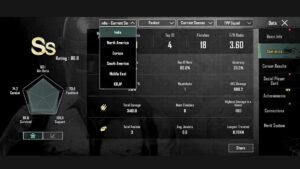
Useful numbers to track include average kills, average survival time, damage per match, knock-to-death situations, finishes, placement and match win rate. Team players can also track revives, assists and successful squad placements where their data is available.
These numbers give a better picture than kills alone. If your average damage increases while your deaths during early rotations decrease, that can suggest better decision-making. Stats should be used as a way to spot patterns, not simply as a way to judge yourself after every match.
16. Practice Different Situations
Do not play every match with exactly the same goal. Different practice goals can improve different parts of your game sense. One match can focus on early rotations, another can focus on positioning, and another can focus on communication.
For example, you can set a rule for yourself: do not take unnecessary fights during the first few minutes. In another game, you can focus on reaching a strong position before the next zone closes. These simple challenges force you to think about decisions instead of only chasing kills.
Training modes can also help with aim, recoil control and movement. However, game sense needs real match situations because the information changes constantly. The best practice combines mechanical skills with actual decision-making.
17. Learn From Better Players
Watching experienced BGMI players can help you understand how they make decisions. Do not simply copy their sensitivity or weapon choices. Instead, watch their movement and ask why they are doing certain things.
Notice when they stop to gather information, how they move between buildings, when they choose to fight and how they prepare for the next zone. Pay attention to the order of their decisions rather than only their final result.
It is also useful to watch the moments when a good player avoids a fight. Those moments often teach more about game sense than a simple high-kill sequence because they show how experienced players manage risk and information.
18. Build a Simple Decision-Making Routine
You can make game sense easier by following the same mental routine before important decisions. A simple routine could be:
Information → Position → Team → Zone → Fight
First, gather information about enemies. Next, check your position and available cover. Then confirm where your teammates are. After that, check the zone. Finally, decide whether fighting is the best option.
This process does not need to take a long time. With practice, these checks can become automatic. The goal is to reduce impulsive decisions and create a habit of thinking before acting.
19. Avoid Common Game Sense Mistakes
Many BGMI players repeat the same mistakes without realizing it. One common mistake is chasing an enemy too far after getting a knock. Another is leaving cover just to finish a player. Late rotation, solo pushing and ignoring teammate positions are also common problems.
Another issue is tunnel vision. This happens when a player focuses so much on one enemy that they stop checking other angles. For example, you may be aiming at one opponent while another squad member is moving around your left side. Checking the wider area regularly can reduce this problem.
You should also avoid copying every decision from another player. A strategy that works for an aggressive player with excellent aim may not work for someone with a different playstyle. Build your game sense around your own strengths and weaknesses.
Improving game sense in BGMI is mainly about becoming better at reading situations and making smart choices. Most importantly, do not expect game sense to improve overnight. It develops through repeated situations. The more carefully you observe the match and the more often you think about why you are making a particular move, the easier it becomes to make better decisions during real BGMI matches.