

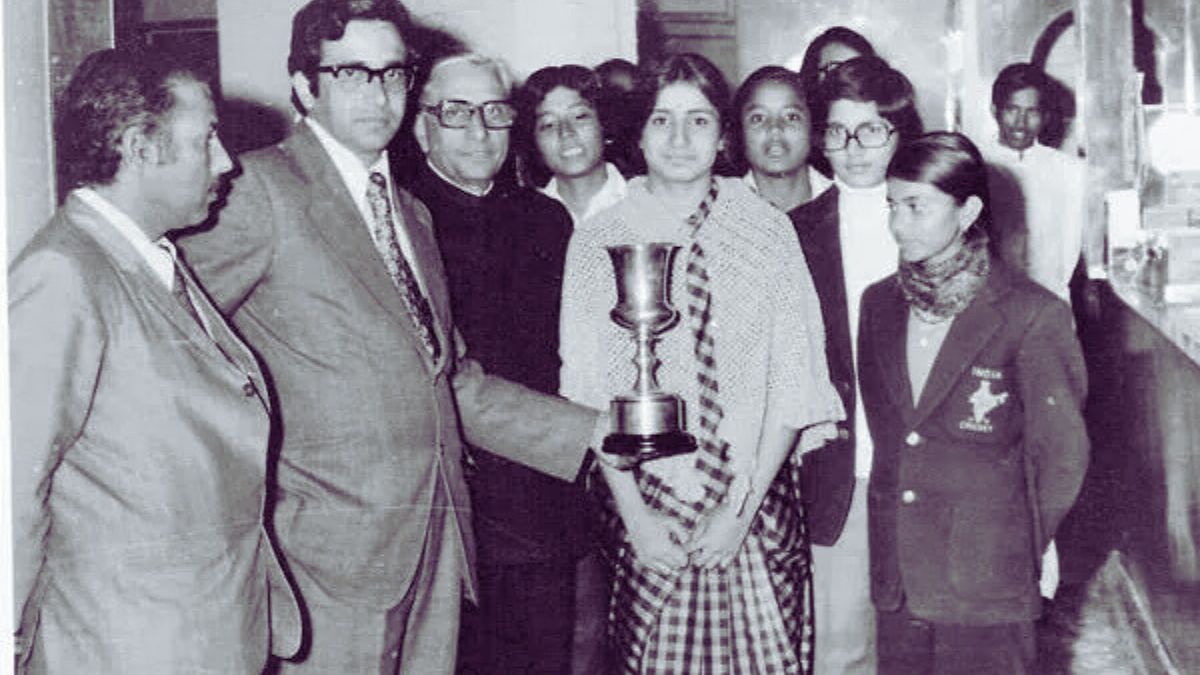
Meet the Man Who Made Women’s Cricket Famous in India? It’s Not Jay Shah?Read Complete Story
Meet the Man Responsible for Women’s Cricket Development in India – It’s Not Jay Shah
When people talk about the rise of women’s cricket in India today, names like Mithali Raj, Jhulan Goswami, Harmanpreet Kaur, or even modern administrators often dominate the conversation. Few stop to ask a more fundamental question: Who actually planted the seed of women’s cricket in India when the idea itself seemed impossible? The answer takes us back to the 1970s and to a man whose contribution remains largely forgotten — Mahender Sharma.
Long before packed stadiums, World Cup finals, central contracts, and media attention, women’s cricket in India survived purely on belief, struggle, and sacrifice. Mahender Sharma was the man who provided all three.
In the early 1970s, cricket in India was an overwhelmingly male-dominated sport. The idea of women playing competitive cricket was almost unheard of. While countries like England, Australia, and New Zealand already had established women’s teams and structures, India had no system, no association, and barely any recognition for women cricketers.
Mahender Sharma, however, noticed this global contrast. He questioned why Indian women were denied the same sporting opportunity. This question became the foundation of a movement that would eventually reshape Indian cricket history.
The Hyderabad Softball Camp That Changed Everything
The turning point came in 1973, during a softball camp organized by Sharma in Hyderabad. During a break, he noticed a woman participant casually picking up a cricket bat and playing shots with ease. It was an ordinary moment, but for Sharma, it sparked an extraordinary idea.
If women could naturally adapt to the game in their free time, why couldn’t they play cricket professionally?
This single observation stayed with him and slowly transformed into a mission: to create a platform for women’s cricket in India where none existed before.
A Lonely Beginning: One Club in the Entire Country
At that time, there was only one known women’s cricket club in India — the Albase Cricket Club in Bombay. It was founded by Aloo Bamjee and her husband, serving as a rare safe space for women who wanted to play cricket.
Outside Bombay, the situation was bleak. There were no competitions, no selectors, no coaching structures, and no financial backing. Women’s cricket existed on the fringes, surviving only because of passion.
Mahender Sharma knew that for the sport to grow, it had to be seen.
Rickshaw, Microphone, and a Revolutionary Campaign
With no sponsors, no television coverage, and no social media, Sharma adopted a grassroots approach that now feels almost legendary. In the streets of Lucknow, he rode a rickshaw with a microphone, announcing:
“Kanyon ki cricket hogi, dekhne zaroor aana.”
(There will be women’s cricket — do come and watch.)
This simple but powerful campaign worked. People turned up, curious and skeptical at first, but slowly began accepting the idea of women playing cricket competitively. Visibility brought legitimacy — and legitimacy brought growth.
India’s First Interstate Women’s Cricket Tournament
Later in 1973, Mahender Sharma organized India’s first-ever women’s interstate cricket competition in Pune. Teams from Uttar Pradesh, Maharashtra, and Bombay participated — a modest beginning, but a historic one.
The success of this tournament proved that interest existed, both among players and spectators.
The next edition, held in Varanasi, witnessed a dramatic rise in participation. Eight teams competed, reflecting how rapidly women’s cricket was spreading across states once a platform was provided. What had seemed impossible just a year earlier was now becoming a national movement.
Creating an Official Body for Women’s Cricket
Realizing that sustainable growth required structure, Mahender Sharma ensured that women’s cricket in India received its own governing body.
Importantly, the association was affiliated with the International Women’s Cricket Council, giving Indian women’s cricket global recognition even before it received full support at home.
This was a crucial milestone. It gave women players legitimacy, selection processes, and the opportunity to represent India internationally.
India Takes the International Stage
Thanks to Sharma’s relentless efforts, the Indian women’s cricket team played its first international matches in 1975. However, official recognition from the Indian government did not come easily.
It took three long years of continued struggle before women’s cricket was finally recognized in 1978. Those years were filled with financial hardship, administrative resistance, and constant uncertainty.
Yet, Mahender Sharma never backed down.
Personal Sacrifice Beyond Imagination
Perhaps the most striking aspect of Sharma’s contribution was the personal cost he bore. Reports suggest that he sold his own property in Lucknow to fund women’s cricket activities.
In an era without sponsorship deals or institutional funding, this sacrifice kept the sport alive. Few administrators in Indian sports history have put their personal assets at stake for the growth of a game — especially one that had no guarantee of success.
A Legacy Ignored, But Not Forgotten
Mahender Sharma passed away in 2022 due to health issues. His death went largely unnoticed by the mainstream sports ecosystem — a painful reminder of how pioneers are often forgotten once success arrives.
Yet, his contribution remains etched in every milestone Indian women’s cricket has achieved since 1973.
From Struggle to Global Glory
From those early days of rickshaw announcements to the modern era of packed stadiums, professional contracts, and global tournaments, Indian women’s cricket has come a long way. By 2025, India has lifted World Cups and produced global icons.
But none of this would have been possible without the foundation laid by Mahender Sharma.
Final Perspective:
In a time when administrators and institutions receive credit for success, Mahender Sharma’s story reminds us that revolutions often begin with individuals — people who act without power, money, or recognition.
He didn’t have social media reach. He didn’t have government backing.
As women’s cricket in India continues to grow, his name deserves to be spoken with respect and remembrance.
Meet the Man Responsible for Women’s Cricket Development in India – Mahender Sharma
| Aspect | Details |
|---|---|
| Key Question | Who planted the seed of women’s cricket in India when the idea seemed impossible? |
| The Man Behind It | Mahender Sharma |
| Era | Early 1970s |
| State of Indian Cricket Then | Cricket in India was overwhelmingly male-dominated with almost no space for women |
| Global Comparison | Countries like England, Australia, and New Zealand already had women’s cricket teams |
| Initial Realisation | Mahender Sharma questioned why Indian women were denied the same opportunity |
| Turning Point | 1973 softball camp in Hyderabad |
| Defining Moment | He saw a woman casually using a cricket bat and playing shots during free time |
| Core Thought | If women could adapt naturally, why couldn’t they play cricket professionally? |
| Mission Formed | To create a platform for women’s cricket in India where none existed |
| Women’s Cricket Clubs in India (1970s) | Only one club — Albase Cricket Club, Bombay |
| Founders of Albase Club | Aloo Bamjee and her husband |
| Condition Outside Bombay | No competitions, selectors, coaching structures, or financial backing |
| Key Belief | For women’s cricket to grow, it had to be seen |
| Grassroots Promotion Method | Riding a rickshaw with a microphone in Lucknow |
| Public Announcement Line | “Kanyon ki cricket hogi, dekhne zaroor aana” |
| Public Response | People turned up, first curious and skeptical, then supportive |
| Result of Visibility | Legitimacy for women’s cricket |
| Historic Tournament | First-ever women’s interstate cricket tournament |
| Year of Tournament | 1973 |
| Venue | Pune |
| Participating Teams | Uttar Pradesh, Maharashtra, Bombay |
| Outcome | Proved interest among players and spectators |
| Next Tournament Venue | Varanasi |
| Teams in Next Edition | Eight teams |
| Significance | Rapid national growth of women’s cricket |
| Structural Step Taken | Formation of a governing body for women’s cricket |
| International Affiliation | Linked with the International Women’s Cricket Council |
| Impact of Affiliation | Global recognition for Indian women’s cricket |
| First International Matches | Indian women’s team played in 1975 |
| Government Recognition | Granted in 1978 |
| Struggle Duration | Three years of administrative and financial challenges |
| Personal Sacrifice | Sold his property in Lucknow to support women’s cricket |
| Funding Reality | No sponsorships or institutional backing |
| Why His Effort Was Rare | Few administrators risked personal assets for the sport |
| Year of Passing | 2022 |
| Reason | Health issues |
| Recognition at Death | Largely unnoticed by mainstream sports ecosystem |
| Legacy | Foundation of every milestone in Indian women’s cricket since 1973 |
| Journey of Women’s Cricket | From rickshaw announcements to packed stadiums |
| Status by 2025 | World Cups won, global icons produced |
| Final Reality | None of this would exist without Mahender Sharma |
| Core Message | Revolutions often begin with individuals, not institutions |
| What He Didn’t Have | Social media reach, government backing |
| Why He Must Be Remembered | His contribution shaped the future of women’s cricket in India |
Frequently Ask Questions(FAQ):
1. Who is the real pioneer behind the development of women’s cricket in India?
The true pioneer of women’s cricket in India is Mahender Sharma. In the early 1970s, when cricket in India was almost entirely male-dominated, he questioned why Indian women were denied the opportunity to play the sport competitively. His vision and determination laid the foundation for women’s cricket in the country at a time when there was no system, structure, or recognition.
2. What inspired Mahender Sharma to start women’s cricket in India?
Mahender Sharma’s inspiration came in 1973 during a softball camp in Hyderabad. He noticed a woman casually picking up a cricket bat and playing shots with ease during her free time. This simple moment made him realize that women could naturally adapt to cricket if given a platform. That observation turned into a mission to create opportunities for women cricketers in India.
3. How did women’s cricket begin at the grassroots level in India?
At the start, women’s cricket in India had only one dedicated club — the Albase Cricket Club in Bombay. To promote the sport beyond Bombay, Mahender Sharma personally campaigned on the streets of Lucknow, riding a rickshaw with a microphone and inviting people to watch women’s matches. This grassroots approach brought visibility, public interest, and early acceptance.
4. What were Mahender Sharma’s major contributions to organized women’s cricket?
In 1973, Sharma organized India’s first women’s interstate cricket tournament in Pune, featuring teams from Uttar Pradesh, Maharashtra, and Bombay. The next edition in Varanasi saw participation rise to eight teams, showing rapid growth. He also played a key role in forming a dedicated governing body for women’s cricket, which was affiliated with the International Women’s Cricket Council, giving Indian women global recognition.
5. What sacrifices did Mahender Sharma make, and why is his legacy important today?
Mahender Sharma reportedly sold his own property in Lucknow to financially support women’s cricket during its early years, when there was no sponsorship or institutional backing. The Indian women’s team played its first international matches in 1975 and received government recognition in 1978 after years of struggle. Although he passed away in 2022 with little mainstream attention, his efforts laid the foundation for the success Indian women’s cricket enjoys today, including World Cup triumphs and global recognition.