Can You Become a Pro Pickleball Player in 6 Months in India?
Pickleball is no longer just a recreational pastime—it’s one of the fastest-growing sports in India today. From residential societies to organized tournaments, the sport is gaining serious traction across cities. With this rapid rise, a common question is being asked by beginners and athletes alike: Can you become a professional pickleball player in just six months?
The honest answer is nuanced. While it’s technically possible for a small group of athletes, for the majority, it remains highly unrealistic. Understanding why requires a closer look at skill development, training demands, and the current Indian pickleball ecosystem.
Your Starting Point Defines Your Ceiling
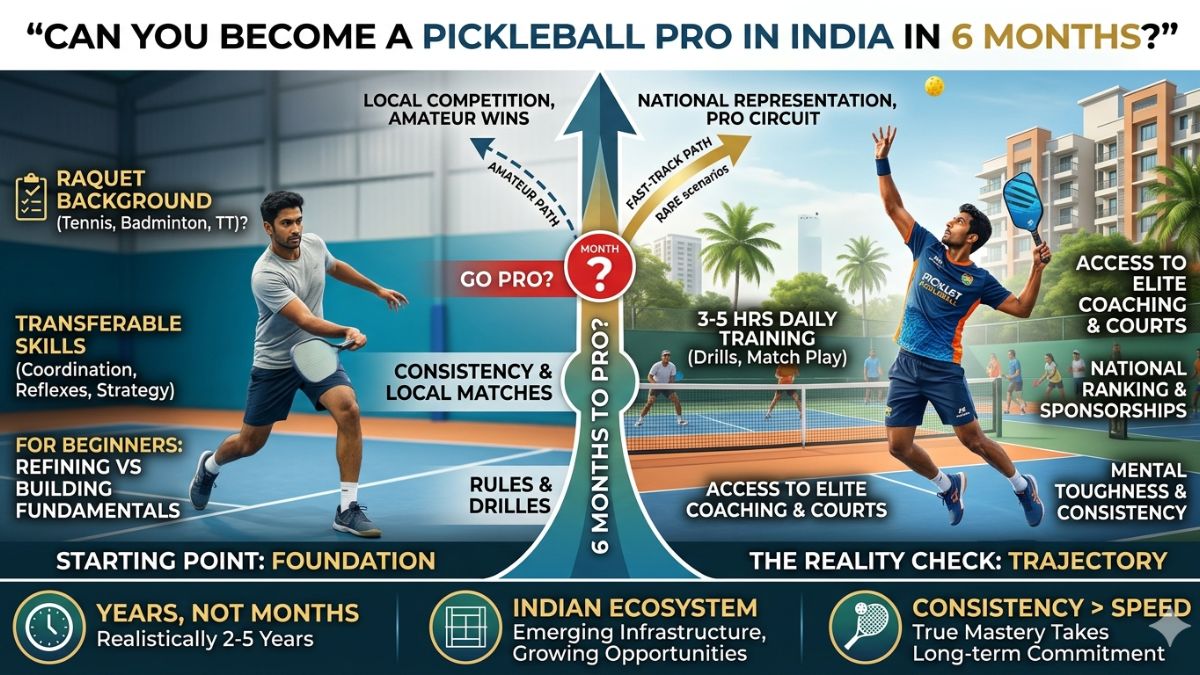
The biggest factor in determining your progress is not time—it’s your background. Athletes who come from racquet sports such as tennis, badminton, or table tennis have a significant advantage when transitioning into pickleball.
These players already possess essential skills like hand-eye coordination, reflexes, and court awareness. They understand positioning, shot selection, and how to read opponents. Because of this, their learning curve is much steeper—they’re refining rather than building from scratch.
On the other hand, complete beginners face a different reality. In six months, they can certainly learn the fundamentals, develop consistency, and even start competing at a local level. But expecting mastery or professional-level performance within that time frame is not practical.
What Six Months of Serious Training Really Means
When people talk about “six months,” they often underestimate what that actually involves. Reaching a competitive level in such a short span requires a level of commitment that goes far beyond casual play.
We’re talking about training for three to five hours daily, not occasionally but consistently. This includes technical drills, match practice, and strategy sessions. Access to high-quality courts and experienced coaching becomes essential. Without proper guidance, progress can plateau quickly.
Additionally, match exposure is critical. Playing regularly against stronger opponents accelerates growth and sharpens decision-making under pressure. Alongside this, fitness and recovery routines play a huge role—strength training, mobility work, and injury prevention are all part of the process.
At this point, pickleball stops being a hobby and starts resembling a full-time profession.
Understanding the Indian Pickleball Ecosystem
India’s pickleball scene is still evolving, which presents both opportunities and challenges. On one hand, the sport is not as saturated as it is in countries like the United States. This means there is room for new players to rise quickly through the ranks.
On the other hand, the infrastructure is still catching up. Access to elite coaching, structured development programs, and consistent high-level competition can be limited depending on your location. While organizations like the All India Pickleball Association are actively working to grow the sport, the ecosystem is still in its formative stages.
This dual reality means that while opportunities exist, they require strategic navigation and persistence.
What Does “Professional” Actually Mean?
One of the biggest misconceptions is the definition of a “pro” player. Playing well casually or even winning a few matches does not automatically qualify someone as a professional.
In the Indian context, being a professional pickleball player involves several factors. It includes consistently performing well in tournaments, building a ranking, and earning recognition within the circuit. It also means competing at national or international levels and, in many cases, securing sponsorships or brand partnerships.
This level of achievement is built over time. It requires not just skill, but also consistency, mental toughness, and the ability to perform under pressure. For most athletes, reaching this stage takes years of structured effort—not a few months.
The Rare Case Where Six Months Might Be Enough
There are exceptions, but they are rare and highly specific. A player might fast-track their journey if they already have a strong competitive background in racquet sports and decide to fully commit to pickleball.
In such cases, daily high-level coaching, rigorous training, and frequent participation in tournaments can accelerate progress. These players may become competitive quickly and start making a mark in local or even national circuits.
However, even in this best-case scenario, six months is only the beginning. It may help you enter the competitive space, but it does not mean you have “arrived” as a professional.
The Reality Check
Pickleball is often described as easy to learn but difficult to master—and that perfectly sums up this discussion. Within six months, a dedicated player can achieve significant progress. You can become competitive at the local level, build consistency, and even win amateur tournaments.
But becoming a true professional is a different journey altogether. It requires long-term commitment, continuous improvement, and exposure to high-level competition.
Final Takeaway
If you’re serious about pursuing pickleball in India, the focus should not be on shortcuts or unrealistic timelines. Instead, invest in the right systems—quality coaching, structured practice, and regular competition.
Progress in sport, much like in life, is not just about speed. Quick results may impress initially, but it’s consistency that ultimately builds champions.
Six months can change your trajectory—but becoming a professional requires staying the course long after that.
Frequently Asked Questions (FAQs)
1. How long does it realistically take to become a professional pickleball player in India?
For most players, the journey to becoming a professional pickleball athlete takes anywhere between 2 to 5 years of consistent effort. This timeline depends on multiple factors such as your sporting background, quality of coaching, frequency of competition, and dedication to training. Players with prior experience in racquet sports may shorten this duration due to transferable skills, but they still need time to adapt to pickleball-specific strategies and gameplay. The key difference between amateur and professional levels lies in consistency under pressure, match temperament, and the ability to perform repeatedly against top competition—something that cannot be rushed within a few months.
2. Is pickleball a financially viable career option in India right now?
Pickleball in India is still in its growth phase, which means financial stability as a full-time professional is not guaranteed yet. While prize money, sponsorships, and brand collaborations are slowly increasing, they are still limited compared to established sports like cricket or badminton. However, this also creates an opportunity for early movers. Players who build a strong personal brand, perform consistently in tournaments, and stay active on social media can attract partnerships and coaching opportunities. Many players currently combine playing with coaching, content creation, or academy involvement to create multiple income streams.
3. What is the best way to start if I want to pursue pickleball seriously?
The smartest way to begin is by focusing on structured learning rather than random play. Start with understanding the basic rules, techniques, and court positioning. Investing in a qualified coach early can prevent bad habits and speed up your progress. Regular practice combined with local match play is essential to gain real-game experience. As you improve, start participating in district and national-level tournaments to test your level and build exposure. Equally important is maintaining fitness and recovery routines to avoid injuries. Treating the sport professionally from the beginning—both physically and mentally—sets the foundation for long-term success.
| Section | Key Insight | Explanation |
| Core Question | Can you go pro in 6 months? | Possible for a small percentage of athletes, but unrealistic for most people in India. |
| Your Starting Point | Background matters more than time | Players from tennis, badminton, or table tennis adapt faster due to existing skills like reflexes, positioning, and game awareness. Beginners need more time to build fundamentals. |
| Beginner Reality | 6 months = learning phase | New players can learn basics, gain consistency, and start competing locally, but cannot reach professional mastery. |
| Training Commitment | Requires full-time dedication | 3–5 hours of daily training including drills, match play, and strategy. Casual effort won’t be enough. |
| Coaching & Infrastructure | Access is critical | High-quality coaching and proper courts are essential. Lack of guidance can slow down or limit progress. |
| Match Exposure | Competing accelerates growth | Playing against stronger opponents improves decision-making, confidence, and adaptability under pressure. |
| Fitness & Recovery | Often underestimated | Strength training, mobility, and injury prevention are key to sustaining high performance. |
| Indian Pickleball Scene | Opportunity + challenge | Less competition compared to global markets creates opportunities, but limited infrastructure and elite coaching can be barriers. |
| Governing Body | All India Pickleball Association | Actively developing the sport in India, organizing tournaments and building the ecosystem. |
| Definition of “Pro” | More than just playing well | Includes tournament wins, rankings, recognition, sponsorships, and national/international representation. |
| Time Reality | Years, not months | Becoming a professional requires long-term consistency, not short bursts of effort. |
| Fast-Track Scenario | Rare but possible | High-level racquet sport athletes with elite coaching, daily training, and frequent competition may accelerate their journey. |
| Limitation of 6 Months | Entry, not mastery | Even in best cases, 6 months only helps you enter competitive circuits—not dominate them. |
| Short-Term Gains | What you can achieve | Become locally competitive, improve consistency, and potentially win amateur tournaments. |
| Long-Term Requirement | What it really takes | Discipline, consistency, mental strength, and continuous exposure to high-level play. |
| Final Advice | Focus on systems, not shortcuts | Invest in coaching, structured training, and regular competition instead of chasing unrealistic timelines. |
| Key Philosophy | Consistency > Speed | Fast progress is impressive, but long-term consistency is what builds true professionals. |