
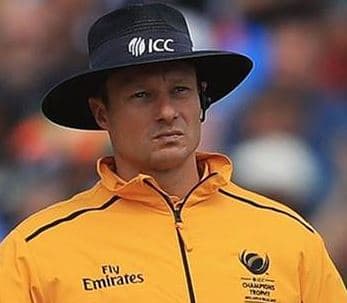
10 Highest Paid Umpires Cricket: These days’ umpires are always under scanner for making ruthless mistakes that cost teams’ matches, tournaments and even a World Cup final.
Who can forget the World Cup 2019 final, where a major mistake was made by an on-field umpire for awarding an extra run to England in their pursuit of maiden World Cup, and eventually that 1 run cost New Zealand the World Cup and England were declared champions by ICC boundary rule.
Now the question arises that despite huge criticism and a plethora of blunders, how are they still an essential part of the game, even when technology can easily replace them. And even more amusing is the total earning they bag from officiating cricket matches.

 Digital marketing that shows up in revenue
According to a report by Sports Eon, the umpire of ICC panel salary varies between US$ 35,000 to US$ 45,000 (if converted into INR it will range between Rs. 24 Lakhs – 35 Lakhs).
The ICC umpires also receive a match fee of USS$3000 for tests, $2000 for ODI’s and $1000 for T20. Now, these numbers also vary, it doesn’t mean the umpire can host as many matches and enhance his earning.
Usually, an ICC umpire hosts 8-10 tests in a year and 10-15 ODIs in a year, while the T20 matches’ number still fluctuates, which takes the earning figure to around $46000 ( Rs. 32 Lakhs), which excludes the annual fees.
Let’s take a look at top 10 highest paid umpires in international cricket:-
Richard Kette-Borough
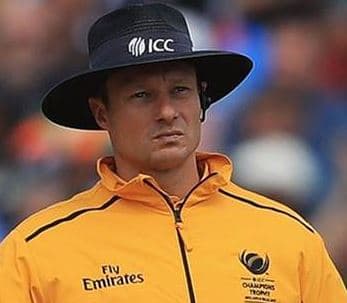
Richard Kette-Borough, the man from Yorkshire started his international career in 2009, and since then the Englishman has officiated 58 tests, 83 ODI’s, and 22 T20’s so far. Looking at his excellent track record, he was given the opportunity to host World Cup 2015 final and 2017 Champions Trophy final, which dispensed weightage on his umpiring resume.
He was also awarded the Umpire of the Year in 2015. His annual earnings include:-
Yearly Fee: ₹ 25, 00,000
Test Fee per Match: ₹ 2, 00,000
ODI Fee per Match: ₹ 1, 50,000
T20I Fee per Match: ₹ 70,000
Richard Illingworth

Richard Illingworth, hailing from Yorkshire, made his international debut in 2009, and till then he has hosted 42 test matches, 65 ODI’s and 16 T20’s. His major achievements include hosting World Cup 2015 matches and was one of the on-field umpires during the first semifinal of World Cup 2019.
His annual earnings include:-
Yearly Fee: $35,000
Test Fee per Match: $3000
ODI Fee per Match: $2200
T20I Fee per Match: $ 1000
Marais Erasmus

Marais Erasmus, hailing from South Africa made his international debut in 2006 and since then he has officiated in 55 test matches, 90 ODI’s and 26 T20 matches. His annual earnings include:-
Yearly Fee: $35,000
Test Fee per Match: $3000
ODI Fee per Match: $2200
T20I Fee per Match: $ 1000
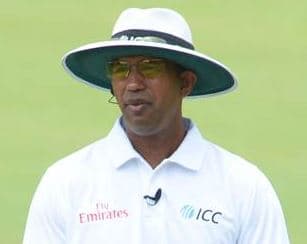
Kumar Dharamsena, the former Sri Lankan cricketer-turned ICC umpire is an emblem of innovation and dedication. From discovering doosra to making hawkeye decisions during the match, he is among the most successful ICC umpires in modern times.
He made his international debut in World Cup 2011 and since then, has hosted 60 tests, 103 ODI’s and 22 T20 matches. His annual earnings include:-
Yearly Fee: $35,000
Test Fee per Match: $3000
ODI Fee per Match: $2200
T20I Fee per Match: $ 1000
Ian Gould
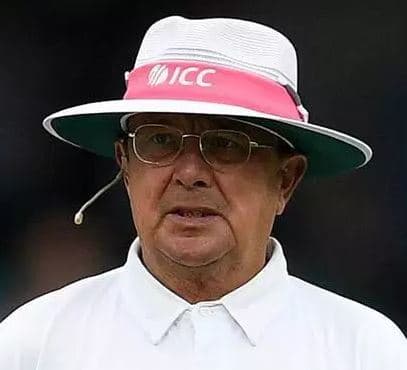
Ian Gould, hailing from Buckinghamshire, has been one of the finest international umpires in the last decade. He made his debut in 2006 and since then, he has hosted 74 tests, 140 ODI’s and 37 T20 matches. His annual earnings include:-
Yearly Fee: $35,000
Test Fee per Match: $3000
ODI Fee per Match: $2200
T20I Fee per Match: $ 1000
Bruce Oxenford
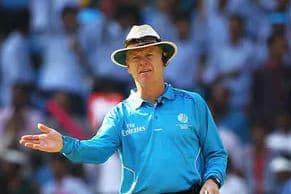
Bruce Oxenford is a former Australian cricketer and ICC cricket umpire, who made his debut in 2008 and since then he has hosted 55 tests, 95ODI’s and 20 T20 matches. His annual earnings include:-
Yearly Fee: $35,000
Test Fee per Match: $3000
ODI Fee per Match: $2200
T20I Fee per Match: $ 1000
Paul Reffiel

Paul Reiffel is a former Australian cricketer, who was the main bowling spearhead during the late nineties. During his 7-year-long international career, he has played 35 Tests and 92 One Day Internationals.
Post-retirement, he shifted his focus to umpiring and is currently a member of the elite panel of ICC umpires. He made his international debut in 2009 and since then, he has hosted 43 tests, 68 ODI’s and 16 T20 matches.
His annual earnings include:-
Yearly Fee: $45,000
Test Fee per Match: $3000
ODI Fee per Match: $2200
T20I Fee per Match: $ 1000
Nigel LIong

Nigel Llong is a former first-class English cricketer and is now a member of the Elite Panel of ICC umpires. He made his international debut in 2006 and ever since he has hosted 56 tests, 128 ODI’s and 32 T20 ODI’s. He secures his place at 3rd position in the list.
His annual earnings include:-
Yearly Fee: $45,000
Test Fee per Match: $3000
ODI Fee per Match: $2200
T20I Fee per Match: $ 1000
Billy Bowden

Billy Bowden, the New Zealand umpire with a crooking finger, is one of the greatest umpires to have officiated the game in the history of cricket. He made his international debut in 2005, and since then he has hosted 84 tests, 200 ODI’s and 24 T20’s till date.
His annual earnings include:-
Yearly Fee: $45,000
Test Fee per Match: $3000
ODI Fee per Match: $2200
T20I Fee per Match: $ 1000
Aleem Dar
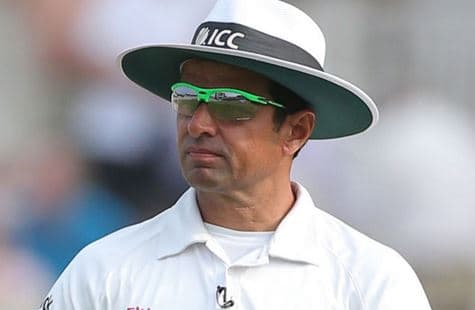
Aleem Dar, the Pakistan cricket umpire, and former first-class cricketer is one of the all-time greats to have officiated the game. In 2004, he became the first Pakistan umpire to be included in the members of the Elite Panel of ICC Umpires.
He made his international debut in 2001 and has gone on to host 126 tests, 206 ODI’s and 43 T20’s till date.
His annual earnings include:-
Yearly Fee: $45,000
Test Fee per Match: $3000
ODI Fee per Match: $2200
T20I Fee per Match: $ 1000
My Perspective:
Umpires does play an important role without their participation nothing materialize on the field.
Their calls can change entire scenario in quick succession.
Whether its on field umpires or 3rd Umpire all play an equal responsibility in order to make sure any event becomes successful and most importantly rules of the game should be properly taken into account.
Before we dive deep into Umpires roles and responsibilities, one most important thing they would require perfect eye coordination and most importantly patience to stand in longer hours of the game .
Let’s talk about current fees in 2026 via several format:
A- Annual Retainer: $35,000=$45,000 base prize amount.
B- Test Match Fees: $3,000 per game
C- ODI Match Fees: $2,200 per game
D- T20I Match Fees: $1,000 per game
Let’s decode Key Financial Factors responsible for Umpire’s salary in International Cricket to be shared in the below format:
- Panel Status as well as Retainers Amount: When it comes to annual retainership amount especially in reference to Umpires is quite high, which is roughly around (35,000 dollars- 1 lakh dollars + Gst).
The elite umpires are paid good amount in reference to non elite umpires who rely strictly on per match earnings.
2. Match Formats:
Match formats does play an important role in deciding Umpires wages, where Test Match pay being the highest where elite umpires gets paid around $5,000 followed by ODI and T2OI matches.
Test match being the pinnacle as always demands long hour standing irrespective of conditions also making sure everything is aligned perfectly.
3. Match Volume and Assignment Frequency:
When it comes to Match Volume and Assignment Frequency, Total yearly income umpires associated with ICC could be described based on how many high profile environment and official is appointed to oversee governing body.
4. Franchise Cricket Integration:
Franchise based Cricket leagues played an important role in making sure they get paid heavily it can be shared via- IPL where they are paid around 3-4 lakh per match which adds massive increase in their income.
5. Perks and Allowances:
When it comes to Corporate Sponsorships like Fly Emirates and other boards cover International Travel, daily per diems, health insurance and many more.
International Cricket Umpires: Salary & Key Financial Factors (2026)
| Factor | Details |
|---|---|
| Annual Retainer | Elite international umpires can earn approximately $35,000–$45,000+ as a base annual retainer, with higher-panel officials potentially earning significantly more. |
| Test Match Fees | Around $3,000–$5,000 per match, depending on panel/status. Test cricket commands the highest match fee due to longer match duration and demanding conditions. |
| ODI Match Fees | Approximately $2,200 per match for international assignments. |
| T20I Match Fees | Approximately $1,000 per match, generally lower due to the shorter format. |
| Panel Status & Retainers | An umpire’s ICC panel status has a major impact on earnings. Elite umpires receive retainers, while others may rely more heavily on match fees. |
| Match Volume & Assignments | Annual income depends heavily on the number and level of international matches an umpire is selected to officiate. High-profile appointments can significantly increase earnings. |
| Franchise Cricket | Leagues such as the IPL can provide an additional income stream, with experienced umpires reportedly earning around ₹3–4 lakh per match, depending on the assignment. |
| Perks & Allowances | International boards and tournaments may cover travel, accommodation, daily allowances, insurance and other expenses, reducing the umpire’s out-of-pocket costs. |
| Performance & Experience | Experience, consistency, decision-making ability and reputation can influence panel selection and access to higher-value assignments. |
Key takeaway: An international umpire’s earnings are not determined by match fees alone. Panel status + annual retainer + match volume + franchise appointments + allowances together determine their overall annual income.
FAQ 1: How much do international cricket umpires earn in 2026?
The earnings of international cricket umpires depend on several factors, including their ICC panel status, annual retainer, number of matches officiated, match format, tournament assignments and additional opportunities in franchise cricket. Elite-level umpires generally receive an annual retainer, which can provide a stable financial foundation even before match fees are considered. Reported figures for international umpires have traditionally placed annual retainers in the range of approximately US$35,000 to US$45,000, although actual compensation can vary according to panel category and governing-body arrangements.
Match fees are another major component of an umpire’s income. Test cricket generally commands the highest payment because officials must remain focused for several days while dealing with physically and mentally demanding conditions. Reported international figures have placed Test match fees around US$3,000–US$5,000, while ODI assignments can be approximately US$2,200 and T20I matches around US$1,000, depending on the relevant agreement and panel status.
However, these figures should not be viewed as a fixed salary applicable to every umpire. International assignments are limited, and umpires cannot simply choose how many matches they officiate. Selection depends on availability, performance, fitness, experience, panel status and the ICC’s appointment process.
Franchise cricket can also substantially increase earnings. Major competitions such as the IPL offer experienced officials additional opportunities and reportedly higher match payments than some international assignments. Travel, accommodation, daily allowances and other tournament-related expenses may also be covered.
Therefore, the highest-paid umpires are not necessarily those who officiate the most matches. Their overall earnings are determined by the combination of reputation, panel position, retainers, match assignments and opportunities across international and franchise cricket.
FAQ 2: Why are cricket umpires still important despite advanced technology?
Technology has transformed cricket officiating, but it has not eliminated the need for human umpires. Modern cricket uses systems such as ball-tracking, UltraEdge, replays and decision-review technology to assist officials, but technology primarily works as a support mechanism rather than a complete replacement for human judgment.
On-field umpires remain responsible for managing the match and making immediate decisions. They monitor no-balls, wides, catches, run-outs, player conduct, dangerous deliveries, dead-ball situations and several other aspects that cannot always be determined through technology alone. Their presence also ensures that the Laws of Cricket are consistently applied throughout the contest.
The third umpire has an equally important role when decisions require technological assistance. Close run-outs, stumpings, boundary calls, catches and review situations can be examined through multiple camera angles and technological systems. The third umpire then communicates the outcome to the on-field officials.
Another important responsibility is game management. Cricket can involve long periods of concentration, changing weather conditions, player disagreements and complex situations. Umpires must remain calm, communicate clearly and maintain control without allowing external pressure to influence their decisions.
Technology can identify evidence, but officials still need to interpret that evidence within the Laws of Cricket. This is why elite umpiring requires experience, concentration, patience, communication skills and excellent visual coordination.
The occasional mistake does not make umpires irrelevant. Instead, it highlights why cricket needs a combination of technology and experienced human officials. The objective is not to remove human involvement completely but to reduce avoidable errors while preserving the authority and flow of the game.
FAQ 3: What factors determine the salary of an international cricket umpire?
An international umpire’s overall earnings are influenced by multiple financial and professional factors. The first is panel status. Officials occupying elite positions generally receive annual retainers and access to high-profile international assignments, while officials outside the top panels may depend more heavily on individual match fees.
The second factor is match format. Test matches generally provide higher match fees because they require officials to work over several days and maintain concentration for extended periods. ODI and T20I assignments are shorter but still contribute significantly to annual income when an umpire receives regular appointments.
Match volume is another major consideration. An umpire who receives frequent international assignments can naturally generate greater match-fee income than someone who officiates fewer games. However, appointments are based on performance, fitness, experience, availability and the governing body’s scheduling requirements.
Franchise cricket provides another important revenue opportunity. Competitions such as the IPL can offer experienced umpires additional assignments and potentially lucrative match fees. This can significantly supplement income generated through international cricket.
Allowances and benefits should also be considered. International tournaments may cover travel, accommodation, meals, daily allowances, insurance and other expenses. These benefits reduce an umpire’s personal costs while travelling for assignments.
Finally, experience and reputation can influence career longevity and access to important matches. Officiating major ICC tournaments, semifinals and finals can strengthen an umpire’s profile and potentially improve future opportunities.
Ultimately, there is no single figure that represents an international umpire’s total annual earnings. The complete financial picture is created through annual retainers, match fees, assignment volume, panel status, franchise opportunities, tournament appointments and allowances. This combination explains why experienced elite umpires can build substantial careers despite working behind the scenes rather than being the primary stars of the sport.
| Factor | How It Influences an International Cricket Umpire’s Salary |
|---|---|
| Panel Status | Elite-panel umpires generally receive annual retainers and access to more high-profile international assignments, while others may rely more on individual match fees. |
| Match Format | Test matches generally offer higher fees due to their multi-day duration. ODI and T20I matches are shorter but can contribute significantly through regular appointments. |
| Number of Matches | More international assignments generally mean greater match-fee earnings, although appointments depend on performance, fitness, experience and availability. |
| Franchise Cricket | Competitions such as the IPL can provide additional assignments and lucrative match fees, significantly supplementing international earnings. |
| Allowances & Benefits | International assignments may include travel, accommodation, meals, daily allowances, insurance and other benefits, reducing personal travel expenses. |
| Experience & Reputation | Experienced and highly regarded umpires may receive greater opportunities and officiate important matches, including major ICC tournaments, semifinals and finals. |
| Tournament Appointments | Selection for major international tournaments can increase an umpire’s exposure, match opportunities and overall earnings. |
| Overall Earnings | Total income is generally a combination of annual retainers, match fees, assignment volume, panel status, franchise opportunities, tournament appointments and allowances. |