
How Spain Won The FIFA World Cup 2026: Numbers, Stories And Heart
Spain lifted the World Cup trophy after beating Argentina in the final, and the way they did it tells a story much bigger than just one match. This was a team built on strong defense, smart passing, and players who fought through hard personal battles to reach the top. Let’s look at how Spain built this win, piece by piece.
From the first minute, this final felt different from a normal close match. Luis de la Fuente, Spain’s coach, had built his team around a solid defense. This defense did two big jobs at once. First, it helped Spain keep the ball for long periods. Second, it stopped Argentina from creating any real danger near the goal.
Argentina’s coach, Lionel Scaloni, seemed to know this from the start. He did not even try to fight Spain head-on. He kept his best midfielder, Leandro Paredes, on the bench instead of starting him. This was a clear sign that Argentina planned to defend and hope for a chance, rather than attack with full force.
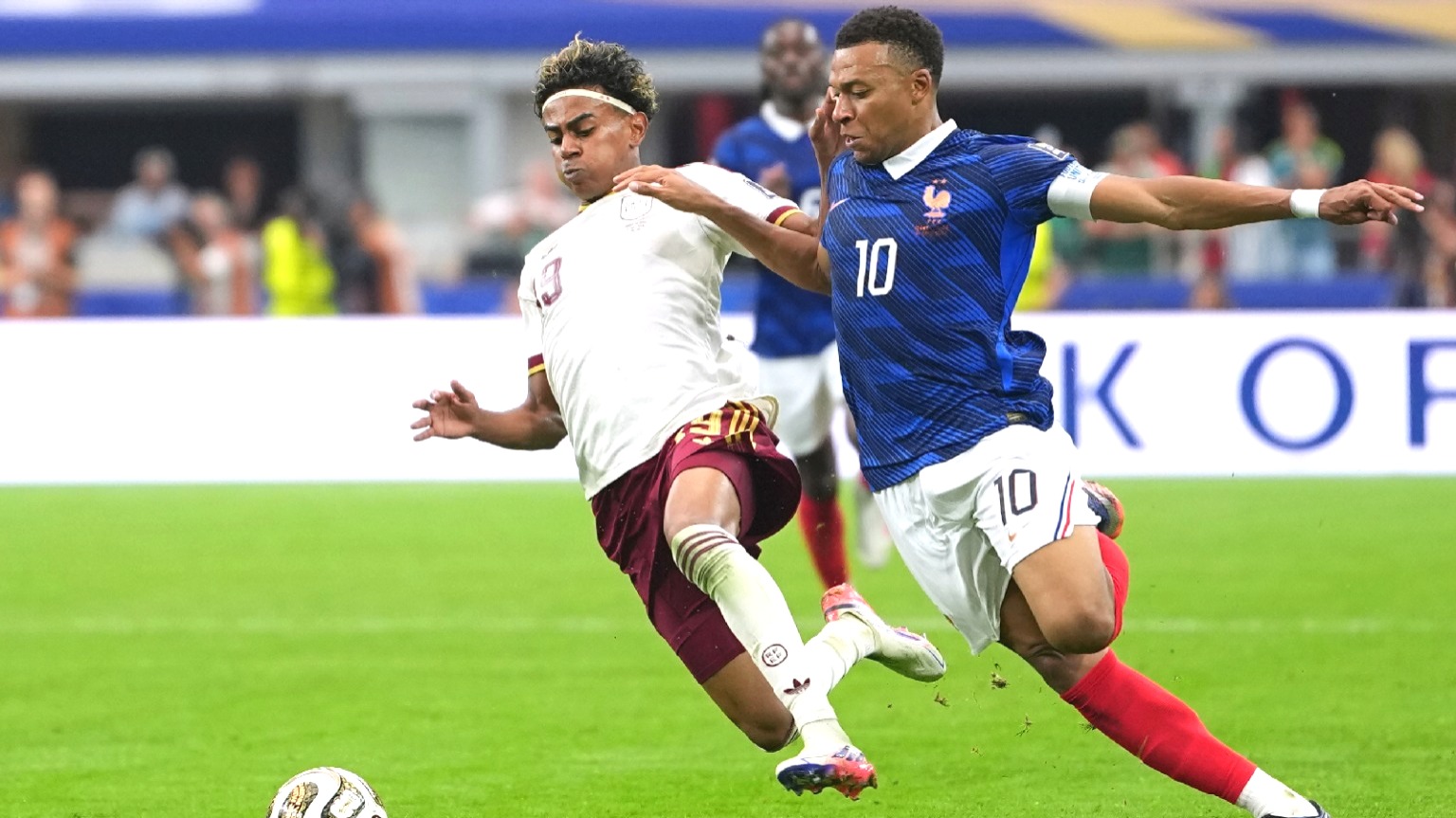
France had already learned this lesson earlier in the tournament. When a team tries to take on Spain directly, Spain usually finds a way to punish them.
The Passing Numbers Tell The Story
Numbers help us understand just how much control Spain had. In this final, Spain passed the ball 853 times. To put that in context, back in the 2010 World Cup final, Spain passed the ball 715 times against the Netherlands. That team had legends like Xavi, Andrés Iniesta, and Sergio Busquets running the midfield. This new Spain team beat that number by a wide margin.
Spain also touched the ball over 400 times more than Argentina in the match. When one team holds the ball that much more than the other, it becomes very hard for the other side to create chances. Argentina simply did not get enough time on the ball to build any attacks.
Three Players Who Controlled The Game
If we look closer at Spain’s defense, three names stand out: Pau Cubarsi, Aymeric Laporte, and Rodri. Rodri played as a deep midfielder, sitting just in front of the defense, while Cubarsi and Laporte formed the center-back pair.
Together, these three players took 359 touches out of Spain’s total of 1091 touches in the final. That means these three alone controlled about one-third of everything Spain did with the ball. Their part of the field became a kind of safe zone that Argentina could not break into.
Spain gave up just one goal in the entire World Cup. This is an all-time record for the tournament, showing just how tight their defense was from game one to the final. It is no surprise that Rodri won the Golden Ball as the best player of the tournament, and Cubarsi won the award for best young player. Both awards point to where Spain truly won this World Cup: in defense and in midfield control.
Total Control In Attack Too
Spain did not just defend well. They also created chances all match long. They took 20 shots in total, with twelve of them on target. Argentina, on the other hand, managed only two shots in the whole game. Both of these came very late, in extra time, after Spain had already scored the winning goal.
Argentina defended hard and with a lot of heart. Twelve of Spain’s 20 shots came from outside the penalty box, showing that Scaloni’s plan worked in one way: he stopped Spain from getting too many easy chances close to goal. But in the end, Argentina fell into the same trap that England had fallen into in the semi-final. By sitting back so much, they put pressure on themselves instead.
Messi’s Quiet Afternoon
One of the biggest stories of the final was how quiet Lionel Messi was kept. He touched the ball only 56 times in the whole match, a very low number for a player of his skill. He ran over ten kilometers during the game, more than most of his teammates, but most of that running was spent defending rather than attacking.
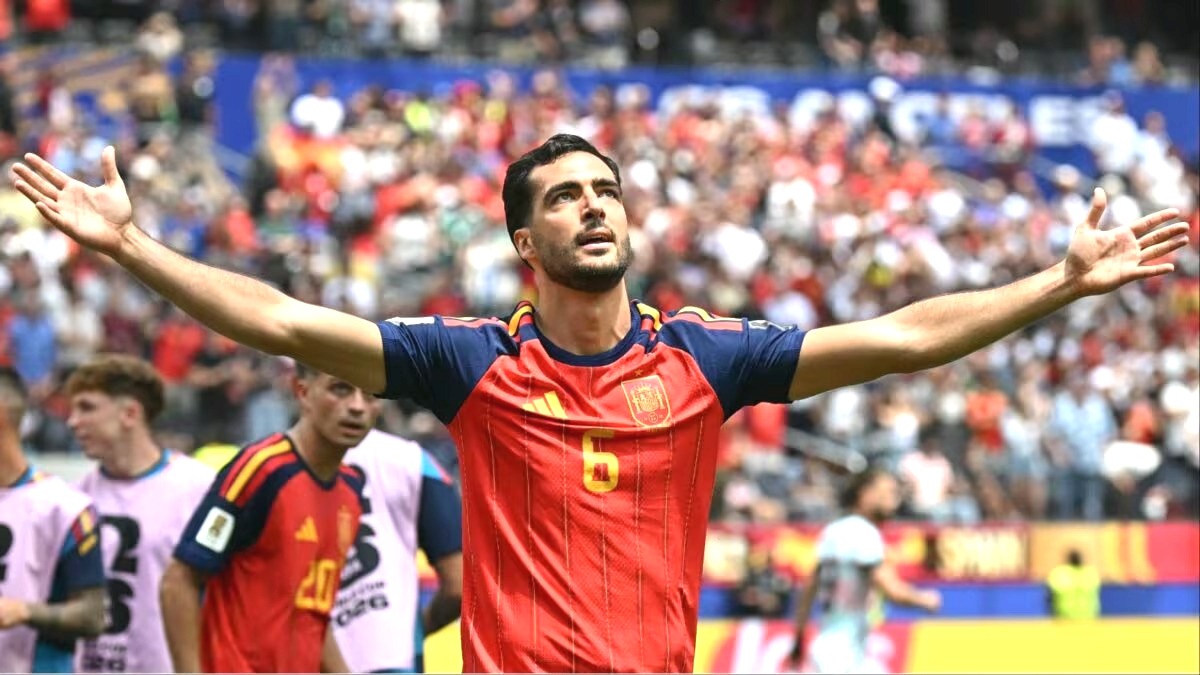
Messi had just one shot in the match, a strong effort that was blocked by Mikel Merino late in the game. Both Messi and his teammate Julian Alvarez rarely got close to Spain’s goal. Instead, they spent much of the match helping their own defense. For Messi, now 39 years old, this may have been his last World Cup final. He now stands with one win in three finals.
The Sprint That Won The Game
With the score still at 0-0, something small but important happened. Argentina’s right-back, Nahuel Molina, looked over his shoulder to check on Nico Williams, Spain’s winger. Williams had been standing behind him. But when Molina turned back to focus on the ball, Williams had already run past him.
This one sprint set up the winning goal. Williams is one of the fastest players in the Spanish squad and one of the best at sprinting many times in a match. This speed is part of what makes him so dangerous, but his story goes far beyond football skill.
Two Parents Who Walked So Their Son Could Run
Nico Williams was born to parents who made an incredibly hard journey to reach Spain. In 1994, his parents, Maria Comfort Arthur and Felix Williams, left Ghana in search of a better life. They planned to go to England but were told Spain would be cheaper to reach.
What no one told them was how dangerous the journey would be. They crossed the Sahara Desert on foot, through temperatures as high as 50 degrees Celsius. Felix suffered an injury during this journey that left him with a limp for the rest of his life. Maria was three months pregnant at the time with their first son, Inaki, who would later become a football star himself.
Along the way, through five countries, they lost many friends who did not survive the journey. When Maria finally reached Melilla, a Spanish city in North Africa, she was caught by guards. A lawyer told them to destroy any papers linking them to Ghana and instead say they had fled a war in Liberia. This was the only way they could ask for safety in Spain.
Felix later found work at a chicken factory. Maria worked wherever she could, from a pizza shop to an airport. From these hard beginnings, Inaki became Athletic Bilbao’s first Black star player, and Nico grew into one of Spain’s brightest football talents.
Nico Williams has spoken about a saying his mother taught him: “If you want to go fast, go alone; if you want to go far, go together.” This idea showed up clearly in the final. Instead of trying to score the winning goal himself, Williams passed the ball back to his teammate, Ferran Torres, who scored.
Ferran Torres And His Battle With His Own Mind
Ferran Torres’ story is just as powerful, though very different. In 2024, he was going through one of the hardest times of his career at Barcelona. The team had a season without winning any trophies, and fans blamed Torres a lot of the time. He had scored only 25 goals in 113 matches, and people online were harsh and mean about it.
Torres later said he fell into what felt like a bottomless pit. He lost confidence in his own skills and even lost his love for playing football. To deal with this, he chose to see a psychologist, something not many footballers openly talk about.
He has said that going to therapy should not be something people feel ashamed of. He explained that talking to someone outside his family helped him see things differently and let his feelings out. After this, his form improved greatly. In the next two seasons, he scored 40 goals in 94 matches, almost double his earlier rate.
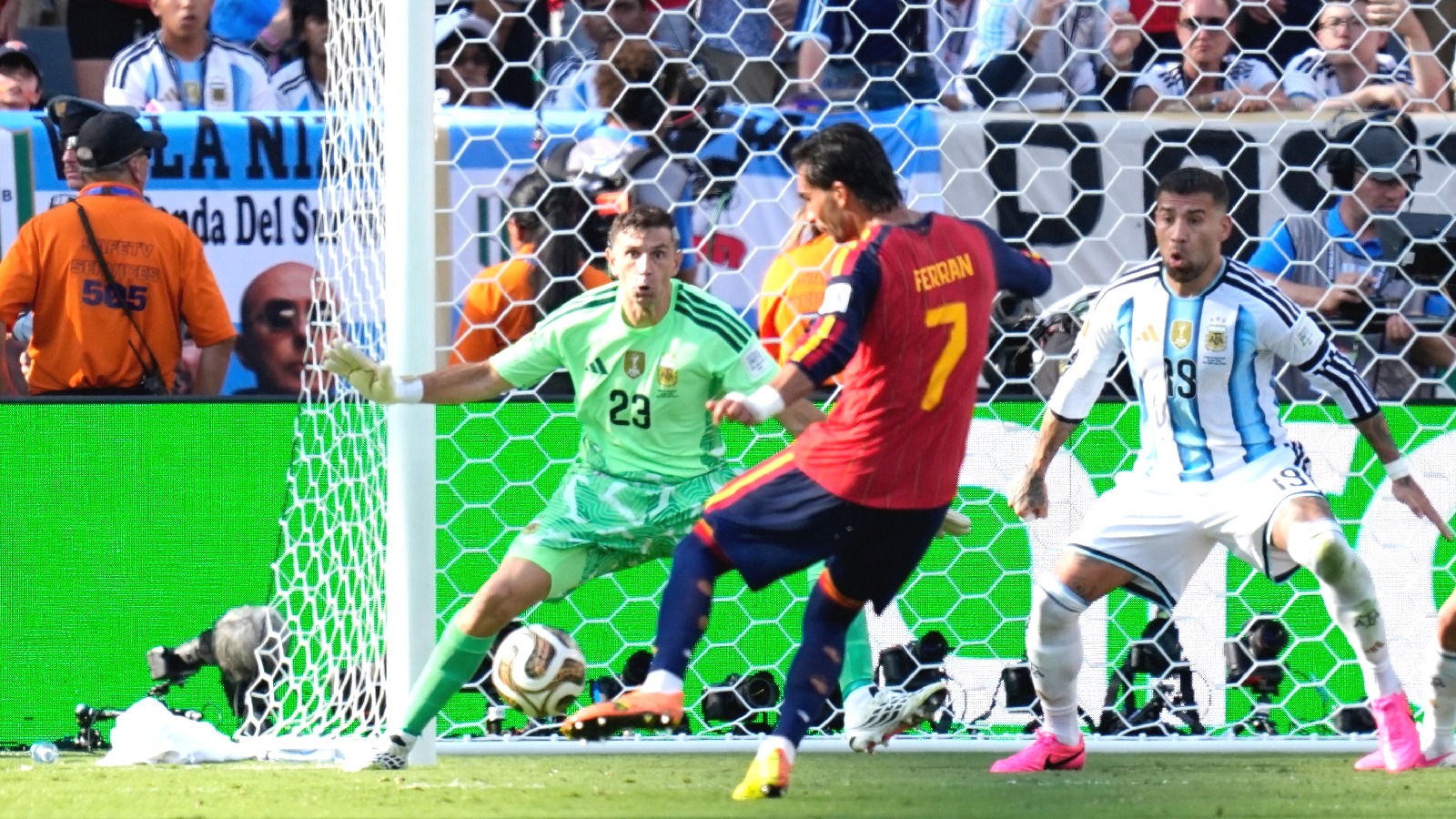
In the World Cup final, it was Torres who scored the winning goal, right after Williams passed it to him. A powerful shot went into the top corner of the net, and Spain took the lead they would not lose.
A Golden Chance In New Jersey
The winning goal came in the 106th minute of the match. Williams jumped to meet a cross from Pedro Porro but chose to pass the ball back instead of shooting himself. Torres struck it perfectly, and the ball flew past Argentina’s goalkeeper, Emiliano Martinez.
With that goal, Spain earned their second star on the football jersey, thanks to two players who each had to overcome something big before reaching this moment.
A Story That Started In India
Interestingly, Torres’ football journey has a small connection to India. Back in 2017, he played in the FIFA U-17 World Cup, which was held in India, including at the DY Patil Stadium in Navi Mumbai. Vijay Patil, who owns the stadium, remembered watching Torres and his teammate Eric Garcia as young players.
Patil, speaking after watching the World Cup final from the stands in New Jersey, said it was special to see a player he had watched as a boy grow up to score the winning goal in a World Cup final. Spain had reached the final of that 2017 tournament too but lost 5-2 to England, with Phil Foden scoring twice for the English side.
That tournament, played almost a decade ago, turned out to be an early sign of the talent that would one day help Spain win the biggest trophy in football.