
Football has always evolved with time, but few decisions have been as transformative as FIFA’s expansion of the World Cup. The 2026 edition, hosted across the United States, Canada, and Mexico, marked the first-ever 48-team tournament. While many critics feared the competition would lose its quality, the event instead demonstrated that global football had become deeper, more competitive, and commercially stronger than ever before. Following the tournament’s success, FIFA is now moving toward an even more ambitious milestone—a 64-team FIFA World Cup in 2030 to celebrate the competition’s 100th anniversary. The proposal has gained momentum after FIFA President Gianni Infantino confirmed that the governing body would examine the expansion, while CONMEBOL has openly backed the move.
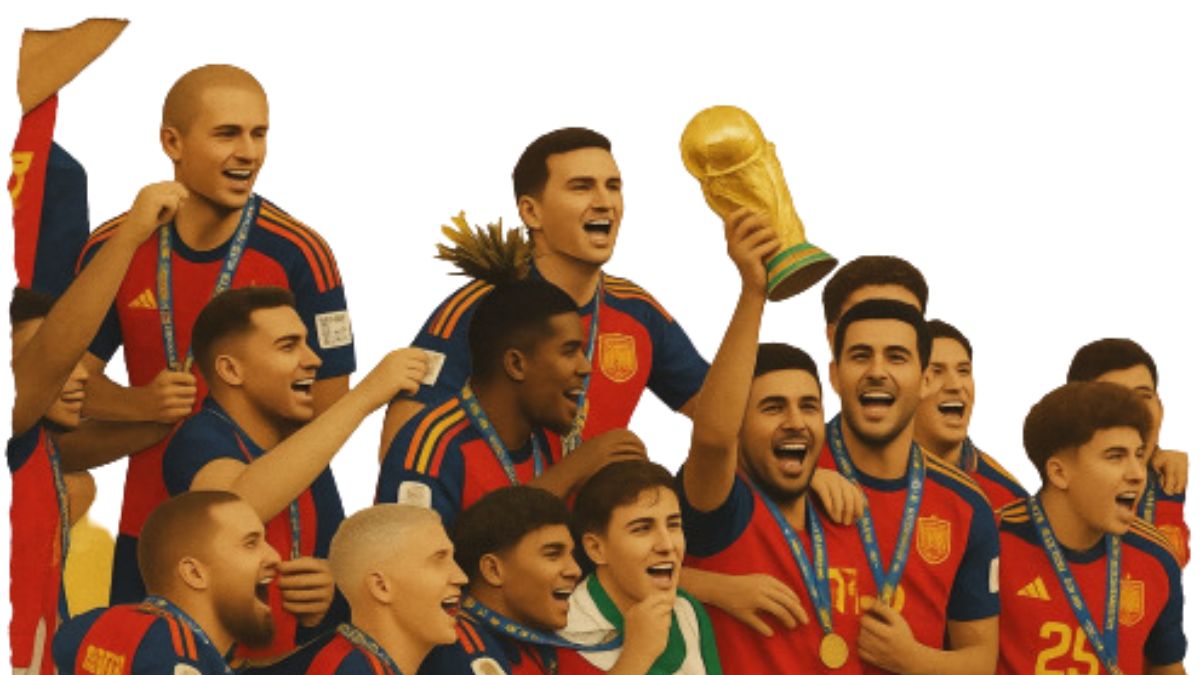
The 2030 World Cup is already unique in football history. Spain, Portugal, and Morocco will serve as the main hosts, while Uruguay, Argentina, and Paraguay will stage the opening centenary matches to commemorate the inaugural World Cup held in Uruguay in 1930. With six host nations spread across three continents, FIFA believes the centennial edition deserves a format that reflects football’s truly global reach. Reports suggest that a 64-team competition could also simplify the tournament structure by replacing the complicated third-place qualification system used in 2026 with 16 groups of four teams, where the top two teams advance directly to the knockout stage.
One of the biggest reasons behind the proposed expansion is the overwhelming success of the 2026 tournament. Smaller football nations proved they belonged on the biggest stage. Countries that had rarely qualified for previous World Cups managed to produce memorable performances, attract massive television audiences, and inspire millions of young footballers back home. The tournament demonstrated that football’s growth is no longer limited to Europe and South America. African, Asian, CONCACAF, and Oceania nations all showed measurable progress, strengthening FIFA’s belief that more countries deserve a chance to compete.
Commercially, a 64-team World Cup represents an enormous opportunity. More participating nations mean more broadcasters, sponsorships, ticket sales, tourism revenue, and digital engagement. Every additional qualified country creates a new television market while giving local brands greater incentive to invest in football. FIFA has consistently focused on expanding football’s global economy, and increasing participation aligns with its long-term commercial strategy. The centenary tournament is expected to become the largest sporting event ever organized if the proposal receives final approval.
The sporting advantages are equally significant. Emerging football nations often struggle because they rarely experience elite international competition. By qualifying for the World Cup, these countries gain invaluable exposure, financial support, and experience against world-class opponents. Such participation accelerates football development at grassroots level, encourages government investment, and inspires future generations. History has repeatedly shown that major tournament appearances can transform football cultures within nations.
For countries like India, the proposed expansion has generated particular excitement. Former India captain Bhaichung Bhutia recently stated that a 64-team World Cup could significantly improve India’s qualification chances, although he also acknowledged that maintaining the tournament’s quality would remain a challenge. For one of the world’s largest football markets, simply reaching a FIFA World Cup could transform the sport’s popularity and commercial potential.
However, the proposal has also attracted substantial criticism. Opponents argue that expanding from 48 to 64 teams within a single World Cup cycle risks diluting the tournament’s quality. Critics fear that larger mismatches between elite nations and lower-ranked teams could reduce competitiveness during the group stage. The 2026 tournament already witnessed several one-sided encounters, raising concerns that further expansion may increase the gap between football’s strongest and weakest nations.
Another major concern involves scheduling. Modern footballers already face demanding club calendars, continental competitions, and international commitments throughout the year. Expanding the World Cup means additional players, more training facilities, greater accommodation requirements, and increased travel logistics across multiple host countries. Domestic leagues, particularly in Europe, worry that fixture congestion could negatively affect player welfare and the overall football calendar. La Liga president Javier Tebas has been among the most vocal critics, arguing that continuous expansion threatens the sustainability of club football.
Despite these concerns, FIFA appears confident that the benefits outweigh the risks. The governing body views football as a genuinely global sport that should offer more nations the opportunity to participate on its biggest stage. Rather than protecting exclusivity, FIFA believes greater inclusivity strengthens the game’s worldwide ecosystem by creating new markets, improving infrastructure, and encouraging long-term investment in developing football nations. This philosophy has shaped nearly every major FIFA decision during the past decade.
If approved, the 2030 World Cup will become far more than another football tournament. It will represent a celebration of one hundred years of FIFA World Cup history while showcasing how dramatically the sport has expanded since 1930. From just 13 participating nations in the inaugural edition to a possible 64 teams a century later, the World Cup would symbolize football’s remarkable journey from a predominantly European and South American competition into the world’s most inclusive sporting spectacle.
Whether supporters celebrate the expansion or critics continue questioning its competitive impact, one fact remains undeniable: the FIFA World Cup is entering a new era. The success of the 2026 tournament has accelerated FIFA’s ambition to make football more global than ever before. If the governing body formally approves the proposal, the FIFA World Cup 2030 will not simply be remembered as the centenary edition—it will be remembered as the tournament that fundamentally redefined the scale and future of international football.
| Section | Key Points |
|---|---|
| Introduction | Football has continuously evolved, and FIFA’s expansion of the World Cup has been one of its biggest transformations. After the successful 48-team FIFA World Cup 2026, FIFA is considering expanding the 2030 tournament to 64 teams as part of the competition’s 100th anniversary celebrations. FIFA President Gianni Infantino has confirmed the proposal is under examination, while CONMEBOL has publicly supported the move. |
| 2030 World Cup Hosts | The 2030 FIFA World Cup will be jointly hosted by Spain, Portugal, and Morocco, with the opening centenary matches taking place in Uruguay, Argentina, and Paraguay to commemorate the first-ever FIFA World Cup held in Uruguay in 1930. It will become the first World Cup hosted across six nations and three continents. |
| Proposed Tournament Format | FIFA is reportedly considering a 64-team format featuring 16 groups of four teams, with the top two teams from each group advancing directly to the knockout stage. This would simplify the competition compared to the more complex 48-team format introduced in 2026. |
| Why FIFA Wants Expansion | The primary motivation is the success of the 2026 FIFA World Cup, where many smaller football nations proved they could compete at the highest level. FIFA believes football has become more competitive globally, with strong growth across Africa, Asia, CONCACAF, and Oceania. |
| Commercial Benefits | A 64-team tournament would significantly increase:• Global television audiences• Broadcasting rights revenue• Sponsorship opportunities• Ticket sales• Tourism income• Digital engagementEach additional qualified nation creates a new football market, making the centenary World Cup potentially the largest sporting event ever organized. |
| Sporting Advantages | Greater participation provides emerging football nations with:• Experience against elite opposition• Increased FIFA funding• Better infrastructure investment• Grassroots football development• Government support for football programs• Inspiration for future generations of players |
| India’s Perspective | Former India captain |
Why is FIFA considering expanding the 2030 FIFA World Cup to 64 teams, and what impact could it have on global football?
FIFA’s proposal to expand the 2030 FIFA World Cup from 48 to 64 teams is driven by a combination of sporting ambition, commercial opportunity, and the symbolic significance of celebrating the tournament’s 100th anniversary. The governing body believes the centenary edition should reflect football’s transformation into the world’s most global sport, offering more nations than ever before the opportunity to compete on the biggest stage.
The biggest catalyst behind the proposal was the remarkable success of the 2026 FIFA World Cup, the first edition featuring 48 teams. Despite initial criticism that the expanded format would reduce the tournament’s quality, the competition proved that football’s competitive balance has improved considerably. Nations from Asia, Africa, CONCACAF, and Oceania produced memorable performances, demonstrated tactical maturity, and showed that the traditional dominance of Europe and South America is gradually being challenged. The success of these emerging football nations convinced FIFA that the global talent pool is much deeper than previously believed.
From a development perspective, qualification for a FIFA World Cup often transforms football within a country. Participation generates increased government funding, attracts corporate sponsorships, improves football infrastructure, strengthens youth development systems, and inspires millions of children to pursue the sport. Countries that qualify also receive greater financial support from FIFA, helping federations invest in coaching, grassroots programs, women’s football, and high-performance training facilities. In many cases, a single World Cup appearance can permanently elevate football’s status within a nation.
Commercial considerations also play a significant role. Every additional qualified country introduces millions of new viewers, attracts local broadcasters, creates fresh sponsorship opportunities, boosts tourism, and increases merchandise sales. As football continues expanding into new markets, FIFA sees inclusivity as both a sporting and economic strategy. The governing body expects the centenary tournament to become one of the most watched sporting events in history if the expansion receives final approval.
However, the proposal is not without controversy. Critics argue that expanding to 64 teams could dilute the tournament’s quality by increasing the number of mismatches between elite nations and lower-ranked teams. Others point to an already congested international football calendar, warning that additional matches could place greater physical demands on players while disrupting domestic leagues and continental competitions.
Ultimately, the debate represents a broader question about the future of international football: should the FIFA World Cup prioritize exclusivity and competitive balance, or embrace greater global participation? If FIFA approves the proposal, the 2030 FIFA World Cup will not only commemorate a century of football history but also mark one of the most significant structural changes the sport has ever witnessed, reshaping international football for generations to come.
| Frequently Asked Question (FAQ) | Answer |
|---|---|
| Why is FIFA considering expanding the 2030 FIFA World Cup to 64 teams, and what impact could it have on global football? | FIFA is considering expanding the 2030 FIFA World Cup from 48 to 64 teams to celebrate the tournament’s 100th anniversary while making football more inclusive and globally representative. The proposal reflects FIFA’s vision of giving more nations the opportunity to compete on football’s biggest stage and acknowledges the rapid growth of the sport across every continent. |
| Reason 1: Success of the 2026 World Cup | The biggest reason behind the proposal is the success of the 2026 FIFA World Cup, the first edition featuring 48 teams. Despite concerns that expansion would dilute quality, the tournament proved that emerging football nations could compete at a much higher level than expected. Teams from Asia, Africa, CONCACAF, and Oceania delivered competitive performances, demonstrating that the global football landscape has become significantly stronger. |
| Reason 2: Promoting Global Football Development | FIFA believes that World Cup qualification accelerates football development within participating nations. Qualification often leads to increased government investment, improved infrastructure, enhanced youth academies, better coaching systems, and gre |