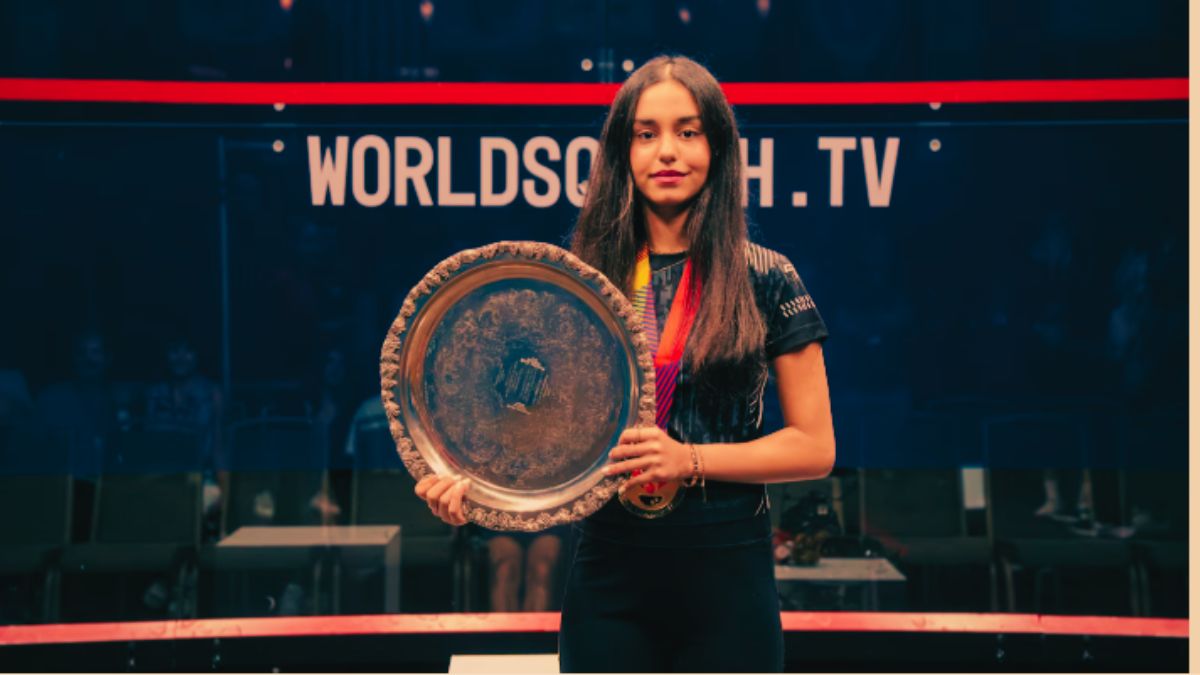
In last 24-48 hours one name which has gripped all the headlines in Sporting domain due to her accolades at the biggest of the stage as she won World Junior Squash Champion Title which she was trying to attain from quite some time.
Before we dwell into what makes her special? Let’s talk a little bit about her victory as she won Title in Niagara on Lake in Canada, where she won title by beating Egypt Ruqayya Salem in the final.
The moment she won that medal it was end of dominance for Egypt who have been winning title at Junior circuit from last 16 years.
This is extremely special as the country who have produced top players like- Sourav Ghosal, Joshna Chinapa, Dipika Pallkal and many more have not be able to attain this important feet.
However Chinappa came close after winning silver medal in 2005.
The current crop of Indian players which include- Ramit Tandon and Velvan Senthilkumar are exceptional.
The victory was extremely special at the same time challenging for her as she entered the tournament as World Number 1 where she didn’t lose single match and ultimately winning title.
National Coach Harinder Pal Singh Sandhu described ” This victory will go down as one of the biggest moment in Indian Squash”
He further added that “This was one title missing in Indian Squash”
Beating Egypt is not a mean task as they have been dominating junior and senior circuit in Squash for quite some time now .
She certainly faced immense heartbreak where she came quite closer in the past couldn’t cross the line.
“The loses have been heartbreaking for us we waited for long time. All we did we started working on her mindset as we were looking to break those barriers physically as well as mentally”
Sandhu Explained her movement on courts along with deceptive shots have been her biggest strength, her ability to handle pressure in tough times made him fan favorite.
Her mental ability could be easily decoded in the final where she stayed calm in the first set against Egypt Salem.
Let’s decode why she is a special talent? Let me share it in the below format:
1. Her mental strength is biggest asset, where she absorb pressure brilliantly especially in the crunch phase of the game.
2. Her fast learning ability through which she has accelerated from bottom to Top at rapid precision.
3. The greatest thing about her growth, she has climbed those ranks in limited time frame where most players in her age group is still finding hard to get groove.
4. It was last year at Junior circuit so attaining that feat and progressing at Senior level means a lot especially all her past heartbreaks where she came close and lost in the semifinal as well as final demands special focus.
5. Overall, her hunger to learn, listen and absorb and make quick correction in her game makes her another talented player to watch out for as per her coach.
Final Perspective:
Her title has added more confidence and belief in Indian Squash ecosystem, with strong guidance, Indian Squash could certainly head into right direction.
| Aspect | Details |
|---|---|
| Historic Achievement | Won the World Junior Squash Championship in Niagara-on-the-Lake, Canada, defeating Egypt’s Ruqayya Salem in the final. |
| Why the Victory Matters | Ended Egypt’s 16-year dominance in the World Junior Squash Championship, marking a historic milestone for Indian squash. |
| Indian Squash Context | Despite producing stars like Sourav Ghosal, Joshna Chinappa, and Dipika Pallikal, India had never won the World Junior title. Joshna Chinappa came closest by winning silver in 2005. |
| Tournament Performance | Entered the championship as the World No. 1 junior, remained unbeaten throughout the tournament, and clinched the title without dropping a match. |
| Coach’s Verdict | National coach Harinder Pal Singh Sandhu described the triumph as “one of the biggest moments in Indian squash”, adding that it was the only major junior title India had been missing. |
| Challenge of Beating Egypt | Egypt has dominated both the junior and senior squash circuits for years, making the victory even more significant. |
| Overcoming Heartbreaks | After suffering several heartbreaking semifinal and final defeats in previous editions, she finally broke through to win the coveted title. |
| Coach on Her Development | Sandhu revealed that the team focused extensively on strengthening her mindset alongside improving her physical game to overcome mental barriers. |
| Technical Strengths | Her exceptional court movement, deceptive shot-making, and ability to stay composed under pressure are regarded as her biggest strengths. |
| Mental Toughness in the Final | She remained calm and composed during crucial moments, particularly in the opening game against Ruqayya Salem, demonstrating remarkable maturity. |
Why Is She a Special Talent?
| Key Attribute | Explanation |
|---|---|
| 1. Mental Strength | Her biggest asset is her ability to absorb pressure and deliver during the crunch moments of matches. |
| 2. Fast Learning Ability | She learns quickly, adapts her game rapidly, and has progressed from the lower ranks to the top in a short period. |
| 3. Rapid Rise | She climbed the junior rankings much faster than most players in her age group, who are still trying to establish themselves. |
| 4. Resilience | Winning the World Junior title in her final year on the junior circuit after multiple near misses highlights her perseverance and determination. |
| 5. Hunger to Improve | According to her coach, her willingness to learn, listen, absorb feedback, and make quick adjustments makes her one of India’s brightest squash prospects. |
Final Perspective
| Takeaway | Details |
|---|---|
| Impact on Indian Squash | Her historic World Junior title has injected fresh confidence into the Indian squash ecosystem. With continued guidance and a strong development pathway, India appears well-positioned to produce more world-class players and strengthen its presence on the global stage. |
FAQ 1: Why is this World Junior Squash Championship title considered a watershed moment for Indian squash?
The significance of this triumph extends far beyond an individual achievement. For the first time in history, an Indian has lifted the World Junior Squash Championship trophy, ending Egypt’s remarkable 16-year dominance in the competition. Egypt has long been regarded as the global powerhouse in squash, consistently producing world champions at both the junior and senior levels. Defeating an Egyptian player in the final on the biggest stage is therefore symbolic of India’s growing stature in the sport.
The victory is also historic because several legendary Indian players, including Sourav Ghosal, Joshna Chinappa and Dipika Pallikal, enjoyed outstanding international careers but could not win this particular title. Joshna Chinappa came closest with a runner-up finish in 2005, making this achievement even more special after nearly two decades of waiting.
Equally impressive was the manner in which the title was won. Entering the tournament as the World No. 1 junior, she handled the expectations exceptionally well, remained unbeaten throughout the event and displayed remarkable composure under pressure. Winning as the top seed often brings added scrutiny, but she embraced the challenge instead of being overwhelmed by it.
The success also sends a strong message about the progress of Indian squash. Improved coaching structures, scientific training methods, international exposure and a stronger domestic ecosystem are beginning to produce players capable of competing consistently with the world’s best. Her triumph is likely to inspire the next generation of Indian players, encouraging more youngsters to pursue squash professionally while reinforcing the belief that India can produce future world champions.
FAQ 2: What qualities make her one of the most exciting prospects in world squash?
What separates her from many of her contemporaries is the complete package she brings to the court. While technical ability is essential in squash, elite players are often defined by their mental resilience, tactical awareness and willingness to improve. She possesses all these qualities despite her young age.
Her greatest strength is undoubtedly her mental toughness. Throughout the tournament she remained composed in high-pressure situations, particularly during the final against Egypt’s Ruqayya Salem. Rather than allowing the occasion to affect her, she trusted her game plan and executed it with confidence. Such temperament is usually associated with experienced senior professionals, making it a standout characteristic.
Another major strength is her exceptional learning ability. According to her coach, she is eager to absorb feedback, implement tactical adjustments and continuously refine her game. This openness to learning has accelerated her development and enabled her to rise rapidly through the junior rankings.
Technically, she combines excellent court movement with deceptive shot-making, allowing her to control rallies and force opponents into difficult positions. Her fitness and anticipation further enhance her effectiveness, helping her maintain consistency throughout long matches.
Perhaps the most admirable aspect of her journey is her resilience. After suffering heartbreaking defeats in previous editions of the championship, she refused to lose confidence. Instead, she used those setbacks as motivation to improve both physically and mentally. That ability to bounce back from disappointment, coupled with an unwavering desire to keep learning, suggests she has the potential to make a smooth transition into the senior circuit and become one of India’s leading squash players in the years ahead.
| FAQ | Answer (Tabular Format) |
|---|---|
| FAQ 1: Why is this World Junior Squash Championship title considered a watershed moment for Indian squash? | First-ever Indian champion: For the first time in history, an Indian won the World Junior Squash Championship, ending Egypt’s 16-year dominance in the tournament.
Breaking Egypt’s supremacy: Egypt has long been the global powerhouse in squash, consistently producing junior and senior world champions. Defeating an Egyptian player in the final highlights India’s growing stature in the sport. Historic achievement: Renowned Indian players such as Sourav Ghosal, Joshna Chinappa, and Dipika Pallikal enjoyed successful international careers but never won this title. Joshna Chinappa came closest with a runner-up finish in 2005, making this victory especially significant after nearly two decades. Dominant performance: Entering as the World No. 1 junior, she remained unbeaten throughout the tournament, handled immense expectations, and displayed remarkable composure under pressure. Boost for Indian squash: The triumph reflects the success of improved coaching, scientific training, greater international exposure, and a stronger domestic ecosystem. It is expected to inspire young players and reinforce India’s potential to produce future world champions. |
| FAQ 2: What qualities make her one of the most exciting prospects in world squash? | Mental toughness: She remained calm and composed in high-pressure situations, particularly during the final against Egypt’s Ruqayya Salem, demonstrating maturity beyond her years.
Strong learning mindset: According to her coach, she eagerly accepts feedback, implements tactical adjustments, and continually works to improve, accelerating her development. Technical excellence: She combines outstanding court movement, deceptive shot-making, excellent fitness, and sharp anticipation to control rallies and maintain consistency in long matches. Resilience: After disappointing performances in previous editions of the championship, she responded by improving both physically and mentally instead of losing confidence. Future potential: Her blend of technical skills, tactical awareness, mental resilience, and commitment to continuous improvement positions her as one of the brightest prospects capable of making a successful transition to the senior circuit and becoming one of India’s leading squash players. |