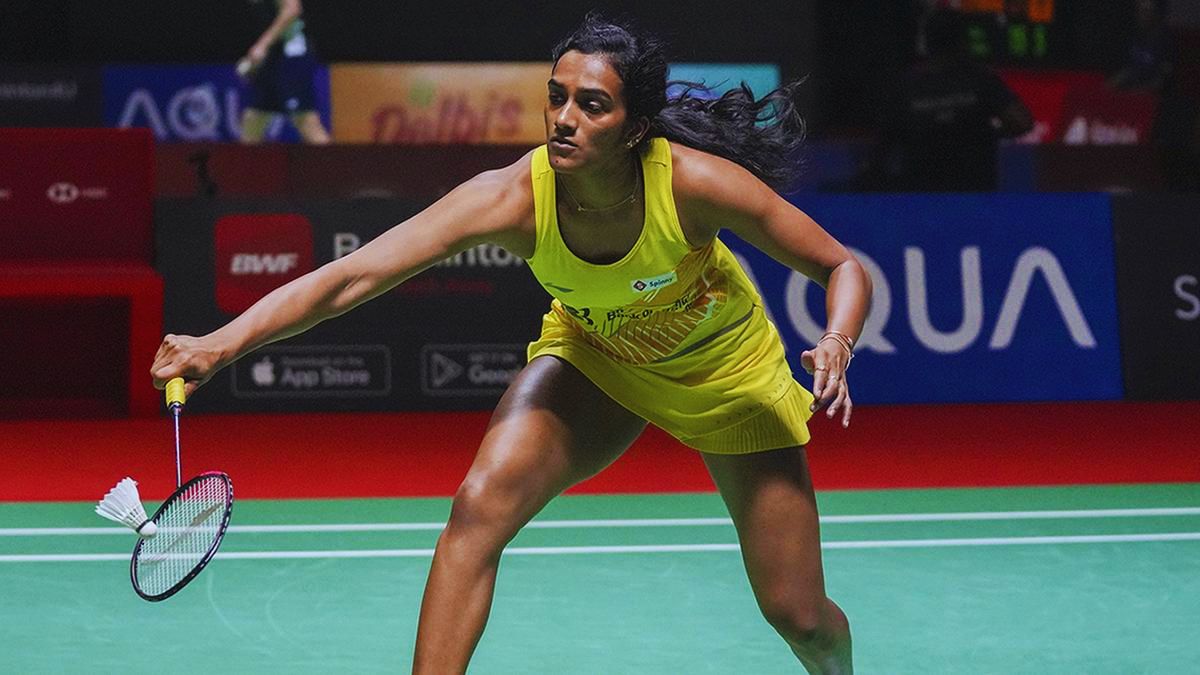
PV Sindhu has created a big moment in Indian sports history. At 31 years old, she became the first Indian to win the Japan Open, beating Japan’s Akane Yamaguchi 21-17, 21-17 in the final. This win means a lot for many reasons, and one big reason behind her comeback is some simple advice from cricket star Virat Kohli.
A Historic Win For Indian Badminton
Sindhu’s win at the Japan Open was full of firsts. She became the first Indian to lift this trophy, and at 31, she is also the oldest woman to win a BWF Super 750 title. This was her 30th match against long-time rival Yamaguchi, and she won it in straight games, 21-17, 21-17.
This victory is also Sindhu’s first title since the Syed Modi International back in 2024. Even bigger, it is her first major BWF title since she won gold at the 2019 World Championship. That means she waited almost seven years for a win this big.
The match itself did not start easy for Sindhu. She was down early in the first game but fought back, tying the score at 17-17 before pulling away to win 21-17. In the second game, she played with more attack from the start and never let go of her lead, closing out the match in around 50 minutes.
Why This Win Feels So Special
Sindhu had not won any title in over a year before this. She was also carrying the effects of a foot surgery from four years ago, which had slowed down her recovery and form for a long time. Many people had started to wonder what was wrong with her game, even though she kept trying hard in every tournament, often without a good seeding or an easy draw.
She spoke about this after the win. “I had tears in my eyes because it was very, very important for me to win,” she said. “I was really working hard on myself and kept believing that I could do it. Even though a lot of people were asking what was happening, I still believed in myself, my family, my coaches and my support staff.”
This shows just how much pressure she was under, both from herself and from people around her. Yet she kept working quietly, without giving up.
The Advice From Virat Kohli That Changed Her Mind
During one of her toughest periods, Sindhu reached out to Virat Kohli. She wanted to know how he dealt with his own long wait for an international century in cricket. His advice was simple: focus on enjoying the sport again, instead of only thinking about results.
This small piece of advice stuck with Sindhu. Instead of putting pressure on herself to win matches and titles, she began to enjoy playing badminton again. This change in mindset became one of the biggest reasons behind her strong comeback at the Japan Open.
Recovering From Injury In Atlanta
Before this comeback, Sindhu had a snapped toe ligament, and doctors told her to rest for three months. During this time, her husband, Venkata Datta Sai, took her to a sports training center called Exos Sports Performance in Atlanta. There, she worked with special coaches and trainers to build back her strength.
Datta later shared that the main goal during this training was not just to fix her body, but to help her enjoy badminton again, rather than feel weighed down by expectations. For almost three weeks, Sindhu trained in a calm, family-like setting where she could focus fully on healing and finding her love for the game again.
A Team Effort Behind The Comeback
Sindhu’s win did not happen alone. She has a support team of 13 people, including coaches, trainers, physiotherapists, and sports science experts. According to Datta, many people on this team were moved to tears after watching her beat Yamaguchi in the final. This shows how much work and emotion went into this comeback, from many people, not just Sindhu herself.
What Sports Science Found And Fixed
After the Paris Olympics, Sindhu’s team studied her game closely using sports science. They found two major problems.
First, her attacking style had become weaker over time. This forced her into longer rallies against top players, which made her tired and increased her chances of losing close matches.
Second, she was making too many line judgement calls during matches. This means she was deciding too often whether the shuttle landed inside or outside the lines, which increased the risk of mistakes.
Once her coaching team knew these two problems, they built a new training plan to fix them before the Japan Open.
Fitness Changes That Made A Difference
Along with the mental and technical changes, Sindhu also worked hard on her fitness. Following her team’s plan, she lost 3.5 kilograms through a careful diet and fitness program. Protein-rich food, especially chicken, became a major part of her meals during this time.
After all this hard work paid off with the Japan Open trophy in Tokyo, Sindhu celebrated in a simple and happy way ,with a serving of ice cream.
A Season Of Growth, Even Without Titles
Even though Sindhu did not win many titles this year before Japan Open, she was quietly getting better. She climbed back into the world’s Top 10, moving from world rank 18 to rank 9. This is not an easy jump in a sport with so many strong players.
Her footwork, shot depth, and line judgement have all been improving compared to the last two years. It feels strange to say this about a player with five World Championship medals and two Olympic medals, but the drop in her game after her 2022 injury was serious enough that she had to rebuild much of it from scratch.
Close Losses To The World’s Best
This year, Sindhu played at a high level, often looking like a true top-10 player again. But she kept losing close matches to the very best players in the world. Her losses this year came against World No. 1 An Se Young (twice), World No. 2 Wang Zhi Yi, World No. 3 Akane Yamaguchi (twice, before the Japan Open final), and World No. 4 Chen Yu Fei.
One match stands out ,her quarterfinal loss to An Se Young at the Singapore Open. The score, 21-17, 21-14, does not show how close and tough that match really was. An Se Young, known as the best player in the world right now, had to play at a much higher level than usual just to win that match. Losing matches like this, again and again, could have easily broken anyone’s spirit. But Sindhu kept coming back.
Standing Out In A Tough Draw
At the Japan Open, all the top players in the world were in the draw. The tough schedule took a toll on many of them. Chen Yu Fei, who played Sindhu in the semifinal, had to retire due to injury. Nozomi Okuhara, who lost to Sindhu in the quarterfinal, also retired hurt. An Se Young also had to stop her match against Okuhara due to injury.
Sindhu managed to stay fit and strong through all of this, even beating World No. 5 Han Yue in the second round on her own merit. Yes, she got a bit of luck with two walkovers along the way, but she still had to stay fit and ready to use those chances. As the old saying goes, fortune favors the brave ,and in this case, the fit too.
A Legacy That Continues To Grow
Sindhu first became known to the world at just 17 years old, when she won her first medal at the World Championships. Since then, she has built one of the most decorated careers in Indian badminton history, with five World Championship medals and two Olympic medals.
This Japan Open win adds another special chapter to that story. It shows that even after years of ups and downs, injuries, and tough losses, she still has the drive and skill to fight for the biggest titles in the sport. Her journey from being a teenage medal winner to lifting a Super 750 trophy in her thirties shows a rare kind of determination that few athletes manage to keep for so long.