
Tracing the Epic History of Wrestling in Asian Games
The Asian Games, the continent’s most prestigious multi-sport event, has a rich history of showcasing the ancient sport of wrestling. This article traces the epic journey of wrestling in the Asian Games, highlighting its evolution and significance in the sporting landscape.
Also Read: Demystifying Wrestling: Mastering the Rules and Regulations You Must Know
1. Early Beginnings:
Wrestling, a sport with origins dating back thousands of years, has been an integral part of Asian cultures. Its presence in ancient civilizations like Mesopotamia, Egypt, and the Indus Valley is a testament to its historical significance. As the Asian Games emerged in 1951, wrestling was among the first sports included, reflecting its deep-rooted heritage in the region.
https://www.youtube.com/watch?v=m815nh-M-7E&pp=ygUXSW5kaWFuIHdyZXN0bGVycyBvbiBtYXQ%3D
2. Wrestling at the Inaugural Asian Games:
During the inaugural Asian Games held in New Delhi, India, wrestling featured prominently as one of the main events. Athletes from participating Asian nations showcased their strength, agility, and technique in various wrestling styles, captivating audiences and laying the foundation for the sport’s continued prominence in future editions.
3. Emergence of Freestyle and Greco-Roman:
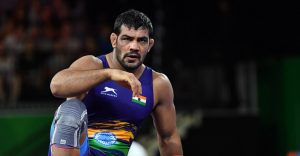
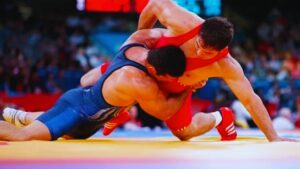
As the Asian Games gained momentum, wrestling competitions diversified into two distinct styles: freestyle and Greco-Roman. Freestyle wrestling, characterized by dynamic moves and holds, became a crowd favorite, while Greco-Roman wrestling, focusing on upper body techniques, showcased a different dimension of the sport.
4. Notable Moments and Athletes:
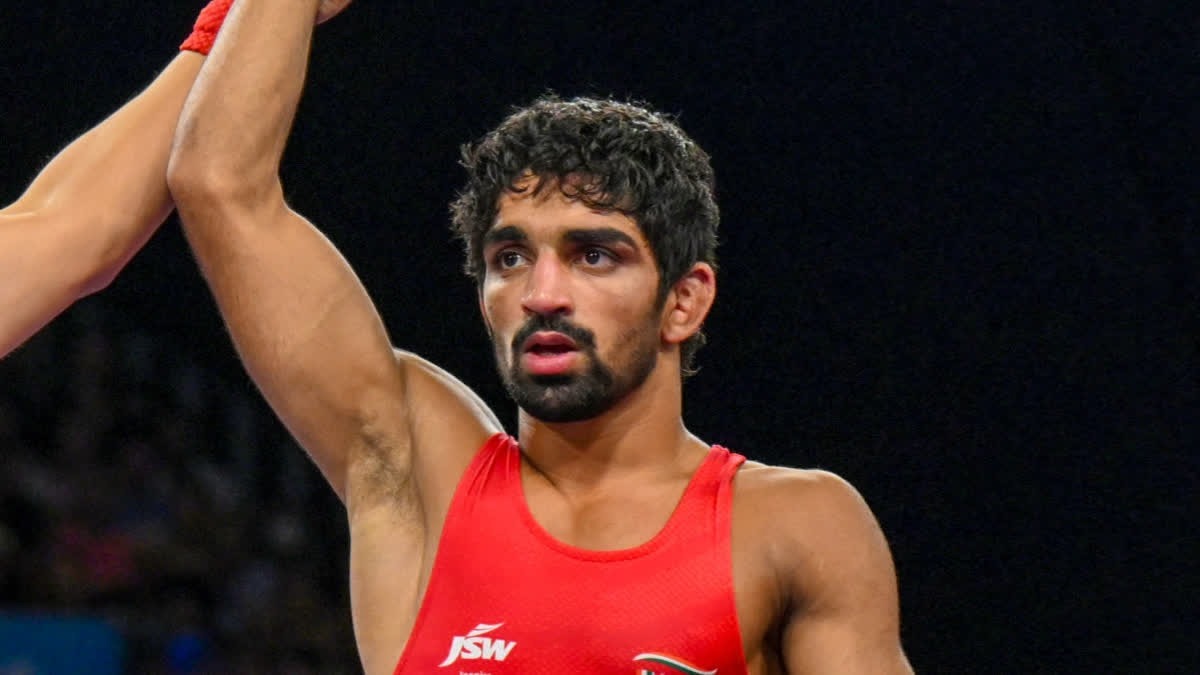
Throughout the history of the Asian Games, wrestling has witnessed remarkable moments and outstanding athletes. Legendary wrestlers like the Iranian Gholamreza Takhti, Indian Khashaba Jadhav, and Japanese Saori Yoshida etched their names in the annals of the Games with their exceptional performances and multiple gold medals.
5. Women’s Wrestling Inclusion:
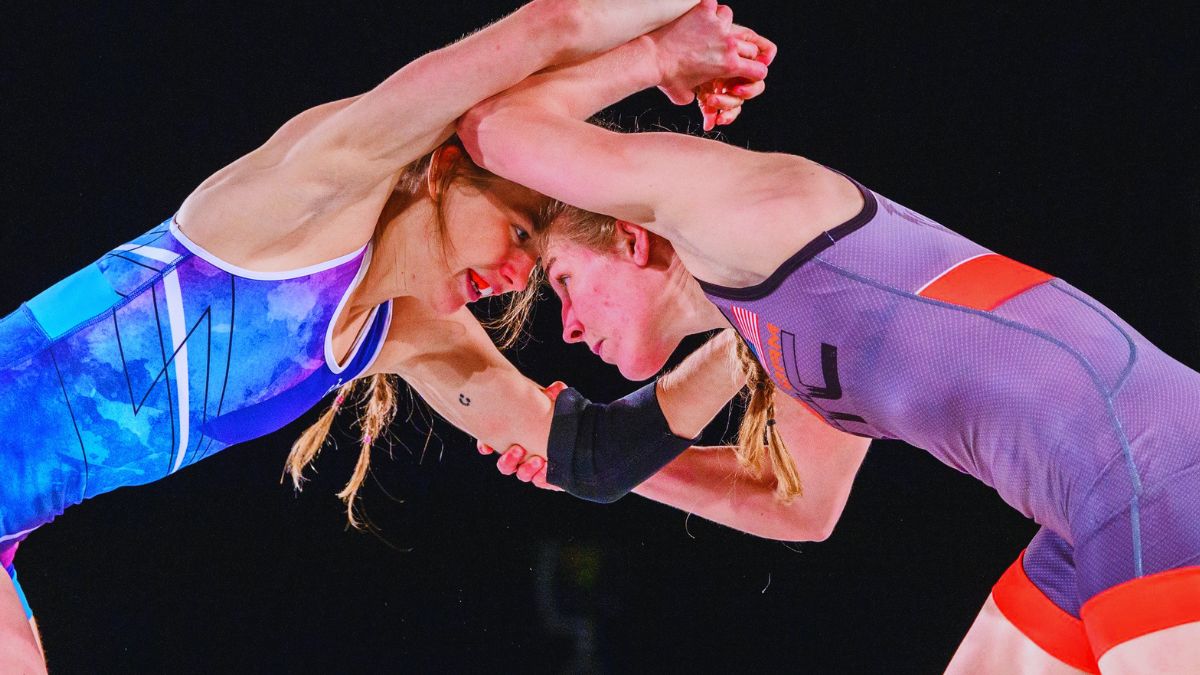
In a significant move towards gender equality, women’s wrestling was introduced to the Asian Games in 1990, adding another dimension to the sport. Female athletes from across Asia began demonstrating their prowess on the mat, inspiring a new generation of aspiring female wrestlers.
https://www.youtube.com/watch?v=EVkfftGM61s&pp=ygUXSW5kaWFuIHdyZXN0bGVycyBvbiBtYXQ%3D
6. Wrestling’s Impact on Asian Identity:
Wrestling’s presence in the Asian Games has played a pivotal role in fostering cultural exchange and strengthening the sense of Asian identity. As wrestlers from diverse backgrounds gather to compete, they forge bonds of friendship and camaraderie that transcend borders and promote the spirit of unity among Asian nations.
7. The Future of Wrestling in the Asian Games:
With each edition of the Asian Games, wrestling continues to captivate audiences with its heritage, competitive spirit, and tradition. As the Games evolve, wrestling remains an integral part, adapting to modern times while preserving its timeless essence.
Wrestling’s epic history in the Asian Games embodies the spirit of the continent’s diverse cultures and rich heritage. From its early beginnings in ancient civilizations to its prominent position in modern sports, wrestling has left an indelible mark on the Asian Games.
As this iconic sport continues to inspire athletes and fans alike, it reinforces the idea that the pursuit of excellence and camaraderie knows no boundaries, transcending cultures and bringing the continent together in the spirit of friendly competition.