Sports Market and Sports Tourism Market in India and Globally: Growth, Opportunities, and Future Outlook (2026):
The global sports industry has evolved into one of the world’s most valuable economic sectors, extending far beyond professional competitions. Today, sports encompass media rights, sponsorships, sporting goods, sports technology, infrastructure, grassroots participation, fantasy gaming, fitness, esports, and sports tourism. Simultaneously, sports tourism has emerged as one of the fastest-growing segments of global travel, with millions of people travelling every year to watch, participate in, or experience sporting events.
India, despite being a relatively young market compared to established sporting nations, is witnessing unprecedented growth driven by government initiatives, professional leagues, digital consumption, corporate investment, and increasing public participation. As the country prepares to host more international competitions and expands its sporting ecosystem, the contribution of sports and sports tourism to the national economy is expected to rise significantly.
- Global Sports Market: A Multi-Trillion-Dollar Industry:
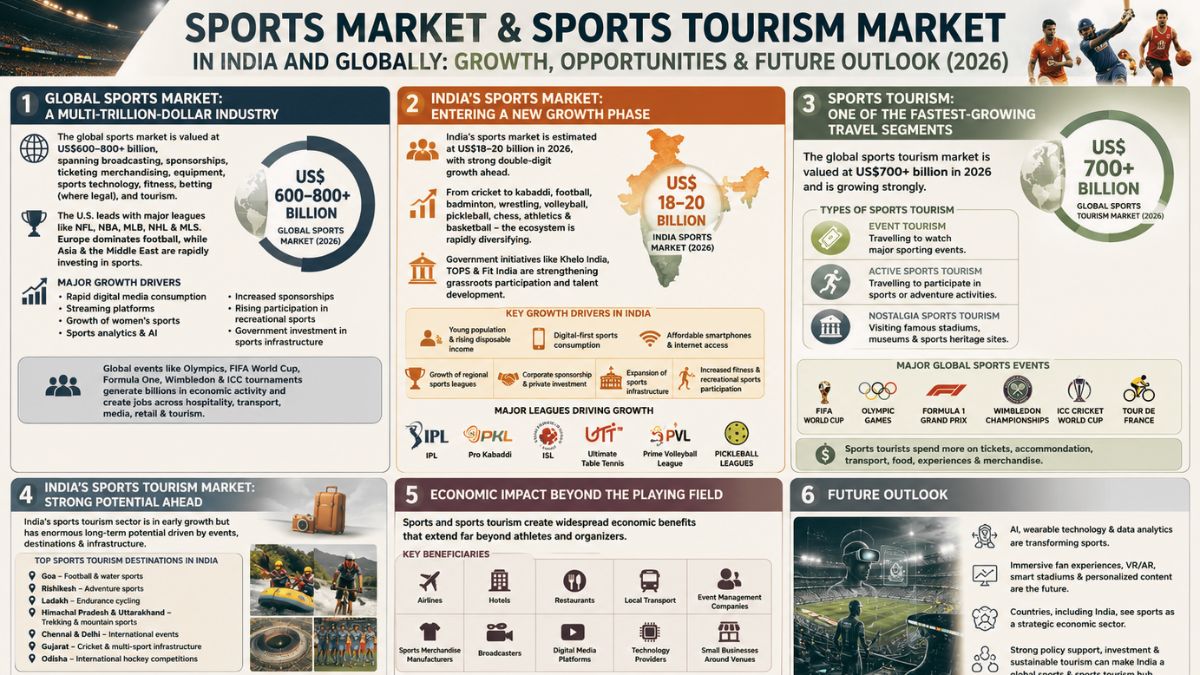
The global sports market has transformed into a massive economic powerhouse. Industry estimates place its overall value—including broadcasting, sponsorship, ticketing, merchandising, equipment, sports technology, betting (where legal), fitness, and tourism—at well over **US$600 billion**, with some broader assessments valuing the entire sports ecosystem at more than **US$800 billion**.
The United States continues to dominate the global sports economy through leagues such as the NFL, NBA, MLB, NHL, and MLS. Europe remains the commercial hub for football, while countries across Asia and the Middle East are rapidly increasing investments through infrastructure development, global events, and sports innovation.
Several factors continue to fuel this expansion:
* Rapid digital media consumption
* Streaming platforms replacing traditional broadcasting
* Growth of women’s sports
* Expansion of sports analytics and artificial intelligence
* Increased sponsorship investments
* Rising participation in recreational sports
* Government investment in sporting infrastructure
Global sporting events such as the Olympic Games, FIFA World Cup, Formula One, Wimbledon, and international cricket tournaments generate billions of dollars in direct and indirect economic activity, creating employment across hospitality, transport, media, retail, and tourism.
2. India’s Sports Market is Entering a New Growth Phase:
India’s sports industry has traditionally revolved around cricket, but the ecosystem has diversified dramatically over the past decade.
Today, professional leagues across kabaddi, football, badminton, wrestling, volleyball, pickleball, chess, athletics, and basketball are attracting investors, broadcasters, sponsors, and fans. Government schemes like Khelo India, TOPS (Target Olympic Podium Scheme), and Fit India have strengthened grassroots participation while corporate investment has accelerated commercialization.
The Indian sports market is estimated to be worth approximately **US$18–20 billion** in 2026 when considering media, sponsorship, equipment, infrastructure, sports technology, fantasy sports, fitness, and related industries. Multiple market forecasts suggest strong double-digit annual growth over the coming decade.
Major growth drivers include:
* A young population with increasing disposable income
* Digital-first sports consumption
* Affordable smartphones and internet access
* Growth of regional sports leagues
* Corporate sponsorship
* Expansion of sports infrastructure
* Increased participation in fitness and recreational sports
The success of leagues such as the Indian Premier League (IPL), Pro Kabaddi League (PKL), Indian Super League (ISL), Ultimate Table Tennis (UTT), Prime Volleyball League (PVL), and emerging pickleball competitions demonstrates that audiences are increasingly embracing sports beyond cricket.
3. Sports Tourism: One of the Fastest-Growing Travel Segments:
Sports tourism refers to travel motivated by sporting activities, whether attending an event, participating in competitions, training, adventure sports, or visiting iconic sporting venues.
Globally, sports tourism has become one of the fastest-growing sectors within the travel industry. The market is estimated at over **US$700 billion** in 2026 and is projected to continue expanding strongly through the next decade as international sporting calendars become increasingly crowded.
Sports tourism generally falls into three categories:
* **Event Tourism** – Travelling to watch major sporting events.
* **Active Sports Tourism** – Travelling to participate in sporting activities.
* **Nostalgia Sports Tourism** – Visiting famous stadiums, museums, and sports heritage sites.
Events such as the FIFA World Cup, Olympic Games, Formula One Grand Prix, Tour de France, ICC Cricket World Cup, and Wimbledon attract millions of international visitors while generating enormous economic benefits for host cities.
Sports tourists typically spend more than conventional leisure travellers because they purchase event tickets, accommodation, transportation, local experiences, food, and merchandise.
4. India’s Sports Tourism Market Shows Strong Potential:
India’s sports tourism industry is still in its early stages but possesses enormous long-term potential.
International cricket tournaments, marathons, Himalayan adventure sports, golf tourism, motorsports, badminton tournaments, and emerging sports festivals are gradually attracting both domestic and overseas travellers.
Several destinations are positioning themselves as sports tourism hubs:
* Goa for football and water sports
* Rishikesh for adventure sports
* Ladakh for endurance cycling
* Himachal Pradesh and Uttarakhand for trekking and mountain sports
* Chennai and Delhi for international sporting events
* Gujarat for cricket and multi-sport infrastructure
* Odisha for international hockey competitions
India also benefits from a massive domestic tourism market, where sports events increasingly influence travel decisions. Fans now travel across states to watch IPL matches, Pro Kabaddi fixtures, football derbies, marathons, and international cricket.
The continued expansion of sports infrastructure—including stadiums, training centres, sports academies, and integrated sports cities—will further strengthen India’s sports tourism ecosystem.
5. Economic Impact Beyond the Playing Field
Both sports and sports tourism generate widespread economic benefits that extend beyond athletes and organisers.
Key beneficiaries include:
* Airlines
* Hotels
* Restaurants
* Local transport
* Event management companies
* Sports merchandise manufacturers
* Broadcasters
* Digital media platforms
* Technology providers
* Small businesses around venues
Major sporting events also create temporary and permanent employment opportunities while improving urban infrastructure, international visibility, and foreign investment prospects.
Countries increasingly view sports as a strategic economic sector rather than merely an entertainment industry.
6. Future Outlook
The future of both the sports market and sports tourism appears exceptionally promising.
Artificial intelligence, wearable technology, immersive fan experiences, virtual reality, data analytics, smart stadiums, and personalised digital content are reshaping how sports are consumed globally.
Sports Market and Sports Tourism Market in India and Globally: Growth, Opportunities, and Future Outlook (2026)
| Section | Key Insights |
|---|---|
| Introduction | The global sports industry has evolved into one of the world’s most valuable economic sectors, extending beyond professional competitions into media rights, sponsorships, sporting goods, sports technology, infrastructure, grassroots participation, fantasy gaming, fitness, esports, and sports tourism. Sports tourism has simultaneously emerged as one of the fastest-growing travel segments, attracting millions of travellers worldwide. India is witnessing rapid growth driven by government initiatives, professional leagues, digital consumption, corporate investment, and rising public participation. |
| 1. Global Sports Market: A Multi-Trillion-Dollar Industry | The global sports market is valued at US$600–800+ billion, covering broadcasting, sponsorships, ticketing, merchandising, sports equipment, sports technology, fitness, betting (where legal), and tourism. The United States leads the global sports economy through the NFL, NBA, MLB, NHL, and MLS, while Europe dominates football. Asia and the Middle East continue investing heavily in infrastructure and global sporting events. |
| Major Growth Drivers | • Rapid digital media consumption • Growth of streaming platforms • Expansion of women’s sports • AI and sports analytics adoption • Increased sponsorship investments • Higher participation in recreational sports • Government investment in sports infrastructure |
| Economic Contribution | Global sporting events such as the Olympic Games, FIFA World Cup, Formula One, Wimbledon, and ICC tournaments generate billions of dollars through broadcasting, tourism, hospitality, retail, transportation, sponsorships, and employment. |
| 2. India’s Sports Market: Entering a New Growth Phase | India’s sports ecosystem has expanded beyond cricket into kabaddi, football, badminton, wrestling, volleyball, pickleball, chess, athletics, and basketball. Government initiatives such as Khelo India, TOPS, and Fit India have accelerated grassroots participation. The Indian sports market is estimated at US$18–20 billion in 2026 with strong long-term growth potential. |
| Key Growth Drivers in India | • Young population with rising disposable income • Digital-first sports consumption • Affordable smartphones and internet penetration • Growth of regional sports leagues • Corporate sponsorship and private investment • Expansion of sports infrastructure • Increasing participation in fitness and recreational sports |
| Major Professional Leagues | Indian Premier League (IPL), Pro Kabaddi League (PKL), Indian Super League (ISL), Ultimate Table Tennis (UTT), Prime Volleyball League (PVL), and emerging pickleball leagues are expanding India’s sporting landscape beyond cricket. |
| 3. Sports Tourism: One of the Fastest-Growing Travel Segments | Sports tourism refers to travelling for sporting events, participation, training, adventure sports, or visiting iconic sports venues. The global sports tourism market is valued at US$700+ billion in 2026 and continues to grow due to increasing international sporting events and fan engagement. |
| Types of Sports Tourism | Event Tourism: Travelling to watch major sporting events. Active Sports Tourism: Participating in sports competitions or recreational activities. Nostalgia Sports Tourism: Visiting famous stadiums, museums, and sports heritage attractions. |
| Major Global Sports Tourism Events | FIFA World Cup, Olympic Games, Formula One Grand Prix, Tour de France, Wimbledon Championships, ICC Cricket World Cup, and other international tournaments attract millions of visitors annually while generating significant economic activity. |
| Sports Tourist Spending | Sports tourists generally spend more than traditional leisure travellers due to expenses on event tickets, accommodation, transportation, food, local experiences, and merchandise. |
| 4. India’s Sports Tourism Market | India’s sports tourism industry is in its early growth phase but possesses enormous long-term potential. Cricket tournaments, marathons, golf tourism, adventure sports, motorsports, badminton championships, and emerging sports festivals are attracting domestic and international visitors. |
| Leading Sports Tourism Destinations in India | Goa – Football and water sports Rishikesh – Adventure sports Ladakh – Endurance cycling Himachal Pradesh & Uttarakhand – Trekking and mountain sports Chennai & Delhi – International sporting events Gujarat – Cricket and multi-sport infrastructure Odisha – International hockey competitions |
| Growth Opportunities | Growing domestic sports travel, expanding stadium infrastructure, sports academies, integrated sports cities, and international event hosting are expected to strengthen India’s sports tourism ecosystem over the next decade. |
| 5. Economic Impact Beyond the Playing Field | Sports and sports tourism contribute significantly to national economies by creating employment, increasing consumer spending, improving infrastructure, and attracting domestic and foreign investment. |
| Industries Benefiting from Sports | • Airlines • Hotels • Restaurants • Local transportation • Event management companies • Sports merchandise manufacturers • Broadcasters • Digital media platforms • Technology companies • Local businesses surrounding sports venues |
| National Economic Benefits | Major sporting events improve urban infrastructure, generate temporary and permanent employment, enhance international visibility, promote tourism, and strengthen foreign investment opportunities. |
| 6. Future Outlook | The future of the sports industry and sports tourism remains highly promising. Artificial Intelligence (AI), wearable technology, smart stadiums, virtual reality (VR), immersive fan engagement, data analytics, and personalised digital experiences are transforming the global sports ecosystem. Countries, including India, increasingly view sports as a strategic economic sector capable of driving GDP growth, employment, tourism, and international branding. |
Frequently Asked Questions (FAQs)
Q1. Why are the sports market and sports tourism industries growing rapidly in India and globally?
The sports market and sports tourism industries are expanding rapidly due to increasing fan engagement, digital media consumption, professional sports leagues, corporate sponsorships, and government investment in sports infrastructure. Rising disposable incomes and improved connectivity have encouraged more people to travel for sporting events, adventure sports, marathons, and international competitions. In India, initiatives such as Khelo India, Fit India, and the growth of leagues like the IPL, Pro Kabaddi League, and Indian Super League have accelerated participation and commercial opportunities. Emerging technologies, sports analytics, AI, and immersive fan experiences are expected to drive sustained growth in both sectors.
| Frequently Asked Question | Answer |
|---|
| Q1. Why are the sports market and sports tourism industries growing rapidly in India and globally? | The sports market and sports tourism industries are witnessing rapid growth due to rising fan engagement, increased digital media consumption, expansion of professional sports leagues, higher corporate sponsorship investments, and greater government spending on sports infrastructure. Rising disposable incomes and improved connectivity have also encouraged more people to travel for sporting events, adventure sports, marathons, and international competitions. In India, initiatives such as Khelo India, Fit India, and the success of leagues like the Indian Premier League (IPL), Pro Kabaddi League (PKL), and Indian Super League (ISL) have significantly boosted participation and commercial opportunities. Additionally, advancements in artificial intelligence (AI), sports analytics, wearable technology, and immersive fan experiences are expected to further drive the long-term growth of both the sports market and sports tourism industry. |