Indian Football is heading in the right direction of late especially after Khalid Jamal have been appointed as the head Coach.
Here in this article, we will reveal Next Step for Indian Football in 2025 to be shared in the below format:
1. Team India did pretty well in recently concluded CAFA Nations Cup where they beat some of the top most teams and eventually did wonders to the best of their ability.
2. Team India is next gearing up for AFC Asian Cup Qualifiers, where Sunil Chhetri have been included the part of the squad.
3. Team India had disastrous result in last 1 year primarily due to classless football they have played on numerous occasions and systematic problems have coupled Indian football..
4. The Problems is diving deep down considering their Top Tier league ISL (Indian Super League) where majority of franchise owners are suffering loses as most of them have closed their operational stuff.
5. Indian Football also needs to get rid of their grassroot talent tapping stuff where they have failed to produce top tier talent to the best of their ability.
6. Recently India did well in SAFF Games held in Sri Lanka where they ensured victory against arch rivals Pakistan however the match went for pulsating stage but India did wonders by winning that game by 3-2.
| Next Step for Indian Football in 2025 | Details |
|---|---|
| 1. Recent Success – CAFA Nations Cup | Team India performed impressively in the CAFA Nations Cup, defeating top sides and showcasing their growing potential. |
| 2. Upcoming Challenge – AFC Asian Cup Qualifiers | The squad is now preparing for the AFC Asian Cup Qualifiers. Veteran striker Sunil Chhetri has been included, boosting morale and experience. |
| 3. Past Year’s Struggles | Despite recent progress, the last year was marred by poor performances due to classless football and deep-rooted systematic issues. |
| 4. ISL Crisis | The Indian Super League (ISL) is facing financial strain. Many franchises are incurring heavy losses, forcing some to shut down operations. |
| 5. Grassroots Development Gap | Indian football continues to struggle with grassroots talent development, failing to consistently produce top-tier players for the national stage. |
| 6. SAFF Games Achievement | In the SAFF Games in Sri Lanka, India secured a thrilling 3-2 victory over Pakistan, reinforcing their dominance in South Asian football. |
More Details About Him
🧮 Recent Match & Tournament Stats
| Metric | Data / Detail |
|---|---|
| CAFA Nations Cup | India beat Tajikistan 2-1 in their opener, with goals from Anwar Ali & Sandesh Jhingan. |
| Historical Feat vs Tajikistan | First win over Tajikistan in 17 years. |
| Away Win Gap | India’s first away victory in almost two years. |
| Third-Place Finish | India secured bronze in the CAFA Nations Cup 2025 by beating Oman 3-2 on penalties (after a 1-1 draw). |
| Ending a Historical Drought | That win over Oman also ended a 31-year winless streak against Oman in international matches. |
💰 Financial & League-Related Stats
| Metric | Data / Detail |
|---|---|
| ISL / FSDL Net Profit (FY 2024-25) | ₹45.2 crore net profit, a turnaround from a loss of ₹14.3 crore in FY 2023-24. |
| Revenue Growth | Revenue from operations rose by ~39%, from ₹355 crore (FY24) to ₹492.2 crore. |
| Total Income vs Expenses | Total income ~₹508 crore; expenses ~₹462 crore in FY 2024-25. |
1. How has Team India performed recently under Khalid Jamil’s coaching?
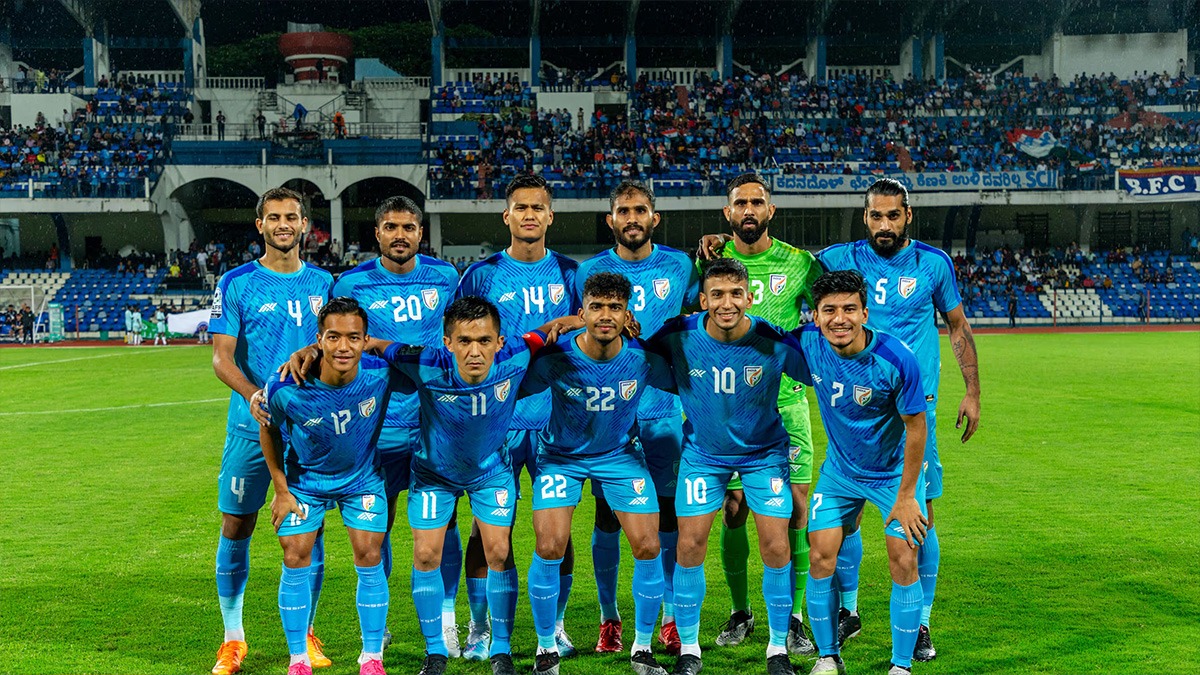
Indian football has been gradually moving in the right direction, especially after Khalid Jamil was appointed as the head coach. His arrival has brought a fresh perspective and a renewed sense of discipline to the squad. A clear highlight under his guidance was the recently concluded CAFA Nations Cup, where Team India displayed impressive performances against some of the region’s strongest teams. The team not only secured wins but also demonstrated improved tactical awareness and cohesion on the field.
Following this success, India is now gearing up for the AFC Asian Cup Qualifiers. The inclusion of veteran striker Sunil Chhetri in the squad adds experience and leadership. With strategic planning, better fitness levels, and a focus on teamwork, India is looking to build on its recent successes and establish itself as a competitive force in Asia.
2. What challenges has Indian football faced in the last year?
Despite the progress, the last year has been difficult for Indian football. Many matches were disappointing, largely due to what has been described as “classless football”—a lack of coordination, poor game strategy, and inconsistent performances. These issues reflect deeper systemic problems within Indian football that have hindered its overall growth.
One major area of concern is the Indian Super League (ISL), the top-tier domestic league. A significant number of franchise owners are experiencing financial losses, with some even shutting down operations. This instability not only affects the league’s competitiveness but also limits opportunities for players to develop at a high level consistently. Without a strong domestic structure, it becomes challenging for the national team to maintain performance standards across major tournaments.
Another challenge lies in grassroots talent development. Indian football has struggled to identify and nurture young players effectively. Many promising talents do not receive adequate exposure, training, or opportunities to compete at higher levels. This lack of structured talent development has prevented the emergence of world-class players.
3. How has India performed in regional competitions, and what are the next steps?
On a more positive note, India showed resilience and skill in regional tournaments. A prime example is the SAFF Games held in Sri Lanka, where the team faced its arch-rivals Pakistan. The match was intense and competitive, keeping fans on the edge of their seats. Ultimately, India emerged victorious with a 3-2 win, demonstrating determination and mental strength in high-pressure situations. Such performances are encouraging indicators of the team’s potential when guided with proper coaching and strategy.
Moving forward, the focus for Indian football in 2025 should be multi-pronged:
Strengthening domestic leagues like the ISL to ensure financial stability and high-quality competition.
Enhancing grassroots programs to identify and nurture young talent efficiently.
Maintaining consistency in international tournaments, using experienced players like Sunil Chhetri to mentor younger squad members.
With strategic planning, consistent coaching, and structured talent development, Indian football can continue its upward trajectory. The combination of recent successes, such as the CAFA Nations Cup and SAFF Games, alongside careful attention to systemic challenges, sets a promising path for 2025 and beyond.
Final Perspective:
Indian Football Team have seen epic downfall in last few years, and there are several reason be it tapping talent at the Grassroot levels to highest level has been pretty meager.
Indian Football Team, also needs the concept of Promotion and Relegations concept in their League, and the concept should be done in such a way best could get an opportunity to play in ISL and worst teams should get relegated towards I-League.
Indian Football is expecting a magic under new Coach Khalid Jamil, let’s see how Men in Blue performs under his regime going forward.
| Focus Area | Details |
|---|---|
| Recent Downfall | The Indian Football Team has experienced a significant decline in performance over the past few years, highlighting structural and developmental issues. |
| Grassroots Talent Development | Talent identification and nurturing at grassroots levels have been insufficient, resulting in a limited pool of top-tier players for the national team. |
| League Structure – Promotion & Relegation | Indian football requires a clear promotion and relegation system: top-performing teams from lower leagues (I-League) should get a chance to play in the ISL, while underperforming ISL teams should be relegated to maintain competitiveness. |
| Expectations Under Khalid Jamil | With the appointment of Khalid Jamil as head coach, there is optimism that Indian football could witness a revival. The team’s performance under his leadership will be closely observed in upcoming tournaments. |
| Focus Area | Details |
|---|---|
| Recent Downfall | Indian football has struggled to maintain consistent performance over the last few years. Poor results in international tournaments, lack of tactical cohesion, and inadequate player fitness levels have contributed to the decline. Fans and experts alike have noted the gap between India and stronger Asian teams, underlining the need for structural reforms. |
| Grassroots Talent Development | Talent identification at the grassroots level remains weak. Football academies are unevenly distributed, and many regions with potential talent remain untapped. As a result, the national team often lacks depth, and players fail to reach their full potential. Strengthening youth programs and scouting networks is critical for long-term success. |
| League Structure – Promotion & Relegation | The Indian Super League (ISL) currently lacks a promotion-relegation system. Introducing a clear structure where top I-League teams get promoted to ISL and bottom ISL teams are relegated will increase competitiveness. This ensures that clubs perform consistently while giving emerging teams a fair opportunity to compete at the highest level. |
| Financial and Operational Stability | Many ISL franchises are facing financial challenges, limiting investments in youth development, infrastructure, and coaching staff. Ensuring financial sustainability for clubs will allow better planning, player development, and long-term growth of Indian football. |
| Expectations Under Khalid Jamil | The appointment of Khalid Jamil as head coach has raised optimism. Known for his tactical knowledge and ability to motivate players, Jamil is expected to bring discipline, improve fitness levels, and implement modern football strategies. His focus will likely be on blending experienced players with emerging talent from grassroots programs. |
| Future Vision | For India to compete on the continental stage, a multi-pronged approach is required: improving domestic league structures, strengthening youth development, increasing financial stability, and implementing professional coaching. With these steps, Indian football could regain its competitive edge and consistently challenge stronger Asian teams. |
The training camps have already begun from them and AFC Qualifiers will be played in the October Month, it would be interesting to see how will they fare in the marquee event.