The Commonwealth Games 2026 have already begun in Glasgow where different teams are trying their level best across all domain to make name for themselves and win laurels for country.
The medals crafted have braii architecture crafted in It which is particularly used where specially abled person who can’t see can also read those letters.
This has been created keeping unity in mind especially in reference to Commonwealth Games being held in Glasgow 2026.
It is crafted in Triangle shape, all the formats scripted on the medals have famous Glasgow places embedded in it.
All these designs have been inspired from Finistin Crane, which reminds about past ship based incident.
If you closely observe medals, you would see three step ladders which makes it even more unique.
All these medals have been designed by Milisa Malikova who was born in Bulgariia and currently artist at Glasgow School of Arts.
More Details About Commonwealth Games 2026
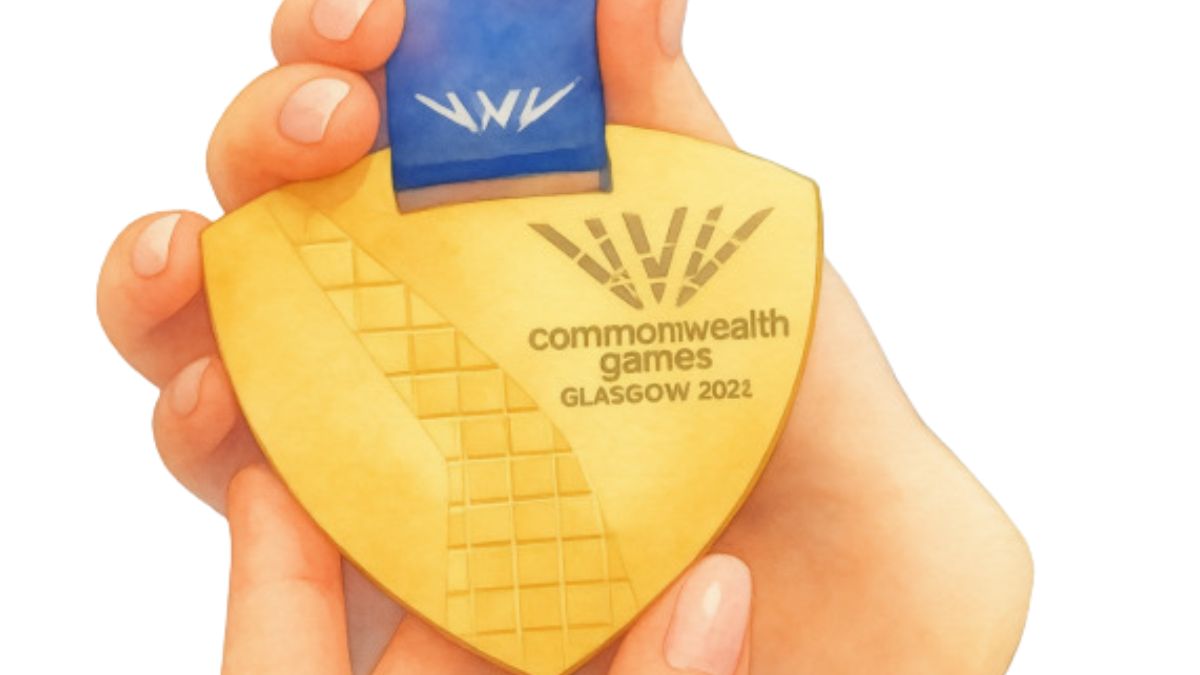
A Masterpiece of Inclusive Design
Designed by Milisa Malikova—a Bulgarian-born artist and an acclaimed talent from the renowned Glasgow School of Art—these medals redefine how triumph is celebrated. Designed with unity at its core, the medal features embedded Braille script across its surface. This tactile architecture ensures that visually impaired athletes can personally read the inscriptions and fully connect with their extraordinary achievements. It serves as a powerful reminder that victory belongs to everyone, breaking barriers in international sports.
Iconic Shapes and Industrial History
Visually striking and unconventional, the medals are crafted in a distinct triangular shape. Every geometric facet and scripted detail pays homage to Glasgow’s iconic skyline and beloved landmarks.
The Finnieston Crane Inspiration: The overarching structural aesthetic takes direct inspiration from the legendary Finnieston Crane—a colossal symbol of Glasgow’s heavy engineering heritage and maritime legacy. It serves as a poignant nod to the city’s rich industrial past and historic ship-building tradition.
The Three-Step Ladder: A close look at the surface reveals a intricate three-step ladder design woven into the metalwork. This feature not only enhances the medal’s unique texture, but also symbolizes the relentless journey of an athlete climbing to the pinnacle of success.
A Lasting Legacy
By seamlessly blending Glasgow’s industrial history with cutting-edge accessible design, Milisa Malikova has created far more than a sporting award. These medals stand as a tangible bridge between the host city’s proud history and a forward-looking vision of universal athletic unity. As champions step onto the podium in Glasgow, they carry home a piece of Scottish heritage that can be seen, felt, and cherished by all.
| Topic | Details |
|---|---|
| Event | The Commonwealth Games 2026 have commenced in Glasgow, Scotland, with athletes from across the Commonwealth competing to win medals and bring glory to their respective nations. |
| What Makes the Medals Special? | The Glasgow 2026 Commonwealth Games medals are designed with inclusivity and accessibility at their core, making them one of the most unique medal designs in the history of the Games. |
| Braille Architecture | The medals feature embedded Braille inscriptions, enabling visually impaired athletes to read the text on their medals through touch. This inclusive design ensures that every athlete can fully connect with their achievement regardless of physical ability. |
| Theme Behind the Design | The overall concept is inspired by the theme of unity, equality, and inclusion, reflecting the Commonwealth Games’ commitment to celebrating athletes from diverse backgrounds and abilities. |
| Shape of the Medal | The medals are crafted in a distinctive triangular shape, setting them apart from traditional circular medals. |
| Glasgow Landmarks | Various inscriptions and design elements engraved on the medals pay tribute to iconic locations and landmarks of Glasgow, showcasing the city’s cultural identity and heritage. |
| Inspiration from Finnieston Crane | The overall structural design is inspired by the Finnieston Crane, one of Glasgow’s most iconic industrial landmarks. The crane symbolizes the city’s historic shipbuilding and engineering legacy, serving as a tribute to Glasgow’s maritime past. |
| Three-Step Ladder Design | A three-step ladder motif is subtly incorporated into the medal’s design. It symbolizes an athlete’s journey of perseverance, hard work, and determination in reaching the highest level of sporting excellence. |
| Designer | The medals were designed by Milisa Malikova, a Bulgarian-born artist currently associated with the Glasgow School of Art. Her design blends artistic innovation with accessibility and cultural storytelling. |
| Inclusive Design Philosophy | The medal represents more than sporting success—it symbolizes universal accessibility, ensuring that achievements can be experienced by all athletes, including those with visual impairments. |
| Connection to Glasgow’s Heritage | By incorporating elements such as the Finnieston Crane and Glasgow’s landmarks, the medals celebrate the city’s rich industrial, engineering, and maritime history while presenting a modern artistic identity. |
| Legacy of the Medal | These medals serve as a lasting symbol of inclusivity, innovation, and Scottish heritage, combining accessible design with Glasgow’s cultural and industrial legacy. They are intended to be treasured not only as sporting awards but also as meaningful works of art that represent unity across the Commonwealth. |