

Why Most Indian Women Players Are Falling in Love with Pickleball?
Pickleball is no longer just a “new sport on the block” in India—it is rapidly becoming a lifestyle choice, especially among women players. From metro cities to tier-2 towns, Indian women of different age groups are picking up the paddle and discovering a sport that is fun, inclusive, and fitness-friendly.
So, what exactly is driving this surge in popularity among women? Let’s break it down.
1. Low Injury Risk, High Fitness Value
One of the biggest reasons Indian women are gravitating toward pickleball is its low injury risk compared.
Pickleball is less physically demanding on the joints. The court is smaller, rallies are shorter, and movements are controlled rather than explosive. This makes it ideal for women who want to stay active without putting excessive strain on their knees, ankles, or shoulders.
For many women—especially working professionals, homemakers, and those returning to sport after a break—pickleball offers the perfect balance between cardio fitness and safety. It improves agility, reflexes, coordination, and stamina, while significantly reducing the chances of long-term injuries.
This is also why women across a wide age range, including 35+, 45+, and even senior players.
2. A Social Sport That Builds Community
Unlike many individual sports, pickleball is deeply social by nature.
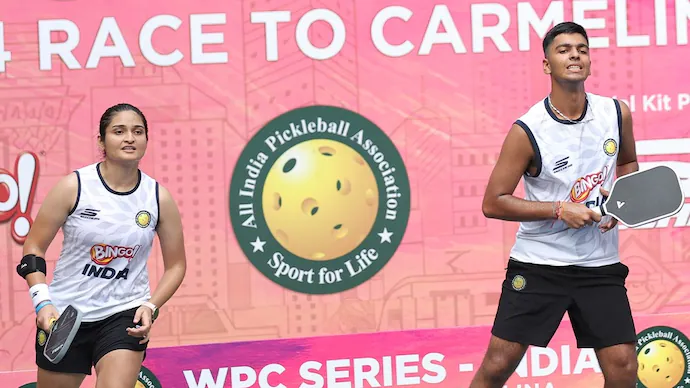
Most games are played in doubles, which naturally encourages conversation, teamwork, and bonding. For Indian women, this aspect has become a major attraction. Whether it’s early-morning games at housing societies or evening sessions at sports clubs, pickleball courts have turned into social hubs.
Women are not just playing—they are connecting, sharing stories, laughing between rallies, and building friendships. The environment is friendly rather than intimidating, competitive yet welcoming.
In a country where community and social interaction matter deeply, pickleball fits seamlessly into the Indian cultural fabric.
3. Easy to Learn, Quick to Enjoy
Another major advantage pickleball offers is its short learning curve.
Unlike tennis or badminton, which may take years to master, pickleball basics can be picked up within a few weeks. Most beginners are able to understand the rules, scoring system, and basic techniques within 1–2 months of regular play.
For Indian women who may be trying a sport for the first time or returning after years. Early success builds confidence, and confidence leads to consistency.
The simplicity of the game ensures that players focus more on enjoyment rather than worrying about complex techniques or advanced footwork.
4. Truly Inclusive for All Genders and Ages
Pickleball stands out as one of the most inclusive sports today.
Men and women can play together, beginners can compete with experienced players, and younger athletes can share the court with seniors. Very few sports allow such seamless integration across age and gender.
For Indian women, this inclusivity is empowering. They are not confined to “women-only” spaces but can confidently play alongside male counterparts in a respectful, balanced environment.
This inclusiveness also makes pickleball perfect for families—husbands and wives, parents and children, friends and colleagues can all play together, strengthening relationships through sport.
5. Rising Popularity and Trend Factor
Pickleball is riding a strong global and national growth wave, and Indian women are very much part of this movement.
With new courts being built in gated communities, clubs, schools, and academies, access to the sport is increasing rapidly. Social media has further amplified its appeal, with fitness influencers, athletes, and lifestyle creators showcasing pickleball as a modern, stylish, and health-driven activity.
For many women, pickleball represents a trendy yet purposeful choice—a sport that aligns with fitness goals, social life, and mental well-being.
It’s not about high-pressure competition; it’s about staying active, feeling good, and being part of something fresh and evolving.
6.
Beyond physical fitness, pickleball also plays a powerful role in mental health.
The fast rallies demand focus, the friendly atmosphere reduces stress, and the social interactions boost mood. For women juggling professional responsibilities, family life, and personal commitments, pickleball offers a much-needed mental reset.
Even a 60-minute session can leave players feeling energized, relaxed, and mentally refreshed—something few workouts manage to achieve consistently.
The Bigger Picture
Pickleball’s rise among Indian women is not accidental. It meets a genuine need—for a sport that is safe, enjoyable, social, inclusive, and rewarding.
As infrastructure improves and awareness grows, more women are expected to embrace pickleball not just as a recreational activity, but as a long-term fitness and lifestyle choice.
This is not just a trend—it’s a movement redefining how Indian women engage with sport.
| Aspect | Why Pickleball Appeals to Indian Women |
|---|
| Growing Popularity | Pickleball has evolved from a new sport into a lifestyle choice for Indian women across metro cities and tier-2 towns. It is seen as fun, inclusive, and fitness-friendly. |
| Low Injury Risk, High Fitness Value | The sport is easy on joints due to a smaller court, shorter rallies, and controlled movements. It reduces strain on knees, ankles, and shoulders while improving agility, reflexes, coordination, stamina, and overall cardio fitness. Ideal for working professionals, homemakers, and women returning to sport after a break, including age groups 35+, 45+, and seniors. |
| Social Sport & Community Building | Mostly played in doubles, pickleball encourages teamwork, conversation, and bonding. Courts in housing societies and sports clubs have become social hubs where women connect, share stories, and build friendships in a friendly and welcoming environment. |
| Easy to Learn, Quick to Enjoy | Pickleball has a short learning curve. Beginners can understand rules, scoring, and techniques within a few weeks, with noticeable improvement in 1–2 months. Early success builds confidence and encourages regular participation without the pressure of mastering complex techniques. |
| Inclusivity Across Genders & Ages | Men and women can play together, beginners can compete with experienced players, and seniors can share courts with younger players. This inclusivity empowers women to play confidently in mixed groups and makes the sport ideal for families and social circles. |
| Rising Trend & Accessibility | The sport is growing globally and nationally, with new courts coming up in gated communities, clubs, schools, and academies. Social media and influencers have positioned pickleball as a modern, stylish, and health-driven activity. |
| Mental Health Benefits | Fast rallies improve focus, while the friendly and social environment helps reduce stress. For women managing work, family, and personal commitments, pickleball offers mental relaxation and emotional refreshment. A 60-minute session often leaves players energized and mentally relaxed. |
| The Bigger Picture | Pickleball meets the need for a sport that is safe, enjoyable, social, inclusive, and rewarding. With better infrastructure and awareness, more Indian women are adopting it as a long-term fitness and lifestyle choice—making it a movement rather than a passing trend. |