The Pickleball Ecosystem in South Asia (2026): Opportunities, Challenges, and the Road Ahead
Pickleball has emerged as one of the fastest-growing sports globally, and South Asia is beginning to experience the impact of this remarkable growth. Combining elements of tennis, badminton, and table tennis, the sport has attracted participants of all ages due to its accessibility, affordability, and social nature.
While North America continues to dominate the global pickleball landscape, South Asia is gradually developing its own ecosystem. As of 2026, India has established itself as the clear regional leader, while countries such as Sri Lanka, Bangladesh, Nepal, Bhutan, and the Maldives are still building the foundations necessary for long-term growth.
India: The Regional Leader
India remains the undisputed leader of pickleball development in South Asia. Over the past few years, the country has witnessed significant growth in participation, infrastructure, tournaments, and private investment. Dedicated pickleball facilities have expanded across major metropolitan cities, including Mumbai, Delhi, Bengaluru, Hyderabad, Pune, and Chennai.
The sport has particularly benefited from increasing interest among corporate professionals, fitness enthusiasts, former tennis players, and recreational athletes. Private academies, leagues, and community-led tournaments have created a strong foundation for future growth.
Despite its success, India continues to face challenges related to governance, federation disputes, and the need for a unified development strategy. Addressing these issues will be critical if the country aims to become a major global pickleball market.
Sri Lanka: Growing Through Community Participation
Sri Lanka has witnessed a steady increase in pickleball awareness, particularly among urban communities and sports clubs. The sport is gaining popularity among younger participants and working professionals looking for recreational fitness activities.
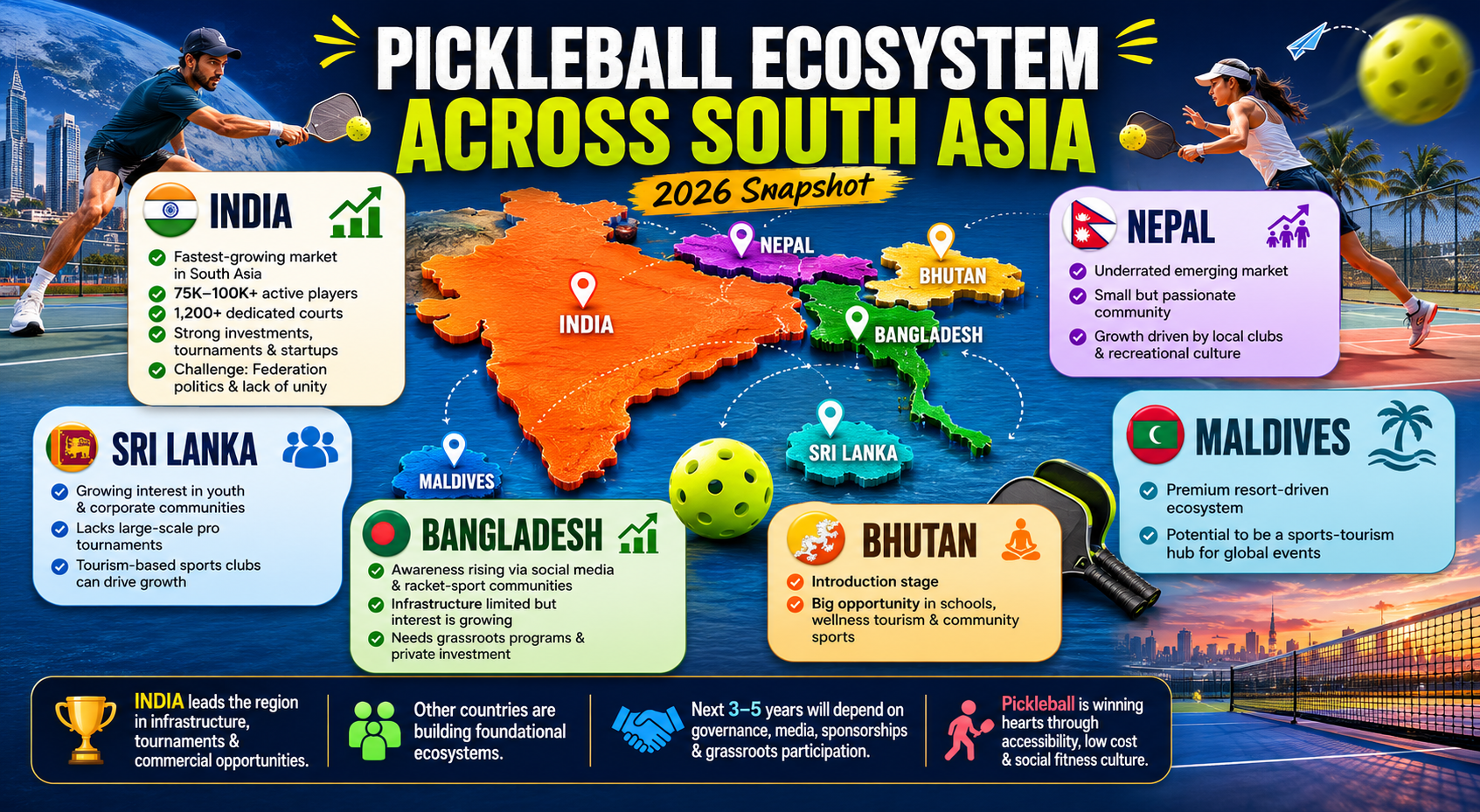

The country’s strong tourism sector presents an opportunity for pickleball clubs and resorts to attract both domestic and international players. However, Sri Lanka currently lacks structured national competitions, professional leagues, and large-scale development programs.
With greater investment and organizational support, Sri Lanka has the potential to become one of the region’s most active emerging pickleball markets.
Bangladesh: Building Momentum
Bangladesh is still in the early stages of pickleball development, but interest in the sport is growing rapidly. Social media exposure and increasing awareness among racket-sport enthusiasts have contributed to the sport’s visibility.
Community-driven initiatives and recreational clubs are playing an important role in introducing new participants to the game. However, the country faces challenges related to limited infrastructure, a shortage of dedicated courts, and insufficient grassroots programs.
If supported by private investors and sports organizations, Bangladesh could become a significant growth market over the next decade.
Nepal: An Underrated Emerging Market
Nepal may currently have a relatively small pickleball community, but it possesses many characteristics that support long-term growth. The country’s active sports culture, community-oriented approach, and growing interest in recreational activities provide a strong foundation for expansion.
Most development has been driven by local clubs and passionate advocates who are introducing the sport to new audiences. While infrastructure remains limited, participation levels continue to increase gradually.
As awareness grows, Nepal could emerge as one of South Asia’s most promising pickleball markets.
Bhutan: Early-Stage Opportunities
Bhutan remains at the introductory stage of pickleball development. However, the country offers unique opportunities due to its focus on community well-being, education, and healthy lifestyles.
Schools, wellness programs, and local sports initiatives could play an important role in introducing the sport to younger generations. The country’s emphasis on recreational and community activities aligns well with pickleball’s inclusive nature.
Although growth is likely to be gradual, Bhutan has the potential to build a sustainable ecosystem over time.
Maldives: A Sports Tourism Opportunity
The Maldives presents a unique case within the South Asian pickleball landscape. Rather than focusing solely on domestic participation, the country has the opportunity to leverage its world-renowned tourism industry.
Luxury resorts and international visitors are increasingly embracing recreational sports as part of their travel experiences. Pickleball courts and organized events could become attractive additions to the Maldives’ sports tourism offerings.
With strategic investment, the Maldives could position itself as a premium destination for regional and international pickleball events.
The Future of Pickleball in South Asia
The South Asian pickleball ecosystem remains in its formative stages, but the long-term outlook is highly promising. India currently leads the region in infrastructure, participation, and commercial opportunities, while neighboring countries are steadily building their foundations.
The next five years will be defined by investment, governance, grassroots development, media coverage, sponsorship support, and community engagement. As awareness continues to grow, pickleball has the potential to become one of the most widely played recreational sports across South Asia.
For stakeholders in sports business, facility development, coaching, technology, and event management, the region represents an exciting opportunity. The pickleball revolution in South Asia has only just begun, and the countries that invest early are likely to benefit the most from its future growth.