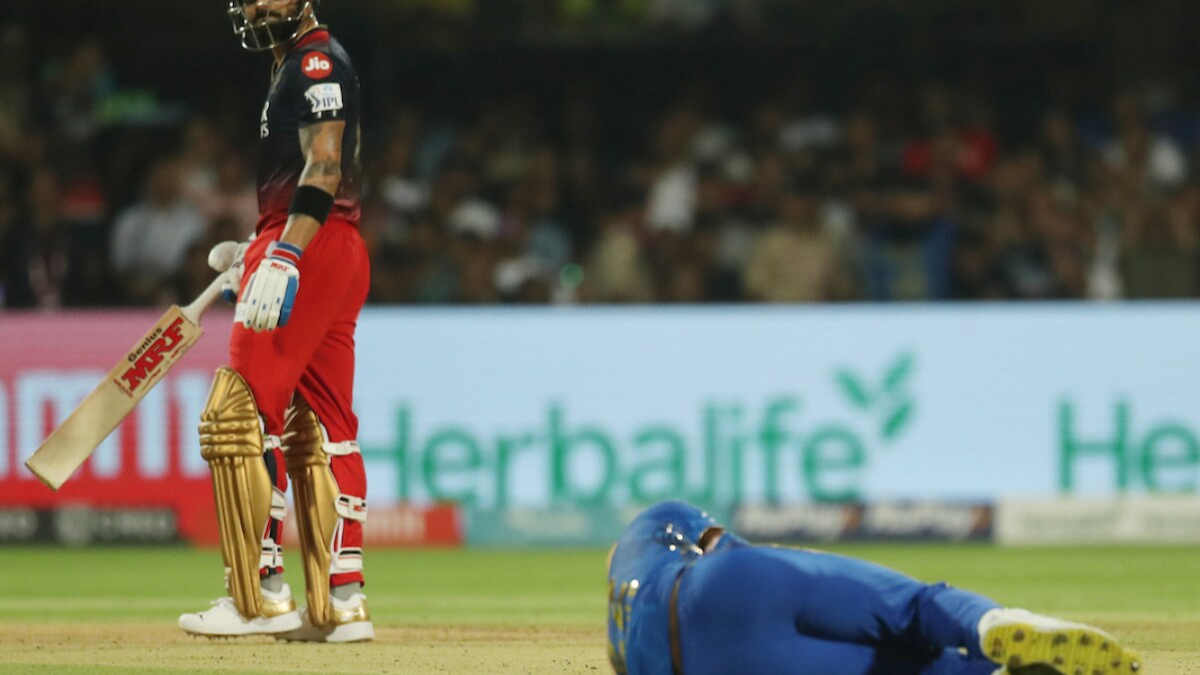
The venue for the IPL 2026 final is suddenly under a cloud, with a political fight over complimentary tickets to legislators putting Bengaluru’s M Chinnaswamy Stadium at risk of losing the showpiece match. The Board of Control for Cricket in India (BCCI) is yet to announce the playoff schedule, and a growing controversy over free passes for MLAs has made the decision more complicated than usual.
According to board officials, the BCCI has been considering both Karnataka and Punjab as hosts for the IPL 2026 playoffs. Bengaluru, as home of defending champions Royal Challengers Bengaluru (RCB), was the natural frontrunner to stage the final, in line with the long‑followed practice of giving last season’s winners the right to host the title match. But the ongoing “MLA ticket” issue has opened the door for the final to be moved to another city if the situation is not resolved in time.
BCCI yet to lock IPL 2026 final venue
BCCI secretary Devajit Saikia has said that the full playoff schedule, including the final, will be announced soon, but sources have indicated that the board is watching developments in Bengaluru very closely. As per an official quoted by ANI, matches are “likely to be divided into Punjab and Karnataka”, but the MLA ticket dispute is a serious stumbling block for confirming the final at the Chinnaswamy Stadium.
The source pointed out that as per convention, the “last time winner should host the final”, which puts RCB’s home ground at the front of the line. However, he also made it clear that if there is no clear solution to the ticket dispute, the BCCI will be forced to shift the final to another venue where there is less off‑field noise and smoother coordination between the local association, administration and security agencies.
The Chinnaswamy Stadium has only recently returned to hosting big events after a stampede during an RCB felicitation event last year led to major questions around safety and crowd control. With that fresh in mind, the board is keen that any venue hosting the final offers a stable environment, both on the security front and on the political front.
How the MLA ticket controversy started
The current row began when Congress MLA Vijayanand Kashappanavar went public with his demand that all elected representatives in Karnataka should receive multiple complimentary tickets for IPL matches in Bengaluru. He argued that MLAs are “VIPs” and should not be made to stand in queues like ordinary spectators, which sparked strong reactions both within and outside the Assembly.
Soon, legislators across party lines raised the issue formally. Many of them complained that they were not being treated with the “respect” they felt they deserved at the stadium and pushed for at least five tickets per MLA, along with special seating or lounge access in the stands. The demand was framed as a matter of protocol and status, but it quickly turned into a larger debate over who should get priority at a venue where tickets are already limited and highly priced.
The Karnataka State Cricket Association (KSCA), which runs the M Chinnaswamy Stadium, also came under fire during this phase. Some leaders pointed out that the stadium stands on government land leased for a very low rent, often quoted as around ₹19,000 a year, which comes to less than ₹1,600 per month. This low lease amount has been repeatedly cited in public discussions to argue that the association owes more “cooperation” to elected representatives and the government.
Government steps in and a compromise is announced
As tempers rose, Karnataka Deputy Chief Minister D.K. Shivakumar stepped in to try and cool down the situation. After meetings with KSCA officials, representatives of RCB and event partners, he announced that each MLA would receive complimentary tickets for IPL games in Bengaluru.
Initially, he spoke about two tickets per MLA, MP and minister for the opening match, after Speaker U.T. Khader had asked the government to secure four VIP tickets for each legislator. But after further talks, the final arrangement settled at three free tickets for each MLA and MP for IPL matches at the Chinnaswamy Stadium. Shivakumar said that several states provide a large share of tickets to public representatives and officials, and argued that Karnataka was actually more restrained in its approach.
Under the revised plan, MLAs would also get two free tickets for international matches in Bengaluru, with the option of buying two more if needed. This was presented as a balanced solution that recognised the demands of legislators without putting too much pressure on the ticket pool. However, the compromise did not fully end the public criticism around what many labelled as “VIP culture”.
Non‑transferable passes and concern about misuse
Even after the official decision, there were concerns that complimentary tickets might be misused, passed on to friends, party workers or brokers instead of being used by the MLAs themselves. In response, Karnataka Home Minister G. Parameshwara clarified that the tickets issued to elected representatives would be non‑transferable and meant only for the MLAs, MLCs, MPs or their immediate family members.
This condition was meant to prevent the passes from entering the resale market and to reduce allegations of black marketing or unfair access. But the matter continued to stay in the news, with repeated questions about how many tickets should go to VIPs when ordinary buyers often struggle to secure seats online or at counters.
Split views among legislators
Interestingly, not every MLA has supported the demand for free tickets. While some legislators strongly defended the need for special access, others refused to take the complimentary passes at all. Leaders such as S. Suresh Kumar and a few others have openly said they do not want the tickets, and that the focus should stay on public services rather than special perks at cricket matches.
Opposition leaders have also used the issue to criticise the ruling side and to highlight what they see as a deeper problem of entitlement among political classes. On the other hand, some members from the ruling party have argued that such arrangements for elected representatives are common across Indian states and should not be blown out of proportion.
This mix of support and pushback has led to an unusual situation, where a part of the political class is pressing for more access while another part is pushing away from it on moral or public‑image grounds.
Public backlash and social media anger
Outside the Assembly, the reaction has been much more one‑sided. Many ordinary viewers and social media users have sharply criticised the demand for free tickets for MLAs, especially at a time when IPL tickets in Bengaluru are costly and often sold out quickly.
Reports and debates on TV channels and digital platforms have highlighted how the row over VIP passes has turned into a flashpoint over “VIP mindset” and fairness in public spaces. Critics have argued that if hundreds of complimentary tickets are set aside for politicians and other VIPs, it leaves fewer seats for regular buyers who pay full price and still struggle to get into the stadium.
The matter has also revived old discussions around the stadium’s location and land lease. Civil groups in Bengaluru have in the past questioned why a major sports venue and club sit on government land with such a low rent and have called for the lease terms to be reviewed. The current ticket row has given those voices new visibility.
Why the row worries BCCI planners
For the BCCI, all of this adds a level of difficulty to what is usually a straightforward decision on playoff venues. The IPL final is not just another game; it demands tight coordination between the board, the host association, police, local government and various agencies. It also involves sponsors, VIP guests, foreign visitors and a global television audience.
The ticket controversy has meant repeated public statements, political debates and policy changes in a short span of time. From one seat per MLA to demands for five, to two tickets, and finally to a three‑ticket formula, the situation has looked fluid and sometimes tense. If fresh disputes arise closer to the final, they could affect ticket allocations, seating plans and even security arrangements at the Chinnaswamy Stadium.
Alongside that, the memory of the stampede during the RCB felicitation event last year at the same venue still lingers. In that incident, crowd flow and safety measures came under sharp focus, prompting calls for better planning and stricter control for future big gatherings. Combining that recent history with the current political noise, the BCCI is naturally cautious about locking in Bengaluru for the biggest night of the season.
KSCA caught between politics and cricket
The Karnataka State Cricket Association finds itself in a difficult position too. On one side, it has to work with the government, which controls the land and provides security support for matches. On the other, it must also protect the interests of paying spectators, members, sponsors, players and broadcasters.
With legislators publicly accusing the KSCA of “disrespect” and pushing for more VIP access, the association has had to defend its ticketing policies while still agreeing to new quotas for MLAs and MPs. At the same time, it is under pressure from public opinion, with many fans criticising what they see as too much focus on special treatment for politicians.
Despite all this, the Chinnaswamy Stadium has continued to host high‑profile IPL games this season, and the KSCA has been praised in some quarters for bringing back major events after the stampede episode. Even so, the continuing noise around MLA tickets and VIP privileges means the association remains at the centre of a debate that stretches well beyond cricket.
Final decision still in BCCI’s hands
For now, the official word is that the BCCI will announce the IPL 2026 playoffs and final schedule “soon”, with both Punjab and Karnataka in the frame. Bengaluru remains the natural choice on cricketing tradition and fan base, but the MLA ticket row has clearly weakened its hold on the final.
If the board feels that the political debate around tickets could affect planning or smooth conduct on match day, it has the option to shift the final to another city with fewer distractions. Until a final call is made, the M Chinnaswamy Stadium will continue to sit at the centre of one of the most unusual off‑field stories of IPL 2026, where free passes and VIP tags have become as much a talking point as runs and wickets.