Pickleball Trivia: Let’s Decode Hidden Cost of Playing Pickleball
The Pickleball as Sport is regarded as one of the fastest growing entity around the world and Credit should be given to decision makers who have worked hard behind the scenes to make it one of the most popular sport in India as well as World.
The game which started in US for the year 1965, by Joel Pritchard and two friends (Bill Bell and Barney Mccullum) where they were getting bored sitting in their old badminton house.
They lower down court due to lack of shuttlecock started playing with wooden paddles and whiffle ball later they realized that they have discovered they have built new sport which is a combination of Tennis, Badminton as well as Table Tennis later they coined as Pickleball.
However there are distinct theories behind keeping this name to be shared in the below format:
1. Many Experts believe Joel Pritchard kept these name as the house in which popular game was discovered had a pet called Pickle eventually the name became Pickleball.
2. However, Joel Pritchard confirmed it in distinct media outlets, the sport name was coined from Pickleboat( Which is small boat made from leftover equipment from the biggest one) he believed that sport is also discovered using leftover equipment.
Pritchard was popular socialist, business man and many other hats he wore as per his daughter his father in his last days was extremely proud of one thing that he discovered one sport.
Pickleball as Sports with proper channeling and federations principles have taken giant strides in their arms to become phenomenal force in ecosystem.
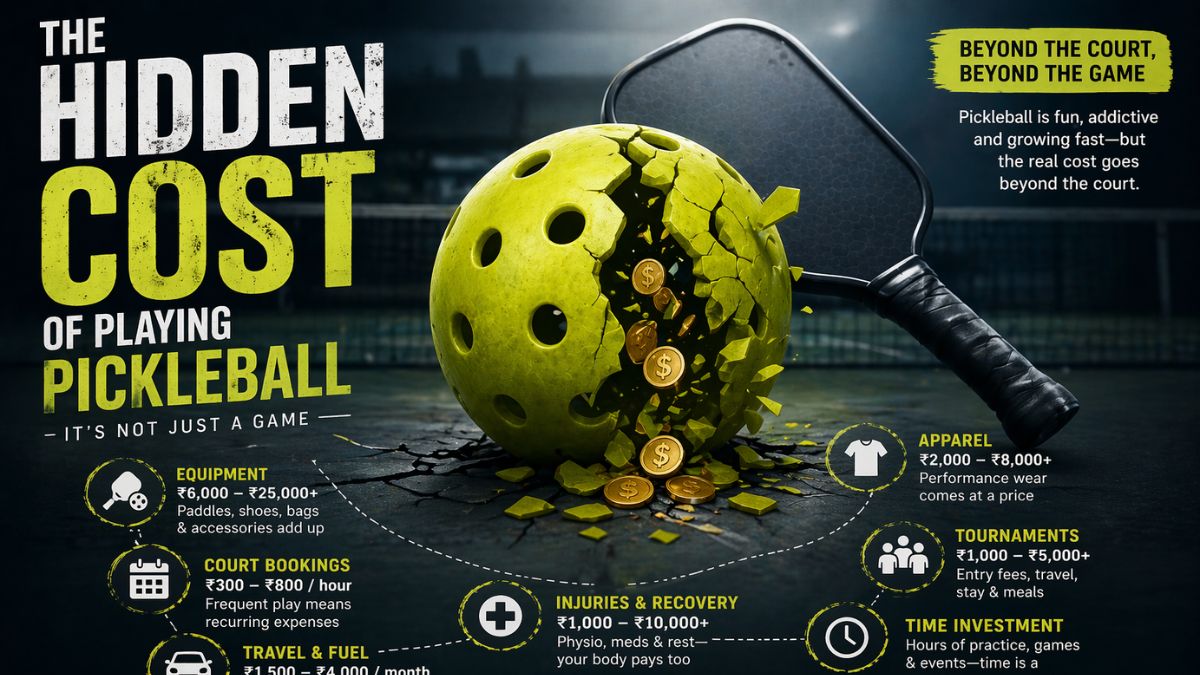
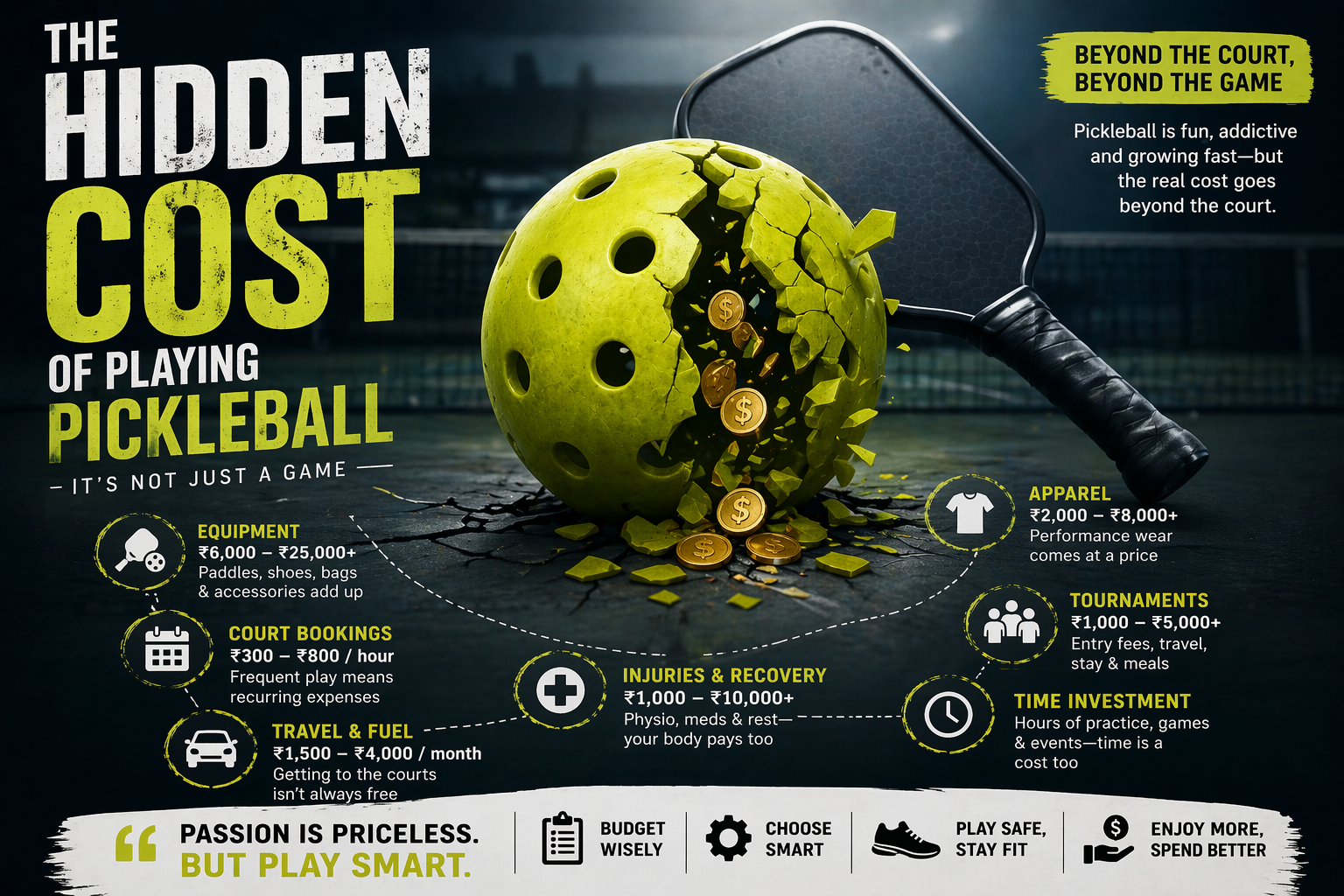
Many People firmly believe that Pickleball is not most expensive sport however it doesn’t hold true let me share some of the hidden cost involve in Pickleball to be shared in the below format:
The answer would be “Yes” let me give you that bifurcation in Detail:
But here’s what most people don’t talk about 👇
While the initial setup looks simple (a paddle and a few balls), the real cost starts adding up over time:
• Quality paddles: ₹3,000 – ₹15,000
• Court bookings: ₹300 – ₹800 per hour
• Coaching: ₹1,500 – ₹5,000/month
• Additional costs: shoes, tournaments, travel, memberships
For casual players, it’s manageable.
But for anyone looking to improve, compete, or stay consistent—it quickly turns into a ₹5,000–₹20,000/month commitment.
👉 The insight:
Pickleball is not just a sport anymore—it’s evolving into a lifestyle expense category, especially among urban professionals.
And that raises an interesting question for the ecosystem:
Are we building an inclusive sport… or a premium recreational niche?
Overall Pickleball to start with is not costly but the moment you start playing at even further you need to bear additional cost which include- specs, hat and many more things
Pickleball is often marketed as an “easy-to-start, low-cost sport,” and at the entry level, that is absolutely true. However, as soon as a player moves beyond the beginner stage, the deeper layers of cost within the ecosystem start to become more visible.
The first hidden layer is the equipment upgrade cycle. Learning the game with a basic paddle is one thing, but as players begin to improve their control, spin, and power, they naturally shift toward higher-quality graphite or carbon fiber paddles. This is not a one-time expense—paddles wear out, grips lose their effectiveness, and upgrades every 6–12 months become quite common. Additionally, balls need frequent replacement, especially for outdoor play where durability is a concern.
The second major factor is court accessibility and peak-hour pricing. In urban cities, court charges during evenings and weekends are significantly higher. For working professionals, these are the only viable playing hours, which means consistently paying premium rates. Many high-end facilities also operate on membership models, where annual fees can range anywhere between ₹15,000 to ₹50,000.
The third aspect is the cost of community and networking. Pickleball in India is rapidly evolving into a social sport. People are not just playing for fitness, but also for networking and lifestyle. This includes weekend mixers, private leagues, and corporate tournaments—where entry fees, travel, and even apparel expectations start adding up. Over time, there is an unspoken “fit-in cost” to remain an active part of the ecosystem.
Another overlooked layer is injury prevention and recovery. With regular play, issues like ankle strain, knee stress, and elbow injuries are becoming increasingly common. To manage this, players often invest in physiotherapy sessions, recovery tools like foam rollers, compression gear, and sometimes even sports massages. These health-related expenses quietly increase the monthly cost of playing.
A growing factor, especially in today’s digital age, is the cost of content and visibility. For individuals looking to build a personal brand in pickleball, simply playing is no longer enough. Creating reels, match highlights, and training content requires additional investment in equipment like tripods, cameras, editing tools, and most importantly, time. While this may generate returns in the long run, it is still an indirect cost that many overlook.
Finally, there is the rise of aspiration-driven spending. As players see international tournaments, brand endorsements, and influencers gaining traction, they begin to envision themselves on a similar path. This naturally pushes them to invest more—better coaching, higher-quality gear, and participation in competitive tournaments.
In essence, pickleball remains simple at its core, but its ecosystem is becoming increasingly premium. The sport is gradually splitting into two distinct layers:
Casual, community-driven play (low cost)
Competitive, aspirational ecosystem (high recurring cost)
The real question is not whether pickleball is expensive or not—but whether its growth will remain inclusive as commercialization increases.
If this balance is not maintained, there is a risk that pickleball could shift from being a mass sport to a premium urban niche. And that transition will ultimately define the future of the sport’s ecosystem.
Pickleball: Origin, Growth & Hidden Cost Analysis
| Section | Details |
| Global Growth | Pickleball is regarded as one of the fastest-growing sports globally. Its rise in India and worldwide is largely due to strategic decisions by key stakeholders and administrators working behind the scenes. |
| Origin of the Sport (1965) | The sport was invented in the USA in 1965 by Joel Pritchard, Bill Bell, and Barney McCallum. It started as a casual activity when they improvised a game using wooden paddles and a whiffle ball due to the unavailability of proper badminton equipment. |
| Game Evolution | The founders lowered the court and combined elements from Tennis, Badminton, and Table Tennis, eventually creating a completely new sport called Pickleball. |
| Naming Theory 1 | Some experts believe the sport was named after a pet dog called “Pickle” that belonged to the household where the game was invented. |
| Naming Theory 2 (Confirmed) | Joel Pritchard clarified that the name comes from “Pickleboat,” referring to a boat made from leftover rowing crew members—symbolizing that the sport was created using leftover equipment. |
| Founder’s Legacy | Joel Pritchard, a businessman and public figure, was most proud of inventing a sport that gained global recognition, as shared by his daughter. |
| Growth of Ecosystem | With structured federations and organized efforts, Pickleball has rapidly evolved into a strong and influential sporting ecosystem. |
Is Pickleball Expensive? – Cost Breakdown
| Cost Category | Details / Range |
| Initial Setup | Appears low-cost (basic paddle + balls) |
| Quality Paddles | ₹3,000 – ₹15,000 |
| Court Bookings | ₹300 – ₹800 per hour |
| Coaching Fees | ₹1,500 – ₹5,000/month |
| Additional Costs | Shoes, tournaments, travel, memberships |
| Monthly Commitment | ₹5,000 – ₹20,000 (for serious players) |
| Conclusion | Affordable for casual play, but expensive for competitive or consistent players |
Hidden Cost Layers in Pickleball
| Category | Explanation |
| Equipment Upgrade Cycle | Players frequently upgrade paddles (every 6–12 months). Balls also need regular replacement, especially for outdoor use. |
| Court Accessibility | Peak-hour pricing increases costs for working professionals. Premium clubs charge ₹15,000–₹50,000 annually. |
| Community & Networking Cost | Participation in leagues, mixers, and tournaments adds entry fees, travel, and lifestyle-related expenses. |
| Injury & Recovery Cost | Expenses on physiotherapy, recovery gear, and injury management increase with frequent play. |
| Content Creation Cost | Players building a personal brand invest in cameras, tripods, editing tools, and time for content production. |
| Aspiration-Driven Spending | Exposure to professional circuits and influencers pushes players to invest more in coaching, gear, and tournaments. |
Ecosystem Insight
| Aspect | Observation |
| Sport Nature | Simple and accessible at the beginner level |
| Current Trend | Rapid shift towards a premium, lifestyle-driven sport |
| Two Emerging Segments | 1. Casual players (low cost) 2. Competitive/aspirational players (high cost) |
| Key Concern | Whether Pickleball will remain inclusive or become a premium urban niche |
| Final Thought | The future of Pickleball depends on maintaining a balance between accessibility and commercialization |
Overall Pickleball has been doing great in terms of grow wise, exponential rise and other things but systematic channeling is required with appropriate step to take it next level.
Let’s see how this game move forward in times to come.