The Board of Control for Cricket in India (BCCI) is reportedly preparing to introduce stricter anti-corruption measures during the IPL 2026 final, with sunglasses and certain smart wearable devices likely to face tighter scrutiny or restrictions around team dugouts and support staff areas. The move is believed to be part of a larger effort by the BCCI Anti-Corruption Unit (ACU) to strengthen communication monitoring and reduce any possibility of unauthorized message transfers during high-pressure matches.
Over the years, the Indian Premier League has evolved into one of the biggest sporting leagues in the world, attracting enormous global attention, sponsorship value, and betting activity. With such high stakes involved, maintaining the integrity of the competition has become one of the BCCI’s biggest responsibilities. The ACU has consistently worked behind the scenes to monitor suspicious activities, player interactions, unauthorized communications, and possible breaches of IPL operational guidelines.
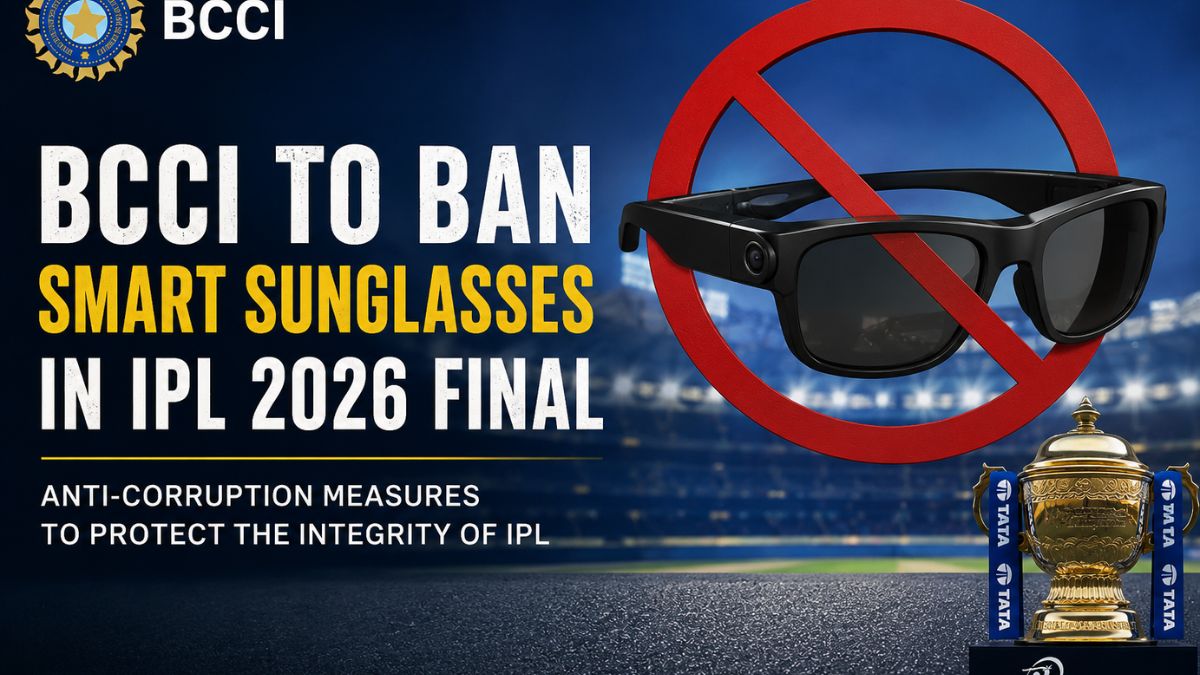
According to reports circulating within cricket circles, the latest concern revolves around the increasing use of smart accessories and communication-enabled devices around team environments. Modern sunglasses, smart glasses, and wearable gadgets can now include hidden microphones, Bluetooth support, live communication tools, and even recording capabilities. Officials reportedly fear that such technology could potentially be misused to relay tactical instructions, betting-related information, or unauthorized signals during live matches.
The IPL has already witnessed several incidents in previous seasons where players, team officials, and support staff were warned or investigated for breaching league operational protocols. While many of these incidents were minor and related to communication restrictions inside dugouts or dressing rooms, the BCCI appears determined to prevent even the smallest loopholes during marquee events like the IPL final.
The Narendra Modi Stadium in Ahmedabad is expected to host a packed crowd for the IPL 2026 final on May 31, making it one of the biggest cricketing occasions of the year. With massive global television audiences and digital streaming numbers expected, the BCCI wants to ensure that the event remains completely secure from an anti-corruption perspective. Sources suggest that stricter surveillance protocols, additional ACU officers, and tighter restrictions around team movement could all become part of the final’s operational planning.
One of the biggest talking points surrounding the proposed restriction is whether the ban would apply only to players and coaching staff inside the dugout or extend to broadcasters, analysts, and other personnel operating near the field of play. Since many modern devices now contain hidden smart features, enforcing such rules could become operationally challenging. However, the BCCI reportedly believes that taking preventive measures is better than reacting after a controversy emerges.
Cricket boards across the world have increasingly tightened integrity measures in recent years because of technological advancements. The rise of online betting markets, instant communication tools, and artificial intelligence-based tracking systems has created new challenges for anti-corruption officials globally. The BCCI’s latest reported move reflects how seriously administrators are treating even indirect communication possibilities during live games.
Interestingly, this development could also change how support staff interact with players during matches. Coaching staff have become increasingly dependent on data analytics, real-time tactical inputs, and communication support during IPL games. If restrictions become stricter, teams may need to rely more heavily on pre-match planning rather than live tactical messaging during critical moments.
Fans and experts are likely to have mixed opinions about the move. Some will appreciate the BCCI’s aggressive approach toward protecting the league’s integrity, especially considering the IPL’s global financial and sporting value. Others may argue that excessive restrictions could make operational management more complicated for players and support personnel.
Nevertheless, the BCCI appears focused on sending a strong message ahead of the IPL 2026 final. The governing body wants to ensure that the tournament’s credibility remains untouched and that all teams operate within clearly monitored guidelines. It will now be interesting to see how strictly these measures are implemented and whether they become a permanent feature in future IPL seasons.
As cricket continues to modernize alongside technology, anti-corruption systems will also need to evolve rapidly. The IPL final could therefore become another major example of how sports organizations are adapting to new-age integrity challenges in one of the world’s most commercially valuable cricket tournaments.
| Topic | Details |
|---|---|
| Main Development | Board of Control for Cricket in India (BCCI) is reportedly planning stricter anti-corruption measures during the IPL 2026 final |
| Proposed Restriction | Sunglasses and smart wearable devices may face restrictions around dugouts and team areas |
| Reason Behind Move | To prevent unauthorized communication, hidden messaging, and possible transfer of instructions during matches |
| Monitoring Authority | BCCI Anti-Corruption Unit (ACU) |
| Main Concern | Smart sunglasses and wearable devices may contain Bluetooth, microphones, recording systems, or communication tools |
| Objective | Protect the integrity and transparency of IPL matches |
| Tournament Importance | IPL is one of the world’s biggest cricket leagues with massive global audience and betting activity |
| Past Incidents | There have reportedly been previous cases where players and support staff breached IPL operational protocols |
| Nature of Previous Breaches | Communication violations, operational misconduct, and possible unauthorized interactions |
| Venue of IPL 2026 Final | Narendra Modi Stadium |
| Match Date | May 31, 2026 |
| Additional Security Measures | Extra ACU officers, tighter surveillance, and stricter movement monitoring around teams |
| Operational Challenge | Identifying hidden smart features in modern wearable devices could become difficult |
| Impact on Teams | Coaching staff may rely less on live communication and more on pre-match tactical planning |
| Technology Concern | Online betting markets and advanced communication systems have increased integrity risks globally |
| Possible Rule Scope | Restrictions could potentially apply to players, coaches, support staff, analysts, and nearby personnel |
| Fan Reactions | Some fans may support stronger integrity measures, while others may feel rules are becoming too strict |
| BCCI’s Core Message | The governing body wants to maintain IPL credibility and prevent any possible corruption loopholes |
| Long-Term Possibility | These measures could become permanent in future IPL seasons |
| Overall Conclusion | IPL 2026 final may become a major example of how cricket is adapting to modern anti-corruption and technology-related challenges |
Q. Why is BCCI reportedly planning stricter anti-corruption measures, including restrictions on sunglasses and smart wearable devices, during the IPL 2026 final?
The Board of Control for Cricket in India is reportedly preparing stricter anti-corruption protocols during the IPL 2026 final because of growing concerns around modern communication technology and possible loopholes inside team environments. According to discussions surrounding the tournament, the Anti-Corruption Unit believes that certain smart devices, including advanced sunglasses, wearable gadgets, and communication-enabled accessories, could potentially be misused for relaying instructions, passing hidden messages, or sharing unauthorized information during live matches. Since the IPL remains one of the biggest cricket leagues globally with enormous financial value, betting activity, and worldwide attention, maintaining transparency and integrity has become extremely important for the governing body.
The concern is not limited to players alone. Reports suggest that support staff, analysts, coaches, and individuals operating close to the dugout areas may also come under tighter monitoring during the final. Over the years, there have been instances where IPL operational guidelines and communication rules were reportedly breached, leading officials to strengthen preventive measures before controversies emerge. The Narendra Modi Stadium in Ahmedabad is expected to host one of the most watched cricket matches of the year, which increases the need for tighter security and stronger operational discipline.
The BCCI reportedly wants to avoid even the smallest possibility of unauthorized communication during such a massive sporting event. While some fans may view these rules as excessive, others believe strict action is necessary to protect the credibility and reputation of the IPL in the long term against future corruption-related risks and controversies globally.
| Topic | Details |
|---|---|
| Main Reason Behind Restrictions | Board of Control for Cricket in India is reportedly strengthening anti-corruption protocols because of concerns around modern communication technology and loopholes inside team environments |
| Monitoring Authority | BCCI Anti-Corruption Unit (ACU) |
| Devices Under Scrutiny | Smart sunglasses, wearable gadgets, Bluetooth-enabled accessories, and communication-enabled devices |
| Core Concern | Devices could potentially be misused for relaying instructions, passing hidden messages, or sharing unauthorized information during live matches |
| Importance of IPL Integrity | IPL is one of the world’s biggest cricket leagues with huge financial value, betting activity, and global attention |
| Main Objective | Maintain transparency, discipline, and integrity during high-pressure matches |
| Individuals Potentially Monitored | Players, support staff, coaches, analysts, and personnel near dugout areas |
| Past Concerns | There have reportedly been earlier cases involving breaches of IPL operational and communication guidelines |
| Preventive Strategy | Officials want to strengthen monitoring before any controversy or security issue emerges |
| IPL 2026 Final Venue | Narendra Modi Stadium |
| Security Importance | The final is expected to become one of the most watched cricket matches globally |
| Technology Challenge | Modern devices now support hidden audio communication, Bluetooth transmission, recording, and live data sharing |
| BCCI’s Priority | Prevent even the smallest possibility of unauthorized communication |
| Possible Impact on Teams | Coaching staff and support teams may face tighter operational restrictions during matches |
| Fan Reactions | Some fans may support stronger integrity measures, while others may view them as excessive |
| Long-Term Goal | Protect the credibility and reputation of IPL from corruption-related risks and controversies globally |
| Overall Conclusion | The BCCI wants to ensure that the IPL 2026 final operates under strict integrity and anti-corruption standards in the modern technology era |