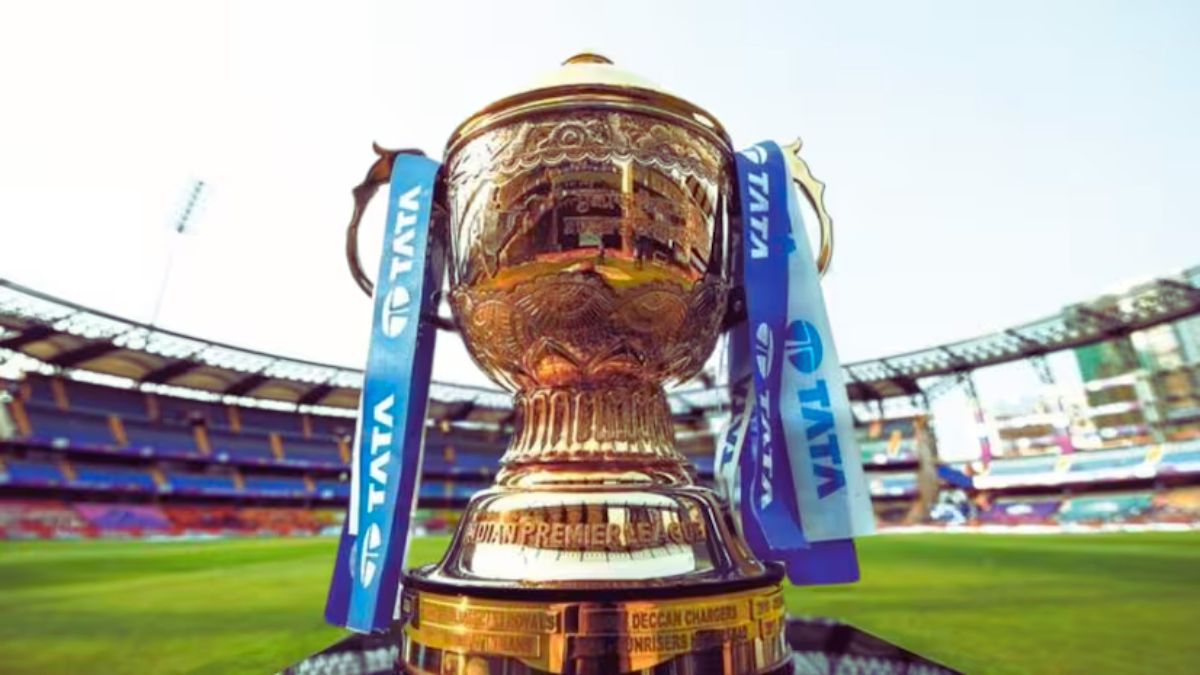
The Indian Premier League (IPL) 2026 final will be played at the Narendra Modi Stadium in Ahmedabad on 31 May, instead of the M Chinnaswamy Stadium in Bengaluru, which is home to the defending champions Royal Challengers Bengaluru (RCB). The Board of Control for Cricket in India (BCCI) has also confirmed that the playoffs will be split across three venues this season – Dharamsala, New Chandigarh (Mullanpur) and Ahmedabad – due to what it calls “operational and logistical considerations.”
IPL 2026 final shifts from Bengaluru to Ahmedabad
The BCCI has officially announced that the IPL 2026 title clash will be hosted by the Narendra Modi Stadium in Ahmedabad, the world’s largest cricket stadium by capacity. This means Bengaluru, which was widely expected to get the final as per the usual practice of giving the summit clash to the defending champions’ home ground, will not stage the match.
In its announcement, the board confirmed that Bengaluru was “originally designated” to host the final before the venue was changed and reassigned to Ahmedabad as a “special case.” The decision comes after the completion of the league phase, which ends on 24 May, and sets up a high-profile closing week for the tournament across three different cities.
Official BCCI explanation on venue change
The BCCI has said the change in final venue is the result of “certain operational and logistical considerations” and specific demands from local authorities and the association that did not fit within its set rules. In its official note on the IPL website, the board stated that the playoffs will take place across three venues “as a special case” for the 2026 season.
The statement further clarified that while Bengaluru had been picked initially, “certain requirements from the local association and authorities” were “beyond the scope of BCCI’s established guidelines and protocols,” prompting the move. As a result, the rights to host the final have shifted to Ahmedabad, which has become a preferred venue for major IPL knockout matches in recent years.
IPL 2026 playoffs schedule: dates and venues
According to the official schedule released by the BCCI, the IPL 2026 playoffs will follow the traditional four-match format – Qualifier 1, Eliminator, Qualifier 2 and Final – spread over six days. The knockout phase starts on 26 May and ends with the final on 31 May.
Here is the confirmed schedule for the IPL 2026 playoffs:
| Match | Date | Venue | City |
| Qualifier 1 | 26 May | HPCA Stadium | Dharamsala |
| Eliminator | 27 May | New International Cricket Stadium | New Chandigarh (Mullanpur) |
| Qualifier 2 | 29 May | New International Cricket Stadium | New Chandigarh (Mullanpur) |
| Final | 31 May | Narendra Modi Stadium | Ahmedabad |
Qualifier 1, featuring the top two teams in the league table, will be held at the Himachal Pradesh Cricket Association (HPCA) Stadium in Dharamsala, with a direct place in the final on the line. The Eliminator and Qualifier 2 will both be played at the new Mullanpur venue in New Chandigarh, which continues to grow in importance as a modern cricket stadium.
Structure of the IPL 2026 playoffs
The format of the playoffs remains unchanged from recent seasons. The first and second-placed teams in the points table will meet in Qualifier 1, where the winner goes straight to the final and the loser gets another chance in Qualifier 2.
The Eliminator will see the third and fourth-placed teams face off, with the loser being knocked out and the winner moving forward to meet the loser of Qualifier 1 in Qualifier 2. The winner of Qualifier 2 will then join the Qualifier 1 winner in the final at Ahmedabad on 31 May, completing the journey from league stage to title clash.
Why Bengaluru missed out despite being defending champions’ home
By convention, the defending champions’ home city usually gets to host the IPL final, and after RCB’s maiden title win in 2025, Bengaluru was in line to stage the 2026 final. Reports during and before the season suggested that the M Chinnaswamy Stadium would host either a Qualifier and the final or at least the summit clash itself, following the usual pattern.
However, a series of issues around ticket allocations and local demands created a tense situation between the Karnataka State Cricket Association (KSCA), local political stakeholders and the BCCI. A key factor reported in the build-up was the so-called “MLA ticket issue,” where fixed quotas of tickets for certain groups were said to be a sticking point for the board, especially after recent crowd-related incidents in the city.
Operational and protocol concerns at Chinnaswamy Stadium
Media reports indicated that the BCCI was closely watching developments in Bengaluru even before the playoffs schedule was made public. While the city eventually hosted league games in IPL 2026, the board appears to have judged that staging the high-stakes final there would be difficult under its own guidelines.
A BCCI source quoted in multiple reports suggested that if the ticket and access issues with local authorities were not settled, the final would be moved to another city — a scenario that has now become reality. The final decision to remove Bengaluru as the host for the summit clash and opt for Ahmedabad instead aligns with the formal explanation of “requirements” that did not match BCCI protocols.
KSCA’s response to the loss of final
Following the announcement of the playoffs venues and the shift of the final away from Bengaluru, the Karnataka State Cricket Association issued a statement expressing its disappointment. The association said it had complied with all norms related to fan access and crowd management during the first phase of IPL 2026, and that it had been prepared and willing to host the playoffs.
The KSCA also mentioned that its communication with the BCCI was “factual, operational, and clarificatory,” aimed at providing transparency on logistical and stakeholder-related needs linked to high-profile matches, including the final. According to the association, detailed reasons for the final being moved have not yet been formally shared with it, despite efforts by the Venkatesh Prasad-led body to stay in touch with the board.
Safety upgrades after the Bengaluru stampede
Cricket returned to the M Chinnaswamy Stadium for IPL 2026 after a long gap, with the venue having last hosted top-level cricket in June 2025. That break followed a tragic stampede in the city during celebrations of RCB’s maiden IPL title win, an incident that led to the Justice Cunha Commission being set up to investigate what went wrong.
In the lead-up to IPL 2026, KSCA is understood to have rushed through several renovation works and safety improvements at the stadium, in line with recommendations from the commission. Even so, the BCCI has chosen not to give Bengaluru the final this season, underlining its cautious approach after the stampede and the wider ticket-related controversy.
Split home games for RCB in IPL 2026
Before the tournament began, it was reported that RCB would not play all of their home matches in Bengaluru because of ongoing work and conditions around the stadium. Instead, the defending champions were slated to play only part of their home schedule at the Chinnaswamy, with the remainder shifted to Raipur to spread out the risk and manage logistics more smoothly.
That arrangement allowed the league to reintroduce cricket to the Bengaluru venue but with a reduced load, while other centres picked up some of the hosting responsibilities. The choice to now give the final to Ahmedabad completes this pattern, keeping the marquee match at a venue that has handled several big IPL nights in recent years.
History of IPL finals across venues
Over the years, the IPL final has travelled across India and even beyond, reflecting both cricketing history and logistical choices. Eden Gardens in Kolkata hosted the final in 2013 and 2015, while Bengaluru’s Chinnaswamy staged the showpiece in 2014 and 2016. Hyderabad has also had two finals, in 2017 and 2019, during a period when Sunrisers Hyderabad were one of the most consistent sides in the league.
Dubai stepped in as a key venue during the seasons affected by pandemic and scheduling changes, hosting the summit clash in 2020 and 2021. Earlier seasons saw DY Patil Stadium host the inaugural IPL final in 2008 and again in 2010, while Wankhede Stadium in Mumbai got the 2018 final and Johannesburg hosted the 2009 decider when the tournament was moved to South Africa.
Dharamsala’s role in IPL 2026
The HPCA Stadium in Dharamsala has been chosen to host Qualifier 1 of IPL 2026, giving the venue one of the most important matches of the season. The ground has a history of hosting high-scoring IPL games and offers a striking hill backdrop, but this time it will also decide the first team to enter the final.
Dharamsala is also linked to Punjab Kings, as the franchise has used it as a home venue in previous seasons. This connection continues into IPL 2026, where Punjab’s region gets a major share of the playoffs, with Dharamsala hosting Qualifier 1 and nearby Mullanpur taking care of the Eliminator and Qualifier 2.
New Chandigarh (Mullanpur) as a rising knockout venue
The New International Cricket Stadium in New Chandigarh, commonly called the Mullanpur stadium, will host two of the four playoff matches — the Eliminator and Qualifier 2. This gives the venue a central role in the road to the final, as it will determine which team joins the winner of Qualifier 1 in Ahmedabad.
Mullanpur has quickly grown in stature as a modern cricket facility and has been used by Punjab Kings as a home ground in recent seasons. In IPL 2026, it becomes part of a three-city playoff layout alongside Dharamsala and Ahmedabad, underlining its importance in the league’s venue map.
A unique three-venue playoff model for IPL 2026
Traditionally, the IPL playoffs are split between two venues, with one city hosting Qualifier 1 and the Eliminator and another staging Qualifier 2 and the final, although there have been exceptions. In 2026, the board has opted for a three-venue model, citing the special circumstances around Bengaluru and the need to balance operational and logistical factors.
Under this setup, Dharamsala gets the first knockout game, Mullanpur handles the middle stretch, and Ahmedabad hosts the final. The arrangement spreads the marquee fixtures across three regions – Himachal Pradesh, Punjab/Chandigarh and Gujarat – while keeping the title match at a venue that has already proved it can handle very large crowds and high-profile events.