Pickleball is suppose to become next big thing in India the same problem which is big time hindering , their success which remains the same for other sports barring cricket in India.
The same old story continues whether there is tussle when it comes to Federation issues, systems failing in place, empowering players from Grassroot levels to many more.
Pickleball had an amazing potential, the same governance inability have failed another popular sport which has so much to offer.
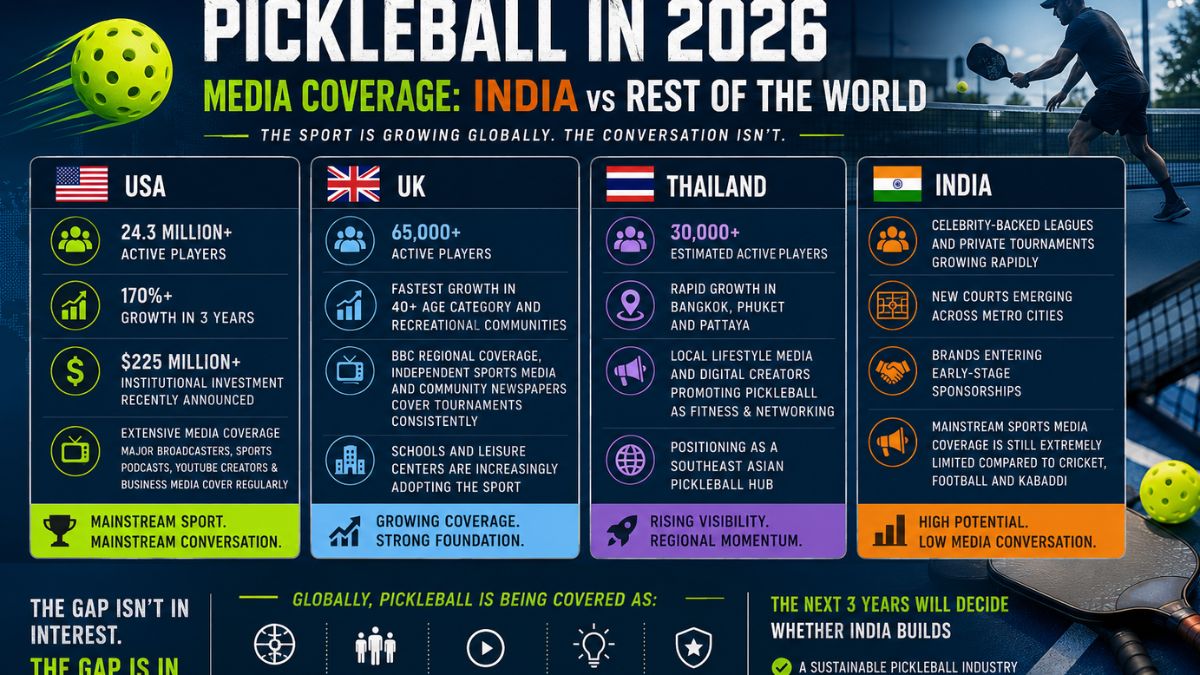
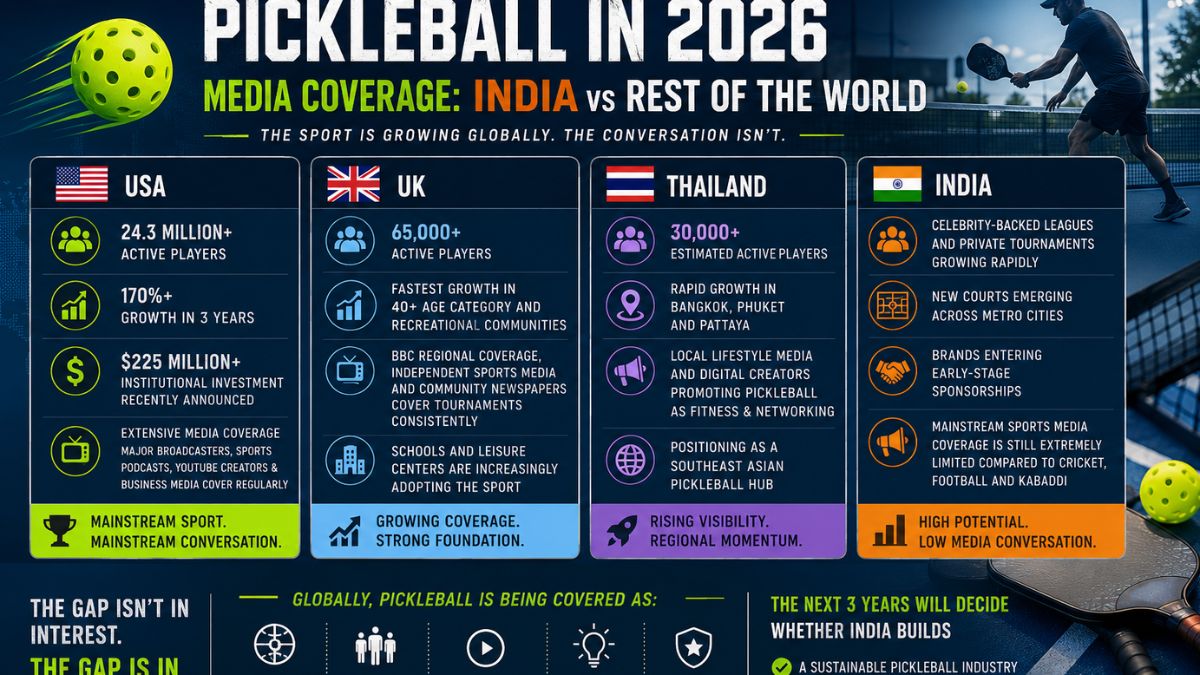
The sad reality is Media covering this sport in India as compare to rest of the world is shared in the below format:
When we look at USA and UK they have amazing media coverage space across- Print, TV and Digital it is massive where they are systematically covering Players,coaches and others around the ecosystem pretty well.
Let me decode those numbers for you even the numbers in Thailand is amazing where they have done pretty well when it comes to India it is pretty less than 1% which makes the sad reality in Indian Pickleball.
1. USA:
• 24.3 million+ active players
• 170%+ participation growth in 3 years
• Major broadcasters, sports podcasts, YouTube creators & business media regularly cover pickleball
• Professional leagues now attract celebrity investors, sponsorships & streaming deals
2. UK:
• Pickleball England reported 65,000+ active players in 2026
• Fastest growth seen in 40+ age category and recreational sports communities
• BBC regional coverage, independent sports media and community newspapers have started covering tournaments consistently
• Schools and leisure centers are increasingly adopting the sport
3. Thailand:
• 30,000+ estimated active players in 2026
• Tourism + sports communities are helping pickleball grow rapidly in Bangkok, Phuket and Pattaya
• Local lifestyle media and digital creators are promoting pickleball as both a fitness and networking activity
• Thailand is slowly positioning itself as a Southeast Asian pickleball hub through events and expat communities
Now Let’s Compare it with India:
• Celebrity-backed leagues and private tournaments are growing rapidly
• New courts are emerging across metro cities
• Brands have started entering early-stage sponsorships
• But mainstream sports media coverage is still extremely limited compared to cricket, football and kabaddi
That’s the real difference.
Globally, pickleball is being covered as:
→ a sports business
→ a participation movement
→ a creator economy opportunity
→ and a serious community ecosystem
Over the last few years, pickleball has rapidly emerged as one of the fastest-growing sports globally. From recreational communities to professional leagues, the sport has transformed into a serious business ecosystem across countries like the United States, the United Kingdom, and Thailand.
In India too, pickleball is witnessing early signs of explosive growth. Celebrity-backed leagues are entering the market, private tournaments are increasing, new courts are being developed across metro cities, and brands have slowly started investing through sponsorships and collaborations.
Yet despite all this momentum, one major problem continues to hold Indian pickleball back — the same issue that has historically affected almost every non-cricket sport in the country.
Governance challenges.
Federation tussles.
Lack of long-term systems.
Poor grassroots empowerment.
And extremely limited mainstream media coverage.
Unfortunately, this is not a new story in Indian sports. From basketball to volleyball, athletics to handball, several sports in India have shown immense potential over the years but struggled to sustain long-term growth due to inconsistent systems and ecosystem failures. Pickleball now risks entering the same cycle if stakeholders fail to act at the right time.
The reality is simple: talent alone cannot build a sport. Ecosystems do.
When we compare India’s pickleball ecosystem with countries like the USA, UK, and Thailand, the biggest difference is not just participation numbers — it is how systematically the sport is being covered, marketed, and positioned within mainstream culture.
USA Leading the Global Pickleball Revolution
The United States currently remains the global powerhouse of pickleball.
According to recent estimates, the country now has more than 24.3 million active pickleball players. Participation in the sport has grown by over 170% in the last three years alone, making it one of the fastest-growing sports movements globally.
But the real strength of American pickleball lies beyond participation.
The sport is receiving massive exposure across television networks, print publications, digital media, podcasts, YouTube creators, and sports business platforms. Players, coaches, tournament organizers, and even community stories are consistently covered through professional storytelling and structured sports journalism.
Professional pickleball leagues in the USA are now attracting celebrity investors, sponsorship deals, streaming partnerships, and large-scale brand integrations. This media attention has helped pickleball evolve from a recreational hobby into a serious sports business opportunity.
That visibility matters.
Because when media covers a sport consistently:
sponsors gain confidence,
audiences become emotionally connected,
athletes build personal brands,
and younger generations start considering it as a viable career path.
UK Slowly Building a Sustainable Ecosystem
The United Kingdom is another example of how structured media and community systems can accelerate a sport’s growth.
Pickleball England reported over 65,000 active players in 2026, with rapid growth particularly visible in the 40+ age category and recreational sporting communities.
Unlike traditional approaches focused only on elite competition, the UK ecosystem has promoted pickleball as a community-driven sport accessible to all age groups.
Regional BBC coverage, independent sports media platforms, and community newspapers have started consistently covering local tournaments and grassroots events. Schools and leisure centers are also increasingly adopting pickleball programs.
This balanced ecosystem approach is helping the UK create sustainable long-term growth rather than short-term hype.
Thailand Emerging as Southeast Asia’s Pickleball Hub:
Even Thailand has managed to position itself strongly within the global pickleball conversation.
The country is estimated to have over 30,000 active pickleball players in 2026, with Bangkok, Phuket, and Pattaya becoming major growth centers.
Thailand’s growth has been heavily supported by tourism, expat communities, fitness culture, and digital creators who actively promote pickleball as both a networking activity and a lifestyle sport.
Local lifestyle media outlets and creators have played a massive role in making the sport
culturally relevant. Events are growing steadily, and Thailand is slowly building its image as a Southeast Asian pickleball hub.
India’s Biggest Challenge Is Visibility?
India undoubtedly has potential.
The country has a massive youth population, rapidly growing urban sports culture, increasing disposable income, and strong digital consumption habits. Pickleball courts are expanding across cities like Delhi, Mumbai, Bengaluru, Hyderabad, and Pune.
Private tournaments are increasing. Influencers are talking about the sport. Brands are testing early-stage sponsorships. Celebrity involvement has also brought initial curiosity.
However, the biggest gap remains mainstream sports media coverage.
Compared to cricket, football, and even kabaddi, pickleball coverage in India is still extremely limited — likely less than 1% of what mature sporting ecosystems receive internationally.
Globally, pickleball is being covered as:
a sports business,
a participation movement,
a creator economy opportunity,
and a serious community ecosystem.
In India, it is still largely viewed as a niche recreational activity.
That mindset needs to change.
If Indian pickleball truly wants to become the next big sporting revolution, the focus cannot remain only on celebrity leagues and surface-level hype. The ecosystem needs stronger governance, structured grassroots systems, player development pathways, professional storytelling, creator-led media coverage, and long-term investment in community building.
Because sports do not grow only through tournaments.
They grow when media, systems, players, brands, and communities move together in the same direction.
| Country | Player Base & Growth | Media Coverage | Ecosystem Development | Key Observation |
|---|---|---|---|---|
| United States | • 24.3 million+ active players • 170%+ participation growth in last 3 years |
• Massive coverage across Print, TV & Digital • Sports podcasts, YouTube creators & business media actively cover pickleball • Professional storytelling around players, coaches & leagues |
• Celebrity-backed professional leagues • Sponsorships & streaming deals growing rapidly • Strong creator economy integration |
Pickleball is treated as a serious sports business + entertainment ecosystem |
| United Kingdom | • 65,000+ active players in 2026 • Strong growth in 40+ age category & recreational communities |
• BBC regional coverage • Independent sports media & community newspapers consistently cover tournaments |
• Schools & leisure centers adopting pickleball programs • Community-driven ecosystem growth |
UK focuses on sustainable grassroots + recreational expansion |
| Thailand | • 30,000+ estimated active players in 2026 • Rapid growth in Bangkok, Phuket & Pattaya |
• Lifestyle media & digital creators actively promote the sport • Pickleball positioned as fitness + networking activity |
• Tourism & expat communities driving expansion • Events helping Thailand become a Southeast Asian pickleball hub |
Thailand has successfully made pickleball culturally relevant |
| India | • Celebrity-backed leagues growing • New courts emerging across metro cities • Early-stage sponsorships increasing |
• Mainstream sports media coverage remains extremely limited • Coverage still far behind cricket, football & kabaddi • Estimated visibility remains below 1% compared to global ecosystems |
• Federation issues continue • Weak grassroots systems • Lack of structured player development pathways |
India has huge potential but governance & media visibility remain the biggest roadblocks |
Global vs India Narrative Comparison
| Globally Pickleball is Viewed As | In India Pickleball is Still Viewed As |
|---|---|
| A sports business opportunity | Mostly a recreational activity |
| A participation movement | A niche urban trend |
| A creator economy ecosystem | A short-term hype sport |
| A professional athlete pathway | A casual fitness activity |
| A community-driven culture | An unstructured emerging sport |
Core Problems Hindering Indian Pickleball Growth
| Problem Area | Impact on Ecosystem |
|---|---|
| Federation tussles | Creates instability and confusion |
| Weak grassroots systems | Limits long-term talent development |
| Lack of media coverage | Reduces visibility for players and sponsors |
| Poor ecosystem planning | Slows professional growth |
| Limited storytelling around athletes | Prevents fan connection and audience building |
| Inconsistent governance | Discourages serious investment |
| Lack of creator-led coverage | Reduces digital engagement and youth appeal |
What India Needs to Unlock Pickleball Growth
| Required Focus Area | Why It Matters |
|---|---|
| Strong governance systems | Builds long-term trust and structure |
| Grassroots player development | Creates future professional athletes |
| Professional sports storytelling | Helps audiences emotionally connect |
| Mainstream media investment | Increases visibility and sponsorship value |
| Creator economy integration | Expands digital reach among youth |
| Community-driven tournaments | Builds local participation culture |
| Long-term ecosystem planning | Ensures sustainable growth beyond hype |
Final Takeaway
| Global Ecosystems | India’s Current Reality |
|---|---|
| Media + Systems + Community work together | Growth remains fragmented |
| Players become brands | Athletes still lack visibility |
| Sports treated as business ecosystems | Focus remains heavily event-centric |
| Structured pathways exist | Professional pathways still unclear |
| Consistent storytelling drives growth | Limited media narrative around the sport |